

Seven-year-old Nika from Vancouver came home with a social studies assignment where she had to color and label the seven continents. Her mother looked into the notebook and said that there are actually six continents, and Nika replied that the teacher said so, and the teacher definitely knows better.
Such an argument always ends the same way, because both mother and daughter are right. They are simply talking about different things.
In Russian schools, six continents are taught, and in this list, Eurasia is treated as a single piece. In Canadian and American schools, seven are taught, because Europe and Asia are considered separately there. The Americas, meanwhile, are separate in both models, so the entire debate rests on a single line drawn across a single continent.
Why Eurasia is divided and not divided at the same time
Between Europe and Asia, there is neither a strait, nor an ocean, nor even a decent mountain barrier along their entire length. The Ural Mountains, which are usually called the border, are not high and end long before the southern seas; further on, the border is drawn along the Ural River and the Caspian Sea, and there is no natural boundary there anymore. From a geography standpoint, this is a single landmass, and the Russian school of thought proceeds precisely from this, which is why there are six continents.
The English-speaking tradition views it differently, dividing history rather than the land. Europe and Asia existed for too long as different worlds, with different languages, religions, and ways of life, and this very division was invented by Greek geographers two and a half thousand years ago. Hence, seven.
Nika asked the only truly practical question: what answer should one write in the notebook. The answer is simple: you need to write the one expected at the school where you are submitting your work, and it makes sense to know both.
A continent and a part of the world are two different things.
From this dispute naturally follows the second distinction, which confuses even adults.
A continent is defined as a large landmass surrounded by water and resting on its own geological foundation, while in some parts of the world the term is a historical and cultural construct invented by people to describe how they view the world. These two concepts do not always coincide, which is precisely why discussions about the number of continents so easily reach an impasse.
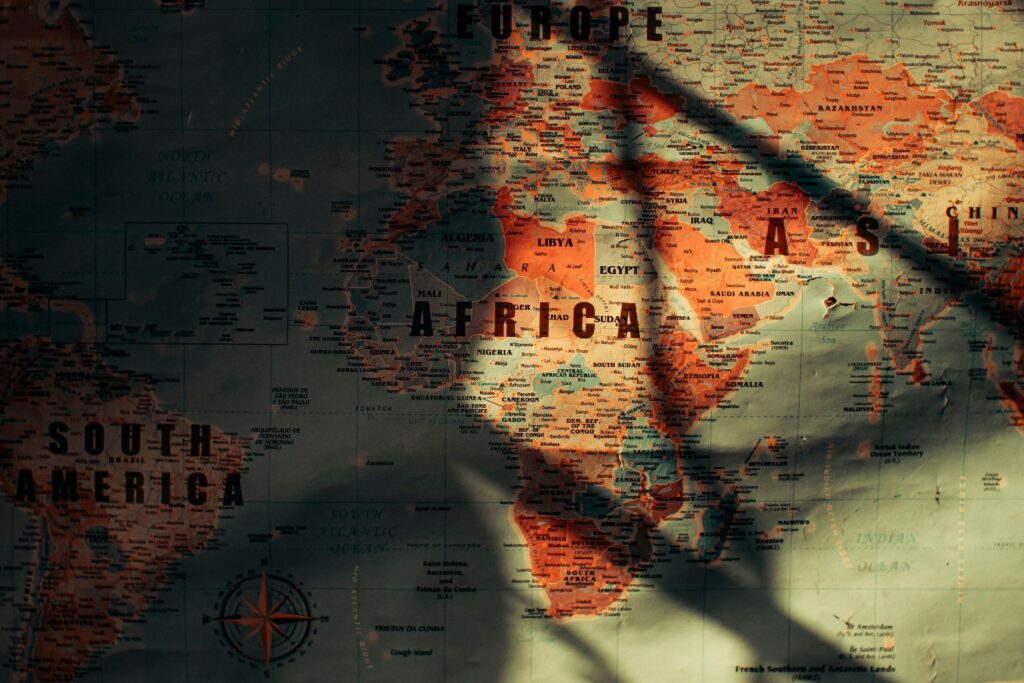
Eurasia is one continent, but two parts of the world, Europe and Asia. America, on the contrary, is two continents, North and South, but only one part of the world. With Australia, it is a different story, because the part of the world it is included in is called «Australia and Oceania» and encompasses thousands of other Pacific islands. Antarctica turns out to be both a continent and a part of the world at the same time.
Six continents and six parts of the world
The boundaries of the two lists do not match everywhere, even though the total in both columns is the same. The reason is visible in the first and third rows, where two parts of the world correspond to one continent, and one part of the world corresponds to two continents. The areas are rounded to the tenths.
| Mainland | A Part of the Light | Area, million square kilometers | How to identify it on a map |
|---|---|---|---|
| Eurasia | Europe and Asia | 54,9 | The largest landmass stretches from the Atlantic to the Pacific Ocean |
| Africa | Africa | 30,3 | It juts out to the west and narrows toward the south, lying on both sides of the equator |
| North America | America | 24,4 | Wide at the top, tapering to a narrow isthmus at the bottom |
| South America | America | 17,8 | A triangle tapering downward, with a mountain range along its western edge |
| Antarctica | Antarctica | 14,1 | A white spot at the bottom edge of the map, near the South Pole |
| Australia | Australia and Oceania | 7,7 | A smooth outline, trimmed at the top and bottom with wide indentations |
In the right-hand column, Oceania appears only as part of a compound name; it does not have its own row among the continents. The English version of the same table is organized differently: there, Europe and Asia are listed instead of Eurasia, and there are seven continents.
Why is Australia a continent, but Greenland an island?
Niki’s next question was about Greenland, which looked impressive on the map and, in her opinion, was quite comparable to a continent. It’s not a matter of size, although even in that regard Greenland doesn’t come out on top, since Australia is about three and a half times larger. The main difference is geological. Australia lies on its own tectonic plate and is home to its own unique set of animals and plants found nowhere else on the planet, while Greenland sits on the edge of the North American plate and is, geologically speaking, an extension of it.
By the way, Nika's sense of its vastness was not unfounded. On a flat map, Greenland is bloated to almost the size of Africa, even though in reality it is fourteen times smaller, and the culprit is the projection, which stretches everything lying closer to the poles. On a globe, the illusion vanishes instantly.
How Is It Actually Remembered?
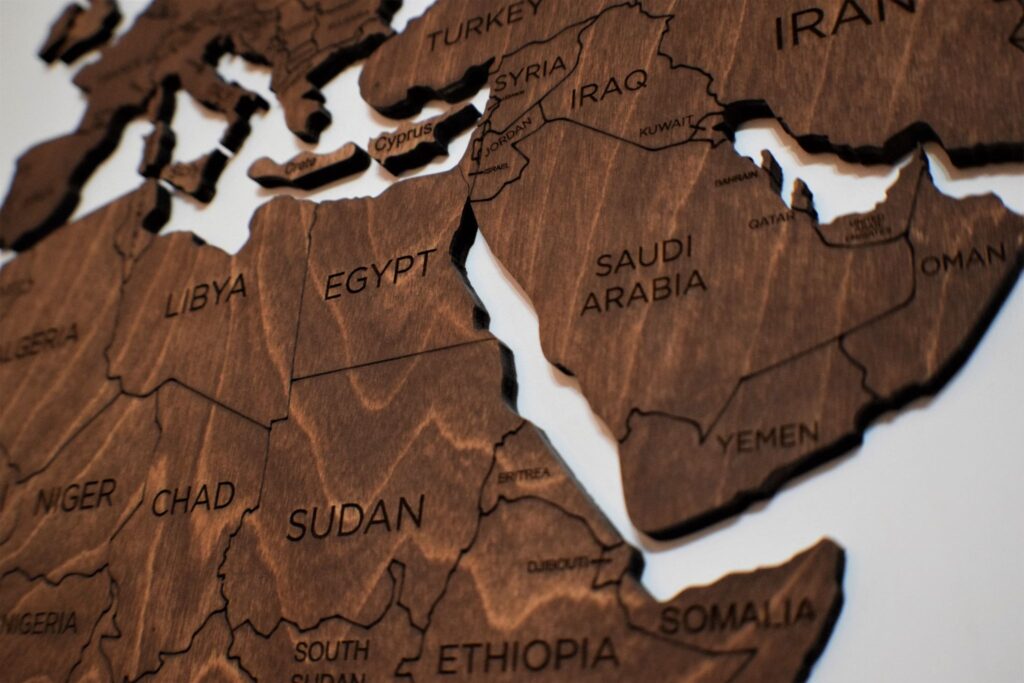
Memorizing a list of six titles works exactly until the end of the week, and then it fades away—and there’s nothing surprising about that.
Continents are remembered as shapes, and children recognize them precisely that way—by their silhouettes—long before they learn their names. Africa is recognizable by its distinctive protrusion in the west, South America by its triangle that tapers toward the bottom, and Australia by its flat silhouette with two deep indentations, one at the top and one at the bottom. Nika, by the way, couldn’t figure out for a long time why Australia was on both the list of continents and the list of world regions until she compared the two lists side by side.
That is why drawing and tracing work better than just looking. What steps home geography takes to move from things familiar to the child to continents and the planet, we analyzed in detail.
What to Say to a Child Who Is Confused

A two-part answer frightens parents more than it does children. Adults worry that a child won’t be able to handle the uncertainty and will conclude that geography is an unreliable science, but in reality, the opposite is true. A child who has been told that the answer depends on tradition rather than on truth sees for the first time that knowledge can be more complex than the “correct” answer at the end of a textbook. For a bilingual child, this is also familiar territory; they already live between two languages and two school systems.
The phrasing that works best goes something like this: «At your school, they count seven because they divide Europe and Asia, but in Russian they count six because it’s all one land. Both answers are correct, and now you know more than what’s asked in class.».
Continents in Russian Class

At home, this conversation happens only once, and it's usually about a school assignment.
At Palme School, geography is taught as a separate course, and the continents are covered according to the Russian curriculum—with Russian names and including Eurasia, which is not part of the Canadian curriculum. Students ranging in age from four to fourteen attend the classes. You can start with free trial lesson.
Frequently Asked Questions About Continents
Are the mainland and the continent the same thing?
In the Russian language, these words are complete synonyms, and the school curriculum uses both freely. The word «materik» is associated with «matery,» meaning solid and strong, while the word «continent» comes from Latin, where continens meant «continuous.» In the English-speaking school system, there is no single list of six mainlands; instead, they list seven continents, and this is where part of the confusion arises when translating assignments.
How many parts of the world are there on Earth?
There are six of them, and the list differs from the list of continents. It includes Europe, Asia, Africa, America, «Australia and Oceania», and Antarctica. The discrepancies arise twice and cancel each other out. Here, Eurasia is divided in two, but North and South America are brought together under a common name, so the total in both lists comes out the same. Oceania is not considered a separate continent at all, because it consists of islands.
Why are there five rings on the Olympic flag if there are six continents?
According to a common explanation, the rings represent the inhabited parts of the world, and Antarctica is not counted among them since there is no permanent population there. This count is based on where the athletes come from.
Are Antarctica and the Arctic the same thing?
No, and they are constantly confused, including by adults. Antarctica lies in the south. It is a real continent, land beneath ice several kilometers thick. The Arctic is in the north, and there is no land in its middle, there is the Arctic Ocean, covered with floating ice. The easiest way to check the difference is on a globe, where Antarctica is drawn as a separate piece of land, and the ocean is visible around the North Pole.
What should the continents be called if a child is studying in English?
Almost all the names match, except for one. Africa, Australia, Antarctica, North America, and South America are easily recognized, but Eurasia is rarely encountered in an English-speaking school because they talk about Europe and Asia separately. This is the exact word the child trips over most often when transferring a Russian assignment into an English notebook.