


In Lev's hallway stands a wicker basket, once bought at IKEA for blankets, but serving a completely different purpose. Slippers are kept in it. Not Grandma's and not Mom's, those have their own on the shelf. These six pairs of various sizes are waiting for people who haven't arrived yet and, perhaps, won't arrive at all today.
Brought home from school for a visit, eleven-year-old Jason saw a basket and didn't understand what it was. At his home, the hallway contained sneakers—his own, matching the number of residents—and in his family, the idea of spare footwear for outsiders had never occurred to anyone.
This entire article is, essentially, about the basket. About where it comes from, what it reveals about a home, and why, without it, Russian hospitality falls apart into a list of funny rules memorized before a trip.
The basket that is not in an American entryway
To begin with, the basket is always full. It is neither gathered for the arrival of guests nor put away afterward; it sits there year-round, taking up space, and is hauled along during moves. This one, for example, traveled from St. Petersburg, lived in Brooklyn for six months, then changed three Chicago addresses, and it never once occurred to anyone to throw it out.
The slippers inside are of different sizes because it is never known in advance who will come. A neighbor, distant relatives from Toronto, the washing machine repairman, the school boy. The house keeps a remedy ready for any of them, and this anticipation, rather than the shoes themselves, is the main thing.
If you're being honest, about a hundred and fifty people have passed through this basket. Neighbors who were invited to see the new apartment. The plumber who refused to take off his shoes and was given disposable shoe covers. The music teacher who came on Wednesdays two years in a row. A group of parents' friends for New Year's, when there weren't enough slippers and woolen socks from the dresser had to be used. Not a single one of these people brought shoes with them, and not a single one was surprised that shoes were put on them.
An American entryway is set up differently, and it is not about clean floors, as people usually explain. The thing is, a guest over there is a scheduled event. They are expected on a specific evening, preparations are made for them, and the rest of the time the house lives for those who live in it. A Russian home lives in a mode of constant readiness to receive, and the basket stands like a small, eternal on-call guard.
Jason, of course, was not explained any of this. He was given blue slippers a size too large in which he shuffled a bit, and Lev casually remarked that grandfather had once arrived with his own because other people's were too small for him. Jason asked again if guests really brought their shoes with them. He was told that some do.
Why did Grandma step away from the door
A few minutes before the slippers, a scene occurred that Jason misinterpreted. He rang the doorbell, the door was opened, his grandmother stepped toward him, saw the boy on the threshold, and suddenly recoiled back into the apartment. Jason decided she was frightened of something or had mistaken him for someone else.
Meanwhile, the grandmother had stepped back precisely because she was glad. In a Russian home, nobody will ever greet someone across the threshold under any circumstances, just as they won't pass keys or converse across it. First, a person is pulled into the apartment, and only inside are they grabbed by the shoulders and marveled at for how big they've grown. The old explanation refers to the threshold as a boundary beyond which one's own space ends, and shaking hands across that boundary promised strife.
Only a few believe in it now, but almost everyone backs away, and that is the very nature of such rules. They are held in the body, bypassing any beliefs. A Russian person who has lived in Illinois for twenty years and laughs at omens will still take half a step back because his mother used to do so.
The same thing, by the way, happens with the wastebasket. No one in the apartment could explain what it is for if asked directly.
Table as an extension of the shopping cart
That evening the table was set for ten with only four diners. Two cold appetizers remained untouched, Grandma had spent two days making the Napoleon cake, and cutlets had been fried with tomorrow in mind.
This is the same basket, only in edible form. The hostess, whose guests ate everything down to the last crumb, considers the evening a failure because the supply has run out, and a supply must remain. What travel guides prettily call Russian hospitality fits entirely within this arithmetic. The host takes full responsibility for the well-being of the visitor and covers it with plenty to spare, since the measure of someone else's appetite cannot be anticipated.
The boys finished in about twenty minutes, at the pace of a school lunch. Grandmother kept serving more and saying that everything is good for a growing body and that no one has ever suffered from an extra cutlet.
The cutlet you can't refuse twice
Then happened the very thing for which this story is even worth telling.
Grandma asked if she should put some more. Jason politely replied that thank you, he was full. Grandma waited and asked again. Jason repeated more firmly and smiled just in case.
He honestly answered a question he had not been asked. In a Russian home, the offer of a second helping is not about being full; it is an act of care and requires payment in the same currency. A refusal spoken twice and without adornment reads as a judgment of the cooking, which is why the grandmother heard, «Thank you, I didn't like it.».
It can be cured with a single phrase, and a child should be taught it in advance, right along with the multiplication table. The refusal should be wrapped in a compliment and a postponement, like «it's insanely delicious, please put some on later, it's impossible right now.» A microscopic portion taken for the sake of decorum and peacefully awaiting the end of the evening on the edge of the plate also works. Adults in Russian families perform this dance automatically and do not consider it pretense, because pretense implies deception, whereas here both sides know the rules perfectly well.
The worst part was that Leva also said no. One of our own, yet he answers like a guest from a stranger's house. Nobody said a word to the boys about the two-day Napoleon cake, since it's awkward for the hostess to praise her own cooking. They shouldn't have kept quiet. Upon learning about the two days of work, Jason probably would have taken seconds just out of respect.
Evening versus dinner

At half past eight, someone came to pick up Jason. He thanked them, put on his shoes, waved, and left, having stayed for an hour and a half, which by his family's standards meant a full-fledged visit.
A Russian feast is structured to last longer and breaks down into rounds. They eat, talk, someone goes out to smoke, someone goes to put the kettle on, then they remember the photo album, then they start arguing about ticket prices. Closer to midnight, the first «well, we must be going» is heard, after which they sit for another forty minutes. Conversation on such an evening carries more weight than food, and a person who gets up from the table right after tea lets everyone know that they just came for dinner.
It wasn't the cutlets that the grandmother was upset about. She had a whole program prepared: school, parents, plans for the future, and along with that, tea, cake, and a box of photographs. A Russian invitation calls you for the evening, an American one for dinner, and the exact same word means a different slice of life.
The mismatch works the other way around as well, which parents tend to forget. Six months later, Leva was invited to dinner at Jason's house, and his mother, brought up properly, sent her son with a bottle of wine for the adults and a box of chocolates. Jason's parents were touched and slightly puzzled, since an eleven-year-old guest with wine looks somewhat peculiar in Illinois. The dinner ended at a quarter past eight, the dishes were cleared away in front of the guest, and Leva, used to his grandmother's endless rounds of hospitality, assumed he was being shown the door.
Two Ways of Life at One Dinner
The same invitation, read from both sides. A child between lifestyles usually only knows the right column.
| What's happening | Russian House | North American house |
|---|---|---|
| The appointed time | Time to gather, the hot food is still finishing up, nobody's bothered by being a quarter of an hour late | Exact start time, they arrive right on the dot |
| End of the evening | Not pre-determined, determined by the conversation | Known to both parties from the very beginning |
| Empty-handed guest | Practically ruled out, even for children and neighbors | It's fine, especially for a children's visit |
| Shoes | They are always removed, and slippers from the home supply are brought out for the guest. | They usually keep their shoes on and take them off at the hosts' request. |
| Amount of food | With enough to spare, there should be some left over after the guests leave | Based on the number of eaters, no leftovers are planned |
| Supplement | They propose it several times; the refusal is softened with praise and a postponement. | Offered once, a short no closes the matter |
| Tea and dessert | Self-entry an hour after the hot one | Part of the same dinner or its conclusion |
| Duration of the visit | The whole evening, with several rounds of conversation | An hour and a half or two hours, the visit is considered to have taken place |
| The role of the table | Platform for dating, news and family stories | Eating together, conversation moves to the living room more often |
Neither way of life is more polite than the other. It is useful for a child to know both, so as not to mistake someone else's norm for bad manners.
The word in which all this is recorded
Language, as usual, knew the answer before everyone else.
The word khlebosolny is glued together from two things that lay on the table, and it is not glued by chance. Bread fed the family, salt was expensive and hard to come by, so together they meant that the house was giving its most valuable possession to the newcomer. Not what was extra, but the most valuable. The ceremony with the loaf on a towel, which everyone has seen in the movies, has survived to this day only at weddings and official delegations' meetings, but the word has remained in everyday use and still works today.
Beside it lives the proverb about the uninvited guest who is worse than a Tatar, and right here the tongue betrays itself completely. The uninvited one, that is, the one who came without asking, breaks the system itself. The basket stands ready, the table holds a reserve, the host has assumed responsibility in advance, and a person who appears past this mechanism puts the house in an awkward position. A guest in a Russian home is loved passionately, but he is still obligated to give advance notice of himself.
What Lev's mom said in the kitchen
The conversation happened late, after the dishes had been put into the dishwasher and grandmother had gone to her room.
Lev asked what she was upset about if everyone had eaten. She started with the cuttlefish and ended up quite far from there. It turned out that no one visits Russians empty-handed, not even eleven-year-olds. That calling and asking what to bring causes no awkwardness at all and usually ends with a lemon or a loaf of bread. That the brought cake will be cut the same evening, so the gift works more as a contribution to the common table. A curious pattern. The very things that open English-language compilations of Russian guest traditions reach the children of emigrants last of all, because at home everyone keeps quiet about them due to how obvious they are.
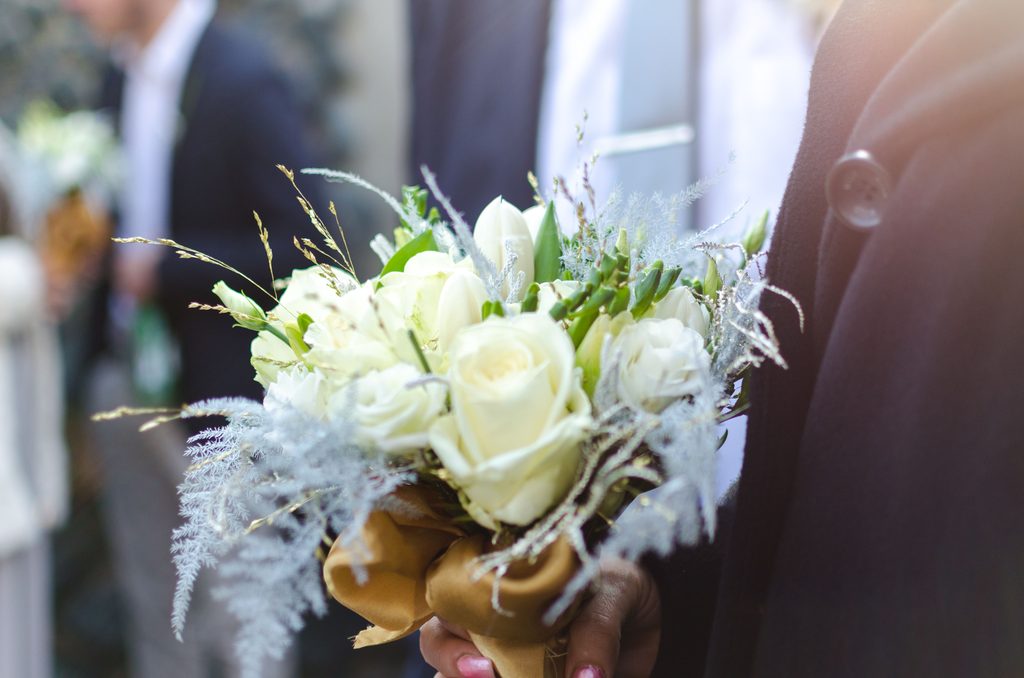
Separately came the flowers and superstitions, which Leva didn't know at all, though he had seen his mother recount the stems before every birthday. Why odd numbers, why carnations won't do, why they take a coin for a gifted knife. All of this is gathered in the cards below, along with two ways of setting the table, so as not to retell the kitchen conversation here in full.
Flowers, gifts, and signs that nobody warns you about
Everything that a Russian adult does without thinking, but that a child in emigration has to have explained in words.
Count the stems
Living people are given an odd number, three, five, seven. An even bouquet is reserved for mourning occasions, so four roses for a birthday make a heavy impression. With bouquets of about a dozen stems or more, they no longer keep count.
A dozen roses is a Western classic
In Europe and America, the number of stems means nothing, and a dozen is considered an exemplary gift. A Russian birthday girl will be confused by a dozen and try not to show it.
Carnations and the yellow color
In Russia, carnations are firmly associated with military dates and the memory of the fallen. Yellow flowers are surrounded by a superstition about separation. Not everyone believes in it, and yet it is better not to bring them to an unfamiliar woman.
What do people get for the house
It's a win-win: everything for the table and for the home. Tea, good tableware, olive oil, a candle, a book. Price doesn't matter, what matters is the very fact that the person was walking and thinking about this home along the way.
Sharp things are sold for a pittance
According to superstition, knives, scissors, and anything sharp lead to arguments. A clever and very Russian solution was invented long ago: in exchange for a gifted knife, a symbolic coin is accepted, and the gift formally becomes a purchase.
Watches, scarves, and an empty wallet
Clocks are associated with the superstition of separation, handkerchiefs are considered a gift of tears, and a wallet is only handed over with a coin inside so that money stays in it. Many laugh at this, almost everyone follows it.
Nothing across the threshold
People do not greet each other, hand over items, or talk across the threshold. A guest is first invited inside. The threshold was considered the boundary of the house, beyond which the outside world begins, and a handshake across it promised discord.
Asking the hosts directly what to bring is considered completely appropriate and usually ends with a request to grab some bread or a lemon for tea.
At some point, Leva asked how Mom knew all this and why no one had told him before. The answer turned out to be disarming. No one had ever explained anything to her; she grew up inside these rules and counts the stems on autopilot.
The shopping cart won't teach you, a conversation will
The list of rules can be mastered in a single conversation. The difficulty lies in what stands behind them, and that is where the language is indispensable. Grandma's mood can only be read from her own words, and you have to reply to her in Russian as well.
At Palme School, children from four to seventeen years old study in small groups online, and everyday topics such as visiting friends, feasts, and gifts are covered during conversation practice along with the necessary words and phrases. You can get acquainted with the school at two free lessons. The introductory lesson is conducted by a methodologist, who assesses the child’s Russian language proficiency and places them in a group; the child then takes the trial lesson in the group with the instructor.
Home

Everything that seems like a set of strange rules grows out of a single device. The house is ready to welcome guests in advance, and this readiness is embodied in a basket of slippers, a table with provisions, an extra cutlet, and an entire evening given over to the visitor.
A child growing up between two different ways of life benefits more from keeping this exact logic in mind; the list of prohibitions will follow on its own. With it, both the grandmother with her ten portions and the classmate who honestly said «no» become understandable, and neither of the two turns out to be rude.
Jason’s mom, by the way, called the next day and thanked us for dinner, which was completely unexpected in this house. Russians usually say thank you as they leave, standing in the doorway, and repeating the gratitude the next day by phone is not customary. Grandma, upon hearing about the call, softened and said the boy must be from a good family after all.
For parents who want to check how well their child understands the inner workings of a Russian home, there is a simple way. Ask them why there is a basket of other people's slippers in the hallway. An answer like «so they don't dirty the floor» means the child sees the object, but not how the system works.
A month later, Jason came back again. With a box of cookies, took off his shoes by himself, found the same blue slippers in the basket, stayed until nine, and asked what herring under a fur coat was.
Frequently asked questions about Russian hospitality
Is it necessary to bring something when visiting Russians?
Yes, and this rule works almost without exceptions. Any small treat for tea, wine, fruit, or a bouquet will do. The price doesn't matter; the point is in the gesture itself. The only situation where you can arrive empty-handed is a visit to close relatives by prior arrangement.
Why do people in Russia give an odd number of flowers?
Because even-numbered bouquets are reserved for mourning occasions. The living are given three, five, or seven stems. The custom applies in Russia and neighboring countries, while the Western tradition does not know the rule of counting stems at all. Starting from about a dozen stems, the rule stops working.
Do I need to take off my shoes when visiting someone?
Almost always, and it is better to start taking off your shoes yourself, without waiting to be asked. Hosts usually offer house shoes; they keep them on hand for guests. Words saying that you don't need to take off your shoes are said out of politeness and do not require literal execution. Formal receptions are the exception.
How to politely decline seconds at a Russian table?
A direct «no, thanks» sounds colder here than intended. The refusal is softened with a compliment to the dish and a request to save some for later. A tiny portion taken just for the sake of propriety also helps. It is important for the hostess to hear that the reason is the guest's fullness and has nothing to do with the quality of the food.
Why do Russians still greet guests with bread and salt?
It is no longer encountered in everyday life; the ritual has survived only in weddings and the reception of official delegations. Its meaning lies in the old value of foodstuffs. A loaf of bread fed a family, while salt had to be bought for serious money. The words "khlebosolny" (hospitable) and "khlebosolstvo" (hospitality) remain in the language from this ritual, used to describe a generous home.