


There is a sure way to ruin a medovik, and it is not described in any recipe. Bake it absolutely correctly and serve it to the table the same evening. The guests will get eight dry brown layers with sour cream laid between them, all of this will exist separately and have decisively no taste, and the hostess will sit through the entire dinner with the feeling that she has made a hopeless mistake somewhere.
Nobody ruined anything, it's just that there is no cake at this exact minute. It will appear at night, in about eight hours, all by itself, without anyone's involvement, and this fact, rather than the list of ingredients, is what you need to know about the honey cake above all else.
What is happening in the refrigerator
The mechanics here are frustratingly simple and explain pretty much everything that follows.
The cake layers come out of the oven dry and porous, leaving almost no moisture inside, but full of air pockets because the dough rose using baking soda and remained that way after baking. The cream behaves in the exact opposite way; sour cream consists of more than half water, and that water hasn't gone anywhere.
Next begins what a physicist would call moisture equalization, and a housewife simply soaking; the water goes where it isn't, that is, from the cream into the layers, they swell, soften, absorb the flavor, and at the very same time the cream thickens and stops running. In about three hours the boundary between the layers begins to blur, by six hours the cake becomes edible, and by morning it reaches absolute perfection.
Nothing can speed up this process. Heat won't help, because a warm honey cake will simply melt; a weight on top won't help either, as the layers will crush together while the moisture will move at its previous rate, paying no attention to the brick. The only thing a person can influence here is decided back during the day, and the thinner the layers are rolled, the faster they will absorb what they need.
It is also curious how the cake behaves when sliced on the second day. The stripes of cream, which were still distinct and white in the evening, become thinner by morning and blend in color with the cake layers, turning the slice from striped into almost monochromatic, and an experienced eye can immediately tell from it how long the cake has been sitting. Pastry chefs take advantage of this property when assembling a medovik for sale, because a cake that is too fresh gives itself away at first glance by the contrast.
It is funny that all this mechanics fits into a three-word recipe, «let it soak,» and this line looks so optional that it is skipped more often than any other. That is where all the disappointed reviews about a dry, tasteless cake come from, because the person did absolutely everything right and just ate their work twelve hours ahead of schedule.
Not everyone knows about this, by the way, and stores are to blame. Honey cake from a coffee shop or a pastry shop reaches the customer already fully matured, and anyone who has only eaten it that way honestly believes that is how the cake is baked. The first homemade attempt comes as a revelation to them and almost always a disappointment.
What is honey doing?
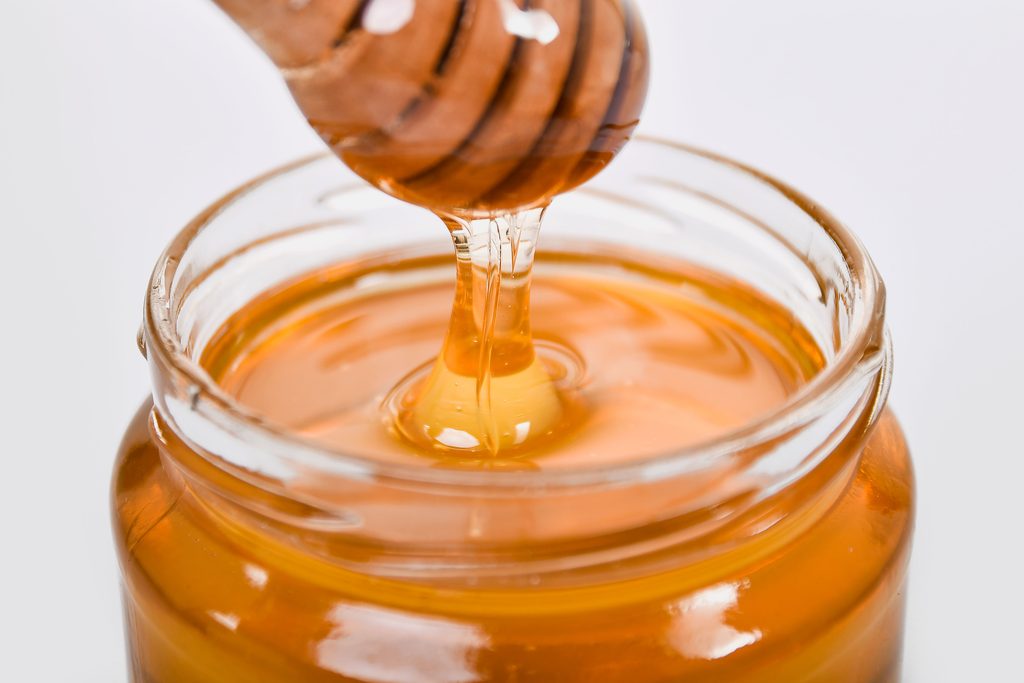
Honey in medovik is not responsible for the sweetness at all; sugar provides the sweetness, while the honey itself takes about three spoons for all eight layers, no more.
He has other works, and there are three of them as well.
The first concerns color and smell: the sugars, which are plentiful in honey, begin to caramelize when heated, the dough darkens before your eyes, and the cake layers turn out from golden to almost brown, depending on how long the mass stayed on the heat. This is also where the main taste fork occurs, over which families argue for decades. Some take it off early and get a light, soft, and sweet honey cake, while others keep it on longer and get a dark one with a distinct bitterness that will later balance the sweetness of the cream, and there is no right party in this argument.
The second step involves baking soda. Honey contains acids that neutralize the soda right in the pot, causing the mixture to foam up and rise, doubling in volume, and leaving the cook standing by with a spoon at the ready. Without this, the cake layers would turn out dense and heavy, like gingerbread.
The third function is the least noticeable and the most necessary: honey retains moisture. That is why overnight the cake layers soften without turning into mush, and the soaked honey cake remains springy even on the third day, something almost no sponge cake can boast of.
Replacing honey with sugar syrup, as some online advice suggests, won't work; the cake will turn out pale, flat, and, to be frank, generic. As for the honey itself, any liquid variety will do, and crystallized honey is simply melted, leaving the only true choice in the entire recipe: buckwheat will provide a dark color and a strong flavor, wildflower will turn out milder, and linden will be more aromatic. Everything else in the honey cake is arranged quite rigidly.
Honey cake, ingredients and ten steps
For a cake with eight layers, about twenty centimeters in diameter. It takes about four hours of work, after which the cake sets on its own.
What you will need
| Product | How much |
|---|---|
| Honey | 3 tablespoons |
| Sugar | 150 g |
| Butter | 100 g |
| Eggs | 2 pieces |
| Baking soda | 2 teaspoons |
| Wheat flour | 500 g, plus extra for dusting |
| Sour cream with 20% fat or more | 800 g |
| Powdered sugar | 150 g |
How to cook
Melt the base
Put the honey, sugar, and butter in a bowl and keep over boiling water, stirring until everything has melted.
ImportantHoney burns quickly, so do not leave the stove.
Slake the soda
Add the baking soda. The mixture will foam up and rise, doubling in volume, then settle down and darken.
ImportantThis is where the color is decided: take them out earlier and the layers will come out light, leave them in longer and they will be dark with a bitter taste.
Knead the dough
Crack in the eggs, add the flour, knead into a warm, elastic dough, and divide it into eight parts.
ImportantThe dough sticks to your hands, that's normal.
Roll out thin
Roll out each part on baking paper to two to three millimeters.
ImportantThe thin cake layer will soak through completely overnight, while the thick one will remain dry inside.
Bake the cake layers
Bake one at a time at 180 degrees for four to five minutes until golden brown.
ImportantThe difference between golden and burnt is a matter of a minute.
Crop with hotkeys
Trim to the size of a plate while the cake layer is soft. Set the scraps aside.
ImportantThe cooled cake layer crumbles under the knife.
Whip the cream
Whip the sour cream with powdered sugar until thick.
ImportantThey put less sugar than you might want, the cake layers are sweet on their own.
Assemble the cake
Spread each cake layer generously, with a layer about as thick as the cake layer itself. Cover the top and sides with cream.
ImportantSkimping on the cream turns into a dry cake by morning.
Sprinkle with crumbs
Dry the scraps, rub them between your hands, and sprinkle the cake on all sides.
ImportantThe crumb hides uneven sides and stays dry when everything else has softened.
Put away for the night
Cover and refrigerate. After six hours the cake is already edible, by morning it reaches perfection.
ImportantThis is not a chef's break, but the final stage of cooking.
Why are there eight cake layers, but twice as much cream?
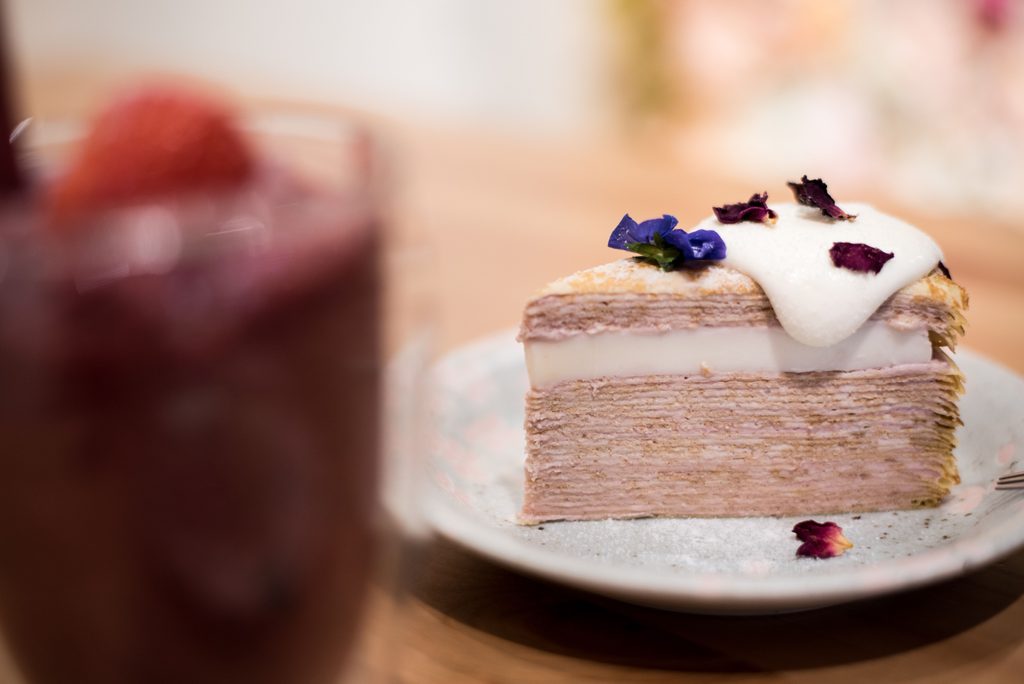
There are two numbers that absolutely everyone who bakes honey cake for the first time stumbles over.
The layers are made thin, two to three millimeters, and the reason for this is not the beauty of the cut, as many think, but the very same physics: a thin layer manages to soak through entirely overnight, whereas a thick one will remain dry inside by morning. The number eight stems from the same logic; at this thickness, this amount is just enough for a cake of normal height, although these numbers, of course, vary from one homemaker to another. Some bake six thicker layers and wait longer, others roll out twelve nearly transparent ones and sit down at the table by nightfall, and one single rule applies to all cases: the thicker the layer, the more time it needs, and no recipe will ever change that.
The story with the cream is trickier. You need twice as much as seems reasonable when looking at a thin cake layer; the layer of cream should end up about as thick as the cake layer itself, and to a beginner, this invariably seems like a waste, which is why they spread it thinly, sparingly, and very carefully. By morning, such a cake will turn out dry, because half of the cream will have gone inside the cake layers by that time, and if too little of it was applied, there simply won't be anything to absorb.
By the way, they use high-fat sour cream, starting at twenty percent, and sour cream frosting remains the main choice not out of tradition, but because it soaks the layers better than any other. Custard is thicker and holds its shape when sliced, whipped cream with condensed milk makes the cake dense and filling, almost like store-bought, and a simple rule applies here: the wetter the cream, the faster the overnight soaking process goes.
The crumbs deserve a mention of their own. Cake trimmings are dried out and rubbed between the hands, and this crumb is used to coat the finished cake. Aesthetics are secondary here; the crumbs hide uneven sides, hold the shape, and, more importantly, stay dry long after everything else has softened. It is precisely what provides that very contrast by which honey cake is recognized blindly by taste.
It is curious that this process is one-way: moisture leaves the cream and goes into the cake layers, never to return. This means it is fundamentally impossible to dry out a soaked cake, but over-moisturizing it is very easy. If you add too much cream, by morning the bottom layers will slide and the cake will sag to one side. Therefore, the right amount comes purely from experience, and almost everyone's first honey cake turns out either a bit dry or lopsided.
Three creams and what they do to the cake
The soaking cream is the main thing here: the moister the cream, the faster the overnight process works and the softer the honey cake turns out.
| Cream | What is it made of | What does it taste like | How it impregnates | When to take |
|---|---|---|---|---|
| Sour cream | Sour cream of 20% or more and powdered sugar | Light, with a sour note | Soaks the best, the sponge layers absorb moisture quickly | Classic version, it is assembled most often |
| Custard | Milk, eggs, sugar, flour, butter | Dense, enveloping | Runs slower, the layers remain more noticeable | Holds its shape when sliced and doesn't melt in the heat |
| Creamy | Butter and condensed milk | Heavy and hearty | It works poorly, the sponge cakes still stay like sponge cakes | Closer to store-bought, cuts evenly |
The Legend of the Empress
The Medovik has a history of origin, and it is told in almost every second recipe, usually with great enthusiasm.
As if the wife of Alexander I, Empress Elizabeth Alexeievna, could not stand honey and forbade serving it at court, but a young cook's apprentice did not know about this ban, baked a honey cake, and the sovereign, having tried it, unexpectedly praised it. It's a nice story, there is no denying that, but there is absolutely no confirmation for it; neither in nineteenth-century cookbooks nor in palace records does such a plot appear, and it surfaced in later retellings, as so often happens with food legends.
The real story is much duller and much older. Honey dough was known in Rus long before any empresses, honey gingerbread and spice cookies had been baked for centuries, and for a simple reason: honey was more affordable than sugar. As for the multi-layered cake with cream, it appeared much later, when sour cream became affordable and homes acquired ovens capable of baking thin cake layers; in its current form, the medovik apparently took shape during the Soviet era, though no one can give an exact date.
It became the number one homemade cake for very mundane reasons: the ingredients are simple and always on hand, and this baked good forgives more mistakes than any other.
Relatives all over the world
In its habit of ripening, the medovik, I must say, is far from being alone.
The Italian tiramisu behaves in the exact same way, where dry biscuits soak in the cream, the English trifle is structured identically, and the herring under a fur coat works the same way, which also needs a night in the refrigerator. The only difference is that in all the listed cases, the soaking improves an already prepared dish, whereas here, without it, the dish simply does not exist.
Closest of all to the medovik is the «Ryzhik,» a relative from the next room who is constantly and quite justifiably confused with it; the dough is similar, the appearance is similar, and both are made with honey. The difference is usually drawn by thickness and cream: the Ryzhik has thicker and softer layers, and it is most often assembled with custard or buttercream, but there is no strict boundary whatsoever here, and in different families it runs completely differently.
And medovik also turned out to be one of the few Russian desserts to make it into coffee shops around the world, on menus it is written as honey cake or simply medovik, and it is ordered by people with no connection to Russian cuisine. The reasons are clear: the cake is not cloyingly sweet, sits wonderfully in a display case, and does not fall apart when sliced. Anyone who searches for medovik cake or russian honey cake in English-language sources will find dozens of recipes, and almost every single one will have the note "rest overnight," which most readers take as optional advice, whereas it is an absolute requirement.
What happens to a cake overnight
Moisture goes from the cream into the cake layers, and this is the only stage of cooking that happens without human involvement.
Immediately after assembly
The layers are dry and hard, the cream is separated. The cake is inedible, with distinct white stripes when sliced.
The first hours
Moisture from the cream has seeped into the layers. The edges are starting to soften, while the center is still dry.
The boundary is blurred
The layers stop being readable individually, the cream noticeably thickens.
Already edible
The cake is edible, even though the flavors haven't melded yet and the layers are a bit dry in places.
Morning
The cake is ready. The layers took about half of the cream, the cross-section is almost monochromatic, and it springs back when pressed.
Second day
Tastes finally converged. Many consider this moment the best.
What to do with it abroad
There are no rare ingredients on the list at all, and this sets honey cake apart from many Russian dishes, because flour, sugar, butter, eggs, and honey can be found in any country in the world.
There is precisely one difficulty, and it has to do with sour cream. Overseas, the familiar high-fat sour cream is often simply impossible to find, which is why homemakers find whatever workarounds they can: Greek yogurt, crème fraîche, or a fifty-fifty mix of yogurt and whipped cream come into play, and the flavor turns out slightly different—more tart or milder—but the cake still works out.
It is also worth mentioning what the medovik lacks entirely, namely a canonical recipe. There is no state standard (GOST), no approved proportion of ingredients, and no single correct number of cake layers; every family bakes from its own notebook, and debates over how much honey to use and which cream to choose go on among relatives for decades. For Russian cuisine, this is a common state of affairs, but in the case of the medovik, it is especially noticeable because this cake is baked in almost every home.
Baking it together with the children is unusually convenient, rolling out the warm dough is fun, cutting out circles using a plate is too, the scraps can be nibbled on immediately, and rubbing the crumbs with your hands, and there is a lot of work involved, but all of it is simple. And most importantly, honey cake teaches you how to wait, because almost a day passes between the beginning and the first slice, and there is nothing you can do about it, and not many things teach you that in our day and age.
While doing this work, the conversation happens in Russian all by itself, because words like «roll out,» «spread,» «soak through,» and «cool down» cannot be learned from a textbook, but in the kitchen, they are remembered the very first time.
For anyone interested in the complete picture of the Russian table, we have big guide to traditional dishes, from cabbage soup to pastila.
At our school, food is discussed in culture classes, and it is one of the liveliest conversations you can have, because every household has its own recipe and its long-standing disputes. Palme School works with children from four to seventeen years old. Classes are small, and levels are determined in advance. You can start with two free lessons. The first is with a methodologist who gets to know the child and selects a group, the second is a trial lesson in a group with a teacher.
What he does not forgive
Medovik is lenient toward resolutely everything, and in this lies its rare virtue.
The cake layer cracked, the cream will glue it. It turned out crooked, it will hide under the crumbs. One turned out darker than the others, overnight it will blend in with the rest and no one will notice a thing. For someone baking a cake for the very first time in their life, this quality is worth its weight in gold, and it is most sensible to start with honey cake.
You can truly ruin it in just two ways: by burning the honey in a pan, after which the bitterness will never go away, and by serving it on the day of assembly without letting it rest overnight.
The second, apparently, happens much more often.
Frequently asked questions about honey cake
Why do you need to make honey cake in advance?
Because at the time of assembly it is not yet a cake, but a stack of dry layers with cream, and the desired state is reached only by morning. In this sense, honey cake is closer to dough that is left to rise than to regular baked goods, so serving it on the day it is made means presenting a semi-finished product to your guests.
Which cream should I choose for honey cake?
Classic sour cream, if you want a light cake with a slight tang and good soaking; custard, if you need a dense cut and heat resistance; condensed milk and cream, if you want a heartier option closer to store-bought.
Why are the cake layers bitter?
The honey was kept on the fire for too long or the cake layers themselves were overbaked, because caramelization happens quickly and the difference between golden and burnt is a matter of a minute. A slight bitterness is considered normal and even desirable in this case, as it balances the sweetness of the cream, but a distinctly burnt taste indicates a mistake.
How long does honey cake last?
Up to five days in the refrigerator with a lid on, and it actually gets softer over time, which is why many consider the second day better than the first. You should not freeze a whole cake, as the cream separates when thawed.