
Fasmer’s dictionary lists the ancient Russian meanings for the word «lesson,» and there are no schools among them at all. «Condition, completion, transaction, rule, payment, tax.» There are no parties or homework in this list. But there are two words in it that a grandmother who pays for her grandchild’s Russian lessons knows better than any textbook: payment and condition. The payment is already due; it’s the third month in a row. With a condition, it’s usually more difficult.
It's moving, it seems to be okay.

Let’s say that in the evening a reminder pops up on the phone about the next payment. You call your daughter and ask how the grandchild is doing in Russia.
«It’s moving, it seems like it’s going fine.
The conversation then turns to the weather and the fact that the younger one is still wearing her booties. You hang up the phone with the same question they asked her, and you sit down to write to school. The letter after such a call comes together almost on its own, and it probably looks something like this (this is a textbook example; there is no real correspondence behind it).
«Please, ask him to read more. We would like him to finish reading „Captain’s Daughter“ by the summer. We are paying for it and we want to see the result.».
There is nothing offensive in such a letter; the school will respond to it politely and, probably, will even add more exercises. What is more interesting is the other matter.
Who is speaking in this letter?
I am paying

Only one person speaks in it, the one who pays, and he has the right to do so. The objection is self-evident; I am the one paying, so I am the one setting the goal. Or, more simply, since he is still young, he doesn’t know what he wants. There is no need to argue with the right to ask the school; the question is legitimate according to the grandmother’s law.
For us philologists, it’s difficult to hold on to this arrangement. We don’t, in our opinion, conclude the deal alone; on the one hand, we don’t negotiate about it. The dictionary certainly doesn’t support this. It simply lists the old meanings of the word, and among them we found both payment and a condition. Our conclusion here is modest. Since the family is paying for the lessons, there’s reason to discuss what they agreed on.
An hour of learning

According to Fassmer, the word was formed from the prefix «u» and the same root as «river» and «rock». In this reading, there is a lesson in the stated, previously agreed upon meaning. In Polish, as the same dictionary notes, urok meant a contract, something established. In Russian, the traces of the old meaning are best preserved in the adjective. «Uroczny» in Ogegov's dictionary means «determined, conditional», and the example chosen there is the most appropriate: a "uroczny" hour.
There is a lesson for the grandson on Wednesdays, though. He is being taken care of by his daughter. She remembers that it is Wednesday today and decides how to combine the lesson with the birthday of a classmate. She is also looking for headphones on the sofa. This task is inconspicuous; it is only visible when it is not being done, so the «like it went well» answer is quite meaningful for the daughter. The lesson was not missed, and Russian fit into the week between school and training. For the mother who handles all of this, it is already a lot. For you, this is the answer to another question.
The lesson itself lasts forty minutes, and a grandson is sitting in it. So there are three people involved in this story, and only one voice is heard in the sample letter.
Orange ball
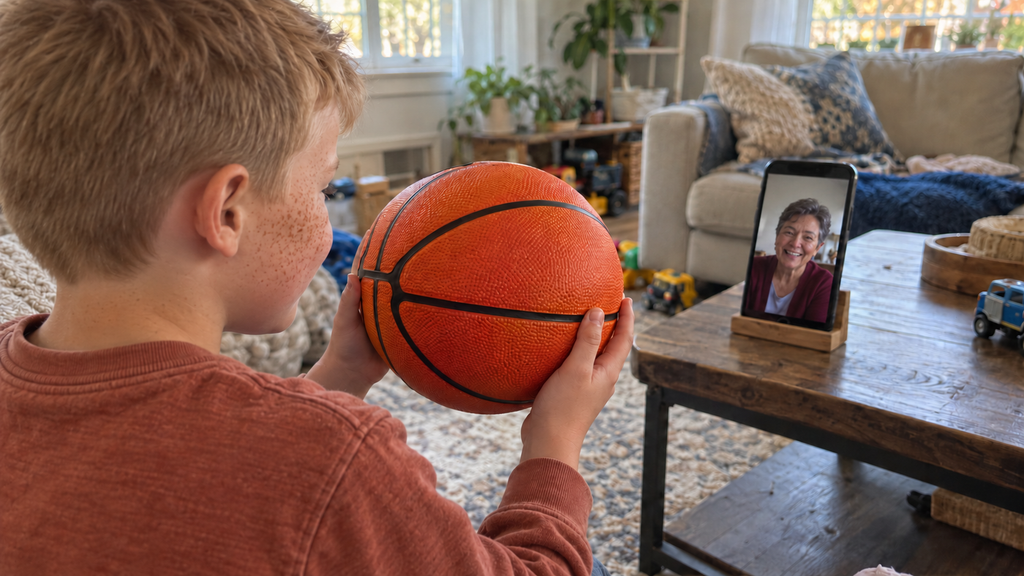
Let’s say that in the evening you have a video call with your grandson and you ask him how his lessons are going. He shrugs and says, «I have Russian class on Wednesdays,» and immediately turns the camera to the new orange ball that you bought on Saturday.
It's insulting. It seems he doesn't care, and you, by the way, pay for these Wednesdays.
Let’s look at the issue itself. «How are the lessons?» requires an assessment of whether they were good or bad, and putting the assessment on one’s own lessons in front of grandma, who is paying for them, is often awkward at any age. Perhaps he finds it difficult to answer such a general question, both in Russian and in English. It’s easy to answer the question about the ball. The ball is new; you can show it; the grandson did that.
The phrase «I have Russian on Wednesdays» is structured like a schedule entry. That’s how they say «I have football» or «I have math,» and the English I have Russian on Wednesdays says the same thing. In this entry, Russian takes its place in the week, between Tuesday and Wednesday. What the child is doing inside this cell and what he wants to do there is not visible from it.
Write back
Suppose that on the next call the question sounds differently, without evaluation.
«And what would you like to do in Russian?»
And the grandson replies that he wants to write to his cousin again. The cousin lives in Kazan and doesn’t write in English, and their correspondence is still limited to emojis and voice messages, of which the grandson understands about half.
There is something to see for the philologist here. The verb «to correspond» has a suffix «-ya», and the meaning is reciprocal here, as in «embracing» or «making a deal». They don’t correspond alone; they need a second person to respond, and grammar calls such verbs reciprocal. The grandson, without even suspecting it, chose a word in which two people are already involved, just like in the old deal.
Two wishes
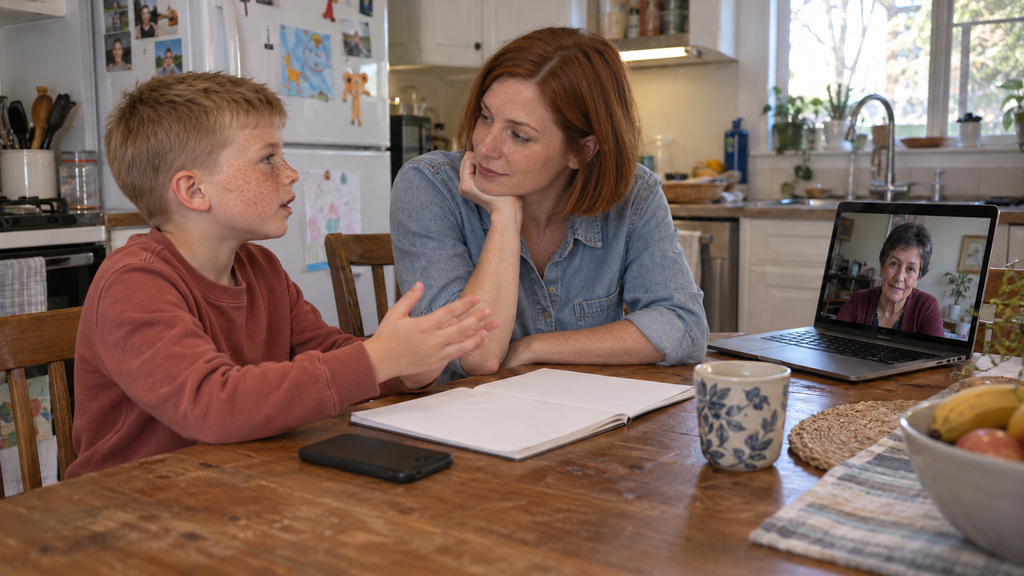
Then there’s a call from her daughter. You tell her about your answer to her grandson and talk about your own situation; you want him to reply to your letters in Russian, in two lines at most. For example, your daughter has a wish of her own. She wants her son to read the messages from relatives himself and not bring her a phone with the question «What does it say here?» She says the workload is quite heavy; besides the lesson on a weeknight, there’s only a quarter of an hour on Saturday, and her son won’t be able to stay up much longer.
The grandmother needs a letter, the mother needs reading. Both requests are put in the verb that the grandson said; to correspond means to write to his brother and read what he replied. The sentence for both of them then comes together almost by itself. «It’s important to us that he reads and writes short messages in Russian himself.».
The second sample

The letter to the school after that takes on a different form. Here is the second example of a letter, compiled from two conversations.
«The grandson wants to write to his brother in Russian. We would like to support this interest. What is the next step in reading or writing that would be suitable for him at his current level?»
The first letter began with the words «ask,» the second begins with the words «the grandson wants.» About that, What to ask the school about goals and feedback, We have discussed this separately.
It is easier to collect such a message in the card below, where each of the three has their own line.
Tonight. During a video call, ask your grandchild what they would like to do in Russian and record the answer as the child said it, even if it is «I don’t know».
Later. Call the child’s parent, tell them about the answer, state your wishes, find a common phrase and send a message in the usual way that families communicate with the school.
The recordings are stored in this browser.
Agreement

It would be better for the daughter to forward this article before calling.
Grandma remembers the saying «an agreement is more valuable than money» better than her grandchildren. Dal« wrote it in two versions, with and without an agreement, in the section about the conditions. »Agreement,« if you look closely, is similar to »lesson,« with the same prefix »u« and the word for what is said; only instead of the old »river« in it there is »agreement.” Next Wednesday, when asked about the Russian grandchild, he might answer not about the schedule, but about the letter that went to Kazan.
At Palme School, children aged 4 and up who are bilingual are taught conversational Russian online, for 40 minutes, at a time that suits the family and their time zone. After submitting an application with their family, a coordinator contacts them within 24 hours, and parents receive recommendations regarding the course schedule.
You can get acquainted with the school at two free lessons. First, the methodologist determines the child's level and helps choose a program; then the family meets the teacher at a free lesson. If the lessons are paid for by the grandmother, you can take the message from this article with you to the meeting with the methodologist.
Book a Free TrialFrequently asked questions about lessons that are paid for by Grandma
What to ask a grandchild instead of «how are the lessons going?»
The question about the subject, for example, «What would you like to do in Russian?» The child has to give an assessment on «how to do it?» and the subject question provides an answer that adults can work on. If the answer is «I don’t know,» the question can be repeated in a week.
How can a grandmother and a parent agree on the purpose of the classes?
First, let’s name our wishes, even if they are different. For a grandmother, the goal can be quite specific., to talk to your grandchild in Russian and understand it without translation. The parent knows how much time there is in a week for the Russian language. A deal is reached when one phrase is agreed upon, which both parties will sign, and the child’s own desire is included in it.
What should a parent write to a teacher if they want to understand why their child is taking the lessons?
One message containing the child's wishes, an agreed phrase from the adults, and a question about the next step at the current level. It is more convenient for the teacher to decide where to start, seeing the child in the classroom.
How is the old word «lesson» related to a school lesson?
By the meaning of the given task. In the Oezgov dictionary, «lesson» has an outdated meaning of «work assigned for completion within a certain period,» while «school assignment» means “homework assigned to a student at home.” In both cases, someone assigns the work, and someone must complete it by the deadline. Today, “lesson” is also used to refer to both a class period and the assignment itself.
Where is the proverb «an agreement is worth more than money» recorded?
In Vladimir Dal's «Proverbs of the Russian People,» it is presented in two variants: «The contract (agreement) is better (more valuable) than money,» in the section about conditions.