The families that have moved in have a special supermarket ritual. A person walks around in a row after row, finds rice from ten varieties, quinoa, couscous, bulgur, and a whole loaf of bread; but the only one he came for is not there. There are no buckwheat noodles. Then someone from his own group suggests that he should look for them in the kosher section, somewhere between the matzo and Shabbat candles; on the package it will say kasha, and it will cost about the same as at home.
That one scene says more about the confusion than any encyclopedia. Outside the former Soviet Union, grain exists, but it lives under other names and on other shelves. And the confusion began long before American supermarkets, because every nation gave the name to the grain itself, pointing a finger at its neighbor.
Cereals that no people have named their own

The Russian word grechitsa, and with it grechya and grechka, comes from the word Greek. Fassmer explains this simply: culture came to the Slavs through the Greek medium. Historians add that cultivation of grechitsa in these lands began around the seventh century, and it was first bred in monasteries, where Greek monks ruled. Hence the Greek grain and grechka, as was said in the Western provinces, for the same reason that in the Russian language there are still Greek nuts.
Next comes the funniest part. The French called the same culture blé sarrasin, the Saracen grain, because they got it from the south and attributed it to the Arabs. The Italians say grano saraceno exactly the same. In medieval Europe, there was the Latin frumentum turcicum, Turkish wheat. The Dutch and Germans saw the walnut kernels in the three-grain grain and coined the word boekweit and Buchweizen, from which the English word buckwheat came, which today is confusing to anyone who searches the web for grechka. And in Ukraine and the Volga region, buckwheat is still called tarashenka.
The picture takes on a comical tone. For centuries, half of Europe has been eating the same food and dutifully copying recipes from others: the Russians from the Greeks, the French from the Saracens, the Ukrainians from the Volga Tatars, the Germans from the trees. No one has ever named it by its own name. The real homeland of grechka lies far from all of the above, in the foothills of the Himalayas and in the south of China, from where it has been traveling west for centuries, changing passports at every border. It seems that everyone honestly named it after the people from whom they received it, and in the end, the name of the grub had more names than that of any other European monarch.
Why millet has nothing to do with grains

Those who are accustomed to considering millet as a grain will have to adjust. Botanically, it stands apart from wheat, rye, and oats because it belongs to the millet family and is more closely related to millet, turnips, and sorrel. What ends up in the pot is considered a fruit, a small three-pointed nut. Such crops are called pseudocereal grains, and they are also grouped together with quinoa and amaranth.
Botanical kinship has a very practical consequence. There is no gluten in chickpeas at all, and for a family where someone avoids it, it turns out to be a real lifesaver, because it solves two problems at once: the garnish and the flour for the pancakes.
The buckwheat grows quickly, in just two and a half months; it is not afraid of poor soil and suppresses weeds better than conventional weeding, for which farmers are happy to sow it as a substitute for chemical herbicides. It blooms with a white-pink cloud that buzzes with bees, and produces the very buckwheat honey, dark and thick, with a hint of spice that cannot be confused with any other. The plant, which has its own honey, its own flour, and its own porridge, deserves respect for its hard work alone.
In the field it is green, but turns brown later.
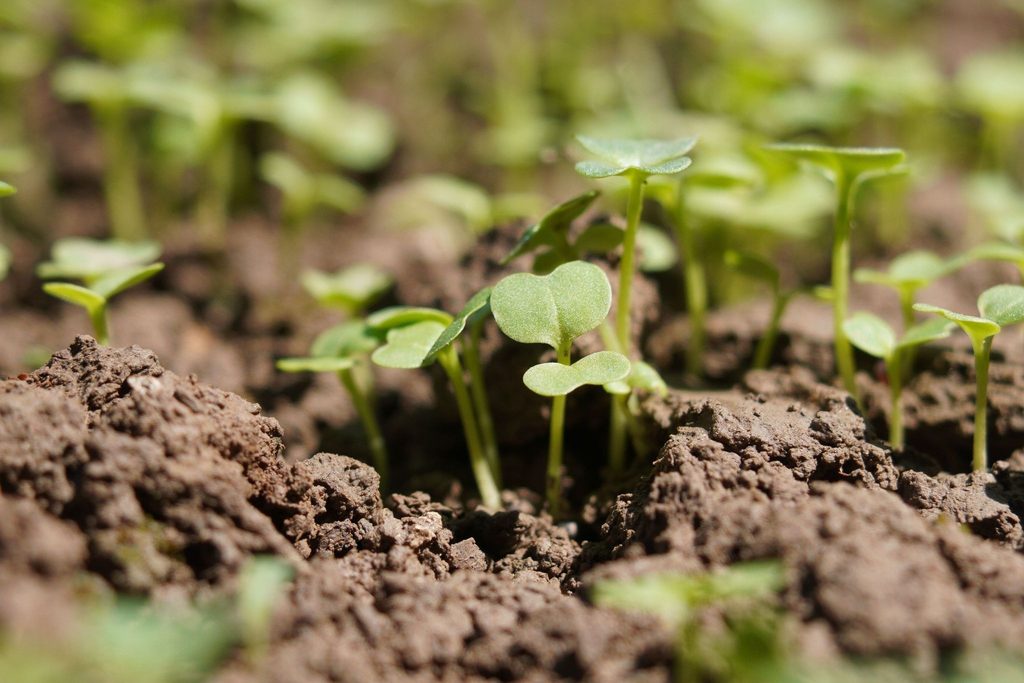
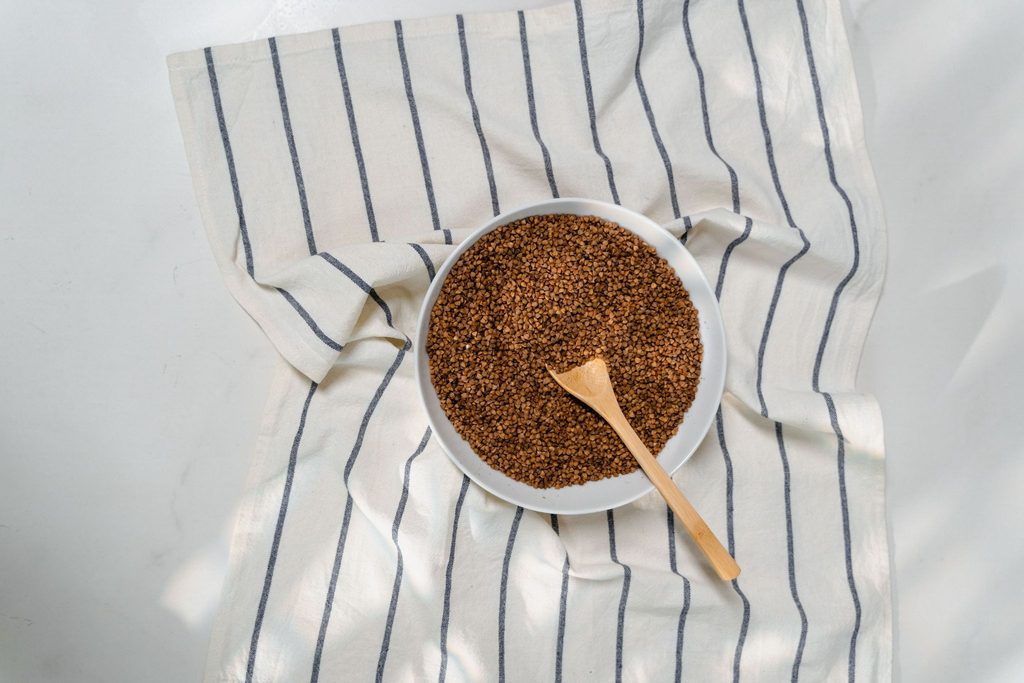
Now the most unexpected thing. The brown color of millet, its nutty aroma and crumbly texture are not inherent in nature. All of this is a result of processing. The grain is steamed and roasted, and only after that it turns into what you find in the familiar package. Raw, unprocessed millet is pale green, soft, and smells of grass.
Roasting and steaming were introduced in Soviet times, and the standard for such a product appeared as early as 1974. The reasons were the most prosaic. Roasted kernels are stronger, last longer, are easier to handle on the road, and do not spread when cooked. Green buckwheat has not disappeared anywhere in recent years and has returned to shelves as a product for those who want to grow it or boil it for a few minutes. It tastes noticeably softer and more herbal, so a person who grew up on roasted products initially suspects a substitution.
At the same time, it’s worth looking into the labels on the packages, because there are various ingredients hidden behind them. The whole kernel is called yadritsy, from which the fluffy semolina comes out. The endosperm, also called the germ, is made from the ground grain and is suitable for a soft, sticky porridge that is cooked for small children. Smolenskian grain is fine to almost the size of flour. The flakes are prepared instantly. And the buckwheat flour is used in blini and noodles, and we’ll talk about that later.
How to boil semolina and not get lumps
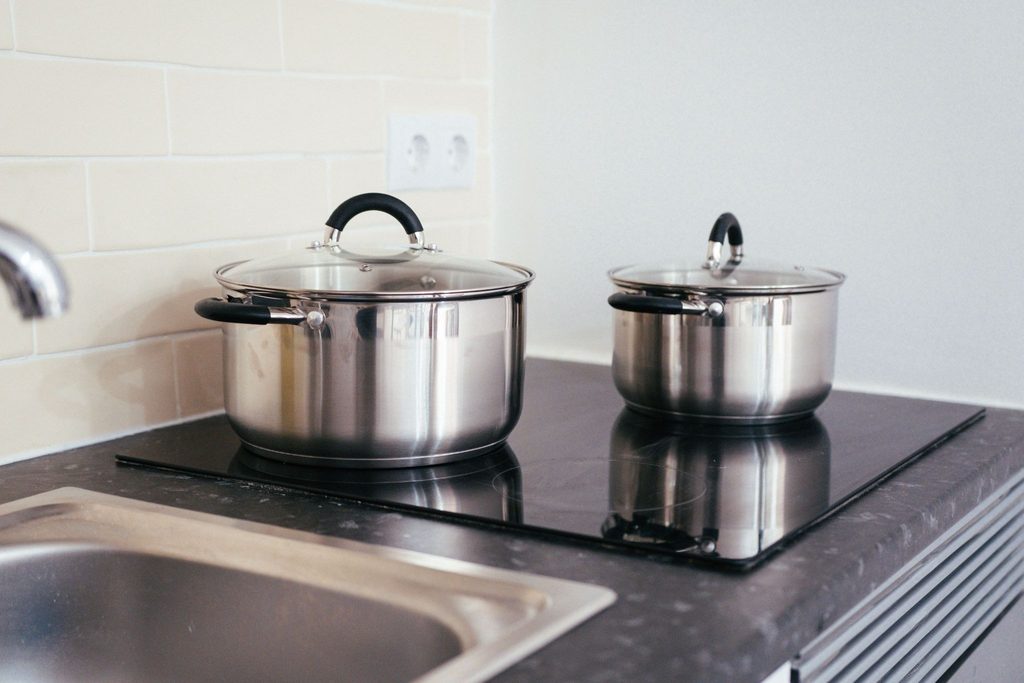
The whole recipe follows one ratio and one restriction. The ratio is as follows: one cup of cereal for two cups of water, and no guesswork. The restriction is even simpler. You cannot mix the cereal.
The millet is sorted and washed, and if you want a stronger flavor, you can roast it for a few minutes on a dry pan until the aroma of the nuts fills the kitchen. Next, pour in cold water, season with salt, bring to a boil, reduce the heat to the lowest level, and cover the pan. Fifteen minutes, maximum twenty, and during this time, it’s best not to lift the lid or lower the spoon into the pot. Every stir breaks the kernels and transforms the millet into a sticky mass, and that’s the main difference between millet and risotto, which, on the contrary, prefers a spoon.
When the water has evaporated, the pot is removed from the heat, a piece of butter is added, a towel is placed over it, and it is left for about ten minutes. This step is called «upret», and it is more important than the actual boiling itself, because the grain absorbs its own steam, swells and becomes crumbly, grain by grain.
There is also a lazy way, familiar to every student. The buckwheat is put in a jar or thermos, poured with boiling water in the same proportion, covered and go to bed. By morning, the porridge is ready; the stove was not even needed, and such steamed porridge is often used by those who keep an eye on their diet and do not want to add too much oil.
What do they do with it when it gets boring—just a garnish?
Most people’s earliest experience of buckwheat tastes like milk. They pour milk over the hot porridge, add oil and a pinch of sugar, and what results is a breakfast that adults later remember with a suspicious tenderness. The children, meanwhile, divide into two camps, and no grandmother has ever managed to reconcile them.
The adult version is called kupechsky grechka. The meat is roasted with onions and carrots, topped with breadcrumbs, and then poured with water and simmered under a lid until everything is thoroughly absorbed. The camping version of the same is made with stew, and the smell alone is enough to make anyone who has ever spent a night in a tent gagging. The fasting dish is made from fried onions and mushrooms, and the result is a dish that can easily be prepared without meat.
The transformations get more serious from here on out. From the mash mixed with boiled millet, they make grishankas, meatballs, and incredibly filling dishes. From the millet flour they bake blini, dark ones with a sourness that makes them the very same red blini that were considered the main ones on Lent long before the wheat ones. And the most beloved combination is based on two cheap ingredients: fried onion and boiled egg, thrown into the hot millet. There is no need to be wise about the words "buckwheat porridge Russia", and that usually leaves people disappointed.
Why dietitians praise buckwheat
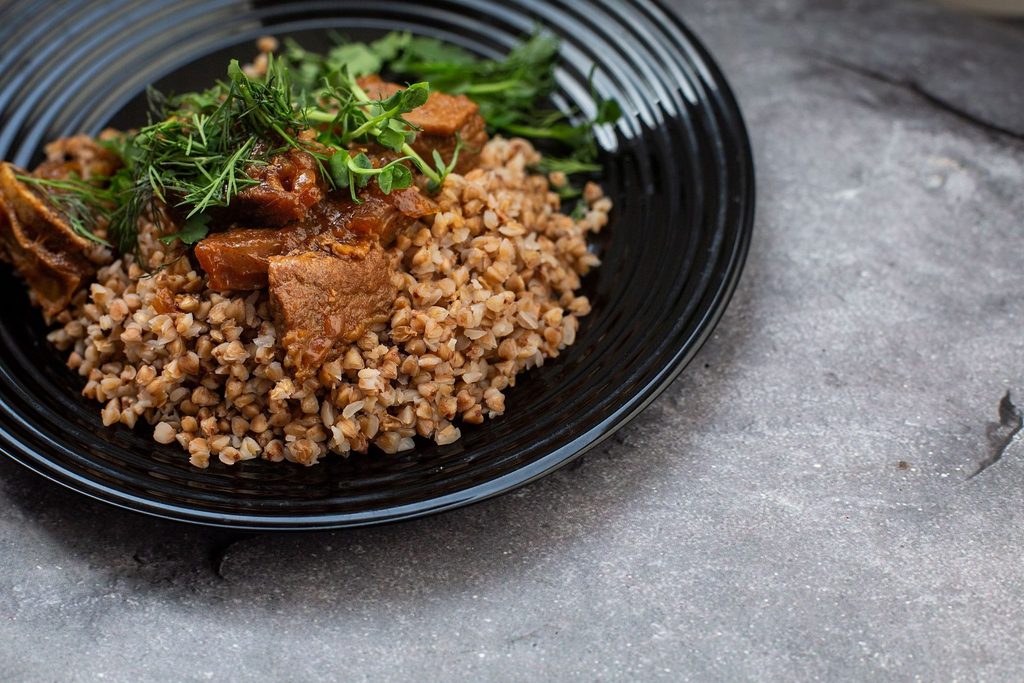
Myths surrounding buckwheat have been expanded into a separate article; it doesn’t really treat anything. They praise it for something else. There’s a lot of plant protein in it, and the amino acid profile is complete, including lysine, which grains usually lack. There’s iron, magnesium, copper, manganese, plenty of fiber and rutin, a flavonoid that makes buckwheat valuable in pharmacology as well. The glycemic index is moderate, so the satiety lasts longer than with white rice. There’s no gluten at all.
All this, however, explains only half of the story. The peasants who planted the poor land with millet did not suspect the lease and took it because it grew where nothing else grew. Science confirmed in retrospect what the country had come to from poverty, and in this lay the millet’s main advantage.
The durum wheat index and the habit of stockpiling

But then comes the pure sociology. In Russia, buckwheat has long ceased to be just a fad and has become a barometer of public anxiety. The moment bad news appears, the shelves with it are the first to empty; before that, it was sugar, salt, and matches.
The first major panic occurred in the summer of 2010, after a drought and a bad harvest. A kilogram rose from twenty-seven rubles to sixty-eight, and the grain disappeared from the stores; the only way to calm the population was at the level of the head of state. In the fourteenth year, everything repeated itself; the reason was rumors of a bad harvest in Altai, where most of the Russian buckwheat is grown. In March of the twentieth, when the rest of the world was buying toilet paper, Russian carts were filled with buckwheat. Economists even coined a semi-jokey term: the «buckwheat index,» according to which the level of anxiety in the country is more reliable than other surveys.
Psychologists explain this calmly. When a person cannot influence what is happening, he needs to do something, and a bag of grain brings a sense of control back. The choice falls on millet because it is filling, can be stored for years, and requires neither refrigeration nor culinary skill.
There are also material reasons for the habit. Russia harvests the most millet in the world, by various estimates from forty percent to half of the global harvest, while only a few dozen countries grow this crop. For the rest of the world, the very idea of millet shortage would sound like a mystery, because the shortage is not noticeable where the product is not considered a staple of the diet.
Dog, bagels, and kosher shelf in the supermarket
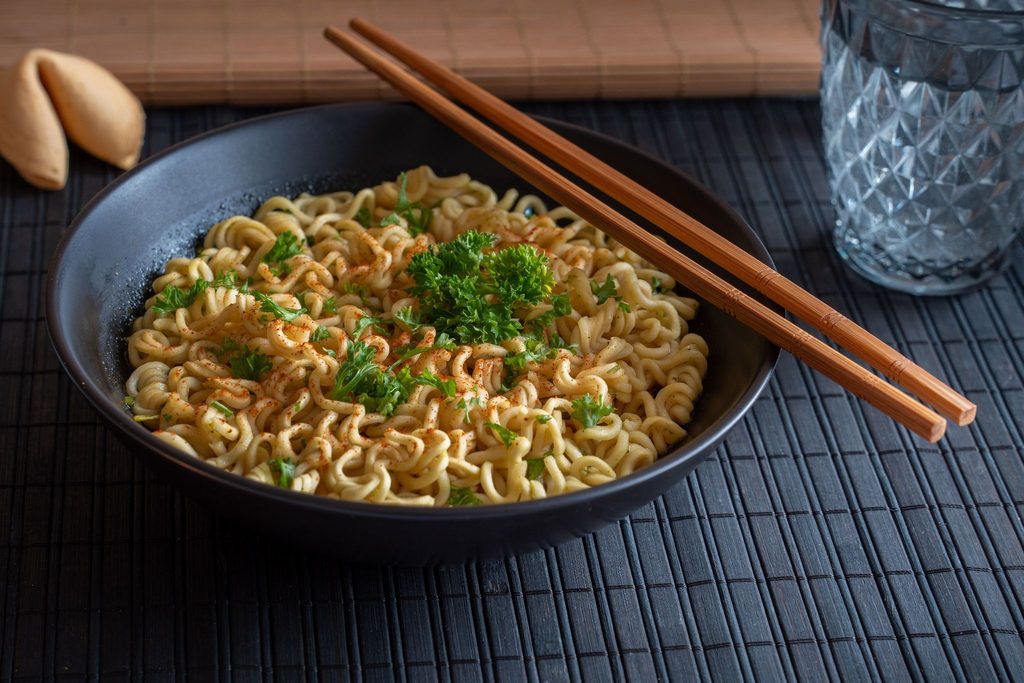
Outside the former Union, millet is eaten, and quite a lot of it; the rest of the world just keeps grinding it up. The Japanese make noodles from this flour, the Bretons bake dark salty bagels, and in Lombardy they make pizza croquettes, gray strips of pasta with potatoes and cheese. Almost exclusively in the former Union, millet is cooked whole, and that is the real thing. The peculiarity of the Russian table, Which is more tangible than talk about the mysterious soul.
The only major exception is the American one. Eastern European Jews brought the same porridge and the same word to the United States, and in English kasha It means exactly fried buckwheat, that very Russian buckwheat. The classic of this cuisine is called kasha varnishkes, buckwheat with fried onions and paprikapuffies, and it is served in a decent New York delicatessen. The Wolff’s brand, familiar to American housewives from the last century, still stands on the shelves, and the mill where this buckwheat is ground has been operating in upstate New York since the late eighteenth century.
This is a practical conclusion for parents overseas, and it boils down to one word. The kasha inscription means roasted grain, exactly the kind you need. The buckwheat groats inscription without the word roasted promises a green product, and the porridge made from it will be unusual. The next question is which department to go to, and the answer is simple: the grain is usually available in several places at one store. And the Russian store has not been abandoned; there the grain is cheaper and sold in bags, just in case anxiety suddenly reminds itself on a new continent.
Where to buy millet in the USA and Canada
Sprouts are found in almost every large supermarket; they are just called something else and are not sold where you would look for them. First we look at the label on the package, then at the department.
How to read the package
U.S.
Canada
Gricea or buckwheat
Let’s start with the trap that even native speakers stumble over. Moscow says “griche”, St. Petersburg stubbornly says “griche”, and this pair stands in the same row as the curb and the curbstone, the entrance and the front entrance, shawarma and shawarma. Both forms are in the dictionaries, although in those places griche is usually marked as conversational and St. Petersburgian; the dispute over this has not become shorter, and the brawls over it are much hotter than around the main dish itself.
Next comes a trio of cognate words that it’s useful to group together. Grechoy is the name of the plant, and grechka is the name of the grain itself, and they have two different adjectives; they are not interchangeable. The porridge is called grechoy, and the honey is called grechishny. People keep confusing them, and this is a great question to ask a child who thinks they already know Russian.
What a mess has been made of the Russian language
The porridge has gotten so deep into the tongue that it comes out in the most unexpected places. «To brew porridge» means undertaking a troublesome task; «to rinse porridge» means dealing with the consequences; «he can’t cook porridge» refers to a person you can’t count on, while «he ate little porridge» is something anyone who lacks the energy to do it will hear. It’s worth mentioning separately a proverb «Porridge praises itself,» that is, a good thing in advertising doesn’t need advertising. Linguist Lev Uspensky noticed in this regard that every nation named the country from which it got its grain, and remembered just that proverb.
For a child growing up in America, there’s something more significant than a dictionary at play here. Chickpeas in his life seem like a strange domestic food that no one in his classmates has ever eaten. And if they’re in the kosher section of the nearest supermarket, they’ve been there for more than a hundred years under the same word kasha, brought here by the grandparents long before the current families arrived. This strange kind of chickpea was just like that until it was discovered that it had been here for a long time.
The whole history of millet is essentially about this. The grain, which every people named after a neighbor, managed to become a household staple in several countries and didn’t lose any of its popularity in any of them. The Russian people hold on to it not in their passports, but in a pot under a towel, in fried onions and in the eternal debate about whether it’s millet or millet. All of this migrates with the people and feels at home overseas as long as it’s spoken about out loud.
We pick up these little things in class because that’s how a living language is formed. We teach children from four to seventeen years old, and you can see if it’s suitable for your child by trying it out. two free lessons. The first one is with a tutor who will determine the level and explain the program. The second is a real lesson in a group with a teacher and other children.
Frequently Asked Questions
Why is buckwheat called buckwheat?
The name comes from the Greek word. It is believed that the culture reached the Slavs through Greek intermediaries, and it was first cultivated by monks in monasteries; hence the Greek grain and later buckwheat. It is interesting that almost every nation named this grain after a foreign one. The French call it Saracin grain, the Germans Bucha wheat, and the Ukrainians and residents of the Volga region call it Tatarka.
Is millet a cereal?
No. Barley belongs to the genus Hordeum and is closely related to turnips and rhubarb; wheat and oats are not related to it. Its fruit is a three-lobed nut, so it is considered a pseudo-grain, along with quinoa and amaranth. The practical consequence is simple: there is no gluten in barley.
How to cook semolina porridge?
One cup of cereal for two cups of water. Wash, pour in cold water, season with salt, bring to a boil, reduce the heat to a minimum and cover with a lid for fifteen or twenty minutes. Do not stir; otherwise the kernels will break and the porridge will become sticky. Remove from the heat, add the oil, cover with a towel and let stand for another ten minutes.
How is green buckwheat different from brown buckwheat?
Only processing. Raw green buckwheat is its natural color and flavor. Brown grain becomes brown after steaming and roasting, which gives it an nutty flavor, a crumbly texture, and a long shelf life. Green buckwheat is often sprouted or steamed, while brown is boiled as a traditional side dish.
How long does buckwheat remain stored?
Longer than is commonly thought, and that is why they take it by the handful. Manufacturers usually put on the sealed kernels about twenty months, on the parched ones a little less, on the green chickpeas noticeably less, because the unroasted grain rots faster. After opening the package, the count is already in months, so it is better to put the cereal in a jar with a lid and keep it away from the stove and from the light. A musty or rancid smell and bitterness when boiling mean that the porridge has gone bad.