In March 1921 in Moscow, at a meeting of his own party, a man announced to the delegates that it was once again possible to trade. That the peasant henceforth paid a fixed tax to the state, and the rest was free to sell. That small businesses would return to private ownership, and hiring workers would no longer be a crime.
Four-and-a-half centuries before that day, the same person was proving exactly the opposite.
People who fought for this very trade ban for three years and buried their comrades were sitting in the hall. Some left the congress with the feeling that everything had been in vain. It is easiest to understand how this came about by looking at this man from the very beginning.
A boy from Simbirsk, who was doing well in all aspects of his life
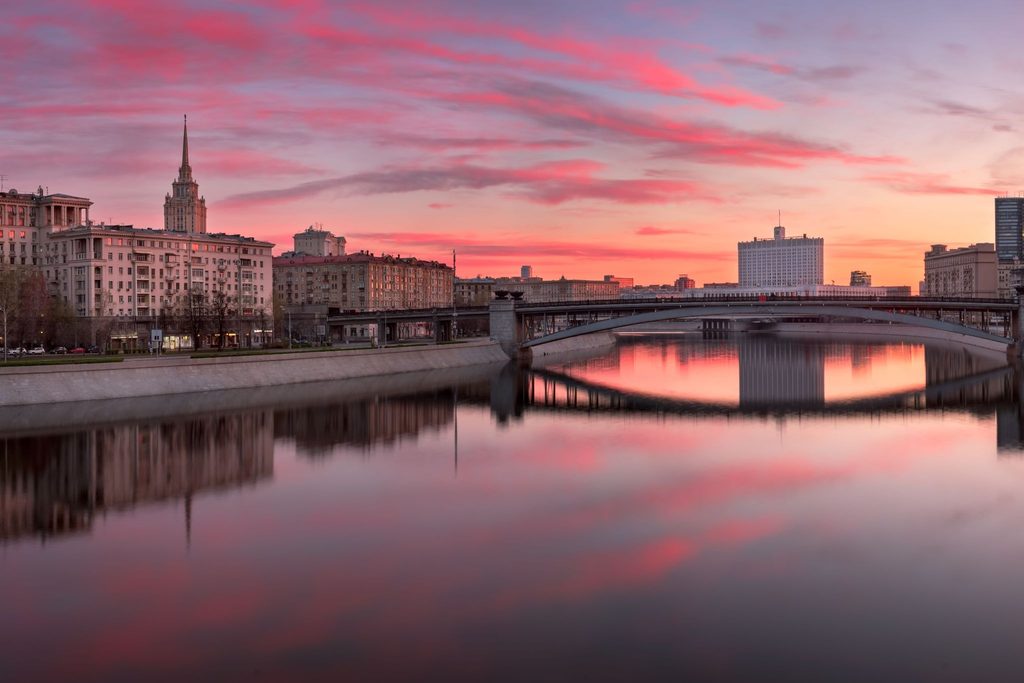
Vladimir Ulyanov was born in April 1870 in Simbirsk on the Volga, and his biography began in a rather boring way. His father, Ilya Nikolaevich, served as an inspector and then as director of the provincial public schools, opening schools, reaching the rank of a nobleman. The house was large and bookish, with music in the evenings. Six children, a governess, summer trips to his mother's estate.
He graduated from the gymnasium with a gold medal. The director of this gymnasium was Fyodor Kerensky, whose son Alexander would lead the Provisional Government thirty years later, which Ulyanov would overthrow. Two natives of the same Volga town, and one would eventually take power from the other.
Kereninsky wrote the most flattering description of the release when he noted only the graduate’s excessive introversion. By that time, the family had little else to be introverted about.
The execution of a brother and the erased future
Three months before the publication in St. Petersburg, the senior brother, Alexander, was arrested. The student-biologist, who had great hopes, was a member of a circle that was preparing an attempt on the life of Emperor Alexander III. The conspiracy was exposed before the case went to trial; the participants were sentenced; Alexander Ulyanov was hanged in Shlisselburg in May 1887. He was twenty-one years old.
That year, the family became a family of a state criminal. People they knew stopped greeting them.
In the autumn, Vladimir entered Kazan University and left there three months later for participating in a student gathering. He was not accepted back: his surname closed the door. He eventually received a law degree, but in a strange way, by passing the final exams for the entire course at the St. Petersburg University in 1891, and doing so brilliantly. He worked as an assistant to a bailiff, handling minor cases and almost immediately giving them up.
The debate over whether the brother’s execution was decided on personal motives continues to this day. Some historians see it as a personal motive for the rest of his life, while others argue that Ulyanov’s path was determined by books and the era, not by revenge. One thing is certain: after 1887, the prosperous path came to an end, and another one remained open.
The reference, the pseudonym, and seventeen years of living in other cities
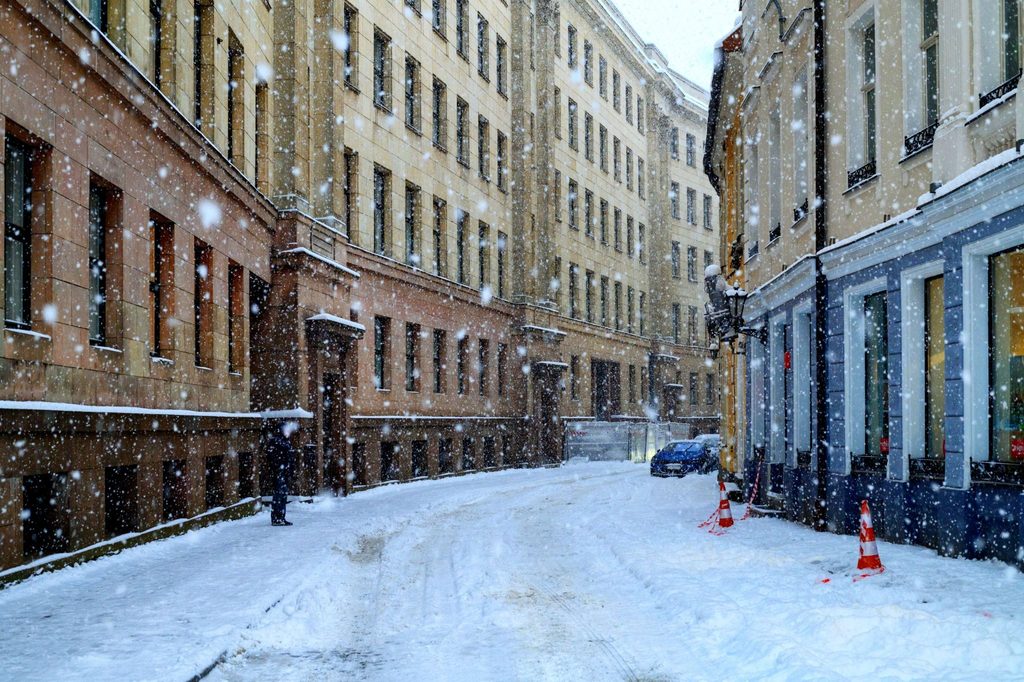
By the mid-nineteen-thirties, he was already leading Marxist circles among the workers of St. Petersburg, for which he was arrested, and then sent to a penal colony in the village of Shušenskoye, Siberia. The link is considered tame by today’s standards: hunting, skating, correspondence, and work on a book. Nadezhda Krupskaya also came there, and in 1898 they got married, because they were not allowed to live together otherwise.
After the exile began, the emigration extended over seventeen years with breaks. Munich, London, Geneva, Paris, Krakow, Zurich. Rent rooms, libraries, endless arguments in cheap cafes. From there, the newspaper «Iskra» was published illegally in Russia, and that’s where the pseudonym appeared. There were more than a hundred signatures in his lifetime, but this one remained. According to one version, it refers to the Siberian river Lena, although there is no reliable evidence for this hypothesis.
The main event of those years occurred at the party congress in 1903, and it looked like a dispute over the wording in the constitution. They argued about who was considered a member of the party, whether only sympathizers or only those who worked personally in the organization. Ulyanin insisted on the second option, a narrow, disciplined party organized like a headquarters, and in this point he lost. But at the elections for central bodies, when some of the delegates had already left the congress, the majority sided with him, and this overwhelming majority resulted in two words: Bolsheviks and Mensheviks, who were about to part ways forever.
Lenin's life by dates
April seventeenth and the theses that were not expected
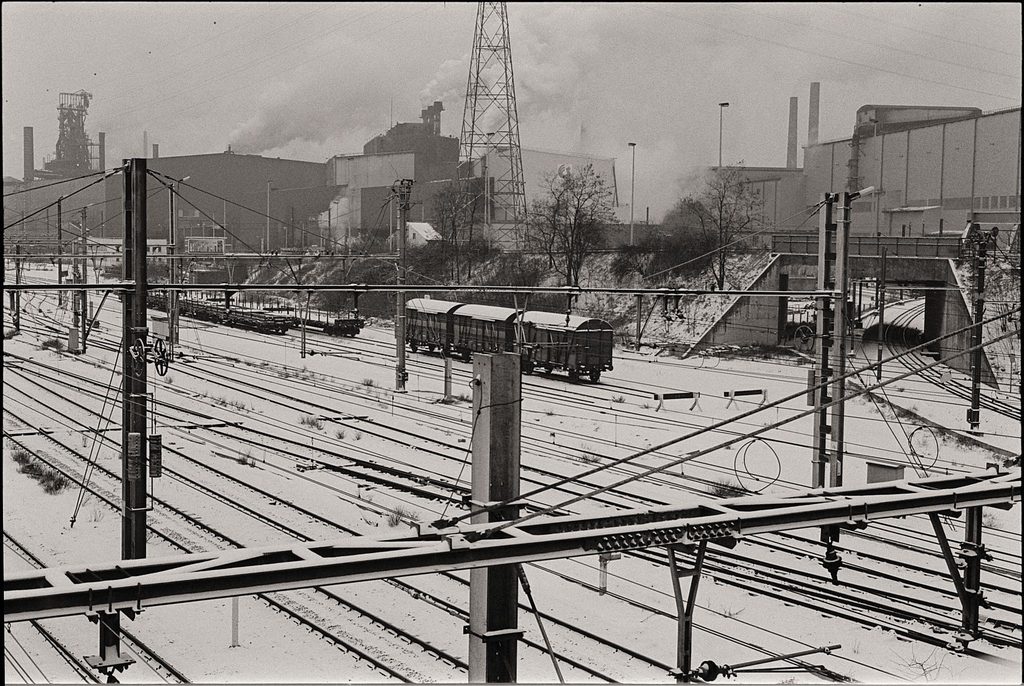
He encountered the February Revolution in Zurich and learned about it from the newspapers. His own country fell apart without him.
He had to return through the territory of the belligerent Germany, in a sealed carriage, about which his opponents would remind him for the rest of his life, accusing him of working for the enemy. The German side really hoped that the radical politician would disrupt the Russian front, and it did not hide this. This coincidence of interests gave rise to the accusation, which no one was able to fully prove, and it was also not possible to completely remove it.
At the Finnish railway station in Petrograd, he was greeted as a returning hero, with an orchestra. A day later, he presented his program, which astonished his own comrades first and foremost. Everyone was convinced that after the fall of the tsar, a long period of ordinary parliamentary politics lay ahead. He, however, declared that there was nothing to wait for; the power had to be taken from the Councils, the war had to be stopped immediately, and the land had to be given to the peasants now. His comrades decided that he had lost touch with reality during his years of exile.
Six months later, this program became a state program. How exactly did this happen, what happened between the two revolutions, and what did October turn into, we have explained in our article. a separate article about 1917, We won’t repeat it here.
The world at any cost
The first serious decision of the new government turned out to be its first split.
The promise of immediate peace had to be fulfilled, and the terms Germany set were devastating: Poland, the Baltic states, Finland, and Ukraine were slipping out of control; with them went a huge portion of the population, the fields, coal, and iron. The party took a stand. Some demanded a revolutionary war to the last. Trotsky proposed a third way: not to wage war, not to sign a peace treaty, and tried to do just that; after which the Germans simply moved forward and occupied even more territory.
Lenin insisted on signing, repeating that power was more important than territory and that a respite was needed at all costs. He threatened to resign, and in March 1918 the treaty was signed in Brest-Litovsk on even worse terms than the original ones. However, his calculation proved to be more rapid than could be expected. In the autumn of the same year, Germany lost the world war to its Western opponents, and the Soviet side declared the Brest Peace invalid. The territories were not returned all at once.
The letters that were canceled
One of the decisions from those same months directly concerns everyone who reads in Russian today.
In the autumn of 1918, the new government introduced the spelling without i, f, and decimal i, and the solid sign at the end of words disappeared. The Russian text suddenly looked like it does now, and everything printed before that became a relic of the old world.
Contrary to popular belief, it was not the Bolsheviks who came up with this reform. The Academy of Sciences had been working on it since the beginning of the century; the project was ready long before the revolution and lay dormant because no one dared to touch the conventional spelling. The new regime simply took the finished product and implemented it by decree, without asking anyone for approval. The method was crude; letters were removed from the printing presses, and the spelling that was then introduced persists to this day.
Next to it stood something even more massive. By the end of 1919, compulsory literacy training was declared mandatory for everyone from eight to fifty years old, and the campaign was dubbed the Likbez, from the words liquidation of illiteracy. In a country where the literate minority is small, tens of millions were taught to read in a year and a half. There is debate about the numbers and the quality of that literacy, but even opponents acknowledge the shift itself.
The shooting at the factory and what happened afterwards
At the end of August 1918, after a performance at the Michelson factory in Moscow, he was shot. The woman who fired the shots was named Fanny Kaplan, an ésserque who was almost blind after serving a prison sentence; she was shot without trial a few days later; the circumstances of the case are still disputed by historians. He received two bullets; none of them could be retrieved at the time.
A week after the attempted coup, the authorities officially declared a state of red terror, and this became state policy: hostage taking, executions based on class and origin, camps. This is where the border runs, beyond which assessments diverge irreversibly. For some, this was a forced defense of power surrounded by enemies in the midst of a civil war. For others, the conscious transition to mass violence as a means of working the system was the fault of the individual who signed the orders.
An enterprise that has ceased operations
While the Civil War was raging, the country lived by a system later called military communism. It was simply organized. Private trade was prohibited, factories were nationalized, money was devalued to the point of being meaningless, and peasants’ bread was taken away in increments, that is, the surplus was taken away by force, leaving only the minimum.
For the war, that worked. The army was fed, and the cities were supplied to a certain extent.
Then the war ended, and it became clear that the system was no longer moving forward. The peasant, who would still be taken away anyway, stopped sowing extra crops, and the areas sown shrank. By 1921, a drought added to this, and the Volga region was engulfed by famine, which claimed millions of lives. Peasants’ uprisings broke out, the largest in the Tambov Governorate. And in March 1921, Kronstadt rose up; this was the most terrible of all because sailors rose up, the very people who had led this power to victory, and demanded Soviets without the Bolsheviks.
Cancellation of one's own program
Kronstadt was crushed by force. And almost in the same days, at the party congress, Lenin proposed to abolish exactly what Kronstadt had rebelled against.
The distribution system was replaced by a food tax. I paid what was due, and I manage the rest myself, right down to selling it in the market. We allowed small private trade and small businesses, we returned to wage labor, we allowed foreign concessions, we carried out monetary reform, and we obtained a solid ruble. All of this was called the new economic policy, abbreviated NEP.
On the outside, it looked like a capitulation, and that’s what they kept saying within the party. The people, who had been shooting up for speculation for three years, watched as the shops opened. He himself replied that the retreat was made deliberately, that this policy, in his words, was «serious and for the long term,» and that the power remained in the same hands, while the concession only concerned the economy.
The result came quickly. In a few years, the country emerged from the ruins; the cities were exhausted, the villages were suffocated. And immediately a rift appeared: the wealthy merchants, nicknamed the nampami and whom official propaganda ridiculed exactly in the years when they fed the country. No one resolved this contradiction, and the NEP was ended without it by the end of the 1920s.
What changed with him?
Orthography
The y, phi, and decimal i were removed from Russian writing, and the hard sign was no longer used at the end of words. The project was prepared by the Academy of Sciences even before the revolution; the new government implemented it through a decree.
Lecture
Literacy training has been declared mandatory for everyone from eight to fifty years old. In a country where a minority can barely read, tens of millions have learned to read in the last year and a half.
Church
Separated from the state in early 1918. In 1922, under the slogan of helping the Volga region in famine, the seizure of church valuables began, which resulted in the resistance of parishes and court proceedings.
Military communism
Private trade was banned, factories were taken over by the state, bread was taken from peasants at harvest time. While the Civil War was ongoing, the army and cities were supplied with food. After the end of the war, the harvests decreased, and the country entered a period of famine and peasant rebellions.
NEP
The distribution system was replaced by taxation, the trade in surplus goods was allowed, small businesses and wage labor were introduced, and monetary reform was implemented. The country emerged from the ruins in a few years.
The Union Device
Stalin proposed including the republics in Russia as autonomous regions. Lenin insisted on a union of formally equal republics with the right to leave, and in December 1922 this was formalized as the USSR.
A ship for those who disagree
The concession in the farm did not mean a concession in other respects; this was demonstrated clearly in the autumn of 1922.
About two hundred people were expelled from the country: philosophers, historians, economists, and engineers, among them Berdyaev, Frank, Losovsky, and Ilyin. Some of them left by sea from Petrograd; because of this, the entire story became a philosophical ferryboat that entered into memory as a symbol of philosophy. They left forever, with the threat of being shot if they returned, and took with them the part of Russian thought that subsequently worked in Paris, Prague, and Berlin for twenty years. The logic of the decision was expressed explicitly: these people are dangerous not by their actions but by their influence.
At that time, the authorities took the church seriously. It was separated from the state as early as 1918, and in 1922, under the slogan of helping the starving Volga region, the seizure of church property began, which resulted in the resistance of parishes, court trials, and the execution of priests.
Two years in Gorky
The bullet that remained in his body was not the cause of the illness; although this version is plausible. In the spring of 1922, the first stroke occurred, which left him speechless and with paralysis on the right side of his body. He recovered and returned to work; then the stroke occurred again, and then again, and by the spring of 1923, the man who had written dozens of volumes could not form a sentence.
Between the attacks, he dictated. These final texts, known as the «Letter to the Congress,» are striking, considering that they were written by a man who was convinced of his own rightness all his life. They are filled with anxiety. He lists his comrades, noting each one's weakness, warns of a split, and separately advises considering moving Stalin from the position of general secretary, finding that he has concentrated too much power in his hands and is too harsh.
At that time, in late 1922, there was a dispute over how to reunite the lands that had been scattered during the war. Stalin proposed a simple solution: to incorporate the republics into Russia as autonomous regions. Lenin insisted on the opposite, on a union of formally equal republics with the right to leave, and in December 1922 the Soviet Union was formed in this way. The dispute over this decision still continues today, because seventy years later the country has split along the republican borders.
The letter was read at the congress after his death, and it didn’t change anything. What happened next and how this struggle for the inheritance ended is told in our book An article about Stalin and his era.
He died in Gorky, near Moscow, in January 1924, at the age of fifty-three.
The body that was not buried
What followed was something he had not asked for himself and, judging by the testimony of his close friends, did not want.
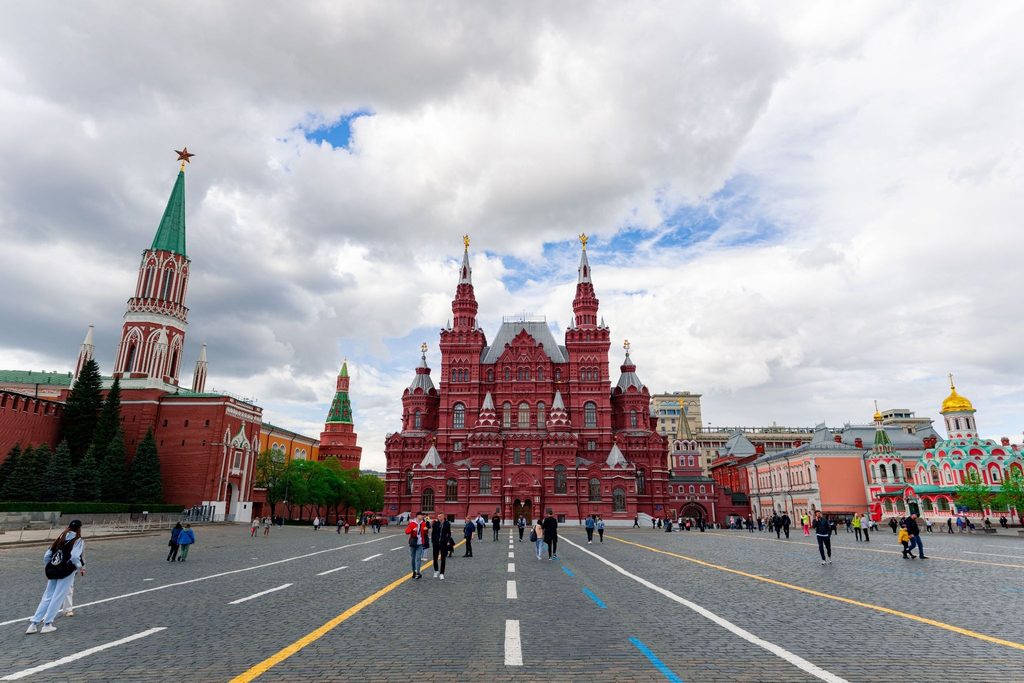
The body was displayed for public viewing, then decided to keep it. Scientists Vladimir Vorobiev and Boris Zbarsky developed a method of embalming, and from the spring of 1924 the body became the subject of a permanent care that continues to this day. A wooden mausoleum was erected over it, then a second one, and in 1930 a granite mausoleum that stands on Red Square today.
Petrograd was renamed Leningrad a few days after his death. From then on, the name spread across the country like wildfire: cities, streets, factories, collective farms, Octoberfests with child portraits. A cult was born, modeled after the veneration of saints, even though he himself was a militant atheist, and this contradiction was immediately apparent to contemporaries.
The debate about what to do with the body has been going on in Russia for decades and flares up regularly. Some believe that it should finally be buried humanely, next to his mother in St. Petersburg, as he allegedly wanted. Others argue that the mausoleum has long become part of the historical ensemble of the square and a monument to its era, and to touch it means fighting with the past. There is no solution.
Home
Vladimir Ulyanov was born into a prosperous family of Volga officials, and the fate of his life was changed by the execution of his older brother; after that, a normal career was no longer possible. Seventeen years of emigration and the split of the party in 1903 created the organization that took power in the autumn of 1917. Next came the Brest Peace, signed in an attempt to find respite; the Red Terror, declared after the assassination attempt; and military communism, which won the war and failed the peace. In 1921, he launched his own policy in the opposite direction and allowed trade, calling this retreat a serious and lasting step. The last two years were spent in illness and in an unsuccessful attempt to influence who would come next. He died in January 1924, and his body has not yet been buried, and the dispute about it continues, as it does about him personally.
How to talk about it with a child abroad
A child growing up in America or Canada will inevitably encounter this name, most often in a foreign context. In a school textbook, where Lenin usually occupies three lines between the First World War and Stalin. On the internet, where it is both a meme and a symbol. In a family where grandparents may hold diametrically opposite opinions and not hesitate to express them.
No one has a ready-made answer here, and pretending that there is one is not worth it. It’s better to show that the same person could have led the country through a trade embargo and its return over several years, and that the assessments of his actions differ, and that this is because people respond differently to the question of what can be paid for a reconstruction of life. The ability to keep both sides in mind and not cling to a label will be useful far beyond this topic.
At Palme School. History they teach exactly that, calmly and without ready-made judgments, along with language and reading, because understanding where a person comes from is also part of the language. We teach online and in small groups; the students are aged from four to seventeen. The programs are divided: one for children who hear Russian speech at home every day, and one for those who have the language as a foreign language. You can start getting to know the school by two free lessons. The first one is led by a methodologist; he assesses the level and selects a group. The second one is just a regular activity, with a teacher and other children.
Frequently Asked Questions
Who is Lenin in simple terms?
According to his passport, Vladimir Ulyanov’s Lenin is his party pseudonym. He organized and led the Bolsheviks who took power in Russia in the autumn of 1917, after which he became the head of the new government. He worked until 1922, when he fell ill. In the ruins of the Russian Empire, a state began to take shape under his leadership, which was given the name Soviet Union at the end of 1922.
Why did Ulyana become Lenin?
The underground work required constant changes of names to make it harder for the police to link the articles, letters, and the actual person. He had over a hundred of these over his lifetime, and one of them stuck, appearing at the very beginning of the century. It’s not exactly known where it came from; most often, they call the Siberian river Lena, but there’s no evidence to support this speculation.
What is NEP and why was it needed?
That is how the new economic policy, announced in 1921, is abbreviated. Instead of forcibly confiscating bread, the peasants were assigned a tax, and they were allowed to trade the remaining surplus; small businesses returned to private ownership, hiring workers was again possible, and the price of goods was restored. This turn was necessary because the previous system had led the village to starvation and the country to uprisings.
What is the Brest Peace?
The peace treaty with Germany, concluded in March 1918, by which Russia withdrew from the First World War by ceding vast territories to the West. The decision caused a split in the party, and Lenin led it, threatening to resign. Eight months later, Germany lost the war to the Western Allies, after which the treaty was declared null and void.
Why did Lenin die?
The cause was a severe disease of the blood vessels of the brain. The first stroke hit him in the spring of 1922; later, he suffered further strokes that took away his speech and mobility; in January 1924, he died in Gorky near Moscow, having lived fifty-three years. The bullet that lodged in his body after the 1918 assassination attempt is often cited as the cause; there is no medical confirmation of this version.
What is written in the «Letter to the Congress»?
These are notes dictated in the year 1922 and 1923. In them he warns the party about the risk of a split, dissects the strengths and weaknesses of his closest associates, and advises considering removing Stalin from his position as general secretary, claiming that he is too rough and has concentrated too much power. The letter was published after his death, and it had no impact on the course of events.
Why is Lenin's body in the mausoleum?
The decision to preserve the body was made immediately after the death; in the spring of 1924, scientists Vladimir Vorobiev and Boris Zbarsky developed a method for embalming. Initially, a wooden mausoleum stood over the body; from 1930, a granite mausoleum was erected on Red Square. He himself did not ask for this, and his relatives said that he did not want it.
Why are they still arguing about Lenin?
Because here they are arguing about the price, while the events themselves are recognized by both sides as the same. Some see the man who gave the powerless majority land, literacy, and unprecedented rights. Others see him as an organizer of mass violence and a destroyer of the previous order, for which millions of lives were paid. Both sides rely on the true events, but differ on what is acceptable to pay for the reconstruction of the country.