

One day your child will come home confused. At school, someone will tease them, laughing, about bears in the streets or eternal vodka, that Russians are gloomy and never smile. And they will look at you. And you will suddenly realize you don't know where to begin. Should you make a joke? Get angry? Give a lecture?
A familiar fork in the road. Nearly every family that has left Russia and Russian-speaking countries passes through it. If a foreigner searches for "Russian stereotypes," a whole heap of ready-made labels spills out, which then wander through schoolyards. And here's what you should understand in advance, before that very conversation. Confusion is unnecessary here. Because behind each of these labels hides not an offensive truth about the people, but something much more interesting, and you can explain it to a child in such a way that they won't shrink away, but rather feel smarter than the one who offended them.
Let's break down how.
First, the main points about stereotypes themselves

Before jumping into dissecting bears and vodka piece by piece, it's useful to give the child one simple thought. It immediately removes half of the resentment.
Stereotypes almost never come from nothing. Almost everything that is considered myths about Russians in the English-speaking world grew out of a grain of truth that someone glimpsed, misunderstood, and then embellished. Not malicious lies, but misunderstandings. And you know what follows from this? That there's nothing to get offended about. You shouldn't be angry at someone who believes bears roam Moscow; you should calmly explain how things really are. This is the attitude you should instill in a child first. You're not making excuses. You're explaining. The difference is huge.
And then you can go by specific labels, thankfully there aren't many of them.
When people say Russians don't smile

This child will probably be heard the most often. And annoyingly, there's some truth to that, so you can't just dismiss it. Russians do indeed smile less often than people are used to in America or Canada. The only mistake is the conclusion drawn from this.
You can explain it to a child using something they can understand. Ask them: you don't smile at just anyone you meet on the street for no reason, right? You smile when you're genuinely happy, when something's funny, when you feel warmth inside. That's exactly how smiles work for Russians too. It's not a perfunctory smile, not for politeness, but a genuine one, for people close to you. Linguist Iosif Sternin, who thought a lot about this, put it simply: Russians aren't gloomy; they're cheerful and witty, they just save their smiles for sincere moments, not for casual encounters. There's even a saying that other nations don't have: "Laughter without a reason is a sign of a fool.".
So the child has something to answer with. Russians aren't sullen. Their smiles are more valuable, they don't waste them on trifles. And when a Russian finally smiles at you, know that it's genuine.
When teasing with vodka

The conversation here is more nuanced, and there's no need to lie to a child. Yes, the problem of drunkenness was a heavy one in Russian history, and it would be dishonest to conceal it. But the taunt that all Russians are constantly with a bottle is long outdated.
If the child is older and ready for numbers, give them the trump card. Over the last twenty years, alcohol consumption in Russia has noticeably decreased, as directly indicated by World Health Organization statistics, and people are now living longer. As for the amount consumed, the country is currently somewhere in the middle of the European list, and it's not even catching up to many. In other words, there are plenty of nations that drink more than Russians, but for some reason, they haven't gotten that label.
The main thing to teach a child here is a calm tone. Not to flare up, not to prove something with foam at the mouth, but to say calmly: this is an outdated picture, look at the recent numbers. Calmness is more convincing than resentment.
When is it about bears on the streets
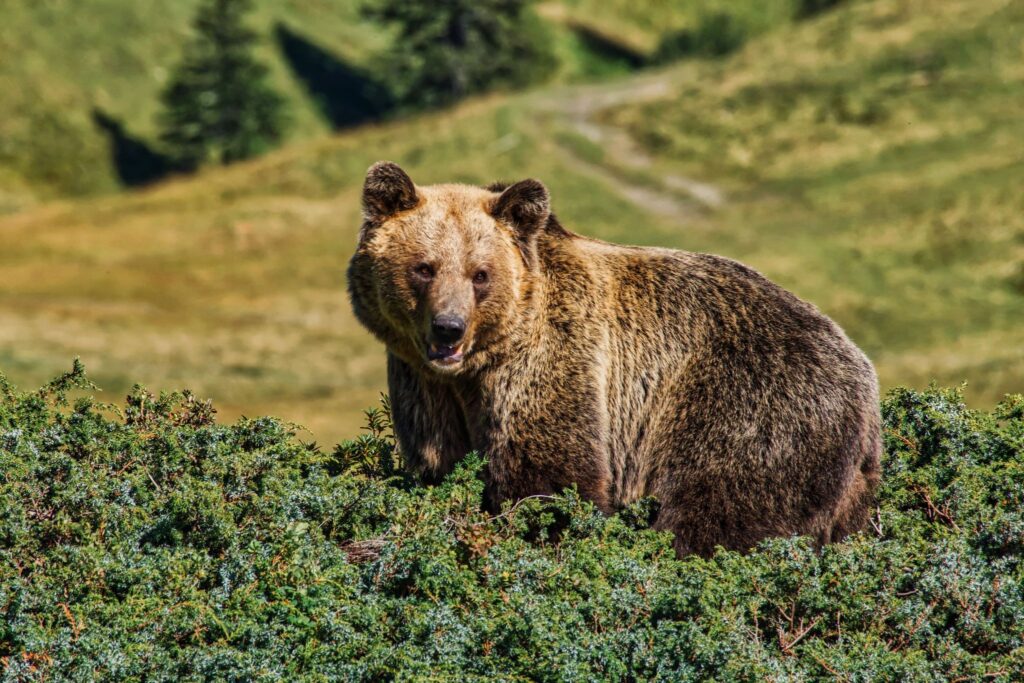
And this is a favorite, and it's easiest here because the stereotype is utterly absurd. A bear walking around town, a balalaika, an ushanka pulled down to the eyebrows, a snowdrift all year round. We analyzed in detail elsewhere where this nonsense came from, and a short version will suffice for a child: a traveling foreigner invented the tale about animals in the streets five hundred years ago, got something mixed up, and it went viral.
With this stereotype, a child's best ally is humor. Bears in Russia live in the forest and avoid people, just like in Canada or Finland, where there are also plenty of them. So, you can respond to a joke about a bear with a joke. Russians themselves, by the way, laugh at this more than anyone, drawing bears with balalaikas in memes, dressing up as them at sports matches. When a stereotype is so foolish, it's much stronger to laugh at it along with everyone else than to get angry. A child who knows how to respond like this instantly stops being a target.
At the same time, it's worth briefly discussing the bear's companions. The balalaika and matryoshka are real, but the balalaika today is mostly heard on stage, not in every home, and it's played no more often than Americans play the banjo. Matryoshka doll and actually younger than everyone thinks, she's just over a century old, and they invented her almost immediately as a souvenir. The ushanka, however, saves you in the frost, but it's not worn all year round, only when it's really cold, like a Canadian wears his warm hat.
When people say there's eternal winter in Russia
A close relative of the bear myth. As if there's always snow, ice, and bitter cold in Russia. It's easy to show a child how ridiculous this is with a simple comparison.
Russia is vast, larger than any country in the world, and its weather is incredibly diverse. In the south, grapes and apricots ripen, summers are nearly thirty degrees Celsius, and people travel to warm seas to sunbathe. In the central regions, summers can be muggy and scorching, with absolutely no snow. To say that it's always winter in Russia is like claiming that all of Canada is the North Pole, and all of America is a Californian beach. A child would laugh and remember that.
When Russians are called gloomy and angry
This grows out of the story about the smile, but it hits harder because it touches not a habit, but something like one's very nature. And here, the child has a very strong answer from their own life.
Ask him: are our guests, our grandmothers and grandfathers, family friends, are they mean? The child himself will laugh. He knows how Russians set the table for a guest, how they don't let them leave until they're stuffed, how they're ready to give their last. That's the truth. Russians are cool on the outside, but hot on the inside. Reserved with strangers, but once they let someone into their circle, they warm them so much that outsiders can't recover. Explain to the child that anyone who judges Russians by their face on the subway simply hasn't made it to their kitchen. If they had, they'd say the opposite.
About the mysterious Russian soul

This nickname the child will encounter later, closer to adolescence, and it's not offensive, but rather beautiful. But it's also useful to explain it, because there's an amusing truth behind it.
Tell a child this: the mysterious Russian soul was largely invented, not by Russians, but by foreigners. When Europe, a century and a half ago, was enthralled by the novels of Dostoevsky and Tolstoy, it was amazed at how deeply and fearlessly Russian books spoke about conscience, pain, and the meaning of life. And it decided that this people had some kind of special, bottomless soul. There's no magic behind this. There's a culture that is accustomed to digging deep, not being afraid of big questions, and speaking seriously about what matters most. It's not magic, it's just a different way of thinking. And when a child understands this, they can wear the label of the mysterious soul with quiet pride, rather than being confused by it.
What does this all actually teach?
If you take a step back, you can see that this entire breakdown isn't about bears or vodka. It's about a much more important skill.
A child growing up between two cultures will sooner or later learn the most important thing: a stereotype is always a simplification, a convenient picture instead of a living person. And the one who understands how such pictures are constructed neither believes in them themselves nor allows others to be offended. They don't flare up at a stupid joke, don't make excuses, aren't ashamed. They calmly explain, and the offender, unexpectedly for themselves, turns out to be the one who doesn't know something. This skill will be useful to the child not only with Russian labels but in life in general, among any people and any prejudices.
And to explain all of this, a child needs one thing: language. The very same living Russian language, with which they can joke about a bear, calmly talk about a smile, and feel that the culture they come from is truly their own, not a collection of foreign caricatures.
Fact or myth
Eight common opinions about Russians. Guess what's true and what's fiction, and test yourself with your child.
The Palme school will help with
This is where our work comes in. For a child to be able to easily and with dignity explain to their peers who Russians really are, they need not a memorized set of phrases, but living speech. The kind with which they think and joke.
At Palme School, children from Russian-speaking families all over the world study in small groups with educators who know how to do more than just teach words; they reveal the culture: they explain about a smile, about a mysterious soul, and about how to respond to a silly joke. They do it in a way that makes the child interested in listening and eager to respond.
We teach children from four to seventeen years old. When Russian is already familiar at home, it will suit the child. Program for bilinguals. When a language is yet to be mastered, the road leads to Russian as a foreign language course. We conduct classes online in small groups, with each lesson lasting forty minutes. You can visit us for free twice. The first meeting is with a methodologist, who will talk to your child and assess their current level. The second meeting is in a group with peers, like a real lesson. These two trial sessions are usually enough to decide if our approach is right for you. You can sign up and find out more details on palmeschool.com. And let your child grow into someone who won't be caught off guard by any label, because they will learn about their own culture firsthand, not from others' jokes.
Home
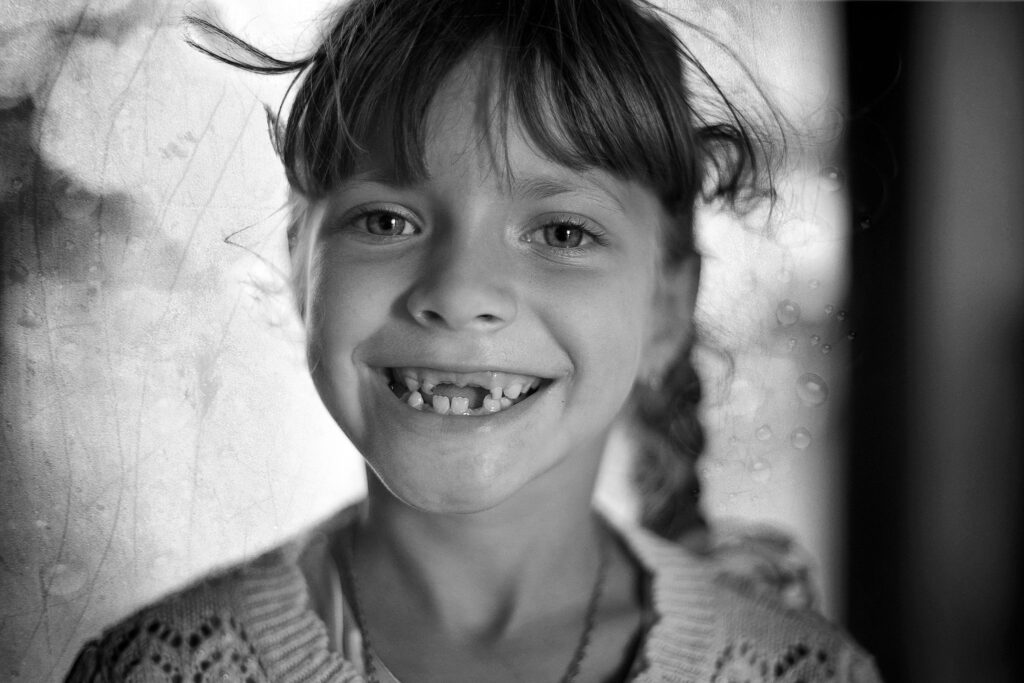
Sooner or later, a child from a Russian-speaking family will be teased with stereotypes about bears, vodka, eternal winter, or grim faces, and it's important that they don't get flustered. It's worth explaining a simple thing to them in advance: behind each such label lies not an offensive truth, but a misunderstanding, a crumb of a fact that someone glimpsed and built upon in their own way. Russians smile less not out of gloom, but because they value sincere smiles. They don't drink any more than Europeans today. Bears live in the forest, it's not cold everywhere in winter, and behind outward restraint lies a rare warmth. A child who has been taught this doesn't make excuses or get offended, but calmly explains, and the foolish joke backfires on the one who made it. And this entire skill is based on live language, on which the child feels their culture is native.
How to react if a child is teased with stereotypes about Russians?
Calmly and without offense. The main thing to convey to a child is that they don't have to justify themselves, they can explain. Behind any stereotype lies not an offensive truth, but a misunderstanding, a grain of fact that someone misunderstood. If a child can calmly and even humorously explain how things really are, an offensive joke turns into an opportunity to show off their knowledge, and they themselves transform from a target into someone who understands best of all.
Here are a few ways to respond to a bear joke: * **Playful agreement:** "Oh yeah, they're everywhere! Did you see that one trying to cross the street yesterday?" * **Slight confusion/innocence:** "Bears on the street? Really? That sounds... interesting." * **Exaggeration:** "Tell me about it! I had to wrestle one for my parking spot this morning." * **Turning it back:** "Why, are you expecting some?" * **Simple chuckle/acknowledgment:** "Haha, good one!"
Humor is best, because the stereotype is quite ridiculous. Bears in Russia live in forests and avoid people, just like anywhere else in the world; there are plenty of them in places like Canada or Finland. The story about animals on the streets is almost five hundred years old. It was once concocted by a visiting foreigner who got something mixed up. Russians themselves laugh at this the most and play it up in memes, so it’s easiest to answer a child with a joke rather than an offense.
Is it true that Russians smile less often?
Yes, but it's not about sullenness, it's about a different attitude towards smiling. In the West, a smile is often a sign of politeness and is given to everyone. Russians reserve it for sincere moments and close people; it's not customary to smile without a reason. This can easily be explained to a child: a Russian smile isn't perfunctory, it's genuine, and if a Russian smiles at you, it means they are truly happy.
Not all Russians drink alcohol. Just like in any country, some people choose to drink, and others don't. It really depends on the individual person and their personal choices.
Honestly, without denying that there was a problem in the past, but relying on today. Over the past twenty years, according to the World Health Organization, people in Russia have started drinking noticeably less, and people are living longer. In terms of consumption, the country is currently somewhere in the middle of the European list, and many nations drink more. The main thing to tell a child is: it's better to respond to such teasing calmly, referring to fresh statistics, rather than getting worked up.
You could say: * "That's a common stereotype, but it's not always true! We have four distinct seasons, and summers can actually get quite hot." * "Ha, if only it were always like that! Sometimes it's too hot to even move." * "That's what they say, but come visit in July and you might be surprised!" * "It's true that we get snow, but it doesn't last year-round everywhere. And honestly, sometimes I wish it was colder!"
To show how absurd this is with a simple comparison: Russia is huge, and its climate varies greatly. In the south, grapes and apricots ripen, with summer temperatures reaching thirty degrees Celsius, and people go to the warm sea to sunbathe. In the central belt, summers can be stuffy and sweltering. To say that it's eternal winter in Russia is like claiming all of Canada is the North Pole. A child would laugh and easily remember this answer.
What to do if Russians are called sullen and unfriendly?
Rely on the child's own experience. It's worth asking them if our guests, grandmothers, and family friends are mean, and they'll laugh themselves, because they know how guests are received in Russia and how much people are willing to give. Russians are cool on the outside and warm on the inside. They are reserved with strangers, but once they let someone into their circle, they warm them up so much that outsiders can't recover. Anyone who judges Russians by their face on the subway simply hasn't made it to their kitchen.
Where do stereotypes about other peoples even come from?
Almost always from a grain of truth that someone glimpsed, didn't understand, and then built upon in their own way. It's not malicious lies, but misunderstandings. Therefore, there's not much to be offended about; it's much more effective to calmly explain how things really are. It's useful to give a child this thought first: they don't have to justify themselves, they can explain. Then an offensive joke turns into an opportunity to show that they understand the topic better than the joker.