


In souvenir shops in Brighton Beach and in Russian shops in California, matryoshka dolls stand in rows. On the left are large, bright red ones with a bouquet of roses on their bellies. On the right are smaller ones with a smooth gold background and a delicate pattern. In the center are very modern ones, painted in the Khokhloma style, in the style of Palekh miniatures, or simply depicting political leaders. Customers most often choose the one they like by color, unaware that each of these dolls has its own school, its own era, and its own geographical name.
A tourist matryoshka doll, taken by friends as a piece of Russian culture, might turn out to be a modern Chinese souvenir. Or it could be an authentic Semenov work, painted according to the canon of the eighties of the last century. They often cost the same, because the store doesn't indicate this.
To stop seeing all matryoshka dolls as the same, you just need to delve into their history once and learn about the four main painting schools. After that, your own collection, your grandmother's matryoshka doll in the attic, and a souvenir shop's display case will start to be read in a completely different way.
In this article, we'll explore the true history of the Russian matryoshka doll, its symbolism, four main types with examples of their decoration, and the signs that distinguish an original from a mass-produced imitation.
The History of the Matryoshka Doll and Its Origins in Russia
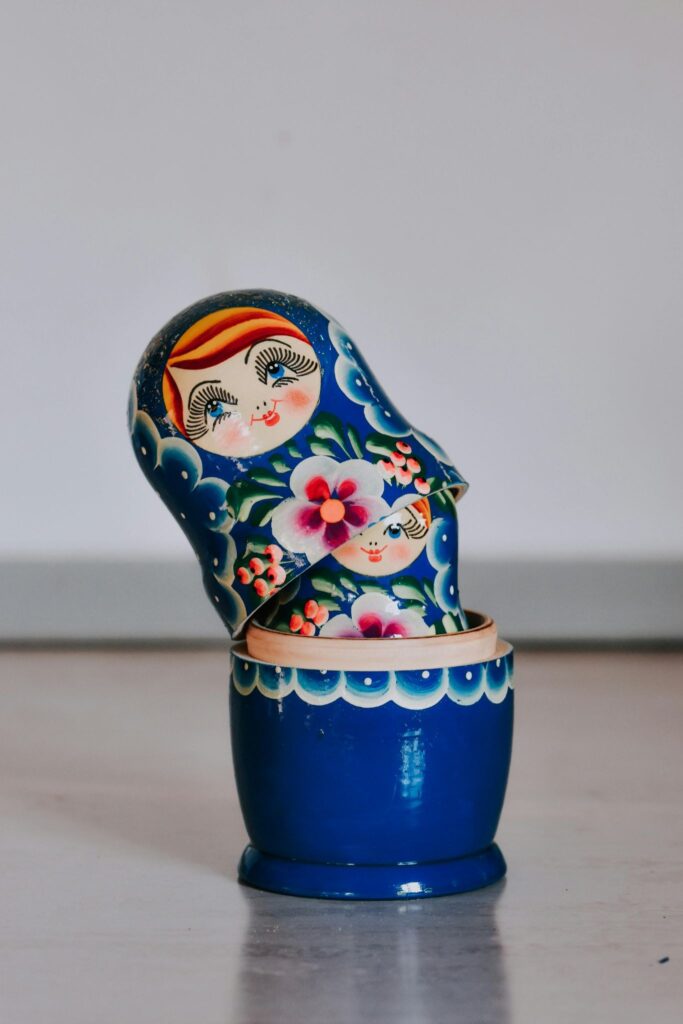
The most famous Russian doll is younger than it seems. If you ask a tourist how old a Matryoshka is, you'll most often hear the answer «hundreds.» In reality, the first Matryoshka appeared in the 1890s, in the workshop of industrialist Savva Mamontov near Moscow. This means that the cultural phenomenon, which many consider an ancient Russian symbol, is just over a hundred years old.
The prototype of the Russian Matryoshka doll was a Japanese doll. From a trip to Japan, Mamontov's wife Yelizaveta brought back a figurine that could be taken apart into several pieces, and inside sat smaller figurines. According to some versions, it was a Daruma, and according to others, a Fukurokuju from the island of Honshu. The idea of nesting dolls was not new, but it came to Russia through this brought-back toy.
In the workshop «Children's Education,» owned by the Mamontovs, the turner Vasily Zvezdochkin carved the first Russian matryoshka doll from linden wood. The artist Sergey Malyutin painted it. It turned out to be a round-faced girl in a sarafan and headscarf, holding a black rooster. Inside sat seven more figures, each with her own costume and character: the older sister with a sickle, a boy in a kosovorotka shirt, a mother with a baby, and so on. Eight dolls in total.
The name «matryoshka» comes from the popular peasant name Matryona and its diminutive form Matryoshka. At the end of the nineteenth century, this name was considered characteristic of the Russian village, and the nesting doll family received the same colloquial nickname.
The star fate began a few years later. In 1900, at the World's Fair in Paris, Mamontov's workshop presented its Russian toy to the international public. The Matryoshka doll received a gold medal and immediately became an export product. French, English, and American orders poured in. From the workshop near Moscow, production gradually moved to Sergiev Posad, where woodcarvers traditionally lived, and from there it spread to other regions of Russia.
By the 1920s, the matryoshka had become a symbol of Russian souvenirs for foreign buyers. By the Soviet era, political themes, portrait matryoshkas, and themed sets of fairy tales, cartoons, and historical events appeared. Modern artists paint matryoshkas on a wide variety of themes, from classic floristry to Cheburashka and pop art, but the basic principle remains the same: a linden or birch base, eight or more dolls, brush, and tempera paint.
The Russian Matryoshka doll symbolizes fertility, motherhood, and the continuity of life.
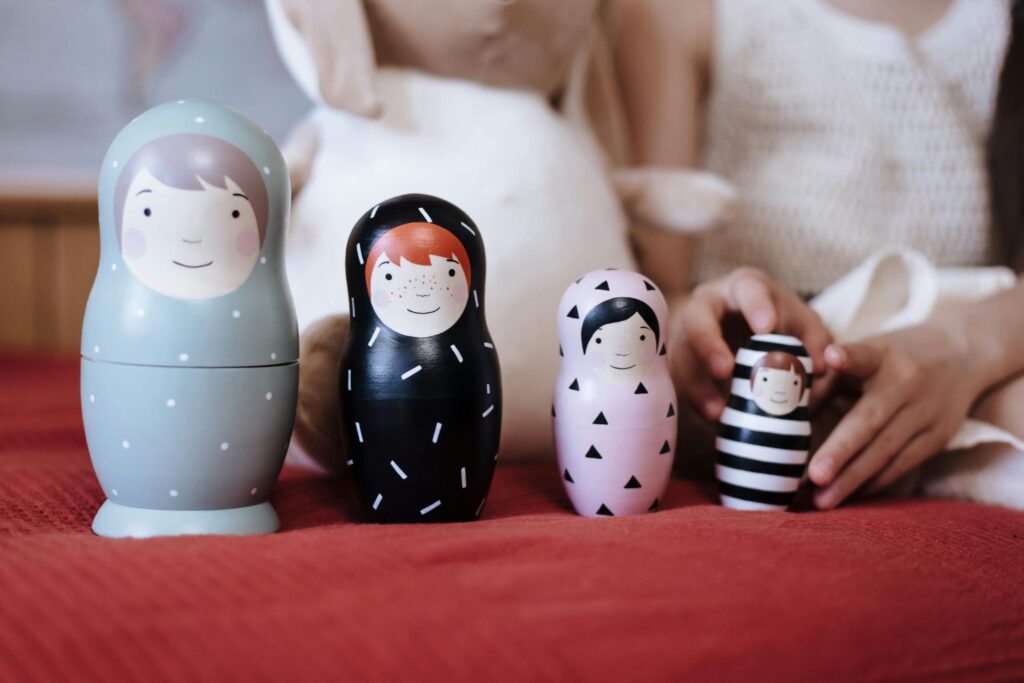
The main symbolic meaning of the Russian matryoshka doll lies in the idea of family and continuity. The largest doll holds a medium one, the medium one a small one, and the small one the tiniest. This is a household metaphor for how a woman in the Slavic tradition carries within her the lineage, daughter, and granddaughter, and within them, future generations. Therefore, the first artist, Sergey Malyutin, painted the largest matryoshka as a girl with a rooster in her hand, and inside sat a mother with a baby, sisters with children, and finally, a little boy in the very core.
Beyond family reading, the matryoshka doll also has a philosophical layer. The doll within a doll is structured as an image of the inner world. From the outside, a person looks simple and the same to everyone. Once you open the first layer, a second, more subtle one appears. Behind it, a third, a fourth. The smallest figure does not come apart, and there is meaning in this too: inside everyone, there is something indivisible, ultimate, and most real.
The third layer of meaning is cultural. The matryoshka doll has become as recognizable a symbol of Russia to the world as the samovar, the balalaika, or ushanka. At any international fair, the matryoshka doll is instantly recognizable without needing a translation, which is why it holds a special place in the country’s visual identity. Contemporary artists take advantage of this and paint matryoshka dolls with all sorts of themes, from cosmonauts to political leaders and pop stars. Often, these designs are no longer about family, but about humor and satire.
For Russian speakers abroad, the matryoshka doll becomes another type of symbol. It reminds them of home, of their grandmother's shelf, of childhood New Year's gifts. For bilingual children, it often becomes the first Russian item they consciously encounter because the matryoshka is beautiful, tactile, and immediately understandable. You can tell a child about eight dolls inside one, and the cultural code is conveyed without lengthy explanations.
Types of Russian Matryoshka Dolls by Region
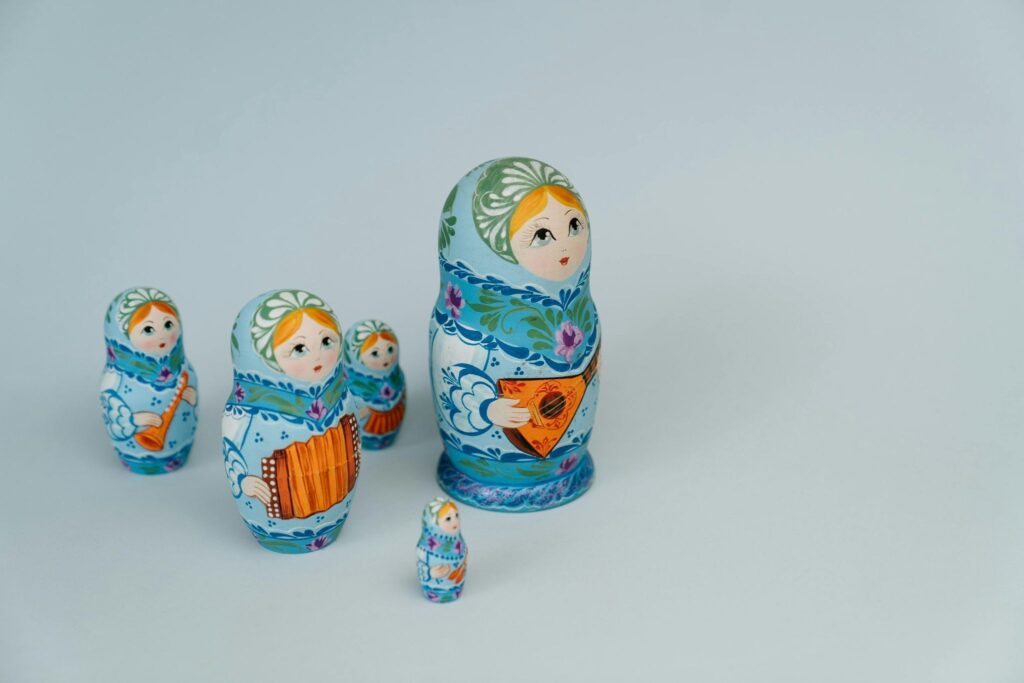
Four main schools of matryoshka doll painting have developed in Russia. Each is tied to a specific city or region, and each has its own recognizable style. If you learn to distinguish these schools, you can tell where a matryoshka doll comes from and approximately what century it was made in from a single photograph.
A Zagorsk matryoshka doll from Sergiev Posad
The oldest and canonical Russian nesting doll. The city of Sergiyev Posad was called Zagorsk during Soviet times, and the school received the name «Zagorsk». This is the very nesting doll that was first carved in Mamontov's workshop and then mass-produced in Sergiyev Posad.
Zagorskaya dolls can be recognized by several features. The face is round, rosy, with dark eyebrows and large eyes. The doll is dressed in a sarafan with bright flowers, often over which is a white apron. On the head is a scarf tied under the chin. The background is usually warm, yellow-red, without frills. The ornament is large, floral, painted with simple brushstrokes. The first doll often holds a rooster, a basket of pies, a bouquet, or a child in her hands.
Inside a Zagorsk doll, there are usually five to eight dolls, but rarer sets of ten, twelve, or more can also be found. The wood is classic, linden or birch. The varnish is transparent, not covering the colors.
This is the most Russian-looking matryoshka, and it is the one most often shown on foreign postcards and in textbooks on Russian culture.
Semyonovskaya matryoshka
The town of Semenov in the Nizhny Novgorod Region became the second major center for matryoshka production in the early 20th century. Semenov matryoshkas are instantly recognizable by their bright yellow or gold background and the large, lush bouquet on their stomachs.
The Semenov matryoshka doll has a more elongated face than the Zagorsk one, and it resembles a portrait more closely. The eyes are finely drawn, and the lips are small and bright. The headscarf is usually black with a golden border, and the sarafan is painted with large roses, daisies, and poppies. The flowers occupy the entire center of the figure and are arranged so that the gaze immediately falls on the bouquet.
Inside a Semyonov matryoshka, there are often fifteen or eighteen dolls, sometimes more. It's the deepest school in terms of the number of figures, and Semyonov matryoshkas often become collectible.
The price for a good Semenov matryoshka doll from Soviet times at American auctions today can reach several hundred dollars, and unique artist-made sets cost several times more.
Polkhov-Maidan Matryoshka
Polkhovsky Maidan, a village in the Nizhny Novgorod Region, gave its name to the third school of mural painting. It differs quite significantly from the Semenov school, even though they are in the same region.
The Polkhov-Maidan doll is the most graphic. The colors are juicy, but not pastel: crimson, blue, lilac, bright green. The background is usually red or purple. The main difference is in the painting technique. First, a black outline is applied to dry wood, and then the color is poured inside the outline. It looks like stained glass.
The face of a Polkhov-Maidan matryoshka also has a black outline, and the features are drawn more conventionally than those of Zagorsk or Semyonov dolls. The eyes often resemble beads, and the lips are drawn with a single short arc. The scarf is wide, painted with a garland of large dog roses or roses.
This matryoshka looks more folk-art and less formal. Inside there are usually five to eight dolls. There are fewer Polkh-Maidan masters than Zagorsk and Semyonov masters, and it's difficult to buy an authentic one without contacting specialized workshops.
Modern author matryoshka dolls
In addition to the three traditional schools, there is a separate category: contemporary designer matryoshka dolls. These are dolls painted by contemporary artists, who are often not affiliated with any particular regional school. The subjects can be anything: famous writers, historical figures, political leaders, cartoon and movie characters, abstract patterns, or memes.
Handcrafted matryoshka dolls are usually more expensive than factory-made ones, even within the same price range. The price depends not on the number of dolls, but on the artist’s reputation and the time spent painting them. A high-quality handcrafted matryoshka by a renowned artist can cost thousands of dollars and is considered a collector’s item.
This category has been growing particularly rapidly over the past twenty years. Many contemporary artists treat the matryoshka doll as a canvas, and the subject matter extends far beyond traditional floral bouquets. The color palette has also broadened to include monochromatic, metallic, and icon- or watercolor-style designs.
How to Tell a Genuine Russian Matryoshka from a Fake
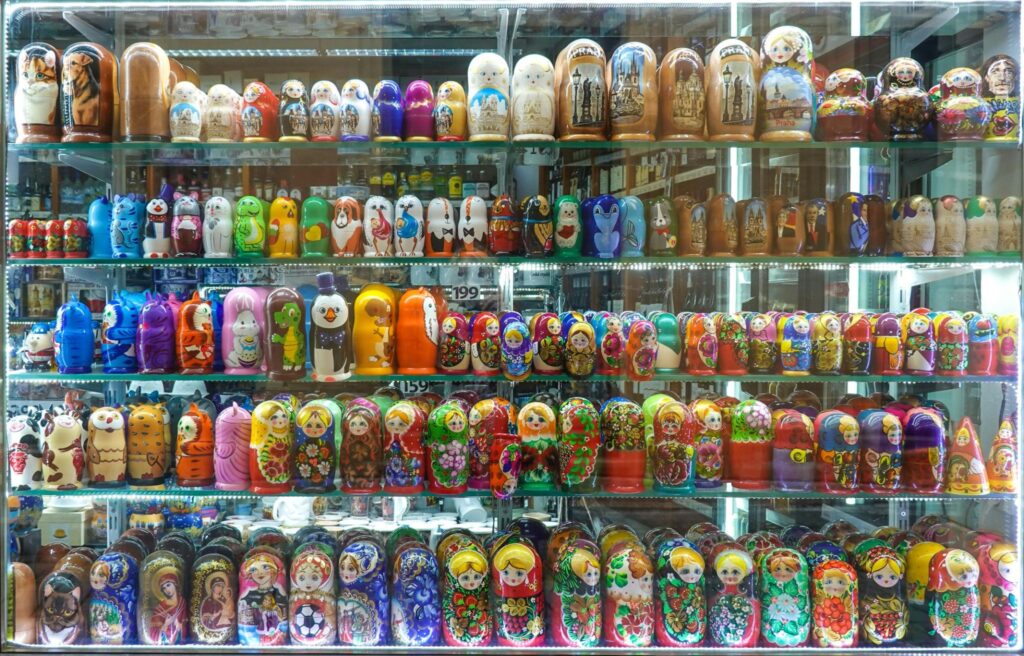
When people say «fake,» they usually mean a mass-produced souvenir product, most often made in China or Eastern Europe for tourists. Such a doll is not bad in itself, but calling it a Russian matryoshka is incorrect because it has neither a painting school, nor a master, nor a connection to tradition. It's just a toy disguised as a souvenir.
To distinguish the real from mass-produced, it is worth looking at a few things.
The very first material signal. A real Russian nesting doll is made of linden wood, less often of birch or alder. These types of wood are soft, easy to work with a lathe, and hold paint well. A fake is often made from dense, cheap wood like poplar, and sometimes entirely from compressed sawdust with a lacquer coating. If the doll is suspiciously heavy, it's likely not linden.
Next comes joining the halves. A real matryoshka doll's two halves fit together tightly, with no gap, and when closed, there's a light puff of air inside. This is the work of the lathe operator, who turned both halves on the same machine with millimeter precision. Mass-produced fakes have poorly fitted halves, a visible gap between them, and sometimes traces of glue.
The painting is even more distinct. On a real matryoshka doll, it's done with tempera or gouache, covered with clear varnish on top. The paint layer is thin; brush strokes are visible. A fake doll often shows screen printing or decal printing on a film glued over the wood. If you hold a matryoshka doll up to the light, you can see printing lines on a fake one, while brush strokes are visible on a real one.
The master's signature is also an important signal. Both artisanal and high-quality factory matryoshka dolls usually have a signature or workshop stamp on the bottom. This can be a carved mark or a painted signature with initials. Mass-produced Chinese goods either lack a signature or have a stamp with the words «Made in China.».
Facial proportions say a lot. A real matryoshka doll has a round or oval face in traditional proportions, with harmoniously placed eyes, nose, and lips. A fake one often shows distorted proportions: eyes too close together, a nose shifted to the side, or crookedly painted lips. The reason for this is that the painting of mass-produced matryoshka dolls is done quickly and formulaically, without proper training for the artisan.
Finally, the inscriptions on the bottom. True Russian matryoshka dolls have signatures and markings made in Cyrillic. If the bottom says «Russian Matryoshka» only in Latin letters, without Cyrillic inscriptions, it is most likely an exported mass-produced version.
It's worth mentioning Chinese matryoshka dolls separately. There are indeed workshops in China that seriously engage with the Russian tradition, and some Chinese matryoshka dolls are painted by genuine masters. However, for the most part, Chinese souvenirs are simplified copies of Zagorsk or Semyonov matryoshka dolls, lacking a distinct style and signature. Such dolls are inexpensive and make for a good affordable gift, but they have no collector's value.
Where to buy a real Russian Matryoshka doll
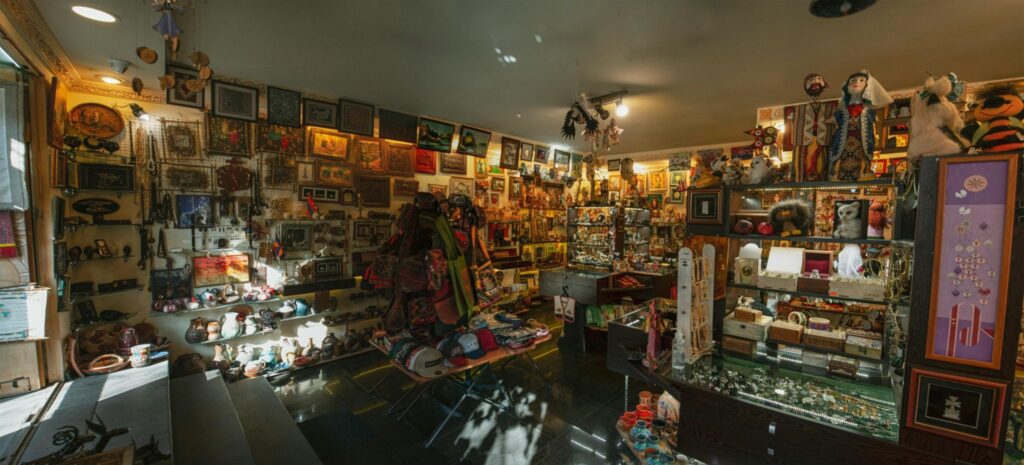
In Russia, the choice is vast. The main center is Sergiev Posad, home to hereditary workshops and a toy museum. Semyonov in the Nizhny Novgorod region also remains a vibrant production center, and you can order matryoshka dolls directly from the factory there. In Moscow, you can find a good selection at the Izmailovo Market, in the museum shops of the State Historical Museum, and in large department stores specializing in folk crafts.
In the US and Canada, buying a Russian matryoshka doll is harder, but possible. Several sources are reliable. Antique shops and Russian art stores in In areas with large immigrant diasporas This is Brighton Beach in Brooklyn, the Westwood neighborhood in Los Angeles, and individual galleries in Chicago, Seattle, and Toronto. Prices here are often higher than in Russia, but the quality is also proven.
The second option is Western online platforms and auctions. They offer a huge selection of Russian matryoshka dolls, from modern mass-produced ones to old Soviet and rare artist-made ones. The main rule is to check the seller, read reviews, and ask for additional photos of the face, bottom, and seams. A good seller will usually mention which school it's from, what year it was painted, and who the artist is, if it's a collector's doll.
The third option is to order directly from the artisan. Many contemporary masters of Russian folk crafts work on commission, and it's possible to contact them directly through the internet. This is the most expensive, but also the most interesting option, because the artisan will paint the matryoshka doll for a specific buyer, with their chosen theme and in a selected style.
In terms of price range, a modern factory-made Semenov matryoshka doll with six to eight dolls costs around thirty to sixty dollars. A good Zagorsk piece signed by the workshop ranges from one hundred to three hundred dollars. Old Soviet matryoshka dolls sell for three hundred to eight hundred dollars at American auctions, depending on their condition and the number of dolls. Collectible artist-made matryoshka dolls from renowned contemporary artists cost from a thousand dollars upwards, with virtually no price ceiling.
You should be especially wary of counterfeits when purchasing a matryoshka if it's intended as a gift or a collectible investment. A price below twenty dollars almost certainly indicates a mass-produced souvenir, and there's no point in buying such an item as a genuine Russian original.
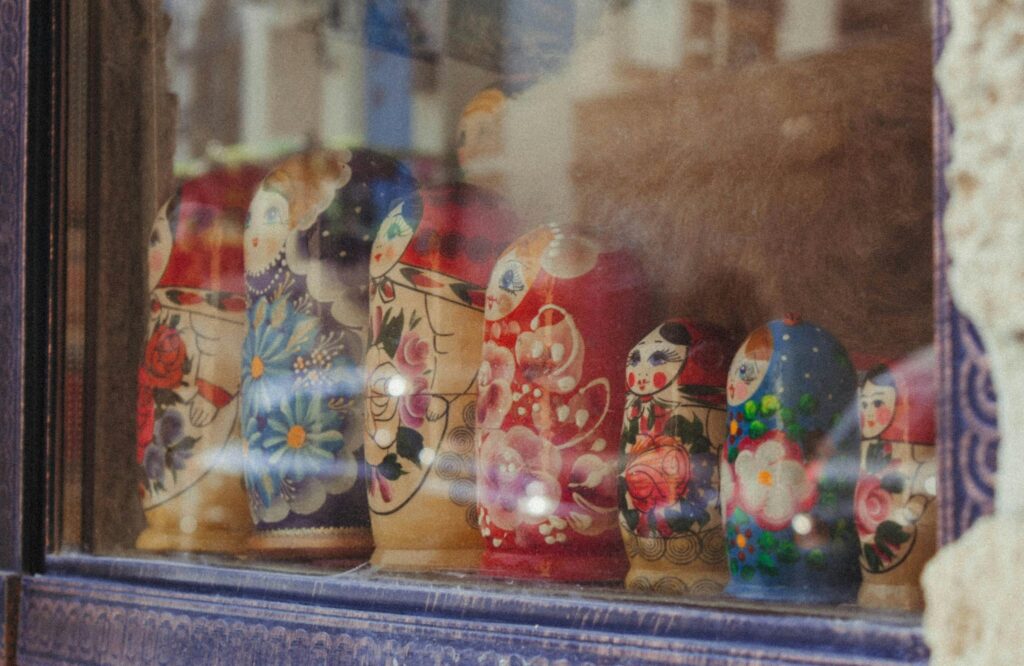
A matryoshka doll that sits in your grandmother's attic or on a shelf after a trip to Russia is rarely expensive, but it's almost always valuable as a family heirloom. The bottom often has the village or factory written on it, the face leads to one of four schools, and the number of dolls suggests whether it's a display piece or an everyday item. After you see the difference between the Zagorsk and Semyonov styles, or between Polkhov-Maidan and modern artist-made dolls, the matryoshka stops being just a souvenir and becomes a small object with its own geography and time.
At Palme School, we explore Russian culture not as a collection of stereotypes, but as living objects with history. In class, students become acquainted with the matryoshka doll, samovar, balalaika, and other symbols of Russian daily life through texts, photographs, and their own family stories. This allows child and for an adult who is learning Russian from scratch, keep in mind not a flat postcard «Russia,» but a three-dimensional picture with regions, schools, and generations of masters.
A matryoshka is a set of wooden dolls of decreasing size placed one inside another. They are typically made of linden wood.
A matryoshka is a wooden doll inside which sits a set of smaller, similar dolls. They fit inside each other in the principle of nesting dolls, hence the English name "Russian nesting dolls.".
Matryoshka dolls are made from soft woods, most often linden, and less often from birch or alder. These woods are easily worked on a lathe and hold paint well. They are painted with tempera or gouache and then coated with clear varnish.
Where did the Russian nesting doll originate?
The Russian matryoshka doll appeared in the 1890s in the workshop of industrialist Savva Mamontov near Moscow. The prototype was a Japanese doll that Mamontov's wife, Elizaveta, brought from the island of Honshu. The first matryoshka was carved by turner Vasily Zvezdochkin and painted by artist Sergey Malyutin.
The international fate of the matryoshka doll began in 1900 at the World Exhibition in Paris, where the Russian toy received a gold medal and became an export item. After that, production moved to Sergiev Posad and from there spread to other regions of Russia.
How many dolls should be in a real matryoshka
There is no standard quantity. The very first Russian matryoshka doll consisted of eight dolls, and this number was considered canonical for a long time. Now, sets range from three to thirty or more dolls.
A Sergiev Posad matryoshka usually contains five to eight figures. A Semyonov matryoshka is often deeper, with fifteen to eighteen dolls and more. A Polkhov-Maidan matryoshka typically has five to eight. Author's collectible sets can include thirty or more figures, and the quantity here speaks more to the master's skill than authenticity.
What's the difference between a Sergiev Posad matryoshka and a Semyonov matryoshka?
The Zagorsk matryoshka doll originates from Sergiyev Posad, which was called Zagorsk during Soviet times. It is the most canonical, with a round, rosy face, a warm yellow-red background, large flowers on its sarafan, and a white apron. The first doll often holds a rooster or a basket in its hands.
The Semyonovo matryoshka doll originates from the town of Semyonovo in the Nizhny Novgorod region. It has a bright yellow or gold background, a more elongated face, delicate eye details, and a large, lush bouquet of roses, daisies, and poppies that fills the entire center of the figure. The Semyonovo matryoshka typically has more dolls than the Zagorsk matryoshka.
How to distinguish a Russian Matryoshka from a Chinese counterfeit
The main characteristics of a genuine Russian matryoshka doll are: soft linden or birch wood, a tight fit between the halves without gaps, hand-painted with tempera or gouache with visible brushstrokes, the presence of the master's signature or workshop's stamp on the base, harmonious facial proportions, and Cyrillic inscriptions.
Signs of forgery: suspicious weight of the doll, poorly fitted halves with traces of glue, silkscreen or decal printing on film instead of hand painting, absence of the artist's signature or a stamp with the words «made in China,» distorted facial proportions, inscriptions only in Latin.
Where to buy a real Russian nesting doll in the USA
The most reliable places are antique shops and Russian art stores in areas with large émigré communities. In Brooklyn, this is Brighton Beach; in Los Angeles, the Westwood area. Individual galleries operate in Chicago, Seattle, and Toronto. Prices here are higher than in Russia, but the quality and authenticity are usually verified.
The second direction is Western online platforms and auctions, where both modern serial production and old Soviet and rare artisan matryoshka dolls are sold. Before purchasing, it is worth checking the seller, reading reviews, and requesting additional photos of the face, bottom, and seams. The third option is to order directly from an artisan via the internet, and this is chosen when an artisan's work is specifically desired.
How much does a collectible matryoshka doll cost?
A modern factory-made Semenov matryoshka doll set of six to eight dolls costs around thirty to sixty dollars. A good Zagorsk work signed by the workshop costs from one hundred to three hundred dollars. Old Soviet matryoshka dolls at American auctions sell for three hundred to eight hundred dollars, depending on their condition and the number of dolls.
Collectible matryoshka dolls from famous contemporary artists cost a thousand dollars and up, with virtually no price ceiling. A price below twenty dollars almost guarantees a mass-produced souvenir with no collectible value.