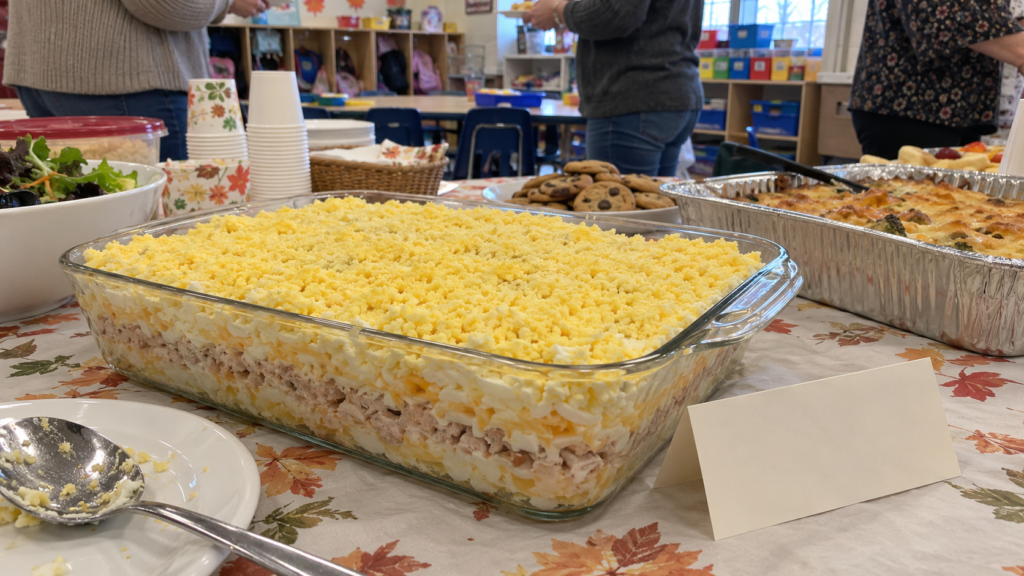

The riskiest word on a school desk could be the name of your salad.
Present the card next to the bowl. In large letters, in children's handwriting, one word.
Mimosa.
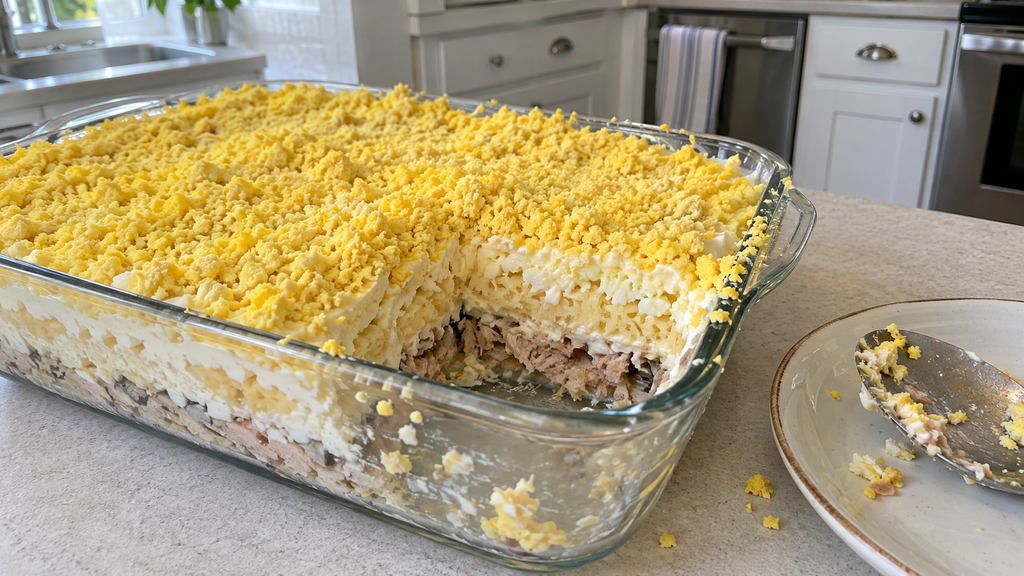
For you, it's a layered salad from your childhood. Fish canned food, eggs, cheese, mayonnaise, and on top of that, a grated yolk, yellow and fluffy, like a mimosa blossom on March 8th.
An American parent might remember the namesake cocktail at the table: champagne with orange juice, which is drunk at brunch.
And he stands next to the juice and cookies at the second-grade party.
It is the most difficult thing to describe your dish.
With foreign food, it's simple. If you don't know it, you look at it, ask about it, and read the label.
The opposite of mine.
You ate mimosa so many times that you might have never even thought about what it looks like to a person who sees it for the first time. At the dinner table, mimosa is usually synonymous with salad. You might not even think about the flower that gave it its name.
In this sense, the child is like you. He may know the proper name, but he doesn’t think about what it will tell his classmates.
When he sits down to write a card for a potluck, he may write what he heard at home. One word. Sometimes translated, sometimes in Latin.
Therefore, the name of the dish is sometimes only shown on the card, without an explanation of its composition.
Keep the name, but not the same one
It's a shame to remove the «mimosas» from the card. That's the best part. The canned salad might bring others, but you'll only have the mimosa.
But one word on the card doesn't explain anything.
It’s worth mentioning that this is a kind of food. In simple terms, both a child and an adult at the table will understand it.
Mimosa salad. Layered salad with fish, eggs and cheese.
The word "salad" here already resolves the main confusion. And the second line answers the question that will still be asked anyway.
You could also add the source of the name. The yellow topping looks like yellow mimosa flowers. Then the name stops being strange and becomes a little story.
What's inside, to be honest
Here's where a funny card becomes important.
There are fish in the lettuce. There are eggs in it, and there are eggs in the mayonnaise too. There is cheese in it.
For some in the class, each of these words can mean «forbidden.».
That’s why the composition is written according to the exact recipe you used this time. What canned foods you used. What cheese you used. Is there any onion in it? The child can rewrite it themselves in English, and the adult will check every word.
The card provides information about the composition, but does not replace a conversation with the school if someone has a food allergy.
And another thing that’s better to do before you start cooking eggs. Learn the rules. Some places allow you to bring homemade food to class on special occasions, while others only allow you to bring packaged food, and some places don’t allow it at all. Ask the teacher in advance.
One line about the family
The last line on the card is not mandatory. But it is what sets your bowl apart from the rest.
Why do you have a mimosa tree in your house?
The child may not know. Then it's a good question for the grandmother.
Maybe they made mimosa for every holiday. Maybe for March 8, with those yellow branches. Maybe Grandma just loves it more than the olive leaf salad.
One sentence will come from this conversation: My grandma makes it for every holiday.
And the conversation itself will remain a mystery to the child. Along with the Russian words that he needed to understand.
We wrote in an article about what Russian food families abroad prepare and why they miss it so much. about comfort food. If you are baking pancakes for a school holiday, take a look at an article about blini.
Menu card in two languages
First the child writes a card in Russian, for himself. Then the same card in English, for the class.
For myself, in Russian
Mimosa
Layered salad
What is it made offish preserves, eggs, cheese, mayonnaise
Why it is called thatThe grated yolk on top resembles the flowers of mimosa
Grandma makes it for every holiday.
For the class, in English
Mimosa salad
Layered salad with fish, eggs and cheese
Ingredientscanned fish, eggs, cheese, mayonnaise
Contains
Why the nameThe yellow topping looks like yellow mimosa flowers.
My grandma makes it for every holiday.
This is a sample. Write the ingredients according to your recipe. Specify the type of fish and check the ingredients of the prepared foods on the packaging, including the mayonnaise. For homemade food, ask the teacher in advance about the ingredients. The card provides the ingredients, but does not replace a conversation with the school if someone has a food allergy.
Who writes the card
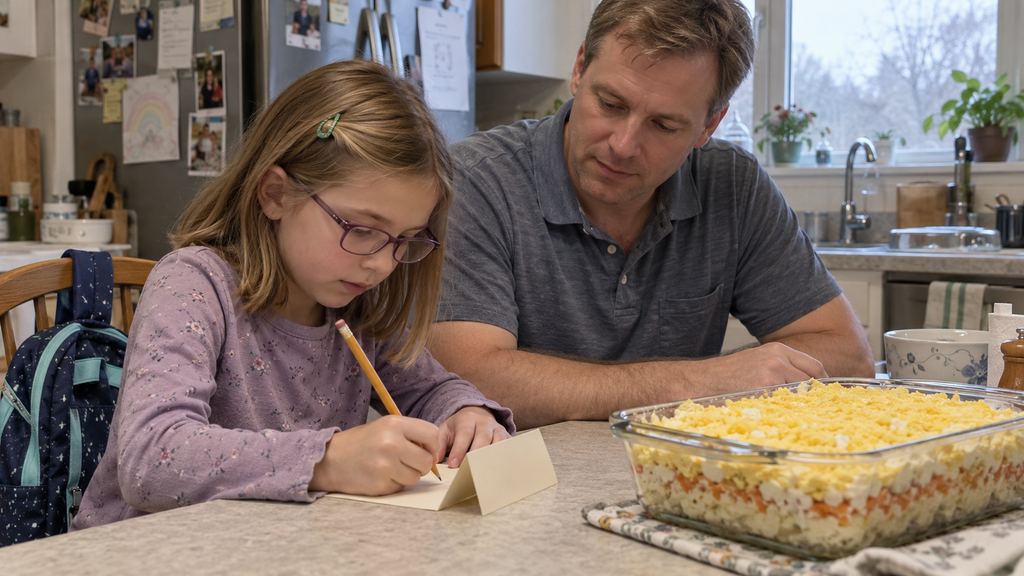
It’s faster for an adult to write it themselves.
But here there is a reason to discuss the dish together and let the child choose what to tell about it.
Maybe we could start with Russian first, for ourselves. What it’s called. What it’s made of. Why it’s only available in Russian for the class. Then the same thing in English for the class.
Take a photo of the Russian card and send it to your grandmother along with a photo of the table. Let her see where her mimosa plant is.
And if they ask about the cocktail
They might even ask you. Especially someone older, with a smile.
By this point, the child already has an answer, and he knows it himself.
It’s a salad. It’s called mimosa because it’s yellow on top.
That's all. The word that could have been intimidating turned into an opportunity to talk.
Frequently asked questions about school potluck
What is potluck in an American school?
It’s a holiday on which each family brings one dish and everyone tries a little bit. In Russian, the similar word is skladchina. The participants contribute their share to the common cause, either with money or with products, and that’s how the communal table is called.
What to write on the potluck dish card?
Name, brief explanation of what the food is, and ingredients. If you like, you can add a paragraph about why this dish is prepared at your home.
How to sign a Russian dish in English?
Leave the Russian name in Latin so that it can be pronounced, and explain it in simple words next to it. For example, Mimosa salad. A layered salad with fish, eggs, and cheese.
Is it necessary to write down allergens on the card?
The ingredients should be rewritten from the actual recipe and each word checked. For example, in mimosa, there is fish, eggs, and cheese. The card provides the ingredients, but does not replace a conversation with the school if someone has a food allergy.
Is it possible to bring home-cooked food to an American school?
School rules vary. In some places you can bring your own food to class parties, while in others only packaged food is allowed, and in others it is not allowed at all. Ask the teacher in advance.
Why is the mimosa salad called that?
The yellow topping on top resembles the yellow flowers of mimosa. In English, this can be explained as follows.
Read about the Russian food prepared by families abroad in the article about comfort food, And if you bring some pancakes to class, they will come in handy. an article about blini.