

After the volcano erupts, the city may look as if a giant fire has been burning nearby all night.
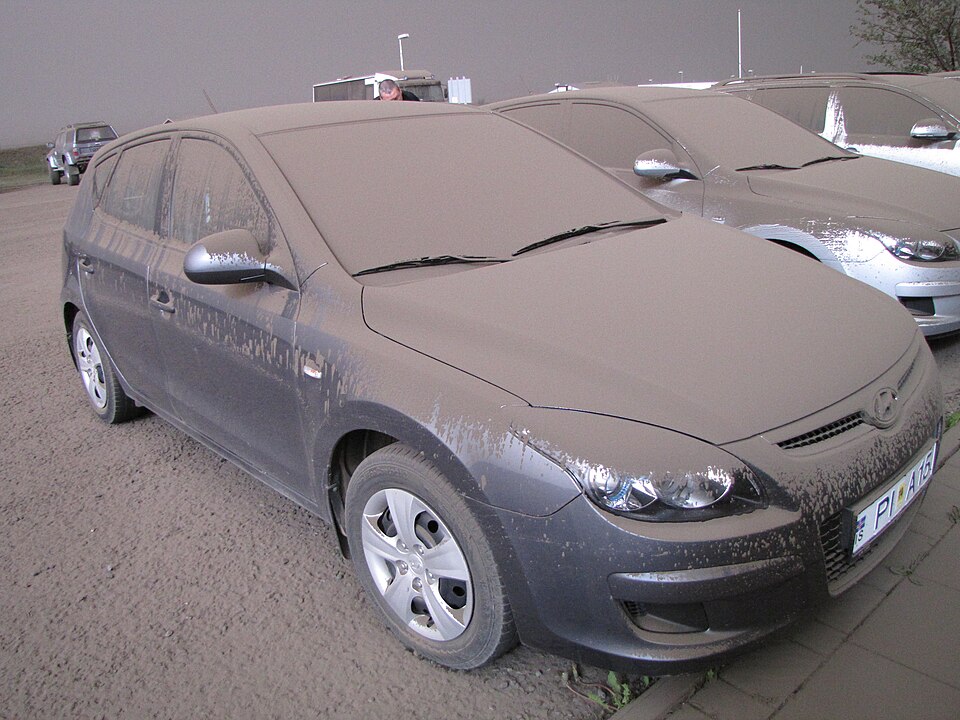
Grey roofs. Grey cars. The road has to be cleared of debris. A layer of what is called volcanic ash lies on the ground.
Only nothing burned there.
If you take such ash and examine it under magnification, instead of the soft ash from paper or wood, you will find tiny pieces of stone, minerals, and glass. Volcanologists call the ash particles less than two millimeters in size. Some are so small that the wind carries them hundreds and thousands of kilometers from the volcano.
So where did the word «ash» come from, and how can a stone be broken into a state of gray dust?
To get an answer, you will have to look inside the volcano.
Before it is released into the open air, lava is called something else.
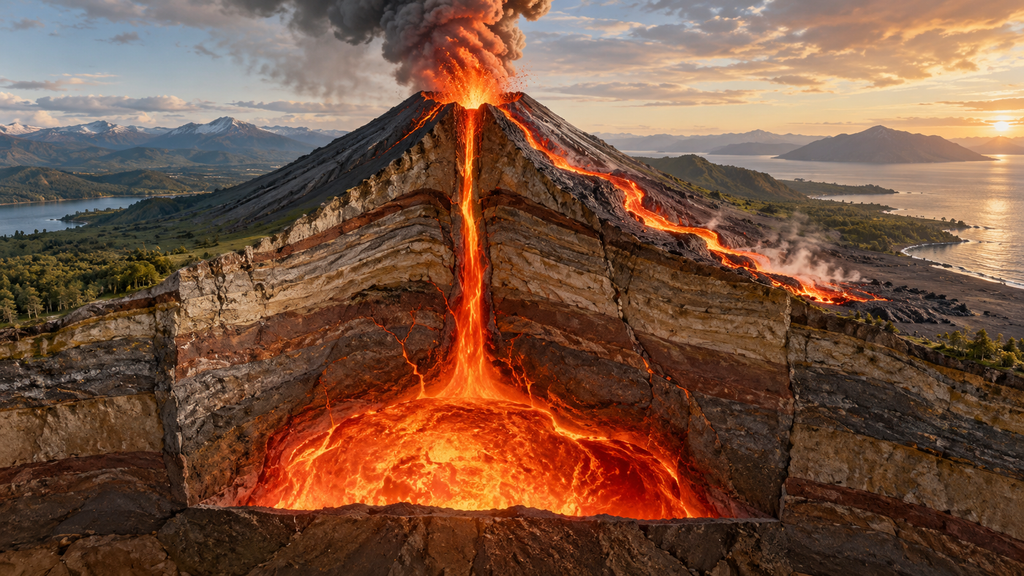
In children's drawings, a volcano usually starts with red lava.
In a true eruption, the story begins earlier, when the word does not yet exist.
The molten rock below the surface is called magma. When the molten rock erupts onto the surface, it is called lava.
But magma doesn't always come out peacefully.
Sometimes instead of a lava flow, an explosion occurs.
And here the story of the ash begins.
There is something in the magma that is hardly visible in the picture
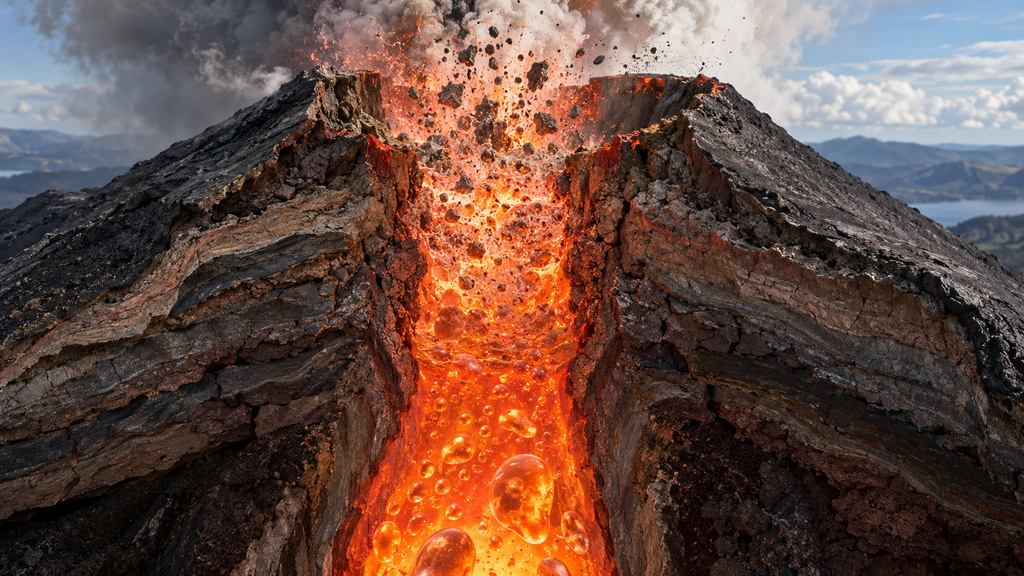
If you open a bottle of soda, the bubbles appear especially quickly after the pressure inside has decreased.
Comparing magma isn’t exactly accurate, but one important thing is similar.
Underground, gases can be dissolved in magma under high pressure. As magma rises closer to the surface, the pressure decreases, and the gases begin to escape and expand.
If they erupt quite peacefully, the eruption can be accompanied by lava flows.
And if the gas expands sharply, it is capable of breaking the magma into a huge number of fragments. At the same time, the explosion also breaks the already solid rocks around the channel through which the magma was rising.
All of this is thrown up.
Large fragments fall back quickly.
The smallest ones remain in the cloud.
And that's exactly what they are called—volcanic ash.
A piece of glass the size of a grain of sand
The word «ash» is convenient because it immediately paints a picture.
It performs poorly with the content.
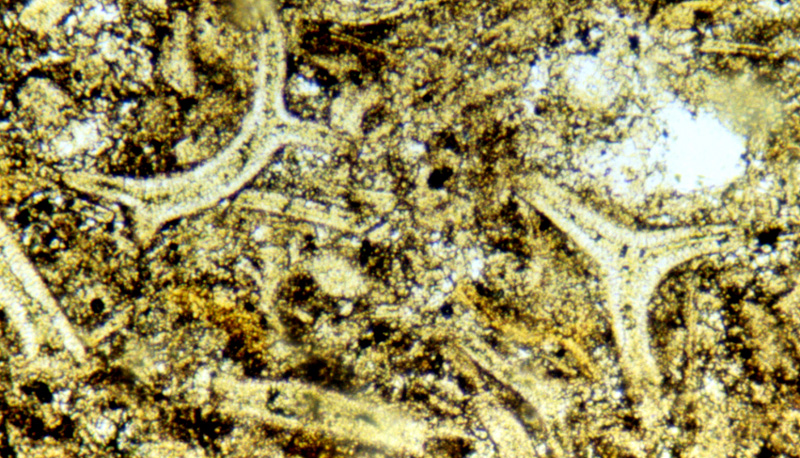
Volcanic ash is composed of various particles. It also contains fragments of old rock, mineral crystals, and volcanic glass.
Part of the volcanic glass forms in this way.
Bubbles of gas grow in the magma. During an explosive eruption, the walls of these bubbles burst open. Tiny jets and splinters of molten material fly outwards and cool down so quickly that they fail to turn into ordinary crystalline matter. The result is volcanic glass particles.
Under the microscope, some of them do not look like rounded pebbles, but sharp fragments.
Therefore, it is not worth rubbing real volcanic ash between your fingers for the sake of experience. It is hard and abrasive, and the fine dust is dangerous for breathing. It is better to study it in photographs and ready-made museum specimens than to collect it during an eruption.
Why a large stone falls nearby, but the ashes fly away
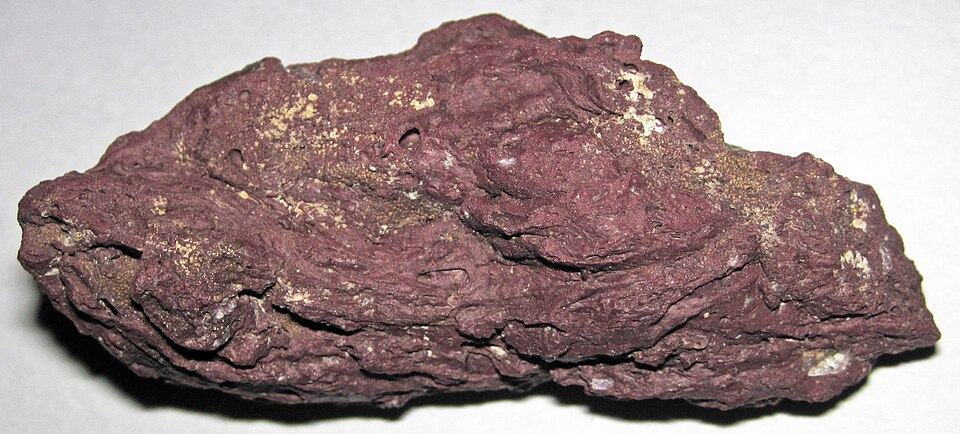
During explosive eruptions, pieces of very different sizes are ejected from the volcano.
There is even a common word for them: tephra.
Ash is the smallest type of tephra. Particles up to two millimeters in size are considered tephra, and volcanologists use other names for larger fragments.
The size here immediately turns into geography.
Large heavy fragments are difficult to remain airborne for long, so they usually fall relatively close to the eruption site.
Small particles rise along with the hot gases higher and are picked up by the wind.
Thus, a volcano may be on the map in one place, but its ash will be found far from it.
The USGS writes that under suitable conditions, the smallest particles can travel through the air for tens to thousands of kilometers.
It is convenient to check this on a map after a real eruption.
First, find the volcano.
Then the direction of the wind.
And then the cities where ash was reported to have fallen.
What emerges is a trail of eruption that is far from resembling a neat circle around the mountain.
The eruption is not necessarily to look like a lava fountain
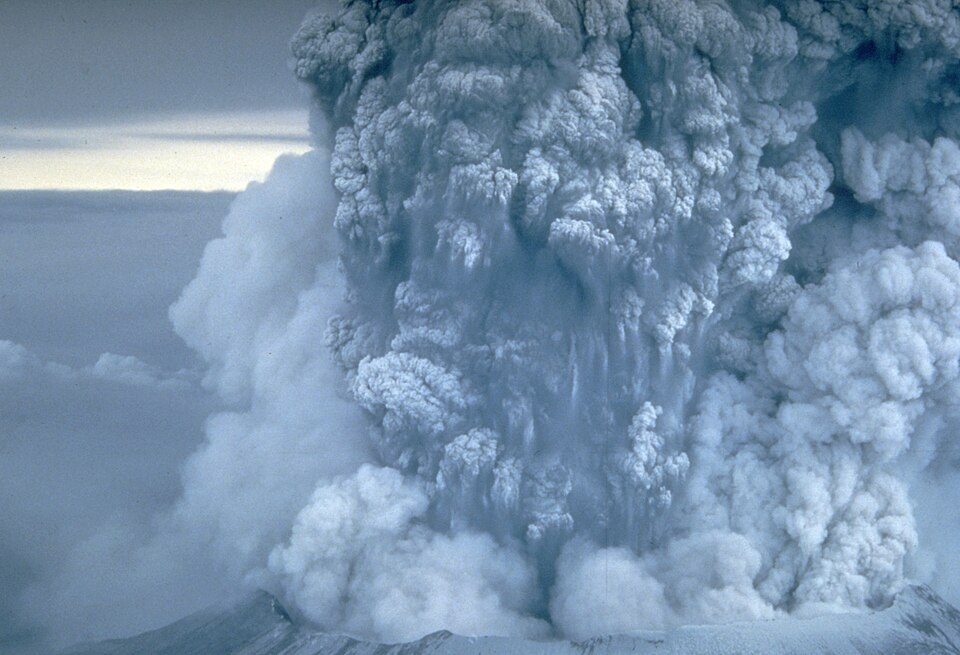
Another familiar image is broken here as well.
If you ask a child to draw an eruption, almost certainly red lava will fly up from above.
But volcanoes erupt in different ways.
In one case, the melt actually flows relatively smoothly and down the slope.
In another main feature, it is a column of gas and fragmented material that extends high into the atmosphere.
Sometimes it is precisely the encounter of water with hot magma or lava that helps make an eruption explosive: the water quickly turns into steam and expands sharply.
Therefore, the question «where is the lava?» is not always the best for photographing the eruption.
In some of the photos, the most important thing is already located in the huge gray cloud above the volcano.
Ash can fall where the volcano is not even visible
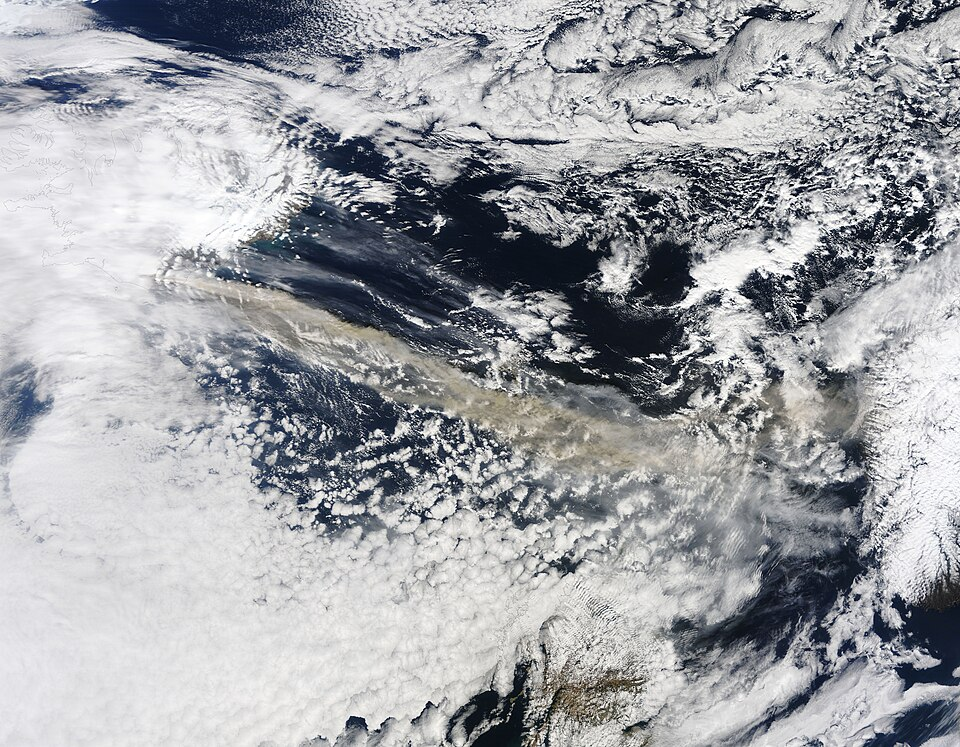
For a child, distance works especially well as a mystery.
Imagine: in the morning there is a layer of gray ash on the car, but the volcano itself is not visible from the street.
How to prove where the material came from?
Today, satellites, meteorologists, and volcanologists are monitoring this phenomenon. The direction of the cloud is also important for aviation: the solid particles of volcanic ash are dangerous for aircraft.
But the principle itself can be seen on a regular map.
Vulcan provides the starting point.
The wind gives direction.
Reports of ash falling indicate the following points.
The smaller the particles and the higher they have traveled into the atmosphere, the further the part of the material is able to escape from the eruption site. Larger material usually falls first, while smaller material may continue its journey.
Vulcan is not just a mountain on the map.
For several hours or days, it connects with a huge area around it.
When the ashes become stone again
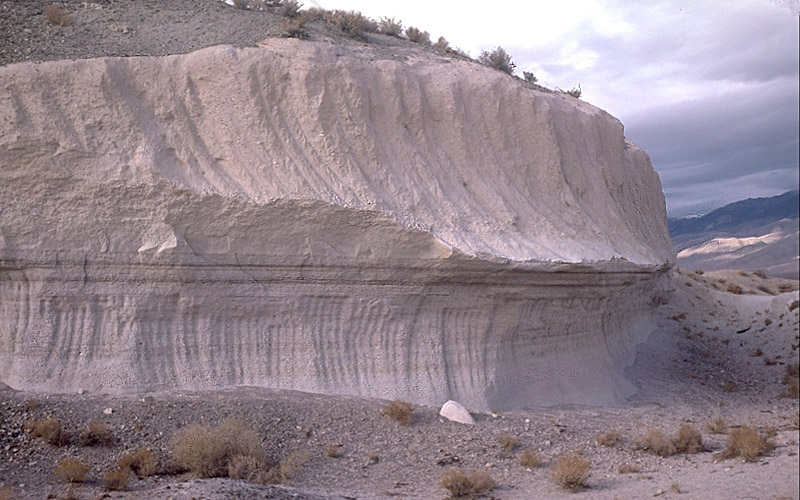
After the eruption, the particle journey ends on the ground, in water, on roofs, and on plants.
But the geological history doesn't necessarily end there.
Layers of volcanic material can persist. Over time, new deposits cover them. They become compacted, change, and remain in the rocks as a result of a specific volcanic event.
After a very long time, a geologist can see a layer of ancient volcanic material where there is no active volcano nearby.
Then the direction of the task changes.
At first we were walking away from the famous volcano and asking where the ash had flown off to.
Now you can find the layer and ask the opposite:
«What eruption brought him here?»
Thus, a tiny particle becomes a clue.
The volcano has several stories in one stone
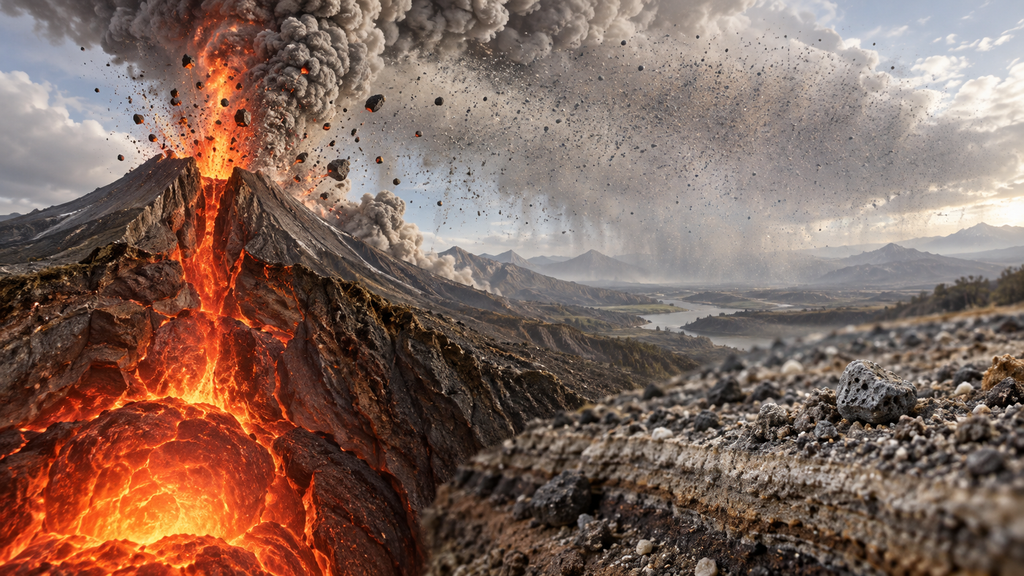
Underground molten rock is called magma. After the eruption, the molten material is brought to the surface and we speak of lava.
But during an explosive eruption, the magma and surrounding rocks can break apart into tiny fragments. The smallest of these particles, less than two millimeters in size, is called volcanic ash.
In just a few minutes, material from deep within the Earth can reach the surface, break into pieces, and fly away from the eruption site.
Probably that's why it's easier to study the volcano without looking at the cone with the red stream at the top.
It’s better to start with a gray lump.
It looks more modest than lava, but it forces you to ask the right question:
If this is not the remains of a fire, then what exactly was scattered in the air?
And the answer leads right inside the volcano.
Three experiences without real volcanic ash
Real volcanic ash for home experiments is not needed. All three tasks demonstrate a separate part of the eruption mechanics in safe objects.
Which falls first
Take a small piece of paper and a similarly sized piece of thick cardboard. Simultaneously release them from the same height and compare how they fall.
What we are discussing
Objects of different mass and shape behave differently in the air. Volcanic ash is very fine, so some of it can remain in the air for a long time and be carried away by the wind far from the volcano. Experience does not model an eruption literally; it only shows the influence of air resistance.
Where the cloud will take you
Draw a volcano in the center of the sheet. Place a wind direction arrow and ask the child to mark three places where the ash cloud could have drifted, and several places on the opposite side where the ash is most likely not to reach.
How to check
The points should not form a smooth circle around the volcano. In a steady wind, the area of ash transport will be elongated mainly along the wind direction.
Magma or lava
Draw a line of the Earth's surface. Underneath it, sign the melted «magma,» and then point the arrow outwards and ask what to call it now.
Answer
Beneath the surface, the molten rock is called magma. After the molten material erupts onto the surface, we speak of lava. The material changes position, and with it the term.
Important: Do not suggest to the child to collect real volcanic ash during or after the eruption. It may contain solid sharp particles and is harmful to breathing.
When one answer is not enough
During the classes, children not only learn what a volcano, magma, or ash is. They also look at maps, photographs, and natural processes, ask questions, and find the explanation for what seems strange at first. You can get to know the teacher and the format during a free trial lesson.
Try a geography lessonFrequently asked questions about volcanoes for children
Is volcanic ash formed because something burned?
No. Volcanic ash consists of very fine particles of volcanic glass, minerals, and fragmented rocks. It forms when material is broken down during an explosive eruption, not when it burns.
What size are the particles of volcanic ash?
Volcanologists classify the particles smaller than two millimeters as pumice. Larger fragments are included in other size groups of tephra.
How is magma different from lava?
The molten rock beneath the Earth's surface is called magma. When the molten material erupts onto the surface, it is called lava.
Why can volcanic ash fly far?
Very small particles can rise along with the hot gases and enter air currents. The wind is capable of carrying them hundreds and even thousands of kilometers from the volcano.
Are all eruptions accompanied by lava flows?
No. Eruptions can be of various types. In some cases, lava flows are clearly visible, while in others the main manifestation is an explosion and a large column of gas, ash, and other fragments.
Is it dangerous to touch volcanic ash?
Real ash is not suitable for children's home experiments. Its particles are solid, can be sharp and irritate the eyes and airways. It is better to use photographs, diagrams, and safe substitutes for activities.
Can old volcanic ash turn into a mineral?
Yes. Layers of volcanic ash can be compacted and cemented. Such rocks are called tuff. They preserve traces of ancient eruptions even after a very long time.