


In the spring of 1973, David Bowie traveled from Japan to Europe without a plane. First, there was the ferry «Felix Dzerzhinsky.» It left Yokohama and brought the musician to Nakhodka.
That was where the Soviet part of the route began.
Boowie got on a train. In Khabarovsk he changed trains again and headed west through Siberia.
There is one city missing in this story.
Vladivostok.
Why the Find
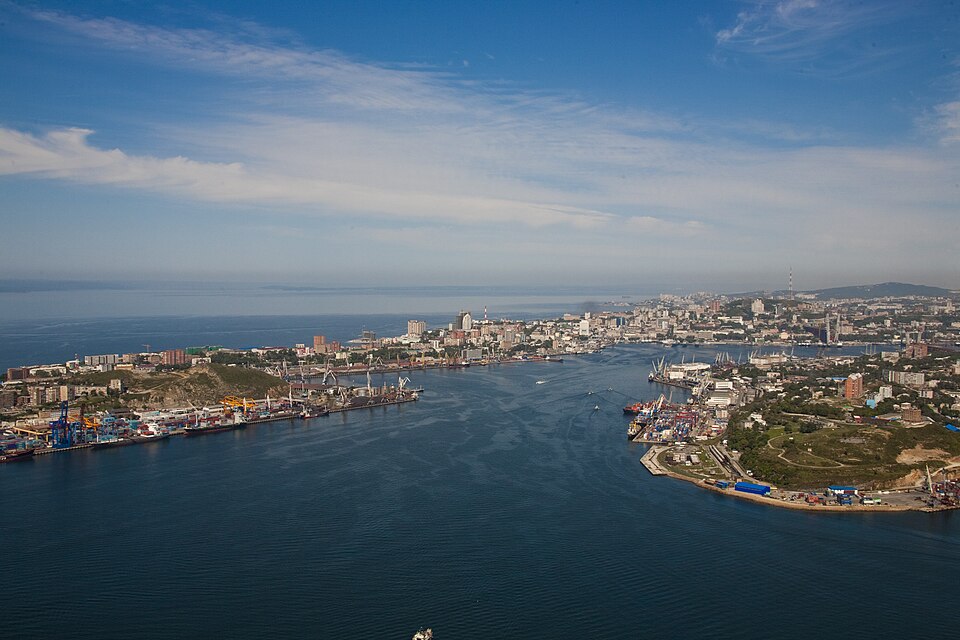
If you look at the map today, the choice seems strange. The main railway route through Russia ends in Vladivostok. There is a large port and a Trans-Siberian Railway station there.
But in 1973, the foreign passenger was not brought there.
Vladivostok was a regime city.
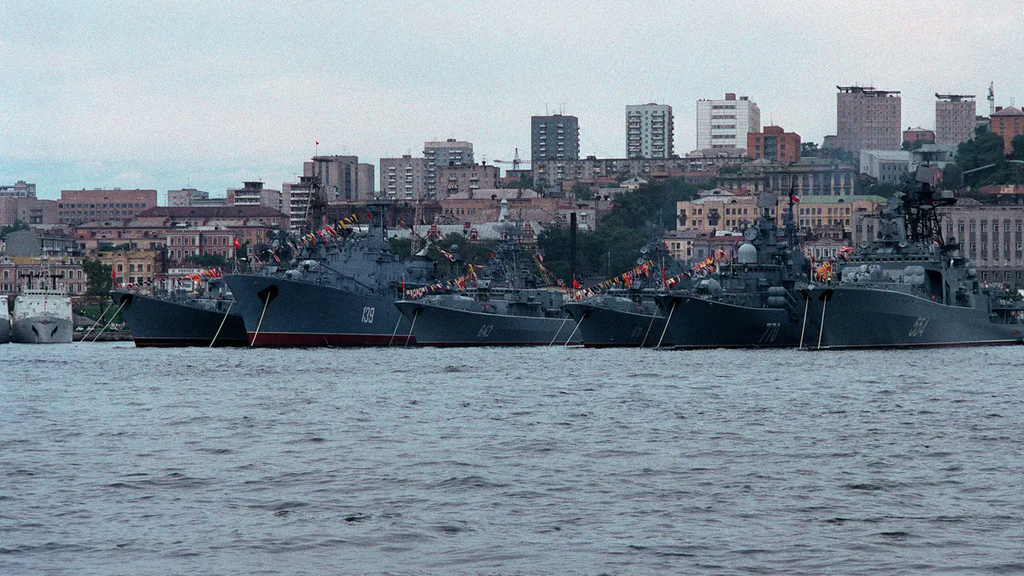
Special entry rules appeared as early as the 1950s. The city was closely connected with the Pacific Fleet, and it was not easy for outsiders to get there. Foreign travelers used another entrance to the Soviet Far East, Nakhodka.
That's why Bowie got off the ship right there.
On the actual ship, he managed to perform for the passengers. In one of the published accounts of that trip, there is another detail: a Vladivostok radio employee allegedly offered the musician to perform in the city. A reliable source for this story has not yet been found, so it is only known that such a concert never happened.
But there is another story. Bowie didn't make it to Vladivostok.
The city continued to function without foreigners
A closed Vladivostok is easily imagined as something like a huge military base behind a fence. In reality, ordinary city life was going on there.
In 1959, Khrushchev arrived. After his visit, Vladivostok received a new boost in construction. Streets were changed, residential areas grew. A funicular was built on the hill.
From Moscow, planes flew here. Trains arrived at the station. People worked at the port. Students studied in the city.
The possibility of coming was simply dependent on who you were.
That's why the next episode looks especially good.
Ford managed to
It has been a year since Bowie's trip.
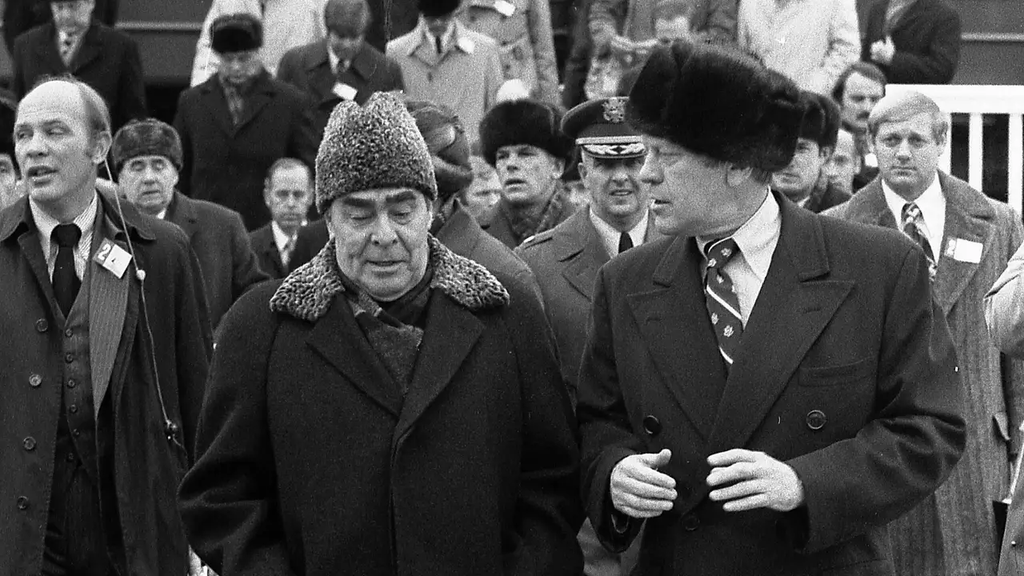
In November 1974, Gerald Ford came to Vladivostok.
Not secretly or on a tourist visa. The US President arrived for negotiations with Leonid Brezhnev. The delegations were transported by a special train and discussed strategic weapons.
Ford saw a city that most foreigners could not see.
And he liked the city.
Later, the American president recalled the similarity between Vladivostok and San Francisco. He wanted to take a closer look at it, but he didn't have time.
It turns out to be a strange pair of photographs from the same time period.
Boowie begins his trip to the USSR in Nakhodka.
Ford drives through Vladivostok a year later.
Both were foreigners. But the U.S. president came for official negotiations, for which an exception was made from the usual entry regime.
And they later searched for the paper.
Many years later, another detail emerged.
In 1991, Vladivostok was set to open to foreign visitors. To do this, it was necessary to deal with the previous regime as well.
There was a problem with the document.
Attempts were made to find the decision that turned the city into a controlled area, but they were unsuccessful. Later, museum researcher Alexander Tkachev said that information about the 1951 decree only surfaced about twenty years later.
It turns out to be almost a Soviet administrative mystery. Everyone knows that the city is closed. The pass system has existed for decades. And when it comes time to abolish it, you have to find the paperwork that started it all.
Yeltsin signed the decree on the opening of Vladivostok on September 20, 1991.
The new procedure began to take effect in January.
The «Haou Jang» arrived at the pier»
The first months of an open city could be described through the eyes of tourists. But the load was much more visible.
In January 1992, the ferry «Haojang» arrived at the Vladivostok trading port.
The ship was Vietnamese. It was chartered by a company from South Korea. In Vladivostok, steel billets intended for Taiwan were loaded onto it.
After decades of restrictions, the pier has become a small map of the Pacific Ocean.
Vietnam.
South Korea.
Russia.
Taiwan.
For a city that has just become accessible to foreigners again, the first episode of the open-world era was not about tours.
It was about trade.
And what would have happened to Bowie today?
Probably nothing particularly interesting.
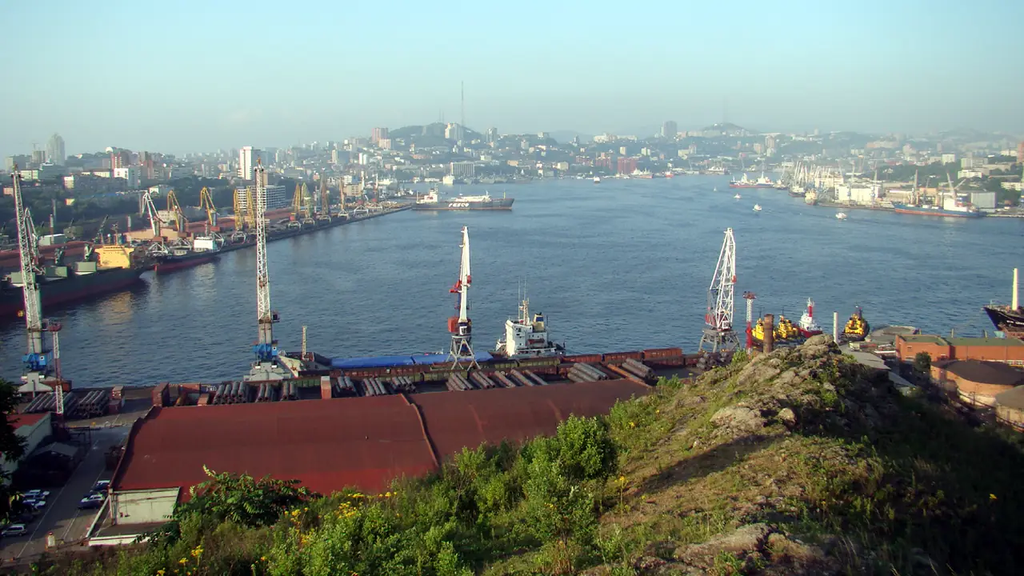
He would get off the ship, go wherever he wanted, look at the city, and then continue on his way.
And that is why his 1973 journey is interesting now.
In the USSR map, Vladivostok was nowhere to be found. The Trans-Siberian Railway still had its final terminus here. The city stood by the sea exactly where it stands today.
But the foreigner's route was constructed as if Vladivostok did not exist.
That’s why Bowie ended up in Nahkhta. That’s why Ford’s visit a year later seems like an exception. That’s why the city’s opening in 1992 changed not its position on the map, but the possibility of using that map.
Today you can step onto the platform of Vladivostok train station and see the sign 9288 kilometers from Moscow. This is where the road ends, along which Bowie once traveled through the USSR, starting his journey further east from a completely different train station.
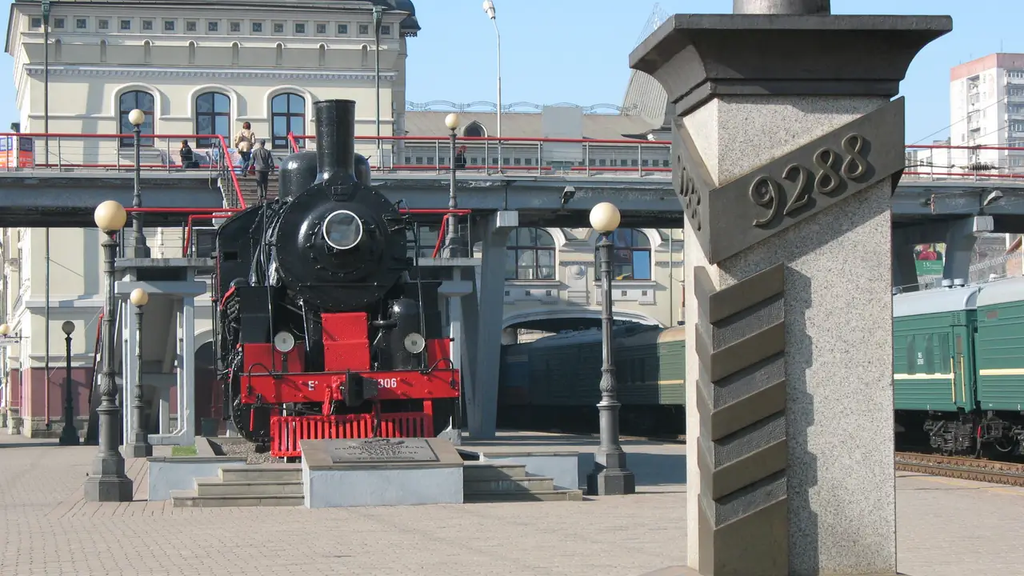
We will discuss the history of the Trans-Siberian Railway separately.
With Bowie, it turned out with a strange twist.
The final station existed.
It was as if she didn't exist for him.
What to see in Vladivostok and what is behind it
| Place | What's there | Why is it interesting after this article? |
|---|---|---|
| Vladivostok Railway Station | The final point of the Trans-Siberian Railway | It was here that Bowie did not get on, starting the railway part of the journey in Nakhodka. |
| Million | Old neighborhoods in the center | After Vladivostok, an international city that existed long before the Soviet regime |
| Vladivostok fortress | Fortresses, batteries and underground structures | Military history helps to understand why the city received a special entry regime |
| Funicular | Short line along the slope of a hill | One of the notable traces of the great Soviet Vladivostok |
| Russian Bridge | Suspended bridge across the Bosphorus Strait, Eastern Side | It connects the city with the Russian Island, where military facilities and fortifications have been preserved. |
| Russian Island | The university campus, forts, the coast and vantage points | It is clear to see how a territory with a military past became a university and a city. |
| Tokarevsky lighthouse | A lighthouse on a narrow promontory at the entrance to the bay | It reminds that Vladivostok is primarily a port city that faces the sea. |
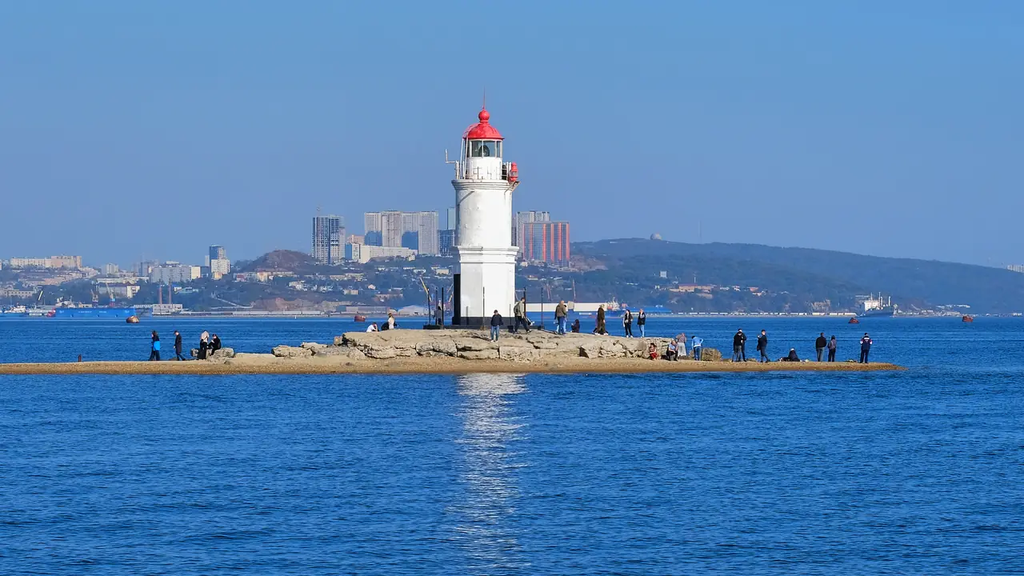
Vladivostok before the trip
Where is it located
Vladivostok is located on the coast of the Sea of Japan, in the south of Primorsky Krai. It is one of the main cities of the Russian Far East.
The difference with Moscow
Vladivostok is seven hours ahead of Moscow. When it is nine o'clock in Moscow, it is already four o'clock in the afternoon here.
How to get there
The most obvious options are a plane or a train. The railway route is particularly interesting because Vladivostok is the final point of the Trans-Siberian Railway.
How many days to leave
For a first visit, it is convenient to allocate two or three days: the center and the bay, the cable car, the fortress, the bridge, and the trip to the island of Rus' require time.
What to watch in the center
The railway station, the embankments, the Millionka and the funicular can be conveniently combined into one day. They are located closer to each other than the island of Ruski and the distant fortifications.
What to leave separately
The Russian Bridge, the Russian Island, and the forts are best avoided when strolling through the city center. This is another part of the city that deserves its own time.
Frequently asked questions about Vladivostok
Where is Vladivostok located?
In the south of the Russian Far East, on the coast of the Sea of Japan. Vladivostok serves as the administrative center of Primorsky Krai and the final point of the Trans-Siberian Railway.
Why was Vladivostok a closed city?
Because of the city's military significance and its connection with the Pacific Fleet. From the early 1950s, a special regime was in effect for entry, and ordinary foreign visitors were not allowed to enter Vladivostok.
When was Vladivostok opened to foreigners?
The decree on the opening of the city was signed by Boris Yeltsin on September 20, 1991. The new order came into effect in January 1992, after almost forty years of special regime.
What should you see in Vladivostok first of all?
It’s convenient to start at the railway station, the center and Milionka, then take the cable car. It’s worth taking a separate trip to see Russian Bridge, Russian Island and the fortifications of Vladivostok Fortress.
What is the time difference between Vladivostok and Moscow?
Seven o'clock. Vladivostok is ahead of Moscow, and when it is nine o'clock in the capital, it is already four o'clock in the afternoon here.
Why does Vladivostok consider itself a city facing Asia?
Geographically, China, Korea, and Japan are close by, and the city’s history has long been linked to trade through the Pacific Ocean. Before the Soviet era, there were large foreign communities here, and after the city was opened in 1992, Asian trade connections once again became a prominent part of city life.
Russian language and culture for children from 4 years old
During the classes, children not only learn the language but also become acquainted with the history, geography, and culture of Russia. At the free start, they will determine the child’s level, be introduced to the teacher, and help choose the appropriate program.
Sign up for two free lessons