

On the first of October, the conversation can start with a pause. «Happy holidays,» says the adult grandson, adding the date. On the other end, they laugh, «what an old man I am,» and a pause appears in the conversation. The attention was sincere, but it came across as a message about age.
Afterwards, the conversation usually picks up again, but the question remains: What are we congratulating the person on October 1st with?
A greeting that sounds like a reminder
The birthday refers to one person and their own year. On October 1st, the greeting is addressed to an entire group, and the boundaries of this group are determined by each person himself. A person may not consider himself to be in the age group the person greeting him/her belongs to. There is no uniform boundary in statistics and demographic publications; in general, older age is calculated from sixty or sixty-five years.
Household words exacerbate the confusion. Grandma and Grandpa talk about kinship, the pensioner about benefits, the elderly about age, and one of them does not fit in with the other. The explanation that «today is a holiday for all grandmothers and grandfathers» narrows the date to the family circle, and the elderly neighbor, who has no grandchildren, is left out of it.
What tasks lie behind this date
The UN General Assembly established this date on December 14, 1990, in resolution 45/106; the annual celebration was chosen to be October 1. The English name is International Day of Older Persons. In Russia, the day was established by a decree of the Presidium of the Supreme Council of the Russian Federation of June 1, 1992, No. 2890/1-1 «On the Problems of Older People.».
On December 16, 1991, the UN adopted the Principles on the Elderly, which list five areas of action: independence, participation, caregiving, realizing one’s own potential, and dignity. These principles address the situation of older people, whether they can receive medical care, learn, work, and go where they want when they want.
First ask, then help
The most notable aspect of the principles begins where help arrives. The adult children decide that the mother should no longer travel alone, and inform her of the final decision. The ticket has not been purchased, the trip has been cancelled, and the conversation takes place afterwards.
Caring at such a moment turns into a decision for another person. The question «How is it more convenient for you?» takes a few seconds and returns that decision to the person it concerns.
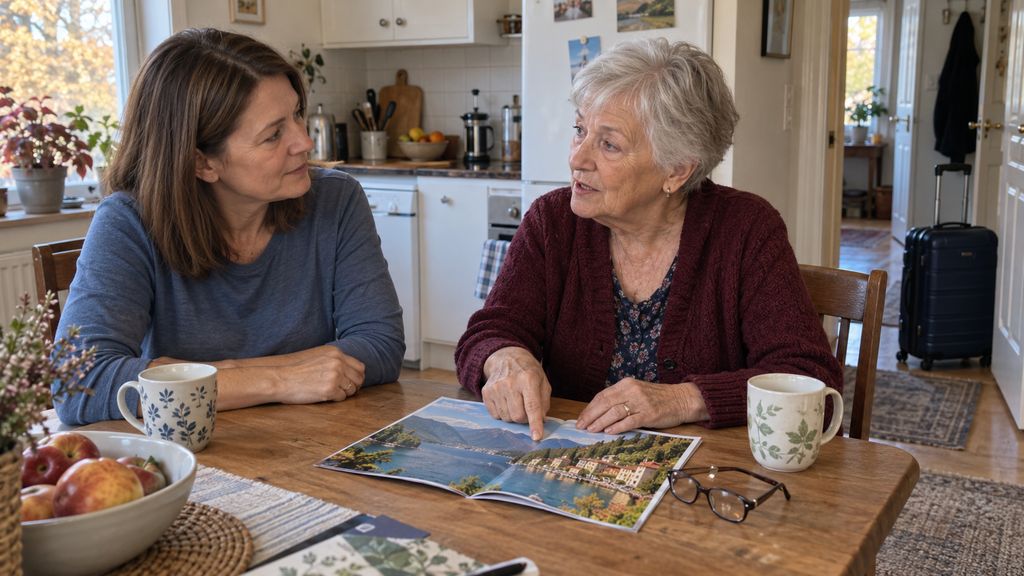
Sometimes help is indeed needed, and it has to be discussed seriously. But even then, a person retains their routine, habits, and opinion about who and when visits their home. Age alone does not dictate these decisions to those around them.
What is a person busy with right now
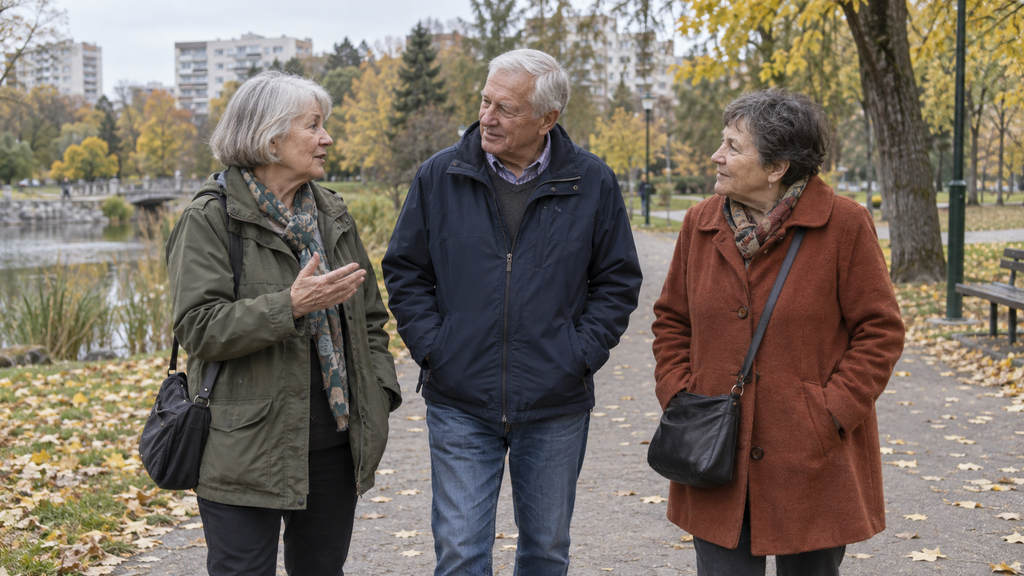
The second common turn of the conversation is health and the past. First there is a question about her well-being, then memories, and the conversation ends there. At the same time, Grandma lives in the present. She reads, discusses the news, goes to the pool, and a week ago she got into a fight with a neighbor over parking.
The conversation changes with simple questions about today’s day. What she is watching now, who of her friends called, whether she managed to make an appointment with the beautician. Children ask these questions more easily than adults, so it’s worth taking time for them in video calls. «What kind of flower is on your window?» opens the conversation faster than a polite «how are you?».
The UN principles specifically mention fair treatment regardless of economic contribution. Dignity is preserved even when a person no longer works and needs constant care. Gratitude for past contributions should not become a prerequisite for a good relationship.
Words of congratulations for October 1st
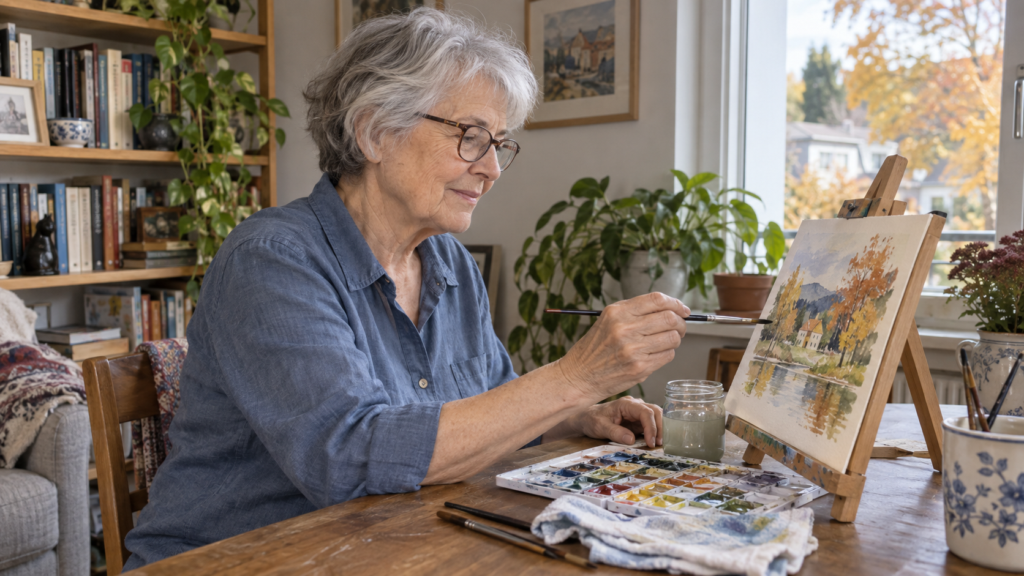
This also forms the essence of the greeting itself. It is based on the details of today's life. The grandmother recently signed up for drawing classes, and next to the wish for good health there is something about those classes.
A child who writes in Russian and speaks English with friends in school will be helped. Ready-made phrases for writing to grandma in Russian. Two live offers are enough if they contain something about the person themselves and their grandmother. You can show the signed postcard to the camera during the call, and send the paper version later.
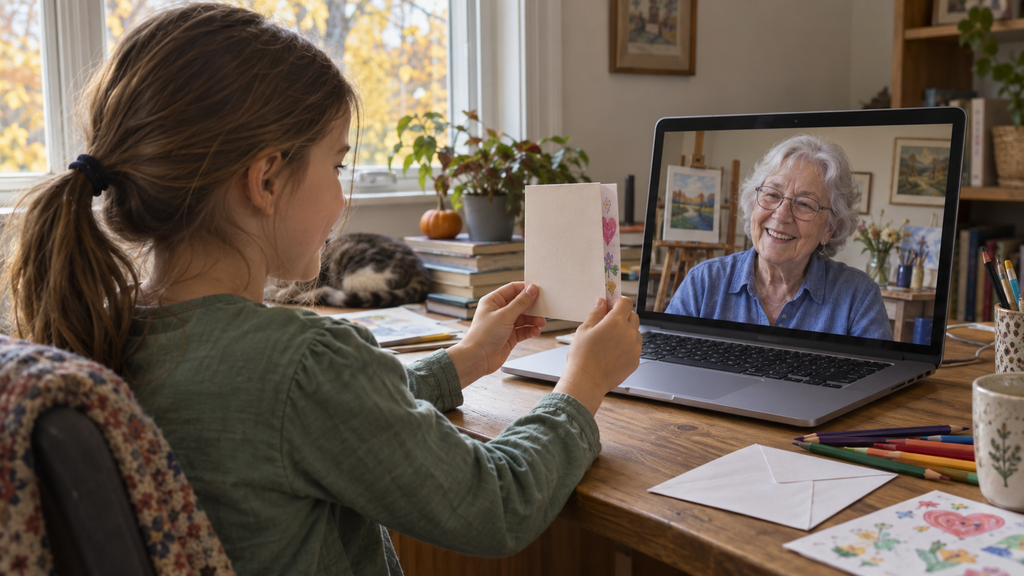
In the actual greeting, it sounds simple. «Grandma, I wish you good health! Will you show me what you’re drawing right now?» The question about today’s class helps to continue the conversation, and from there it moves on to her personally.
Frequently asked questions about the Day of the Elderly
When is the Day of the Elderly celebrated?
Every year on October 1st. The date is constant and does not depend on the day of the week.
Who established this day?
The UN General Assembly adopted resolution 45/106 on December 14, 1990, and declared October 1 as International Day of Older Persons. In Russia, this date was enshrined in a decree in 1992.
How to explain to a child who celebrates October 1st?
Please tell me that this day applies to all older people, not just to their grandparents. You can greet older relatives and friends, taking into account how they themselves feel about this holiday.
How to congratulate a loved one in a different time zone?
Agree on a time that is convenient for both of you. If you can't talk on the 1st of October, the child can record a short greeting in advance and show the card to the camera. You can postpone the live conversation to the next free time together.
What to write to someone who doesn’t like reminders about their age?
Address the person by name or a familiar household term, for example, «Dear Grandma!» You can write warm wishes without mentioning the holiday's name. If the person explicitly says they don't want to celebrate this date, their wishes should be respected.
What to do if the postcard isn’t delivered by October 1st?
On the first of October, you can send a photo of the signed postcard and a voice greeting. The paper original will arrive later. The exact day of delivery does not determine the value of the personal words and the children's drawing.
Russian for communicating with loved ones
At Palme School, children aged four to seventeen learn Russian online. You can learn more about the school here. two free lessons.
The first lesson is an introductory one, conducted by a methodologist. He or she will determine the child's level of Russian and select a group. The second lesson is a trial lesson; the child will work in a group with a teacher and get acquainted with other students.