

Everything is organized conveniently in the children's card.
France — Paris.
Japan — Tokyo.
Russia — Moscow.
One country, one city. It seems that the word «capital» means exactly this: the main city of a country.
And then the South African Republic appears on the list.
And there isn’t just one answer.
Pretoria.
Cape Town.
Bloomfontein.
There are no mistakes. The South African government does indeed call all three cities capitals. They just divide the work among themselves.
And then the usual game of «country — capital» turns into a much more interesting question:
What exactly does a city do to be a capital?
The president is in Pretoria, but the parliament is not there.
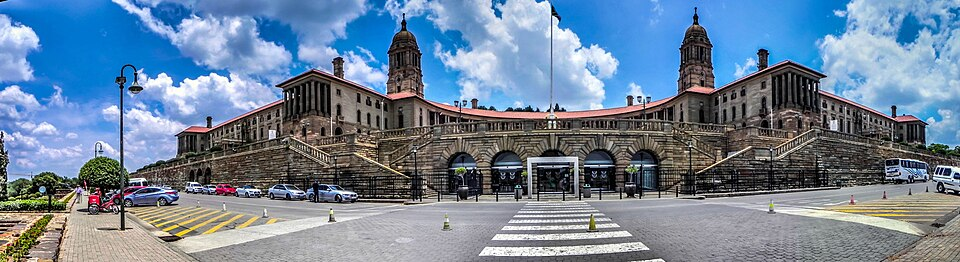
It's easier to start with Pretoria.
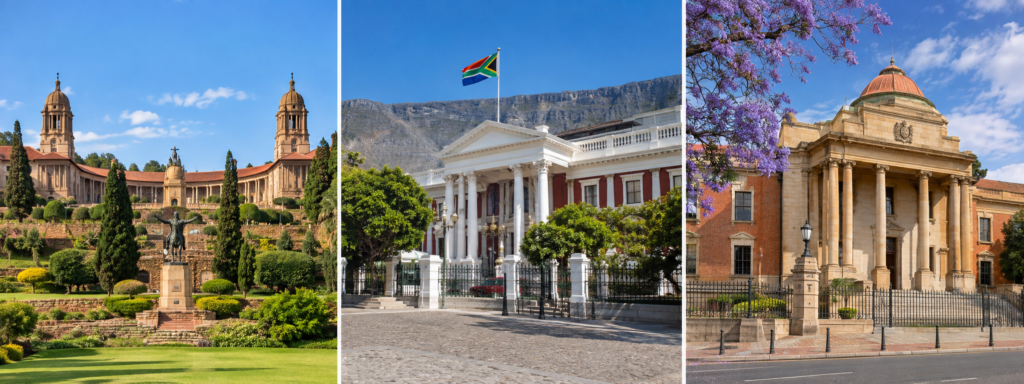
The Union Buildings are located there and the presidential administration operates there. The government of South Africa calls Pretoria the administrative capital of the country.
If the child was previously taught that the capital is the city where the government is located while everything is coming together.
But the South African parliament meets in Cape Town.
It is on the other end of the country, more than a thousand kilometers from Pretoria.
That is why Cape Town is called the legislative capital: there is a parliament that passes laws.
That's the first oddity.
The government is in one city.
The Parliament is another matter.
And both cities have the right to be called capitals.
The third city appears because of a lawsuit
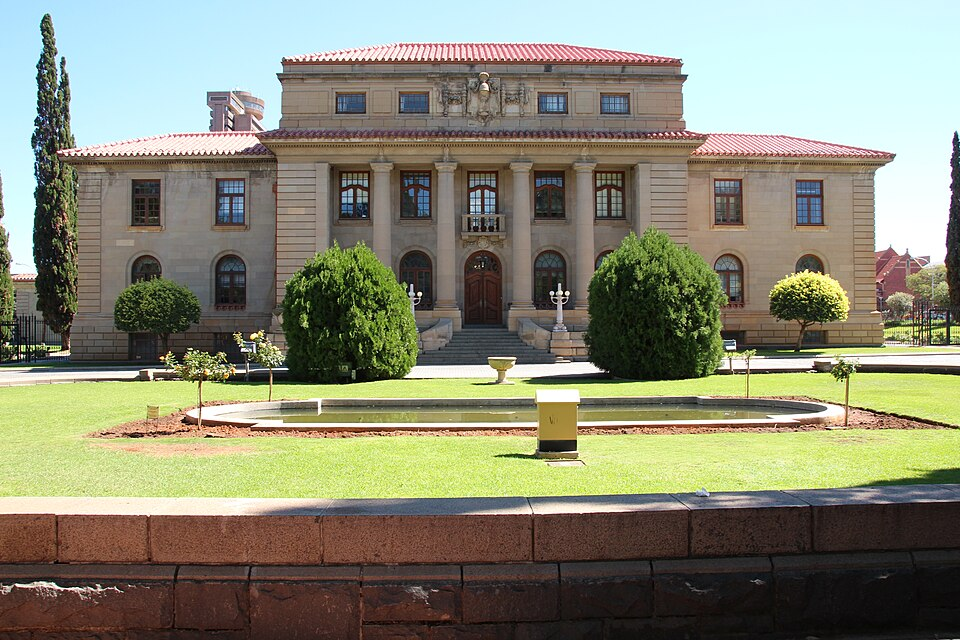
Bloomfontein remains.
It is officially called the judicial capital of South Africa. The country's Supreme Court is located there.
On a simple diagram, everything looks almost perfect:
Pretoria — the administration.
Cape Town — the laws.
Bloomfontein is a court.
But the real world is always a little more complicated than the school curriculum.
The country's highest court is located in another city: the Constitutional Court meets in Johannesburg.
So the equality of «Bloomfontein — the entire judicial system of the country» does not work.
More precisely, Bloumontfontein has historically been considered the judicial capital and remains the seat of the Supreme Court of Appeal.
For a child, this is a useful change of direction.
The name of the capital does not always mean that all government institutions of the same type are gathered in one place.
Why one country needed three cities
This oddity appeared long before school cards.
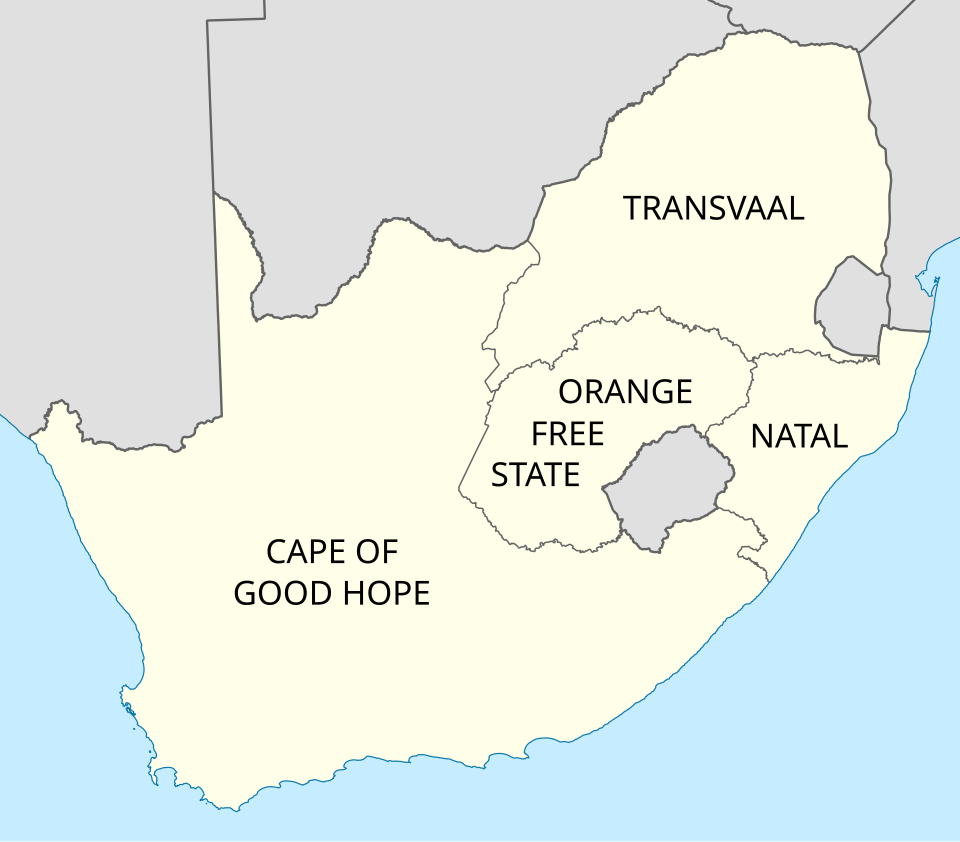
When the South African Union was established in 1910, the dispute over the capital was resolved not by choosing a single city, but by dividing the functions.
The Union included the Cape Colony, Natal, Transvalla, and the Orange River Colony.
Each territory already had its own political centers and interests.
Cape Town got a parliament.
Pretoria became the administrative center.
Bloomfontein received the highest court of appeal of the time.
South African parliament sources describe this as part of a political compromise in the creation of the Union. At the same time, the Union itself was created without the political participation of the majority of the country’s black population, so this compromise did not represent the interests of all residents.
Since then, the state's map has changed significantly; modern democratic South Africa has emerged, and the distribution of capital functions between the three cities has remained unchanged.
Does this mean that the capital doesn't have to be one at all?
It turns out that you don't have to.
Most countries do indeed have a capital city. Therefore, the «country-capital» rule is convenient for first getting acquainted with the map.
But that is not the law of nature.
The word «capital» is not necessarily meant to mean the same set of institutions.
In one country, parliament, the government, and other central authorities operate in the same city.
Their other functions can be distributed among several cities.
And sometimes the official capital city and the place where the government operates don't even coincide.
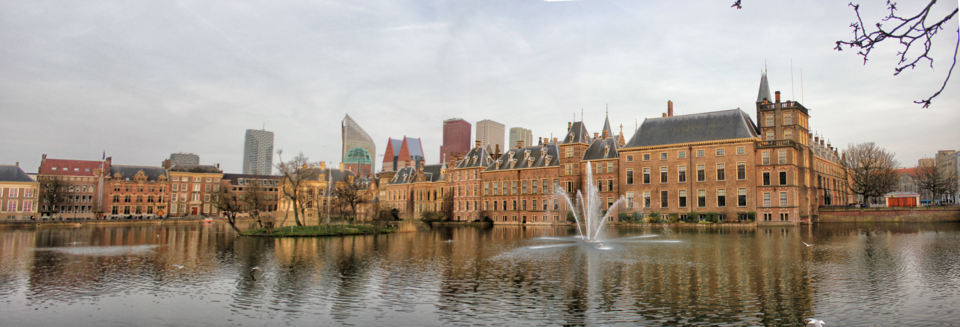
This is the case, for example, in the Netherlands.
The capital of the country is Amsterdam.
But the government traditionally operates in The Hague.
The children's card will look like this:
The Netherlands — Amsterdam.
And that is the right answer.
But if the child asks:
«And where is the government then?»
There won't be enough cards left.
Why the capital isn't necessarily the largest city
There is another rule that children quickly come up with themselves.
If the capital is the main city, then it should be the largest.
That's not necessary either.
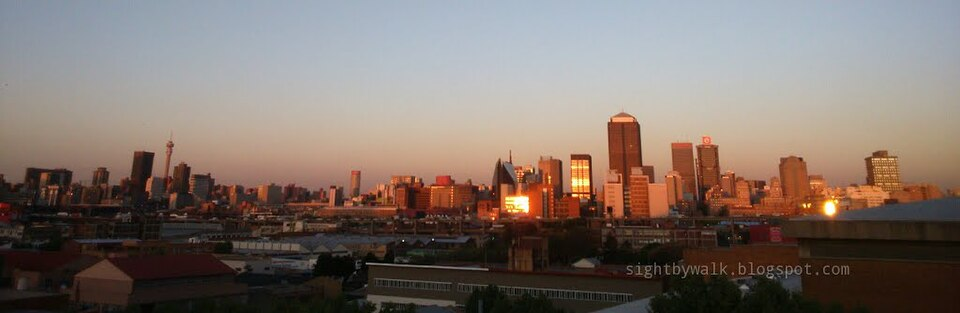
The capital may be the main political center, while the country's largest city in terms of population will be another.
That is, the words «chief», «largest», and «capital» are not equal to each other.
It is convenient to check not by a list, but by questions.
Which city is the capital?
Where is the parliament located?
Where does the government work?
Which city is the largest?
Sometimes the answer to all four questions will be one.
Sometimes there will be two cities.
And in South Africa, several points on the map will be needed at once.
That's when the country stops looking like one signature next to one star.
The map of South Africa turns three words into distance
The names Pretoria, Cape Town and Bloemfontein are easy to learn that way.
But on the map, what is not on the list becomes visible.
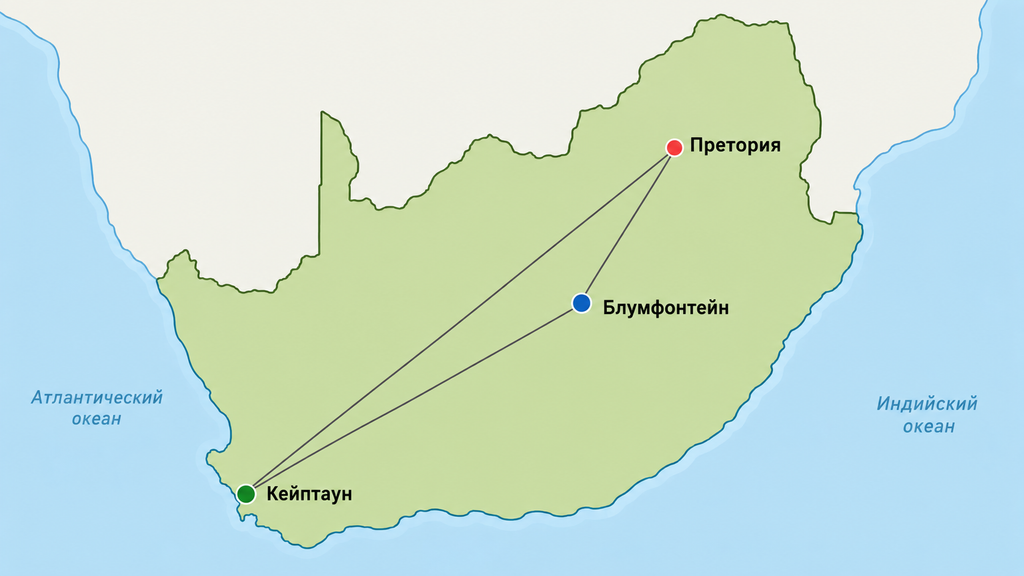
Cape Town is located in the southwest of the country, near the ocean.
Pretoria is far to the northeast, inside the continent.
Bloomfontein is located in the central part of the country.
The three capitals are not located close to each other.
If you connect them with lines, you get a large triangle.
And then the word «divided» becomes literal: the state functions are not distributed between neighboring buildings, but between different cities of the country.
For the first task, that is already enough.
Find all three cities.
Sign only one word next to each one:
management,
the parliament,
court.
There is no need to memorize the definitions. The map itself shows that the word «capital» works in an unusual way here.
And what to write in the answer «name the capital of South Africa»?»
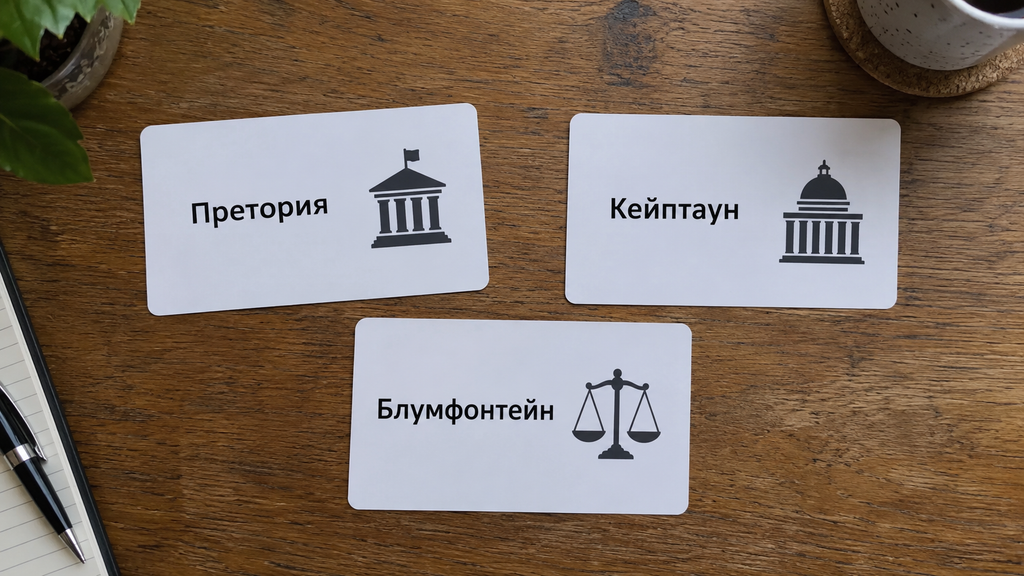
Here the child will benefit from the distinction between a map and real geography.
If the question is:
«How many capitals does South Africa have?»
I can name three.
If you are asked to list them, it is Pretoria, Cape Town and Bloemfontein.
If a textbook lists Pretoria as the only city next to South Africa, that doesn’t make the other two capitals a mistake. Pretoria is indeed the administrative capital and the seat of the presidential administration, but the official government documents of South Africa separately list the three capitals according to their functions.
The best way to avoid getting confused is not to memorize three names without a reason.
It’s better to remember the strangeness itself:
In one country, three cities shared the work of the capital.
After that, it is much easier to attach names to roles.
The «country — capital» card is still useful

After South Africa, you can decide that it’s pointless to teach the capitals at all: there are always exceptions everywhere.
No.
For most countries, the «country-capital» model works well.
The problem arises only when the card is taken as a complete description of the country.
A card is needed to quickly link two names together.
A map is needed to see where they are located.
And a good question is needed to notice when a simple rule stops working.
That is why it is convenient to leave South Africa in the card set.
Not as an unpleasant exception that has to be memorized.
And how about a card that the child will stop by one day and ask:
«Wait a minute. Why are there three cities here?»
From this question, the geography becomes more interesting than the list of correct answers.
Three tasks with countries and capitals
There is no need to repeat the list of capitals here. All three tasks test the same point of the article: the word «capital» can mean different things.
Hand over the work to the capitals
Connect the three cities of South Africa with their respective capitals: Pretoria, Cape Town, Bloemfontein; the administrative capital, the legislative capital, the judicial capital.
Answer
Pretoria is the administrative capital. Cape Town is the legislative capital. Bloemfontein is the judicial capital and the seat of the Supreme Court of Appeal.
Find the triangle on the map
Find Pretoria, Cape Town and Bloemfontein on the map of South Africa. Connect the three cities with imaginary lines.
What to notice
The metropolitan functions are distributed among cities that are far from each other. This is more clearly visible on the map than in the list of names.
Compare two countries
Compare South Africa and the Netherlands. In South Africa, the capital functions are distributed among several cities. In the Netherlands, the capital is Amsterdam, and the government operates in The Hague.
The main question
What do the two examples have in common? The simple formula «capital = the city where all government is located» does not apply to either of them.
After the tasks: Ask the child to explain in their own words why the «country — capital» card is useful, but sometimes they only tell the story of the country.
Three cities and one question why
During the classes, children work with maps, travel around countries and continents, complete interactive tasks, and participate in discussions. In this way, the names are linked to real places and become part of a comprehensible picture of the world.
Try a geography lessonFrequently asked questions about countries and capitals
How many capitals does the Republic of South Africa have?
South Africa officially lists three capitals: Pretoria as the administrative capital, Cape Town as the legislative capital, and Bloemfontein as the judicial capital.
Why does South Africa have three capitals?
This distribution arose during the creation of the South African Union in 1910. The capital functions were divided between several important political centers.
Where is the South African Parliament located?
The Parliament of the Republic of South Africa is located in Cape Town, so the city is called the legislative capital of the country.
Why is Bloemfontein called the judicial capital, when the Constitutional Court is located in Johannesburg?
Bloemfontein has historically maintained its status as the judicial capital and is home to the Supreme Court of Appeal. The Constitutional Court, South Africa's highest court, is located in Johannesburg.
Is the capital necessarily the largest city in the country?
No. The capital status is related to the political role of the city, not necessarily to the population size. The largest city in the country and the capital can be different cities. For example, the capital of Canada is Ottawa, and the largest city is Toronto. In the USA, the capital is Washington, and the largest city is New York. In South Africa, the largest city is Johannesburg, and it is not one of the three capitals.
Why is Amsterdam the capital, if the government of the Netherlands is in The Hague?
Amsterdam is the official capital of the Netherlands, and The Hague traditionally serves as the seat of government. This is an example of the fact that the capital and the seat of government do not always coincide.
How should I answer the question about the capital of South Africa in school?
If you are asked to name the capitals of South Africa, the correct full answer is: Pretoria, Cape Town, and Bloemfontein. If a specific task calls for only one city, you should refer to the wording of the task and the textbook used, not forgetting that South Africa’s official materials list three capitals.