

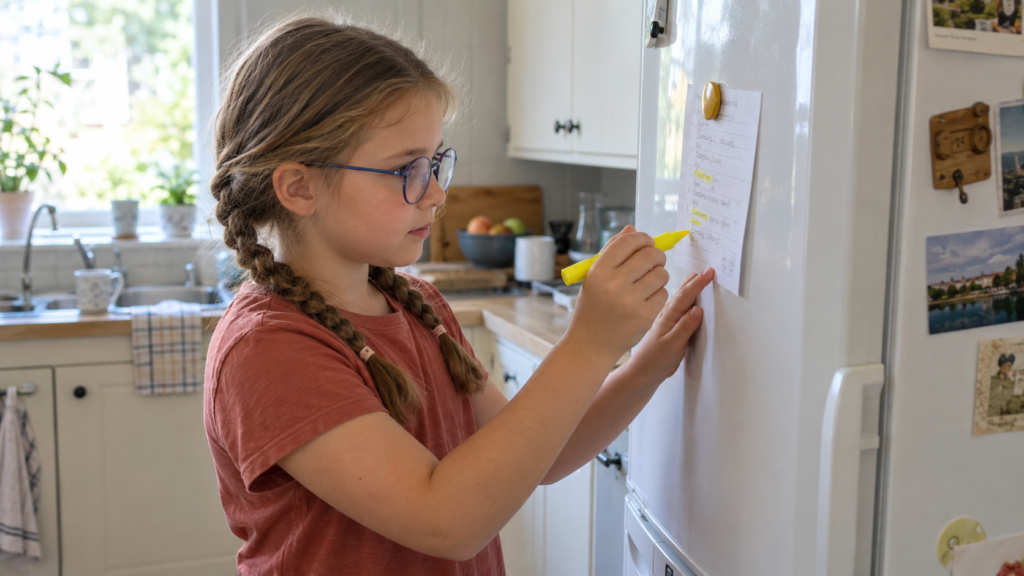

If a child brings sheets from an American school with whole sentences colored in with yellow text markers, then they are already familiar with the method. The assignment on such sheets sounds something like this: highlight the sentence that tells you, highlight the sentence from which you learned that. What the teachers are looking for in the text is called text evidence, a reliance on the text, that is, words or fragments that support the answer. The yellow bar is just a way to highlight that support so that it is visible.
In a home setting, no one usually touches the text marked with this symbol. The text is read at home, often well, quickly, and with expression, and then the adult asks something about what they have read and gets a pause in response. In this case, the child reads the words without any noticeable difficulties, but has difficulty finding the information they need in the text. Why this happened with a particular child is unclear from just one pause; we won’t try to figure that out. Let’s try the marker.
Note and marker
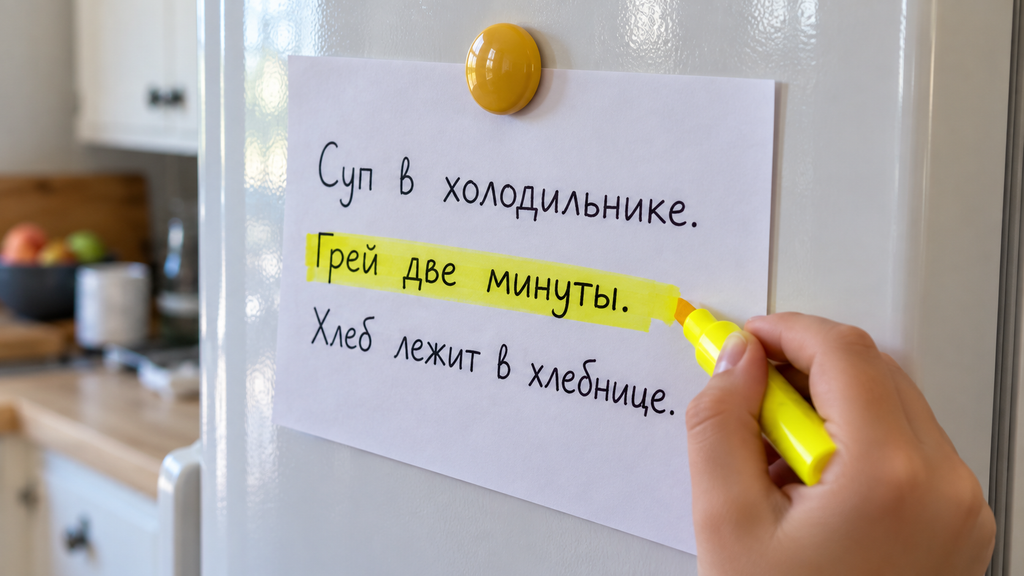
For the first try, a short note on the refrigerator will do. Three lines written before leaving. «Soup in the refrigerator. Grey two minutes. Bread is in the bread bin.» The child reads it out loud in a few seconds, without punctuation and with the correct intonation, and when asked «How much to boil?» she answers in silence, then starts reading again from the first line.
The note stays where it hung; no one turns it over or covers it with their hand. The adult doesn’t ask again louder or remind them that they just read it. He hands them the same yellow marker and says the phrase that the child might have already heard in school, only in Russian. «Highlight where it says how many minutes.».
If the task is familiar, the child will find it easier to understand the request. The first line is about soup; there are no minutes in it. The second line, «Grey two minutes,» and the yellow stripe falls over it. Now you can repeat the question of how much to boil, and the answer is taken directly from the colored, two-word sentence; no one expects a complete sentence.
Why ask a second time?
The shaded line shows that the child has found a place where it is mentioned, and it does not say anything about how he understood that place. It can also be highlighted by the familiar word «minutes» in the question, «minutes» in the note, ready to go. Therefore, the question about the minutes is heard for the second time over the yellow bar, and the answer «two minutes» is given by looking at the text. I highlighted and answered, two actions, and both can be seen from the side, unlike what was happening in my head while the note was read out aloud. This will not be a complete test of understanding; it can also be highlighted and repeated by coincidence of words. The exercise is dedicated to one thing: finding information that is directly indicated in the text.
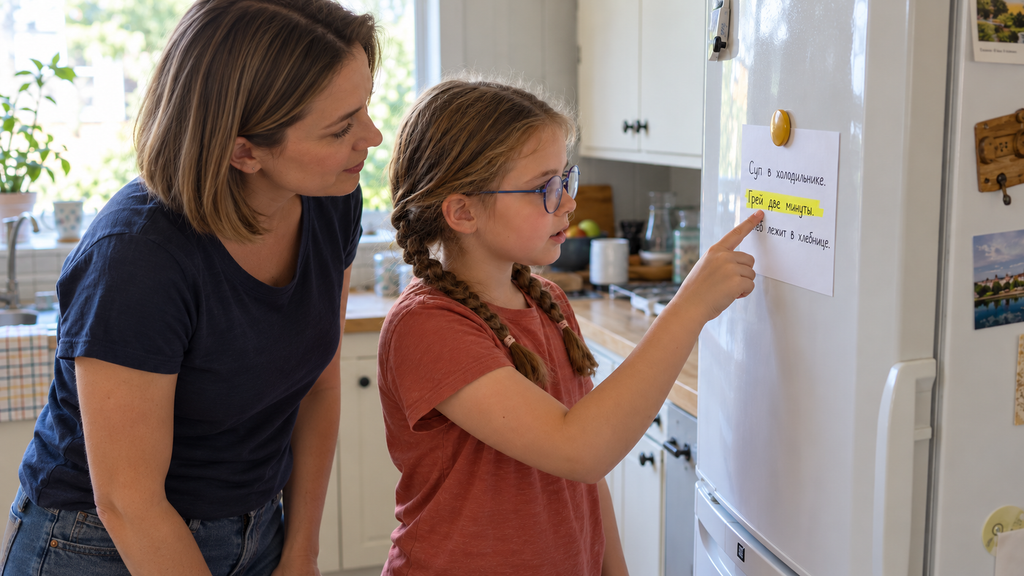
The question about the minutes is suitable for the first time because the answer is in one place and the marker is completely covered. You can ask the same question about bread; the third line. But the «What is the note about?» question is not suitable for the first time; you would have to collect the answer from all three lines and not be able to mark them all, unless you want to cover the entire note.
If the yellow bar is not placed correctly, the note is read again from any place as many times as necessary; no one looks at the clock. Re-reading helps find the correct information. The child read the words without any hesitation; the question now is whether he understood them. In an English-language school, this is called reading comprehension, and the yellow marker on the Russian note is one way to practice finding the answer in the Russian text.
In the exercise below, there are the same short texts with one question. First, choose a sentence that has an answer, then answer it out loud, looking at the text.
A Russian-language exercise book for children to help them understand what they have read
A short text and one question to it, like a note on the fridge from the article. Here are the same texts, where the answer is in one place: the recipe, the rules of the game from the box, the schedule for the cup, a message from Grandma. The child reads the text as they feel comfortable, either aloud or to themselves, and presses the suggestion that contains the answer. The text remains on the screen the whole time. If they press the wrong place, they can search for it again and read as many times as they need; time is not counted anywhere. After finding the suggestion, the adult asks the question again and asks them to answer aloud, looking at the text. A complete sentence is not required; a short answer is enough.
Levels vary in length of text and the amount of information contained within it, not in age. The found sentence does not yet show how the child understood it, so the second step, answering out loud on the found line, is key here. Questions like «What is this text about?» are not intended to be included here; you won’t be able to answer them with a single sentence.
In the «Literary Reading» course at the Palme School, children aged four to fourteen and older who already know how to read work with stories, fairy tales, novels, and poems from Russian and world children’s literature. Groups of up to eight people are selected based on age and language level; classes take place online one or two times a week for forty minutes, and children discuss what they have read and learn to support their opinions.
It all starts with free 30-minute meeting with a methodologist, which will determine the level of the child's Russian language, and a free trial lesson.
Register for the Literary ReadingFrequently asked questions about finding an answer in the Russian text
Why does a child read quickly and without mistakes, but does not answer a question about the text?
There is no way to determine the reason for the pause, and the article does not explain it. A quick reading aloud shows that the child is able to understand the words, but does not indicate whether he/she has understood what has been read. Therefore, instead of asking again, the suggestion is to find the answer: show or highlight the place where the answer is written.
What is text evidence and how is a marker relevant?
Text evidence, reliance on text, is words or fragments that confirm the answer in a school assignment. The yellow text marker is just a way to highlight such support. If the child brings sheets from school with highlighted sentences, you can try the same approach on a Russian note or other short text.
How to ask a question so that the answer can be shown in the text?
The answer to the question should be in one place in the text and not be mixed up with anything else. «How much to boil?» fits with the note «Boil for two minutes»; «What is the note about?» doesn’t apply the first time; the answer is gathered from all the lines. After the place is found, the question is asked again and the answer is asked out loud, with the text in sight; two words are enough.
What to do if the child has entered the wrong line?
The text remains in front of your eyes; the note is read again or from the beginning as many times as necessary. Time is not counted. Re-reading in this exercise helps you find the necessary information, and it is not considered a mistake.
Does the found line mean that the child understood the text?
No. You can also highlight a sentence and repeat the answer based on the coincidence of words. The exercise tests one skill: finding the directly stated information in the text. Comprehension of the entire text, retelling, and the main idea require other questions; they are not covered in the article.
How is this different from the case when a child reads by syllables and loses the meaning?
Here the child reads the words without any noticeable difficulties, and the work proceeds with a whole short text in which one has to find the answer. If the child reads slowly, in syllables, and by the end of the sentence loses its beginning, you can try another approach: breaking the sentence into meaningful parts; a separate article is dedicated to that. And about why it is not worth checking only the speed of reading, there is a note in An article about five mistakes in teaching reading.