


The Midland Independent School District (MISD) in Texas unanimously terminated its lease agreement with IDEA Public Schools after three consecutive years in which IDEA Travis Elementary received a D rating from the state. According to The Midland Reporter Telegram, the decision will affect about 1300 students. The school will close on May 21, 2026, and the partnership officially ends on June 1.
In an official statement from the district, Board of Trustees President Josh Gwinn called the termination a unanimous decision made due to non-compliance. IDEA, in response, stated a possible lawsuit. The story is local, but it's about something big.
What exactly did the county council decide?

Let's go in order. Midland ISD's partnership with IDEA Public Schools was formalized in 2019. The legal basis was laid by Texas Senate Bill 1882, which allows Texas school districts to hand over the management of one or more of their schools to external organizations. Most often, these organizations are charter school networks or private operators of public schools. In return, the state adds funding to the district. The idea is simple: a district entrusts a struggling school to a professional operator in hopes of a quick improvement.
This idea did not work with IDEA Travis Elementary. According to The Midland Reporter Telegram, the school opened in 2019. For the last three academic years that the state has issued its annual ratings, the school has consistently received a D rating. The company itself has publicly admitted that a fourth year of improvements is not expected.
At the April 22, 2026 meeting, the board of trustees voted unanimously to terminate the contract. Trustee Matt Freeze from District 4 cited three consecutive D ratings as the formal basis for ending the partnership. In an official statement, Guinn noted that the district is focused on improving academic outcomes and supports rigorous accountability at each campus.
CEO IDEA Dr. Jeff Cotterill made a public comment. According to The Midland Reporter Telegram, he said he respects the district's decision, but feels the company needed more time to turn things around. A San Antonio law firm representing IDEA sent a letter to the district. The letter calls the termination wrongful and the company threatens the district with a lawsuit.
The U.S. uses various methods to assess school quality, including standardized test scores, graduation rates, college enrollment rates, and teacher qualifications. Many states also have their own rating systems, often using letter grades (A-F) or numerical scores. Parent and community feedback, as well as accreditation reports, also play a role.
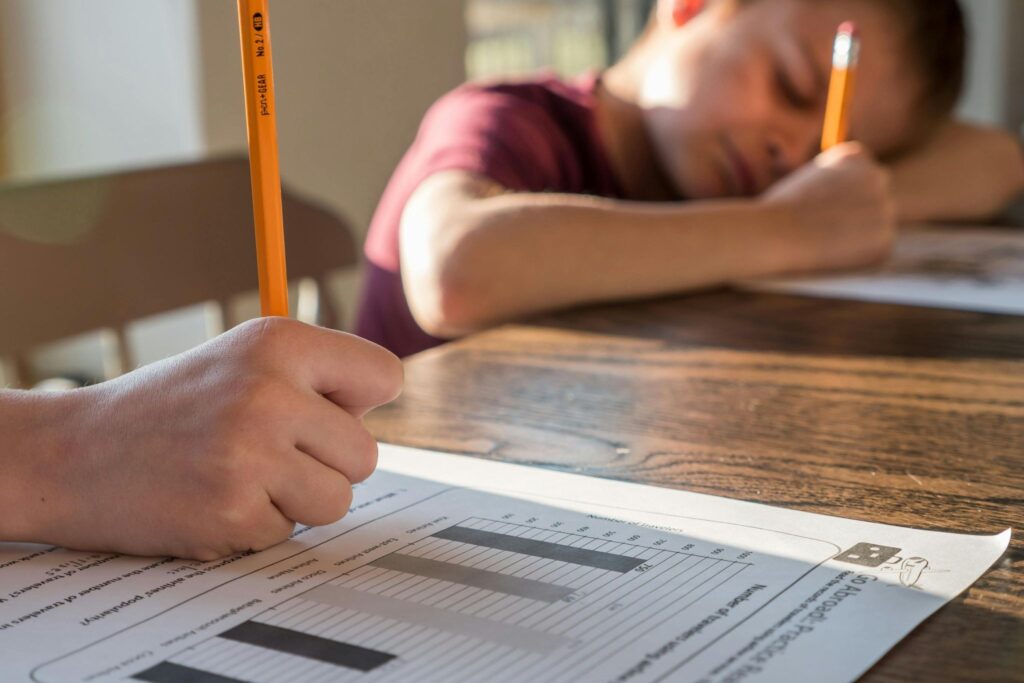
Where does such a swift response from the district come from? The answer lies in the school assessment system, which operates on two levels simultaneously in the US. One level is federal, the other is state.
The federal framework is set by the Every Student Succeeds Act (ESSA). It was passed in 2015. According to ESSA requirements, each state develops its own school assessment methodology, assigns annual grades to schools, and publishes the results. Schools with poor performance on these indicators are placed on one of three federal lists. The first list, Comprehensive Support and Improvement, includes the weakest schools based on a combination of indicators. The second and third lists, Targeted Support and Additional Targeted Support, include schools with failures in specific student groups. For each list, states prescribe their own response measures, ranging from planned adjustments to direct federal intervention in the school's operations.
At the state level, the system is usually even stricter. According to the Texas Education Agency, Texas has been using a letter grading system from A to F since 2017. Each district and each school receives a grade in three areas. The first indicator reflects students' academic achievement based on standardized test results. The second measures the school's progress compared to the previous year. The third assesses how the school is closing achievement gaps between student groups divided by ethnicity and family income level.
70 percent of the overall score is determined by the higher of the first two indicators. The remaining 30 percent goes to the third. All figures are public on TXschools.gov, accessible to any parent. A recent example: the final Texas school ratings for the 2024-25 school year were released in December 2025, as indicated by the Texas Education Agency on its website.
Schools with ratings below a certain threshold are placed on the Public Education Grant list. Parents of students in such schools are granted the right by the state to transfer their child to another school district. The district is obligated to notify them of this. Thus, a low rating turns into a real financial risk.
The stiffer the demands for quality become.

For a long time, letter grades for schools remained more of a formality. The report was published, made the news, and was forgotten a week later. There were few real consequences.
The situation is changing now. Several factors are working at once.
The first factor. Contractual grounds under SB 1882 and similar laws in other states. If a school operator does not show results, the district can terminate the contract for non-performance. Such clauses used to be in contracts, but they were rarely used. The IDEA Travis case shows that this practice is becoming less of an anomaly.
The second factor is the increasing public availability of data. The TXschools.gov website, similar resources in other states, and aggregators like GreatSchools make it easy for parents to compare schools. A school gets a D, and all the parents in the neighborhood find out within a day. This attention has direct consequences. Families move to other school districts, take their children to charter schools, or switch to online learning.
Third factor. Financial pressure after the end of the federal ESSER school aid program in 2024. Districts are more cautious in allocating money and quicker to make unpopular decisions. Enduring a struggling school for several years is more expensive than closing and rebuilding.
In total, this means one simple thing. The districts now have both the tools and the incentives to demand quality more strictly. The situation with IDEA Travis looks like an extreme measure, but logically it's expected within the system.
What does this mean for parents?

In Midland, the district has already presented a plan. According to The Midland Reporter Telegram, 227 students who lived in the IDEA Travis school zone will now be able to choose one of two alternative schools. Lonestar Trails Elementary, which the state projects will receive a high C or low B rating next year, and General Tommy Franks Elementary, with a projected B rating. District Superintendent Dr. Stephanie Howard will present a permanent solution by December 2026 for the 2027-28 school year.
According to The Midland Reporter Telegram, families have mixed feelings. Ebony Coleman, a parent, made her position clear. She said that every parent wants their child to attend a high-quality school. Therefore, while the situation concerns her, she is prepared to support whatever the district decides to do to improve outcomes.
For parents outside of Midland, history shows a few things.
School ratings are no longer an abstraction. If a school receives a D or F for three consecutive years, the consequences are real. The contract can be terminated, the school closed, and students transferred. This means the annual report from the state is worth reading carefully as soon as it's published.
The right to transfer has become more active. If a school is on the Public Education Grant list, parents can transfer their child to a school in another district. Not everyone knows about this, but the option exists.
Educational quality is becoming a public metric. Parents are increasingly involved in discussions at district boards, writing letters to trustees, and turning out to vote. Civic engagement around schools is growing because the cost of inaction is tangible.
And most importantly, children don't have an extra three years to wait for school improvement. If the school in your city or district is consistently underperforming, you should explore alternatives. Transferring to another district. Charter schools with better results. Additional online learning. All these options become part of sensible parental planning.
How we at Palme School view learning assessment

The trend towards strict evaluation of learning outcomes is familiar to us. At Palme School, we have long moved away from the «learned and forgotten» principle.
Each student in our online Russian language school There is a personal account where the student’s entire learning history is tracked: what they’ve covered, which assignments they’ve completed, where they’re doing well, and where they need extra support. The teacher monitors their progress and provides regular updates to parents. We don’t wait until a child starts falling significantly behind.
Every few weeks, the instructor reviews the progress of the group and each student individually. If a particular child is progressing more slowly, we offer the family a conversation. Perhaps the child is tired after school. Perhaps the group format is not suitable for him and he needs Private lesson. Perhaps the program's pace is fast for him. There are many solutions, but they all start with us being the first to see the problem.
The program in Palme is structured cyclically.. Each level has a set of topics, and the child works through them in a cycle, gradually delving deeper into the material. Parents know in advance exactly what the student will cover over the course of a month, a quarter, or a year. There are no surprises along the lines of «we’ll never get to verbs of motion.» All topics are outlined in advance.
After each lesson, the teacher leaves brief feedback. What went well, and what should be focused on. Once every few months, the family receives a detailed breakdown. There isn't a big splash from the state here, but the idea is the same. Education should provide measurable results that the student, parent, and teacher all see.
Transparency for parents is built into our school. No one pays for six months in advance blindly. The first two lessons are free so families can see how we work. After that, the subscription is monthly or with the option to freeze. If at any point Palme isn't a good fit, you can cancel without penalty. To understand if our system is right for you, Sign up for a trial lesson. It’s free. A teacher will lead the session, show you how we work, and answer any questions you may have about your child’s progress and assessment in detail.
An "F" grade for a school in Texas means it is failing to meet state standards.
A D rating in Texas is considered borderline. According to the Texas Education Agency system, it is interpreted as «partially acceptable.».
The school is not facing automatic closure, but the district and the state are beginning to monitor it more closely. If the campus's final score falls below 60, the school will be placed on the Public Education Grant list. After this, parents of its students will be able to transfer their child to a school in another district through a special procedure.
How can I find out my school's rating in Texas?
All ratings are published on the TXschools.gov website. The search works by district name, school name, or address.
Both final letter grades and detailed reports for each of the three components of the letter grading system from A to F are available.
How are school evaluations structured in other states?
School assessment systems differ from state to state, but the same federal law, ESSA, sets the framework for them.
In Texas and Florida, for example, schools are given letter grades. Other states use numerical scores or classifications by performance levels. Everywhere, there's a requirement to publish annual reports and identify underperforming schools. For specifics, you should check your state's Department of Education website.
Is it possible to transfer a child to a school in another district if their current school is underperforming?
Yes, if the school is on a special list of low performance. In Texas, this is the Public Education Grant list. In other states, the names differ, but the mechanism is similar.
The district is obligated to inform parents of their right to transfer. Details regarding transportation and logistics should be clarified with the receiving district separately.
What do districts do when a school is consistently underperforming?
The options are varied. An improvement plan with deadlines. Replacement of management. Transfer of the school to an external operator. In extreme cases, closure or restructuring.
The history of Midland ISD and IDEA Travis shows that terminating a contract with an operator has also become a working tool.