

At Hamel Elementary School, a small rural school in Illinois, Fine Arts Day is held annually. According to The Intelligencer, Children draw, dance, play music, and read aloud. The school is alive with creativity all day, rather than with regular lessons.
Hamel Elementary has about 123 students from kindergarten through second grade. Seven teachers instruct the students. The school is part of Edwardsville Community Unit School District 7. A small school in a small town. And that's precisely why its annual art festival could be a good sign for the entire country.
A small news item about a big trend
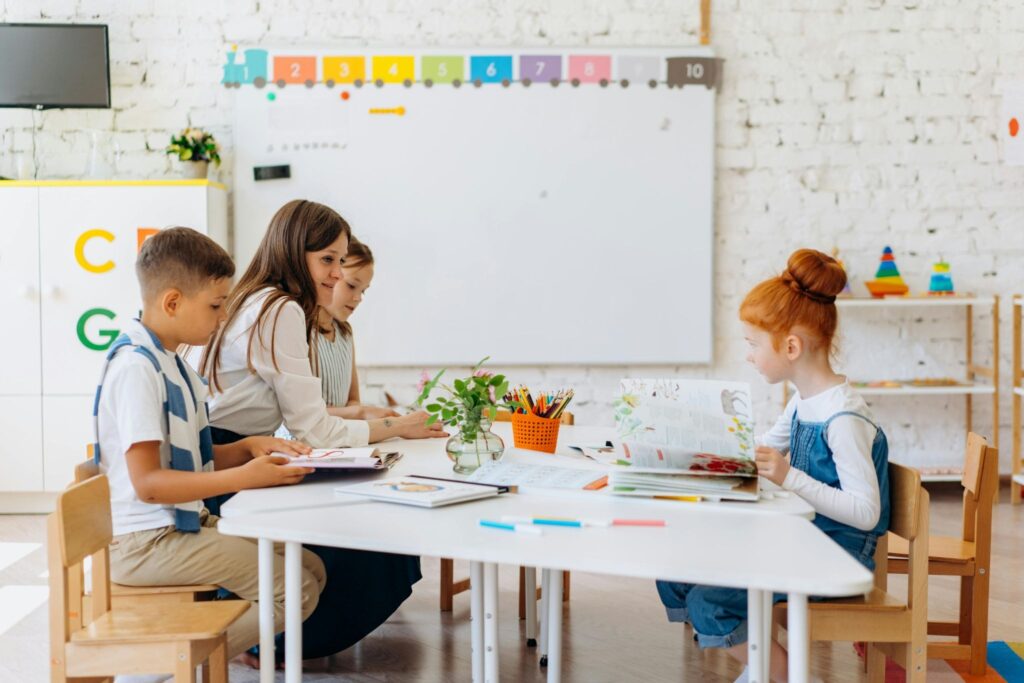
Let's go in order. One Fine Arts Day in one school proves nothing in itself. But when such days happen year after year in small rural schools, they speak of the mood. The school specifically sets aside a day, cancels the usual schedule, and devotes it to drawing, music, dancing, and reading aloud. The teachers and principal are behind such a decision. And the turn goes in one direction.
At the same time, schools across the country are increasingly bringing art back into the curriculum. It's not because there's suddenly extra money. It's because it's becoming clear that without creativity, children learn less effectively. We'll explain why this is happening and what's changing right now.
How art left American schools
So, to get everything in place, we'll have to go back to 2001.
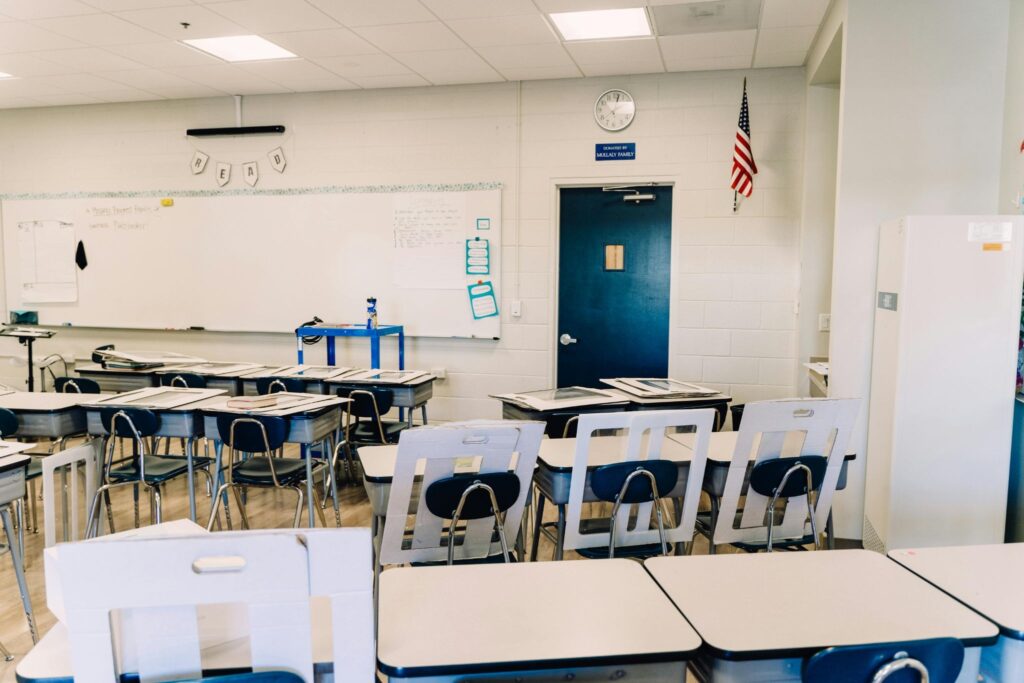
It was then that the No Child Left Behind Act, with its loud title, took effect in the US. The principle behind it was strict. Schools were obligated to show results in two subjects: math and reading. If the results were weak, the budget would be cut. The logic was simple: state money goes where tests are passed. And in schools, they began to cut everything that didn't directly help with tests.
Art, music, dance, and drama classes have been cut. According to the American Academy of Arts and Sciences, art classes in US public schools have drastically declined over the twenty years since the law was passed. The impact has been uneven. Schools in low-income areas have been hit the hardest. The paradox is that art benefits students the most precisely in those areas.
In 2018, the academy assembled a Commission on the Arts to assess the damage. Three years later, a report titled Art for Life’s Sake. The authors noted that the country has reached a critical point. Without special measures, children from low-income families risk growing up without any exposure to music, art, theater, or dance in school. The authors explicitly described the situation as a crisis and called for a major shift in state policy and federal budget priorities.
Fresh figures show a turnaround
Now for the good news. The pendulum has swung back.
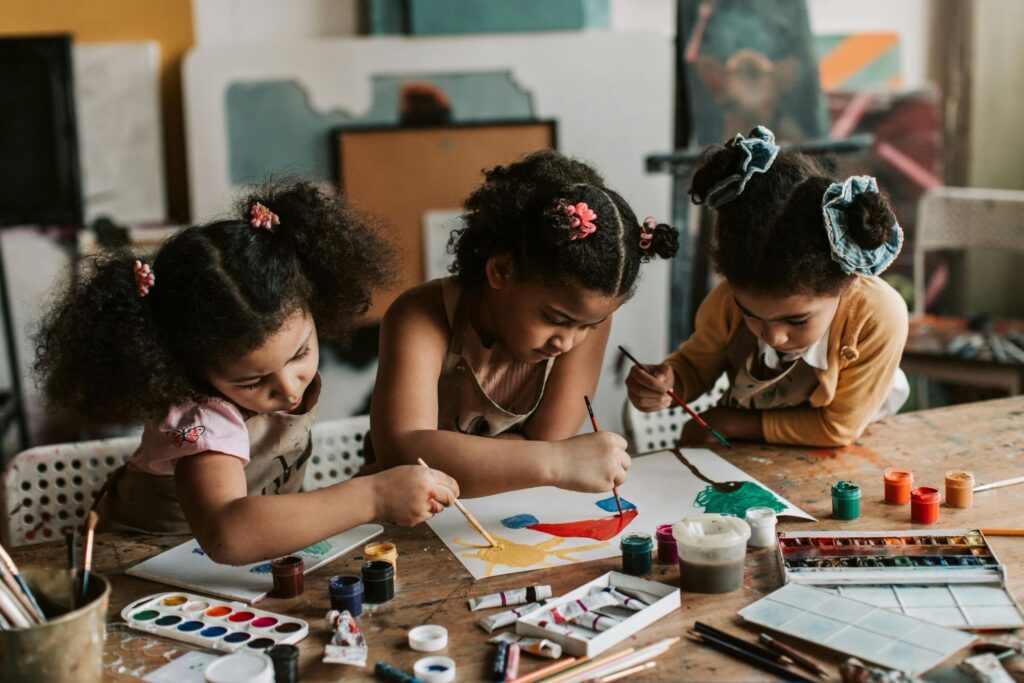
In November 2024, the U.S. National Endowment for the Arts released the results of a School Pulse Panel survey. This marked the first major study in many years on the current state of arts education in American schools. The picture turned out to be mixed, but encouraging.
According to the National Endowment for the Arts, 81 percent of the nation's schools reported sufficient student interest. 76 percent dedicate enough instructional time. 63 percent have enough arts specialists to meet children's demand.
Funding is worse. Only 55 percent of schools said they have enough money, space, and materials for art classes. School size plays a role here. In small schools with fewer than three hundred children, only 49 percent have sufficient resources. In large schools with a thousand or more students, this figure rises to 74 percent.
Partnerships are saving the arts. Sixty-nine percent of schools reported collaborating with external organizations to support creative subjects. The partners are diverse: non-profit foundations, local businesses, and nearby colleges. Urban schools are slightly luckier in this regard: 75 percent have such connections compared to 65 percent of rural schools. In other words, schools are increasingly looking for ways to bring back the arts, even if they don't have enough of their own funding.
The pandemic intervened here. In 2020, federal emergency relief funds poured into American schools, and the flow continued until 2024. In total, the US education system received about $190 billion. The decision on how to spend it was left to the districts. Many of them allocated a portion of the allocated funds to restore long-missing programs like art, music, and theater. By 2024, the resource for such investments was depleted, and schools were faced with a choice: either permanently fund the reinstated programs or cut them again. Some districts have already arranged for permanent funding for creative subjects. Hamel Elementary, with its annual Fine Arts Day, is one of many such examples across the country.
What Science Says About Creativity in Education
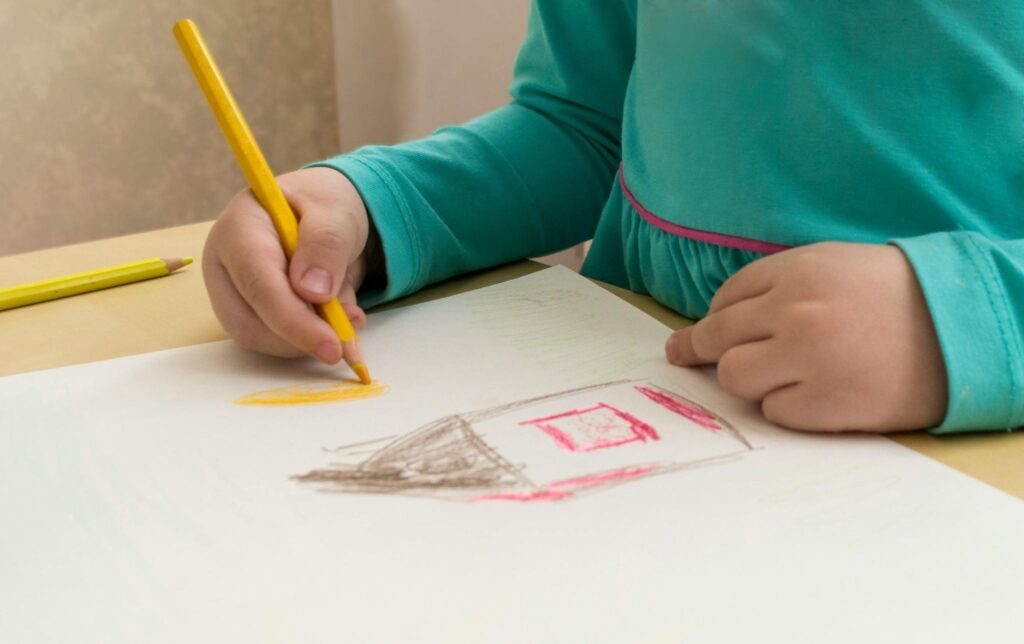
Why bring art back at all, if math and reading are enough? The answer is simple. Without art, math and reading suffer too.
Twenty years of research point to three major conclusions.
Academic Performance. If drawing or music is added to an ordinary lesson, scores in writing and reading improve, and the class itself behaves more quietly. Teachers themselves notice this initial effect. According to the American Academy of Arts and Sciences, children who consistently attend creative classes have fewer absences and fewer complaints from educators. The 2019 study from Rice University also belongs to this compilation: elementary schools with creative programs recorded 3.6 percentage points fewer disciplinary incidents, and students performed significantly better on written tests than their peers from schools without art programs.
Soft skills that work in any profession. Concentration. Patience to see things through to the end. Willingness to collaborate with others. The ability to make a mistake and try again. All of this comes into play when a child draws someone's portrait or learns a dance. Creativity only looks like fun. In reality, the child is learning to concentrate, notice details, and hold a complex task in their mind.
Neurobiology. Music, drawing, and any rhythmic activity literally help build connections between different parts of the brain. Between the ages of four and ten, there is a window of heightened plasticity, and neuroscientists warn that without creative stimulation during these years, some of the brain’s potential may never reach its full capacity.
And all of this applies not only to future artists. A child who draws goes on to write better. A child who studies music finds math easier later on. A child who dances goes on to have a better understanding of anatomy and physics. Art shouldn’t be viewed as a separate extracurricular activity. It serves as a fundamental part of all learning.
How we work with creativity at Palme School
Now about us. In Palme School We stopped thinking of the Russian language as a set of rules a long time ago. We see language as a living fabric, and creativity is woven into it from the very beginning.
In our program for younger schoolchildren, drawing and art are built directly into the learning blocks. For example, in one of the blocks, children learn to write uppercase letters L and M. Simultaneously, they learn words from the world of painting: portrait, landscape, still life. During the lesson, the child draws their own landscape and immediately names what is depicted in it. Thus, the word is remembered not through translation and rote memorization, but through action.
In another section, we cover vocabulary related to music and instruments. The children listen to the sounds of the balalaika, the gusli, and the bayan. They learn the names of the instruments. They describe what kind of music they like and what kind they don’t like at all.
Why is all this necessary? Most of our students come from immigrant families. At home, they often speak Russian, but outside the home, they live in English. It’s easier for them to remember «blue» than “goluboy.” Through drawing, music, descriptions of fairy-tale worlds, and folklore stories, we bring Russian words back into a living context. We don’t “learn vocabulary”—we experience it.
And here’s another important observation. The teachers at Palme were raised in Russian culture and teach in their native language. They know how to do more than just grade a student’s workbook; they can also encourage a child to draw their favorite character, comment on the drawing in Russian, and use it as a starting point for a conversation, a new word, or a story.
The Story of Anna and Artem
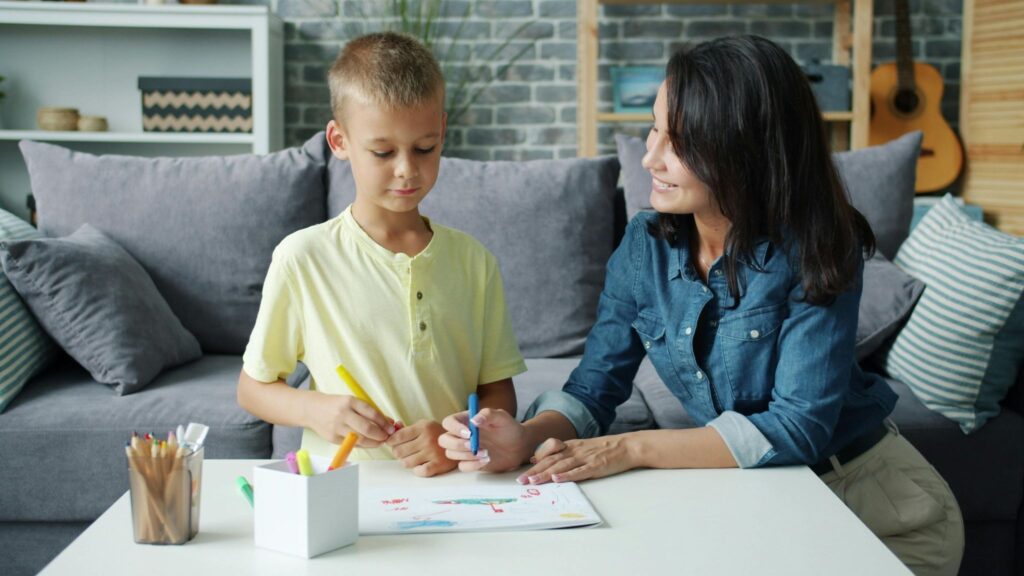
Anna lives in San Jose. She is Russian, and her husband is American. Their son Artem is six years old and is in first grade at a local school. At home, Anna tries to speak to him in Russian, but Artem usually answers in English—especially when it comes to his favorite activities.
But Artem has one favorite thing. Artem draws. Constantly. On the margins of notebooks, on the wallpaper, on the refrigerator door with a marker. All colors, all shapes, rockets, dinosaurs, strange aliens.
Anna says: «I tried to teach him Russian using flashcards and apps. Nothing worked. Artyom would sit for five minutes and then run off to draw. And then I thought, what if I combined them?»
In Palme, we suggested Anna and Artem start with Groups for bilingual children aged 5-6. The program combined conversation practice, reading, writing exercises, and thematic vocabulary, including units on painting and art. The teacher quickly recognized Artem’s unique talent and began giving him additional creative assignments. Draw his favorite character and describe him in Russian. Describe the colors he used. Name the objects surrounding the character.
Two months later, Artem said to his mom for the first time, «Look, I drew a portrait of Grandpa. He has blue eyes and a gray beard.» All in Russian. No translation needed. Anna later admitted that she hadn’t expected to hear the word «portrait» from a six-year-old.
What to try at home today
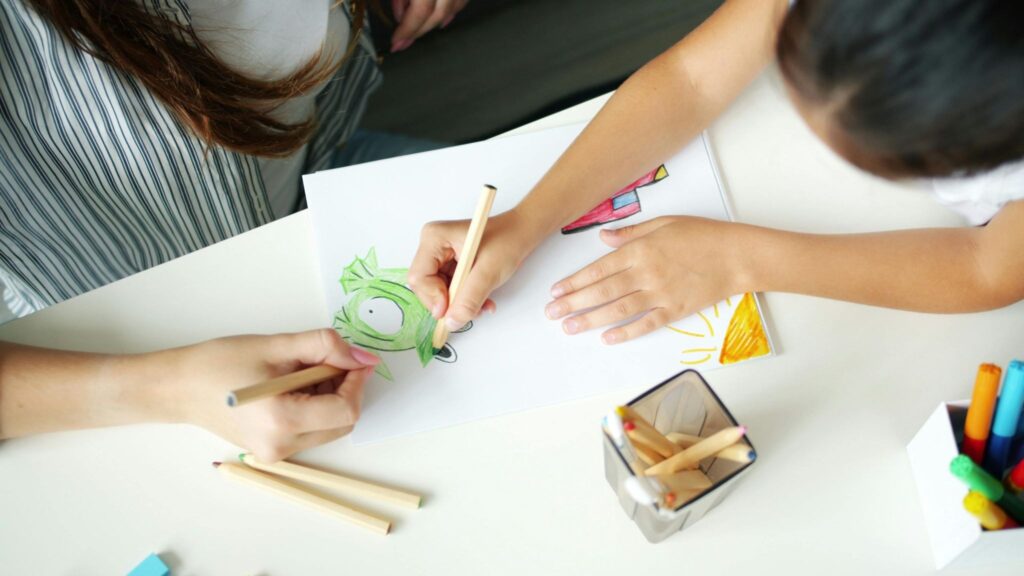
It doesn’t matter whether your child attends Palme or not. You can combine art with Russian language learning right at home today. You won’t need any special materials or skills. Here are a few simple ideas.
When the child is drawing, sit next to them and comment in Russian. «What bright red! And what kind of animal is this?» Don't ask teacher-like questions. Just be an interested spectator.
Set up a folder or box at home for drawings. Label each drawing with the following information in Russian: the date, the artist’s name, and what is depicted. In a year, you’ll have a homemade book in Russian that your child created all by themselves.
Listen to Russian songs while drawing and occasionally view reproductions of Russian artists« works. Any pleasant melodies will create a Russian language background, and over time, the child will begin to sing along. The titles of paintings by Shishkin, Aivazovsky, or Levitan will themselves become a Russian lesson. »Morning in a Pine Forest.« »The Ninth Wave.« »Golden Autumn.".
And the main rule. Don't turn art into a school lesson. If a child doesn't want to draw, it's okay, try again the next day. If they draw in silence, let them draw in silence. It's important that they have warm associations with the Russian language and creativity at the same time.
If you want your child to practice regularly and in a group of peers, come to Free trial lesson at Palme School. We will show how the Russian language works in conjunction with creativity, and help you choose the right format.
What age can Russian language and creativity be combined?
From the earliest age. As early as 2-3 years old, a child can draw scribbles and listen to mom or dad say colors and objects in Russian.
At 4-5 years old, children begin to consciously use words, and this is the ideal age for vocabulary building through creativity. Between 7-10 years old, you can introduce art history, reproductions, and discussions about artists.
What to do if a child refuses to draw in Russian?
Don't insist. Often the problem isn't the language, but the «let's study» format. Try just being nearby and speaking Russian while the child is busy with their own activities. Over time, the language will become background noise, and the resistance will fade.
Are special materials needed for creative activities?
No. Regular paper, pencils, markers, and paints are enough.
Consistency and a positive atmosphere are more important than expensive kits. Sometimes the best creative moments happen on the back of an old envelope.
If there are no art classes at our school, what should we do?
First, ask the teacher or principal what creative activities are available during the week. Often, art is integrated into other subjects and simply not presented as a separate lesson.
If you don't have that either, after-school clubs, online classes, or regular practice at home will help.
Does art influence grades in core subjects?
According to research cited by the American Academy of Arts and Sciences, schoolchildren who regularly engage in creative subjects write more competently, read more willingly, and behave more calmly during lessons.
Art classes do not detract from math and reading, but rather benefit them.