

«Yes, there's a tundra here.» That's what guests who came to the new suburb and couldn't find a single cafe nearby say. That's what they say about the dacha, which is three hours away by road, and about the neighborhood on the edge of the city where the windows dim after nine o'clock. In dictionaries, this usage is recorded in a separate line; in a figurative sense, tundra means a wilderness. Where did it come from? The dictionaries don't explain; they simply record it. And a child in a Russian-speaking family most often hears this word for the first time like that, with an accent, and remembers that tundra is where it's boring and there's no one there.
With its real tundra, this picture has little in common with it. On the world map, it is one of the most noticeable stretches, and for some residents of Canada it is closer to it than to Muscovites.
What really grows in the taiga
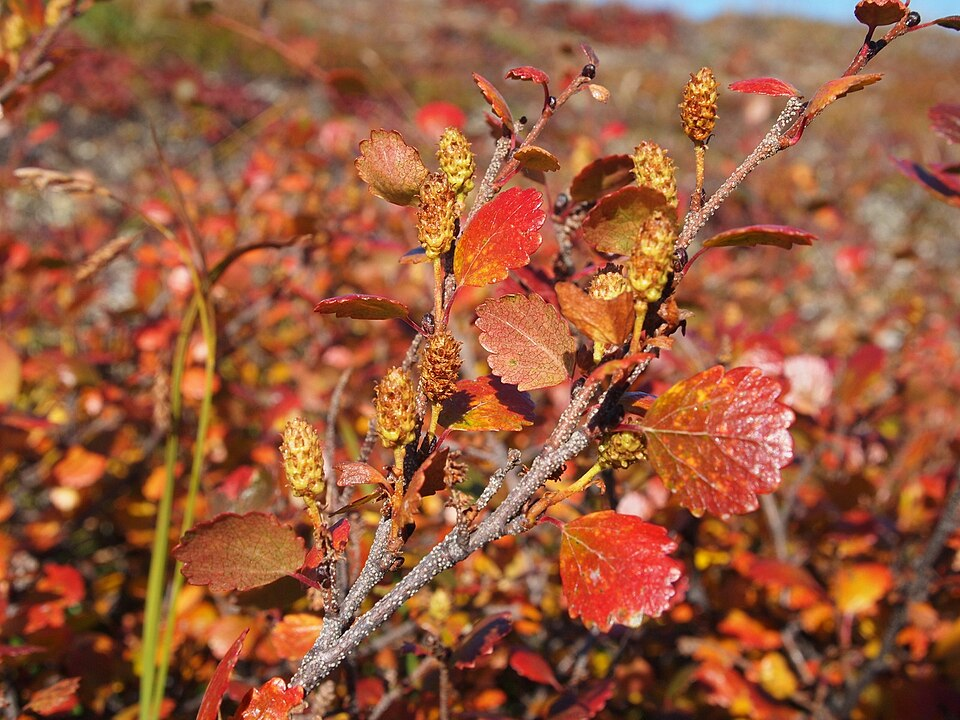
You can find a separate tree in the taiga, but you can’t grow forests from such trees. The summer there is short and cold; the ground in many places has frozen in the ground for years ahead; there is wind, and in such conditions the tree grows so slowly that it doesn’t get tall. There are birch trees there, only dwarf ones, up to the knee, and they sprawl across the ground, hiding from the wind. There are mosses, lichens, lichens, low blueberry and bilberry bushes, and strawberries. In July, when the sun barely sets in the far north, all this is in a hurry to bloom and bear seeds; photos of summer tundra usually surprise those who expected a gray emptiness. There are yellow, pink, white, red, and all of them are at the height of their fingertips.
A deer with three names
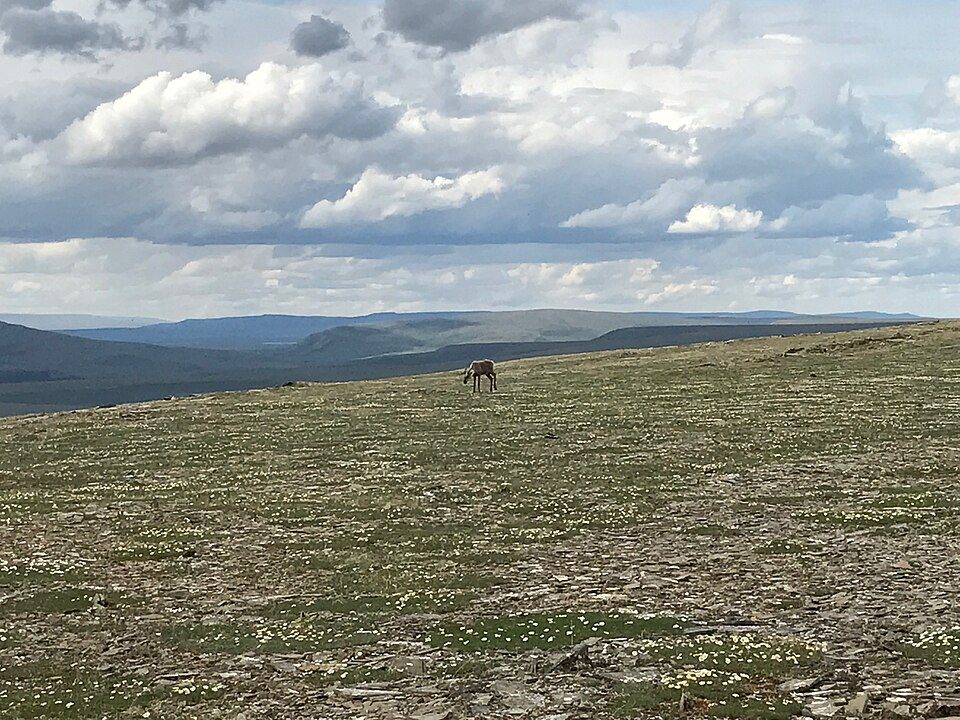
The main beast of the tundra is probably something the child from North America has already seen. It has been featured on a twenty-five-cent Canadian coin since 1937, and it is shown in Alaska-themed shows. It is also called the caribou. In Europe and Asia, the same animal is called the reindeer, in English, the northern elk. The species, Rangifer tarandus, simply has different names on different sides of the ocean. When the child discovers this, the two images that have lived separately will come together. The sleigh of Santa from the Christmas cartoon and the herd on the Canadian plain will turn out to be the same species, only on two continents.
The very word «tundra» also contains a description of the place. According to one version, it is related to the Finnish tunturi and related Saami words that were used to describe bare, elevated land without forest. There was no emptiness in this sense. It was an open place where nothing blocked the horizon.
Ring around the pole
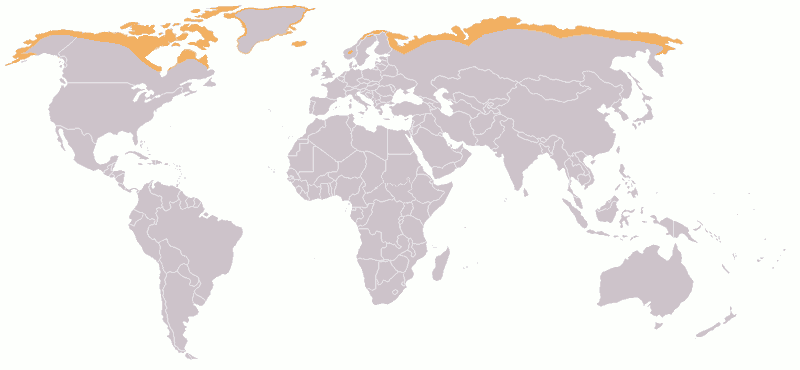
The tundra is a long strip, and this strip encircles the Arctic Ocean almost entirely. The best way to trace it is on a globe, with your finger. If you place your finger on Chukotka and move westwards, it will pass along the entire Russian North, reaching Murmansk, then heading towards Norway, then onto the Greenland coast, from there into the Canadian Arctic and onto Alaska. From Alaska, through the Bering Strait, it will return to the same Chukotka. On a flat map, you would have to go to the right edge and continue from the left; on a globe, your finger would simply draw a circle. A child from Murmansk and a child from Edmonton have different trees in front of them, but if both of them go north, they will collide in the same area.
It's also a long way from Winnipeg to the tundra, about a thousand kilometers straight line. But you can drive there without leaving Manitoba. Near Churchill, on the shore of Hudson Bay, the forest is already transitioning into the tundra, and people from all over the world come to see the white bears there.
There is no line between the forest and the taiga. The trees first thin out, become smaller and more crooked, stand alone, and this transition zone is called the forest-taiga zone. On the map of natural zones, a neat line is drawn here, but on the ground you won’t find it; the child should be told about it right away when they ask where the boundary is. He has already encountered this similar concept before; if he was familiar with it. the land border between continents.
Where to look for the tundra on the map

Usually a political map is displayed at home, less often a physical one; you can’t see any tundra on the political map. The political map shows countries and borders. On the physical map, the color indicates altitude; green there means lowlands, and it has nothing to do with the forest, although it’s easy for a child to figure it out otherwise. Tundra appears only on the natural zones map; in the atlas for it, there is usually a separate section dedicated to it. Show the child the same place—for example, northern Canada—first on the physical map, then on the zone map. On the first one, there are green lowlands and brown mountains; on the second, a strip of their color stretches across the country, and it becomes clear that each map answers a specific question.
A steppe-like story, only the American name the child knows for sure. The prairies from cowboy movies and the steppes in southern Russia and Kazakhstan belong to one large type of nature—the grassy plains of the temperate zone—although they are called and depicted differently on different maps. For a child from Calgary or Kansas, the steppe from a Russian fairy tale will be much closer to reality than he thought.
And if the family moved from Moscow to Toronto, the two cities will be in the mixed forest zone on the map. A child who is convinced that he has gone to the other side of the world will see that the nature outside the window remains the same type. These discoveries are best achieved when the child searches for the answer on their own, so we included three tasks with a map of the zones and a check of the answer in a separate section after the article.
Why the tundra
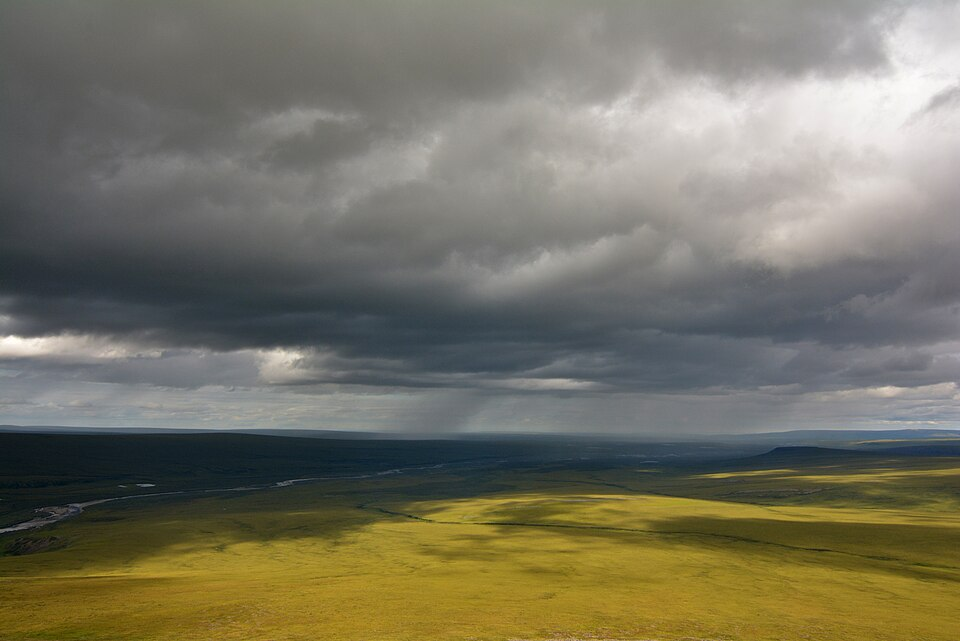
Why tundra became a word for the Nenets is still a mystery, and it is better not to try to solve it. However, you can make it so that the child hears not one, but two meanings of this word. The first, colloquial, he will hear from the guests. The second, real, he will find on the globe himself, by tracing a path from Chukotka to Chukotka. There grows the strawberry, the caribou graze there, in July the tundra blooms at the height of a palm, and there is no emptiness there.
Three tasks with a map of natural zones
We need a map of natural zones, where the strips are colored in different colors and there is a legend. It is included in children's atlases and school atlases for fourth grade; for North America, it can be printed out. The tasks are from simple to complex, but you can start with any one, and you only need one for a single time.
Thumb to the north
The child finds their city on the map and says what color it is. Then he points his finger straight up, to the north, and calls out each new color the finger enters. Legend has it that the adult tells what the strip is called. The task ends when the finger reaches the tundra or the edge of the map.
Two cities, one color
An adult names a couple of cities where their relatives live or lived, for example Toronto and Moscow, Seattle and Tashkent, Miami and Odessa. The child finds both on the map and says that one of them is colored or different. If one, he calls the zone. If different, he calls both and says which one is further north.
Ring around the pole
The child finds the tundra in northern Canada and searches for where this color appears further around the Arctic. Through the strait or ocean, the finger jumps to the next shore, passing by glaciers and other areas. Along the way, the child names the countries and islands where the tundra was found. On the globe, the circle is completed; on a flat map, you have to go to the right edge and continue from the left.
The zones map answers the question «where» and the question «why is it like that» requires someone who can explain in Russian and according to age. In the geography course at Palme School, children from four to fourteen years old study natural zones and learn how to work with a map, both in Russian and online.
You can learn more about the course on free trial lesson. Classes take place in mini-groups or individually, and the materials are adapted to the child's age and level.
Frequently asked questions about natural zones
What is a natural zone, if you can explain it to a child in a single sentence?
This is a large area with similar climates, soils, plants, and animals. In large plains, such zones are often drawn in broad stripes on the map. The tundra, taiga, steppe, and desert are all natural zones. It is easiest for a child to show them on a map by drawing each strip in its own color.
How many natural zones are there in total?
There is no exact number, and there is no point in arguing about it. Some atlases divide the taiga and the taiga forest into separate zones; others draw them in narrow passages, so that in one book the zones will be smaller, in another larger. In the fourth grade of the Russian school, the ones that are found in Russia itself are usually divided up: from the icy north to the subtropical regions near the Black Sea. Savannas and equatorial forests appear later, when the discussion goes beyond the country.
Are there any natural areas in the United States and Canada?
There are, and the child is curious to check it out in their own city. Northern Canada and Alaska are covered in tundra; below that begins a vast conifer forest; in the Great Lakes region, pines and oaks mingle; in the middle of the continent, prairies occupy the place; the Eurasian steppes are a relative of the steppes; in Arizona and Nevada, there is already desert. This is not the full list; there are also mountain and coastal regions, such as the Pacific coast, so it is worth finding your own city on a map and seeing where it is located.
Is tundra and the Arctic the same thing?
They are often confused, but the words are different. Arctic is the name given to the entire area around the North Pole, and a large part of it is the Arctic Ocean with its ice caps. Arctic tundra is located on land, along the edge of this ocean, on islands and the northern shores of continents, and is located in the Arctic roughly the same way as the coast of the sea. There is also mountain and alpine tundra, above the forest boundary, and it can be found far from the Arctic, for example in the Rocky Mountains.
Why do natural zones in the mountains not run in strips?
Because it gets colder in the mountains not when moving north, but when climbing up. Therefore, the zones in the mountains are arranged in layers, and the number of layers varies from mountain to mountain; it depends on where it is located and how wet it is there. Often, alpine meadows and mountain tundra begin higher up in the forest, and the zones are marked on the map with a separate color. A child can show this on any photo of a high mountain, where it is possible to see how the forest ends at a certain altitude.
From what age can a child be introduced to natural zones?
In a Russian school, natural zones are studied in detail in the fourth grade. It is possible to introduce them earlier, but it is easier for a young child to compare two specific places—the forest outside the city and the tundra in the photo—than to memorize the order of the zones. Tasks from the article for children up to six years old are more suitable. home geography.
Where can I get a map of natural zones?
Maps of Russia’s and the world’s natural zones are included in many school atlases of the natural world and in children’s geographic atlases. The map of the North American zones is easiest to print; in children’s atlases in Russian, it is often not included. Any map with colored bands and a legend is suitable for the tasks from the above block.