Palme School

Online Russian Language School in the USA and Canada
Online school in Russian for bilingual children and teenagers
💡 Get bonuses with us! Referral program

Why Kids Refuse to Learn Their Parents’ Language (and How to Change That)

Many parents want to raise bilingual children. It’s easy to see why — speaking and thinking in two languages helps kids stay connected to their roots. 

But the truth is, many children resist learning their parents’ native language. And there are a few reasons why.

Why kids refuse to learn their family language

The main reason is simple — they don’t need it. Why bother learning grandma and grandpa’s language if everyone around them speaks a different one? 

In daily life, their heritage language just doesn’t seem useful. But that makes it almost impossible to talk to grandparents, and slowly the connection to family roots begins to fade.

Another reason can be the feeling of being “different.” If all classmates are learning French or Chinese, and your child is stuck with Russian, it’s uncomfortable to feel out of place. 

The solution here is simple: let Russian be an additional language. Your child can study popular languages alongside everyone else — plus their own heritage one.

Sometimes, the problem comes from parents themselves. Any negativity toward Russian culture or Russian-speaking relatives can easily discourage a child.

Kids don’t process logic the way adults do — they absorb emotions. If you want them to learn Russian, stereotypes about Russia can also play a role.

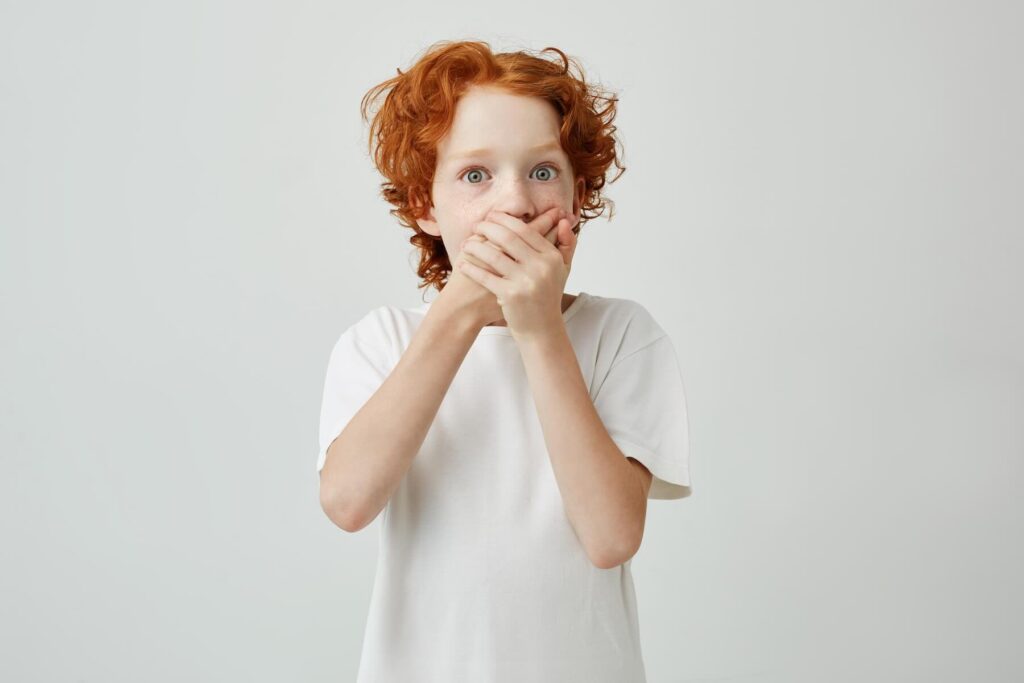
A child and a mother of a schoolboy / Freepik

How to spark interest in a family language

Forcing a child is never the answer. That approach rarely leads anywhere good. 

Instead, a child should understand why they’re learning it. Tell them family stories. Explain why culture and language matter. 

Linguist and Doctor of Philology Liliya Plygavka advises parents to introduce a heritage language gradually — through fun books, movies, and cartoons. That’s absolutely true: every kind of learning should start from the child’s own interests. And of course, the best motivator is a parent’s personal example. 

In the end, a child’s interest in Russian — and their family roots — depends first and foremost on their parents. 
Do you want to support child's successes In studies?
Helping to develop knowledge, confidence, and a love for learning through modern Russian language classes and beyond.
Ukrainian differs from Russian in several key ways, including pronunciation, vocabulary, and grammar. Despite these differences, they are often confused because they are both East Slavic languages and share a common ancestor, Old East Slavic. This shared heritage means they have a significant degree of mutual intelligibility, particularly in spoken form. **Key Differences:** * **Pronunciation:** * **"Г" sound:** In Ukrainian, the letter "г" is typically pronounced as a voiced velar fricative, similar to the "g" in "go" but softer, almost like a gentle breath. In Russian, "г" is usually a hard "g" sound. * **"И" and "Ы" sounds:** Ukrainian has distinct "и" (pronounced like the "i" in "bit") and "i" (pronounced like the "ee" in "see"). Russian has "и" (similar to Ukrainian's "и") and "ы" (a harder, more guttural sound not present in Ukrainian). * **Vowel reduction:** Russian has significant vowel reduction, where unstressed vowels change their sound (e.g., "o" can sound like "a"). Ukrainian generally pronounces vowels more clearly, regardless of stress. * **"Є" and "Ї" sounds:** Ukrainian has specific letters like "є" (pronounced like "ye" in "yes") and "ї" (pronounced like "yi" in "yield") which are not found in Russian. * **Vocabulary:** * While many words are similar or identical, Ukrainian has a richer influence from Polish, and also incorporates words from Turkic languages and other European languages to a greater extent than Russian. * Examples: * Thank you: Ukrainian - дякую (dyakuyu), Russian - спасибо (spasibo) * To speak: Ukrainian - говорити (hovoryty), Russian - говорить (govorit') * Yes: Ukrainian - так (tak), Russian - да (da) * No: Ukrainian - ні (ni), Russian - нет (net) * **Grammar:** * **Vocative case:** Ukrainian retains and actively uses the vocative case for direct address, which has largely disappeared from modern Russian except in very specific or archaic contexts. * **Verb conjugations:** There are differences in verb endings and some verb forms. * **Grammatical genders and noun declensions:** While largely similar, there are minor variations in how nouns change form based on case and gender. **Why They Are Confused:** 1. **Shared Ancestry:** Both languages descend from Old East Slavic, the language spoken in Kyivan Rus'. This common origin means they have a large base of shared vocabulary and grammatical structures. 2. **Geographic Proximity and Historical Interaction:** For centuries, the territories where Ukrainian and Russian are spoken have been in close contact, often under the same political empires (like the Russian Empire and the Soviet Union). This led to significant linguistic borrowing and influence in both directions. 3. **Mutual Intelligibility:** Due to the shared roots and similarities, speakers of Ukrainian and Russian can often understand a significant portion of what the other language is saying, especially in simpler conversations or written texts. This superficial understanding can lead to the misconception that they are dialects of the same language. 4. **Political and Historical Context:** During periods of Russian imperial and Soviet rule, the Ukrainian language was often suppressed or discouraged, and there was a promotion of Russian as the dominant language. This historical context sometimes led to the view, particularly among those outside Ukraine, that Ukrainian was merely a dialect of Russian. However, linguistic analysis clearly shows they are distinct languages.
Ordinal numerals in Russian are formed by taking the root of the cardinal numeral and adding the appropriate ordinal suffix. These suffixes agree in gender, number, and case with the noun they modify. Here's a breakdown: **1. Basic Structure:** * **Cardinal Numeral + Ordinal Suffix** **2. Ordinal Suffixes:** The suffixes are generally based on the endings of adjectives. * **Masculine:** -ый (e.g., первый - first) * **Feminine:** -ая (e.g., первая - first) * **Neuter:** -ое (e.g., первое - first) * **Plural:** -ые (e.g., первые - first) **3. Examples:** Let's look at the first few numbers: * **Один (one):** * Masculine: первый (pervyy) * Feminine: первая (pervaya) * Neuter: первое (pervoye) * Plural: первые (pervyye) * **Два (two):** * Masculine: второй (vtoroy) * Feminine: вторая (vtoraya) * Neuter: второе (vtoroye) * Plural: вторые (vtoryye) * **Три (three):** * Masculine: третий (tretiy) * Feminine: третья (tret'ya) * Neuter: третье (tret'ye) * Plural: третьи (tret'i) * **Четыре (four):** * Masculine: четвёртый (chetvyortyy) * Feminine: четвёртая (chetvyortaya) * Neuter: четвёртое (chetvyortoye) * Plural: четвёртые (chetvyortyye) **4. Numbers 5 and above:** For numbers five and higher, the formation is more straightforward. You take the root of the cardinal numeral and add the standard adjectival endings. * **Пять (five):** * Masculine: пятый (pyatyy) * Feminine: пятая (pyataya) * Neuter: пятое (pyatoye) * Plural: пятые (pyatyye) * **Десять (ten):** * Masculine: десятый (desyatyy) * Feminine: десятая (desyataya) * Neuter: десятое (desyatoye) * Plural: десятые (desjatyye) * **Сто (one hundred):** * Masculine: сотый (sotyy) * Feminine: сотая (sotaya) * Neuter: сотое (sotoye) * Plural: сотые (sotyye) **5. Compound Numbers:** When forming ordinal numerals for compound numbers (e.g., twenty-first), only the last part of the cardinal number changes to an ordinal. * **Двадцать один (twenty-one):** * Masculine: двадцать первый (dvadtsat' pervyy) * Feminine: двадцать первая (dvadtsat' pervaya) * **Сто двадцать три (one hundred twenty-three):** * Masculine: сто двадцать третий (sto dvadtsat' tretiy) * Feminine: сто двадцать третья (sto dvadtsat' tret'ya) **6. Pronunciation and Spelling Changes:** You might notice some spelling and pronunciation shifts, especially with the softer vowels and consonant changes in the first few numbers. These are typical sound changes in Russian. **7. Case Agreement:** Like all adjectives, ordinal numerals must agree with the noun they modify in case. * **Nominative:** первая страница (the first page) * **Genitive:** первой страницы (of the first page) * **Dative:** первой странице (to the first page) * **Accusative:** первую страницу (the first page - direct object) * **Instrumental:** первой страницей (by the first page) * **Prepositional:** о первой странице (about the first page) **Key Takeaways:** * Ordinals are formed from cardinals with specific suffixes. * They agree in gender, number, and case with the noun. * The first few ordinals (первый, второй, третий) are irregular and have unique forms. * For compound numbers, only the last numeral becomes ordinal.

Do you want your child to love learning?

At Palme School, classes are held online in live groups with experienced teachers. Choose a subject and sign up for a free first lesson.

Sign up for the newsletter
We at Palme Online School fall in love with the Russian language and Russian culture

Leave a request for a free call

Sign up for a free lesson.
Apply for a free introductory lesson to get acquainted, determine your goals, and find a suitable group.
Sign up for a free lesson
Submit a request for a free first session with a guidance counselor to get to know each other, determine your goals, and match your child with an educator
Sign up for a free lesson
Submit a request for a free first session with a guidance counselor to get to know each other, determine your goals, and match your child with an educator
Sign up for Russian Dictation
Sign up for a free lesson
Submit a request for a free first session with a guidance counselor to get to know each other, determine your goals, and match your child with an educator
Sign up for a free lesson
Submit a request for a free first session with a guidance counselor to get to know each other, determine your goals, and match your child with an educator
Sign up for a free lesson
Submit a request for a free first session with a guidance counselor to get to know each other, determine your goals, and match your child with an educator
Sign up for a free lesson
Submit a request for a free first session with a guidance counselor to get to know each other, determine your goals, and match your child with an educator
Sign up for a free lesson
Submit a request for a free first session with a guidance counselor to get to know each other, determine your goals, and match your child with an educator
Sign up for a free lesson
Submit a request for a free first session with a guidance counselor to get to know each other, determine your goals, and match your child with an educator
Sign up for a free lesson
Submit a request for a free first session with a guidance counselor to get to know each other, determine your goals, and match your child with an educator
Sign up for a free lesson
Submit a request for a free first session with a guidance counselor to get to know each other, determine your goals, and match your child with an educator
Sign up for a free lesson
Submit a request for a free first session with a guidance counselor to get to know each other, determine your goals, and match your child with an educator