



Names and identifying details of every student below have been changed.
The word that gets used at about six in the evening
My child loses everything, a mother in Ottawa wrote to me last winter, and then she sent the list. Two hats since October. Three library books. The good water bottle, twice, the second time within a week of replacing it. Her son is ten. She had started calling him lazy out loud, in front of him, and what she wanted from me was permission to keep doing it, or a reason to stop.
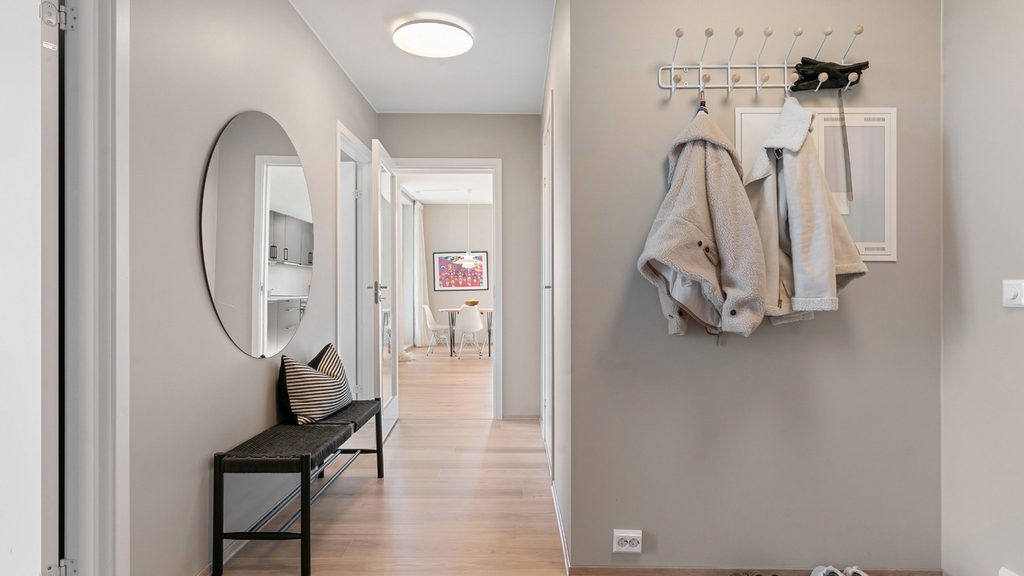
Lazy describes a child who could and won’t. What she was watching was a child who wanted to and couldn’t hold the thread, and those two want opposite things from an adult standing in the hallway at six. One wants pressure, the other scaffolding.
Won’t and can’t look identical from the doorway.
I was the child in that letter
There was a list on the back of our kitchen door. Everything I lost that month, in my mother’s handwriting, added to as it happened. She called it bookkeeping and meant it, which made standing in front of it worse, because there was nothing there to argue with.
Nobody in that apartment had heard the phrase executive function. What they had was a word, scattered, scattered, and I wore it comfortably into my thirties.
What eventually worked was not the list. My mother gave up on it somewhere around my twelfth year and hammered a hook into the wall by the door, at the height of my hand, for keys. That was the whole intervention. I stopped losing keys for about a year, started again when we moved and the hook stayed behind, and it took me until university to figure out that the hook had been doing the remembering and I’d never learned to.
Two different things get called forgetting
Losing a glove and forgetting to hand in homework look like one problem to a tired parent at six in the evening, and they run on different machinery.
Losing an object happens when a thing is set down while attention is somewhere else. The glove goes on the bench because both hands are needed for the zip. Nothing was decided, so nothing got stored anywhere. Forgetting an intention is a separate job entirely. The homework is finished, in the bag, and the child means to hand it in. Doing that requires holding a plan across six hours of noise and acting on it at one specific moment when nothing in the room prompts you.
Adults farm the second one out to calendars and phone alarms without thinking of it as a deficiency. We rarely extend a child the same courtesy.
Both are still under construction, and both do more work than the word forgetting suggests.
Adele Diamond describes the machinery behind both as what makes «taking the time to think before acting» possible.
Harvard’s Center on the Developing Child puts the finish line somewhere in a person’s twenties, and John Best and Patricia Miller traced the trajectories closely enough to show they do not develop in step with one another. A ten-year-old can be strong on one and weak on another, which is why a single word never fits.
Why nagging fails, in detail
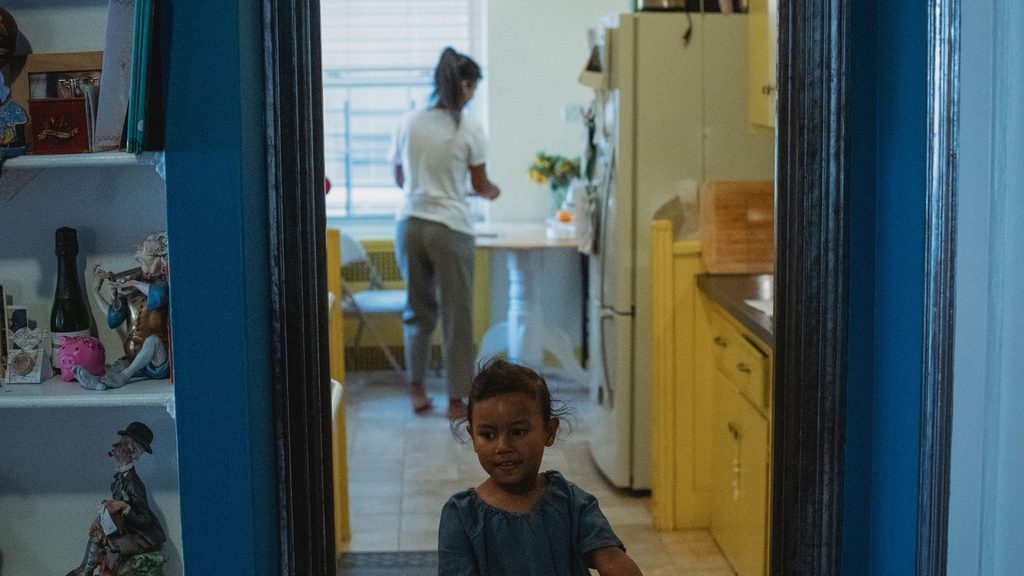
That mother in Ottawa did something I now ask other parents to do: over one week she logged every reminder she gave about belongings. Fifty-one. She had assumed it was five or six a day, and it was closer to eight, and about a third of them landed while her son was already doing the thing she was reminding him about.
Nagging fails for reasons that have nothing to do with willpower on either side, and the first is mechanical. Reminders from outside do the remembering, so the prompt arrives before the failure, and the child never notices the gap, never builds the habit of checking. Same principle as GPS: the route never turns into one you could drive from memory.
Repetition turns the words into weather. Say it eight times a day and by the fourth the sentence has stopped carrying information; both people hear that happening, and neither can stop it.
Then the word attaches.
Children absorb the explanations adults give them, and a child told they are lazy at ten will still be carrying that sentence at twenty. I have watched it happen with a girl and the word shy, and the word outlived every reason anyone had for using it.
None of this means saying nothing to a child who has left their coat at school for the third time this month. It means changing where the reminding lives.
Move it out of your mouth and into the room.
Let the environment do the remembering
The principle behind everything below is that a child cannot lose what has one place to be, and cannot forget what is physically in the way.
Give each thing one home, exactly one. The bottle lives on the left of the second shelf, not «in the kitchen.» Anything with two acceptable homes has none, since deciding between them costs attention nobody has at that moment. Then build a landing zone by the door: one flat surface where everything leaving the house spends the night. Bag, bottle, gloves, folder. Nothing crosses the threshold in the morning unless it started the evening on that surface.
Pack before the tiredness, not after.
Nine in the evening is the worst moment of a child’s day for anything needing planning, and moving the packing to just after dinner costs nothing.
Photograph what matters. The assignment board, the note from the teacher, the page number. Two seconds, and a whole class of arguments about what was said disappears.
Last, rehearse the handoff. For the assignment that gets finished and never arrives, the missing step isn’t the work. Practice putting it in the folder and the folder in the bag while you watch, until neither step requires a decision. I run on the same equipment now, incidentally, and I’ve stopped pretending otherwise. One bag, never two. Everything photographed. A green notebook that goes everywhere and gets left nowhere, because there’s only one and losing it would cost me a week. None of that is memory. All of it is arrangement.
Artyom, ten, in the Seattle suburbs, lost gloves at a rate his father described as industrial. We did nothing about his memory. His gloves went on a carabiner clipped to the outside of his bag, where taking them off and putting them anywhere else required more effort than clipping them back. He lost one pair the following winter, down from six.
What to skip
Brain-training apps come first on that list. The meta-analytic evidence shows children get better at the trained task and not at the untrained ones next door, so your child will get very good at the app.
Punishment for lost items produces concealment instead of care, which is worth saying plainly: the child who breaks something and hides it has learned exactly what the system is teaching, and learned it well. Elaborate systems fail in the third week, when keeping the color-coded planner up to date has become a second homework assignment. One index card outlasts them all.
And waiting for maturity to arrive on its own is a slow strategy. It does arrive, over years, and a child can build workable habits long before it does.
What is normal, and when it stops being that
Expectations do more damage here than the forgetting does. The three abilities underneath all of it were separated out by Adele Diamond, and Best and Miller showed they mature on separate schedules. What follows is my classroom shorthand and not a developmental norm, though it sits alongside those trajectories.
At six, a child keeps track of one thing at a time and needs the adult to be the system. At nine, several items can be managed with a visible list, and a plan holds for an afternoon. Around thirteen, capacity has arrived while reliability has not, and that is precisely when school hands a child six teachers, six systems, and a locker combination, then expects the organizing to keep pace. A child running a year behind peers is inside normal variation. Support pulled away early comes back later, usually in October of sixth grade, usually by telephone.
Some situations sit outside what a parent can fix at home. Executive function difficulty is closely tied to ADHD, one important component of it rather than a defining feature.
Pooling eighty-three studies, Willcutt and colleagues found weak executive function «neither necessary nor sufficient» for the diagnosis.
A child can have one without the other.
Plenty of children carry the difficulty without a diagnosis, and some with the diagnosis test perfectly normally.
Four signals are worth taking to a professional. The difficulty appears everywhere and not in one subject. It has held six months or more, not just a rough patch. Home, school, and friendships all show it. And ordinary support has produced nothing. All four sit in our checklist of ten signs, in a form you can print and carry.
Take it to a pediatrician or the school psychologist. Common enough conversation: roughly one in eight American children between three and seventeen currently holds an ADHD diagnosis. Bring the assignment log too, and a note of what changes when instructions get split.
What the mother in Ottawa did
She stopped counting reminders and built a landing zone instead, a shelf by the door with nothing else allowed on it. Her reminder count went from fifty-one to eleven in two weeks, which she attributed to the shelf and I would attribute mostly to the fact that she had stopped. Her son still loses things. He lost his hat in March. But nobody in that house has called him lazy since January, and the word that was attaching has come unstuck.
At Palme School we teach online, in groups of up to eight, two forty-minute classes a week, and the first two lessons are free. You can book those here, and there are printable materials for parents in our resource library.
Frequently asked questions
Start by moving one thing out of your mouth and into the room: give the item a single home, and put a landing zone by the door.
Reminding works while you are standing there. A shelf works when you are not.
Lazy describes a child who could and won’t. If that same child manages the task when the load is halved, or when the item has one obvious place, then capacity was the constraint and willingness never came into it.
The test costs nothing. Split an instruction in two and see whether performance jumps.
Rehearse the handoff rather than the homework. Getting an assignment from finished to submitted is a separate skill, and it is the one failing.
Practice the two physical steps, folder and bag, while you watch, until neither requires a decision.
There is no age at which it stops entirely, and adults who never lose anything have systems rather than better memories.
What changes is that the child gradually builds those systems for themselves. Around nine most children can manage several items with a visible list; reliability lags behind capacity well into the teens.
Palme School: Russian for bilingual children · Conversation school · Free materials for parents
Lily Rozberg has been teaching for sixteen years, first English in Russia and now Russian to bilingual children across the US and Canada. She writes for Palme School about heritage language, reading, and the things report cards do not measure.