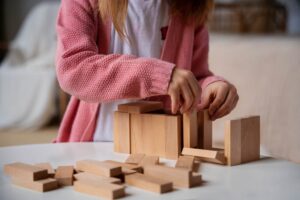
The scene is hypothetical, but familiar. Let’s say a sheet of paper has the text «7 + 5 = 12,» and the answer is correct. It’s evening, the kitchen table is set, the younger one is playing with a construction toy next to him. You ask in Russian how twelve came to be, and you hear a smooth answer: «I did seven, then three more is ten, and two more.» The child looks as if he answered the question. He did answer, only in a different language, and the explanation was ready beforehand; he didn’t have to make it up. It’s not possible to say a number in Russian; he’ll say a number. It’s not possible to follow the sequence of events.
The child is counting in English, but can’t explain it in Russian. The homework is done, the notebook is closed, and the question «how» hangs over the table.
The numbers are the same everywhere

The first thing that comes to mind sounds reasonable. Arabic numerals, plus plus everywhere, mathematics in any language is mathematics, let's just count it as we like. We won't argue about the numbers; the seven in Boston and Voronezh are the same. The trouble is that behind the numbers in the example is an action, and an action has a name, and here in the two languages there are two different sets of names. The child who can solve, but can't name it in Russian, is left alone with his notebook. The grandmother asks via video conference «how did you solve it» and gets silence. The tutor in Russian hears the correct answers and the wrong silence and doesn't understand where exactly the gap is. When the child shows his way, it becomes clearer what Russian words he lacks, and this is not the case where the child I didn't understand the condition of the task. There are no conditions here at all; the example is obvious.
Fold the towels and add up the seven and five.
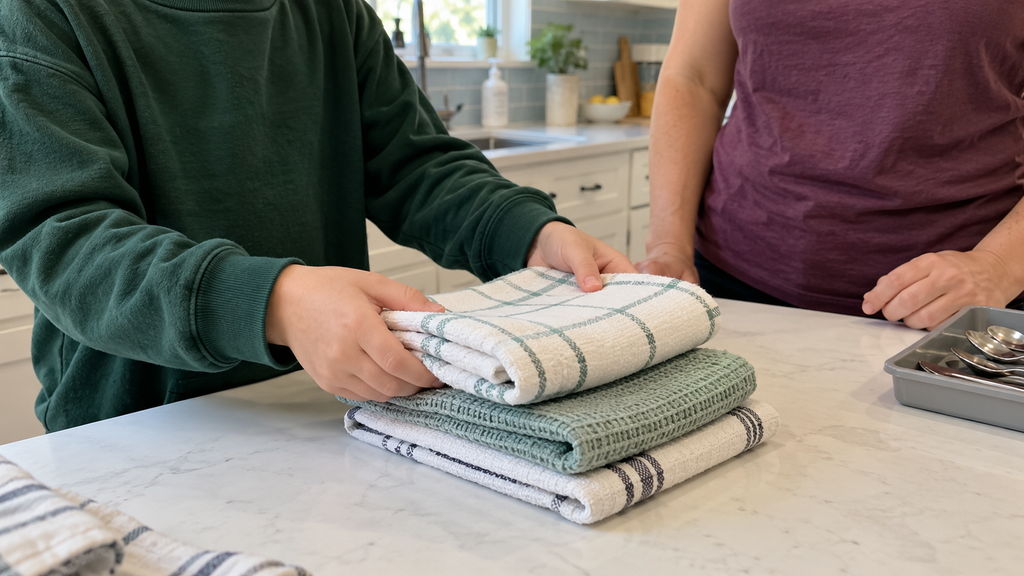
The word that should be started with in Russian lives on in the kitchen before it even appears in a textbook. Folding towels in a pile, putting toys in a box, folding your arms on your chest, and putting things away before leaving the house. The word has several related everyday meanings. And with the same verb, the Russian textbook calls the first arithmetic action, addition. A child who puts five spoons together at seven does exactly what the word describes with their hands. The English word add also has a familiar everyday meaning, adding. In both languages, the familiar homonymous word can appear in mathematics for a child. «Folding towels» and «folding seven and five,» two different meanings of the same verb, and the child learns about the latter in the textbook later than the former.
Subtraction, by the way, is related to the old verb «chesti», which, according to one of the versions, has a common root. But division is also used outside of mathematics; anyone who has grown up to the table can divide a pie into equal parts. Etymology rarely yields 100% accuracy; there’s no need for that here either.
Addiction or addition
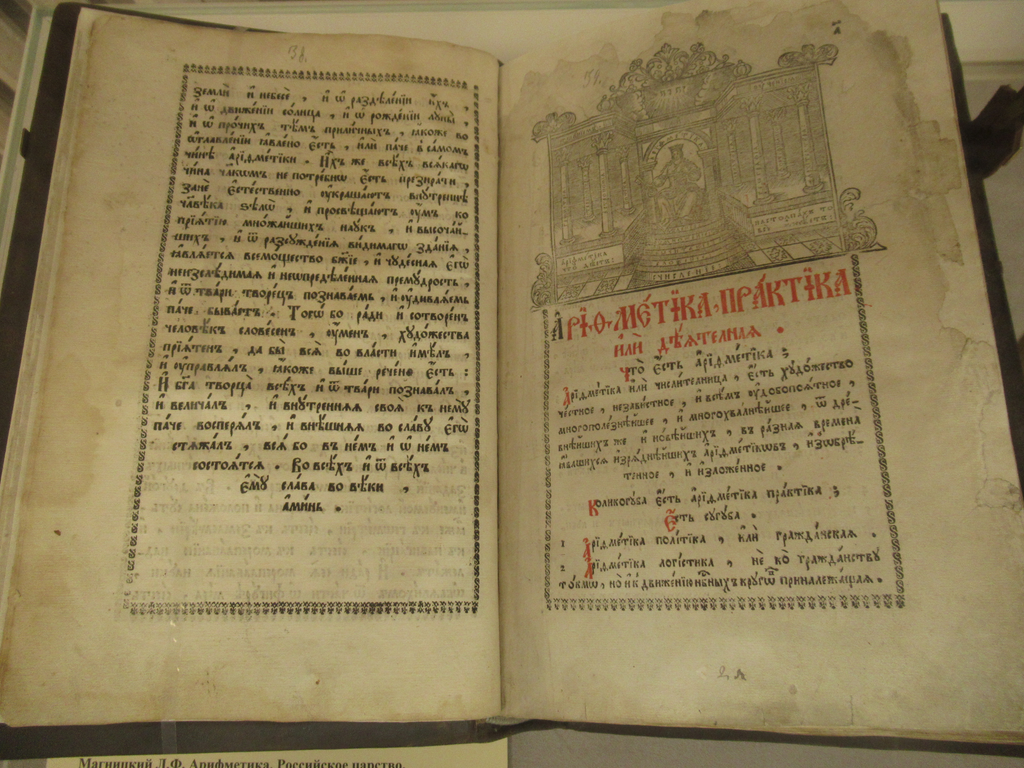
Russian names for actions were once printed alongside those of others. In 1703, Leonid Maginitsky’s «Arithmetic: The Science of Numerical Numbers» was published in Moscow, one of the first Russian printed textbooks on mathematics, and the actions are printed in pairs, in Latin and in Russian: numeratio or counting, additio or addition, substractio or subtraction. A student would encounter two names for one action next to each other. According to Maginitsky, arithmetic is «an honest, unpretentious art that is easy to understand by everyone.» Over three and a half centuries later, a child in an American school also encounters two names for one action; only the pair is reversed. The school name is English, while the home, Russian, name is not printed next to it.
What the child actually did
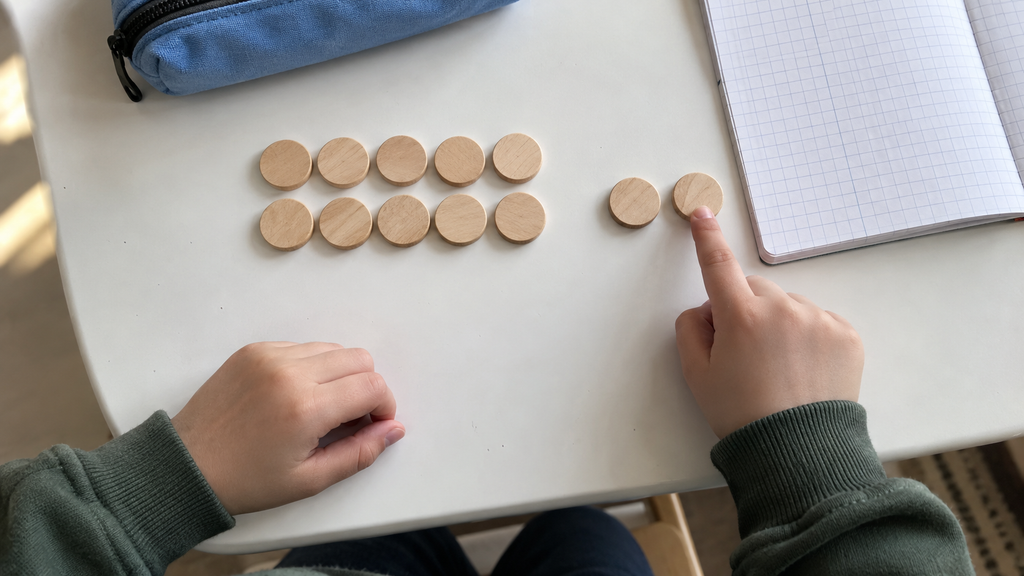
Back to the home base. «Seven, then three more is ten, and two more» is not a mumbling, but a perfectly school-like procedure that in English-language materials is called make ten or making ten. In Russian primary school, it has its own name: adding up to ten. Five is divided into three and two; first adding the seven to make ten, then adding the remaining two. The child hasn’t invented anything strange; only the English words for it are different. A similar story applies to the transition from tens to columns. The English regrouping is related to the regrouping of the units of measure; when adding ten units, they are combined into a ten; when subtracting ten units, they can be exchanged for ten units. When the grandmother explains the same divisions in English, she says «one in mind» or «taken from a neighbor,» depending on the situation. When an adult recognizes a familiar Russian procedure in the English explanation, they no longer need to learn anything new. They just need to substitute the name.
What exactly does the child know and what does he or she lack?
He is able to perform a dozen combinations of moves with ease, and he demonstrated this in English. The Russian explanation can begin with the name of the action.
Add five to seven
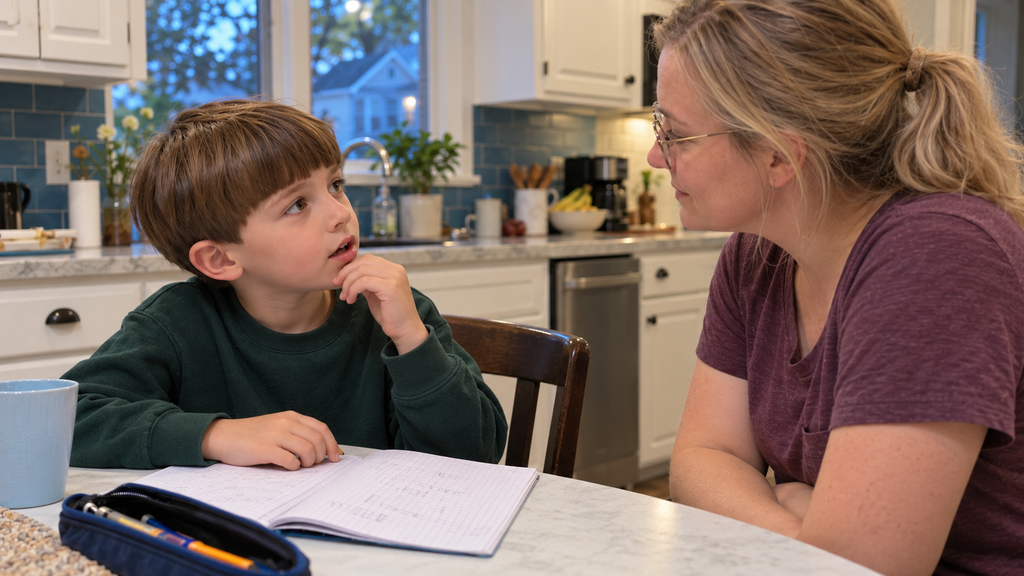
What could interfere with a Russian explanation? For example, the need to choose prepositions and grammatical forms. Add five to seven. Subtract five from twelve. Multiply seven by five. In these sentences, there are «to seven,» «from twelve,» «five,» and each form has to be chosen on the fly. For a child who speaks Russian at home about cartoons and dinner, and meets numbers at school in English, the very example adds to the linguistic difficulty. He tries honestly and gets stuck on the very first «to seven.» It’s easier to say in English or not to say at all.
Here is where the twist comes in. We don't ask for the full phrase. Let the numbers remain in English, «seven and five», even «twelve», there's nothing scary about that; we have that here. A separate discussion about numbers in Russian. The Russian word should be one word, the verb. «She put it down» or «she put it together,» depending on who is sitting at the table. The child will say this word without any inflection or prepositions, and it will describe the action that he has already shown. One verb is the first step in explaining this. Next, you can add a word at a time, without rushing, with the objects on the table and the numbers in any language. First, he added three, which made ten, then two more.
Spoons on the table
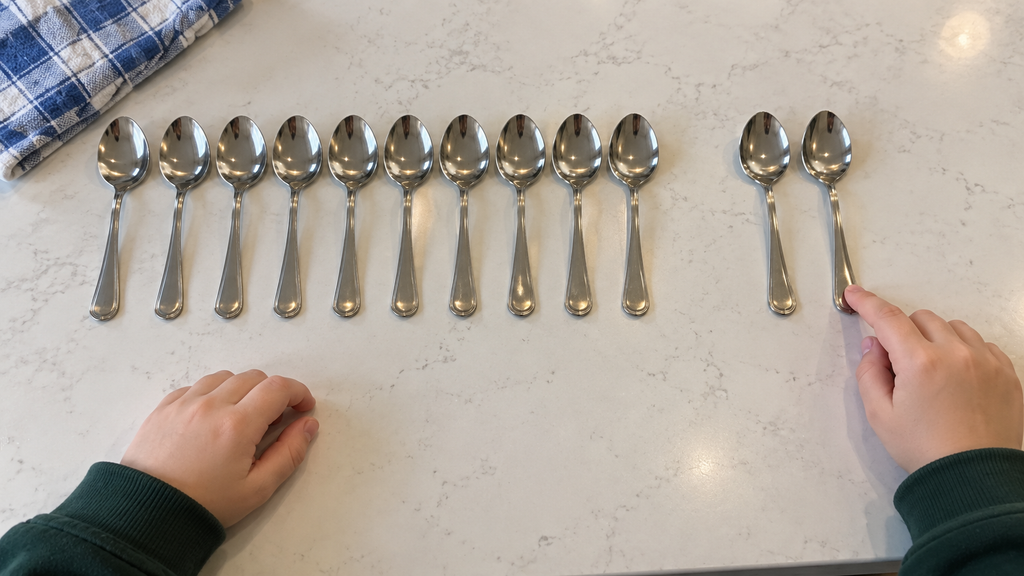
A conditional scene to show how it looks like. Let’s say, after dinner, mom leaves twelve spoons on the table and asks to show a home example, the same one: seven plus five. The child moves seven, then takes three from the remaining five and puts them next to seven, then two more. He showed make ten spoons without knowing what he showed. Mom asks «what did you do?», and he answers «I made them… together». This «together» with a pause in front of it is the point for which everything was set in motion. The child has an action; he just showed it with his hands. There are no words. And the adult has to deliver the word, one at a time, quietly, like when handing over a dropped fork. He put it down. This is the first word; from it you can move on to the spoons, one step at a time.
What will the child hear at this moment?
Most likely, he will hear that his way of learning is not being taught over. And that there is a new word for what he already knows.
Show me how it happened
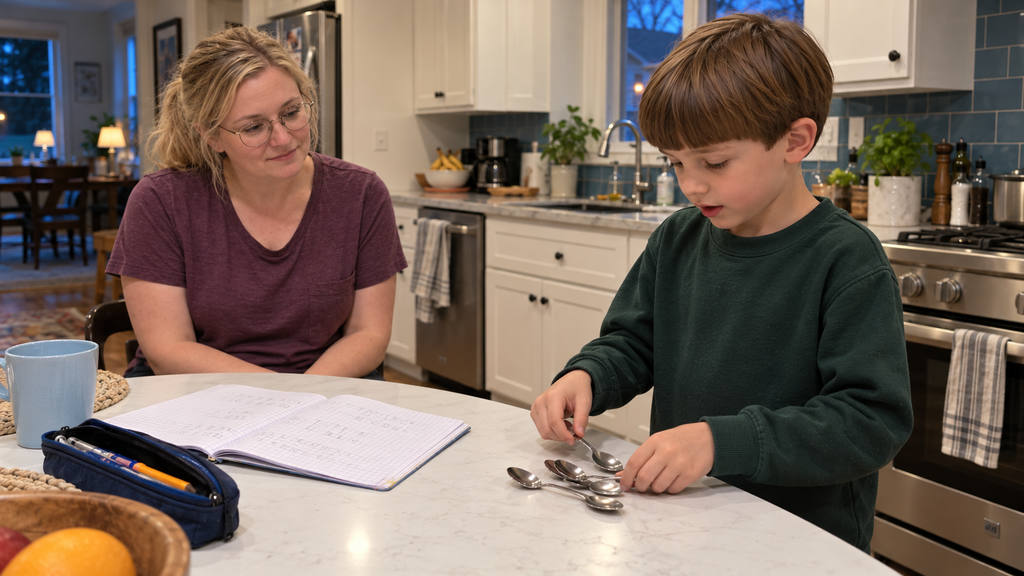
The difference between the two requests decides everything. «Show me how it happened» preserves the child’s way of thinking; he arranges the spoons the way he decided in his head. «Now, let’s count it in Russian» changes the language of the answer, and for the child it is an additional difficulty over the example itself. The method breaks down when the adult suggests their own method. If the adult himself arranges the items, shows his own, more correct method, and asks the child to repeat the ready-made phrase after him, a new lesson in mathematics in Russian will be learned, although the child has already decided everything himself. The benefit from such a lesson is exactly the same as from any lesson after dinner.
For today’s evening, five minutes will be enough. One example from today’s lesson is taken, any one that has already been solved, and the items are from the same table. The request is «show me how it happened,» and then you need to continue until the end without prompting. Then one question is asked, «what did you do?» and one word is answered, if the child knows it, or one word from you, if they don’t. He continues to count in the same way as he is used to. When the child starts using the word «built» independently, the same method can be used to name the second action once it appears on its own in the home. There are already two such words if the child says them themselves.
Name the action
You can move the spoons in any way you like. Click on any one of them and it will move to the next group. When you show your method, click the button and choose the word for what you have done.
For an adult: the child chooses the method; only suggest the word after they have tried it.
One verb for all
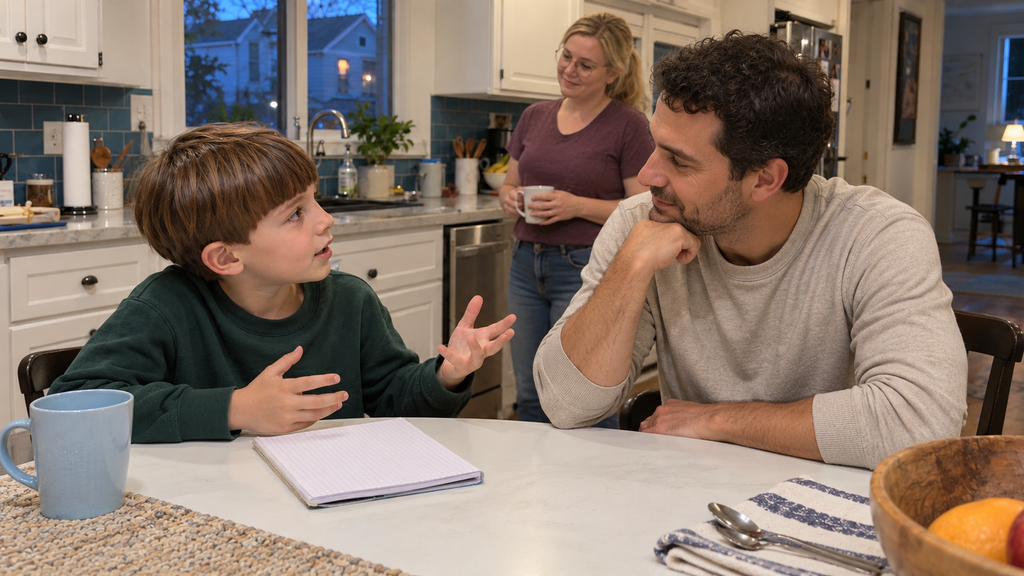
It would be worth sending a single thought from this text to the grandmother via video link: «How did you decide?» asks about the method, «How much will it cost?» asks about the answer, and after the first question, one must wait for at least one word; the story is told in words. To the father, if he does not speak Russian, the role of the first listener falls to him. The child explains in English to him the whole thing, and that is correct; the mother then asks for one Russian verb. It is useful for a Russian school teacher or tutor to know the same things that you now know. If the child explains the method in English or shows it himself during lessons, the difficulty of explaining in Russian in itself does not mean a mathematical gap.
And at home, you have one word that you can offer your child this evening. Put it together. Five spoons for seven, twelve in any language, and one Russian word about how those spoons ended up together. The towels in the closet are folded with the same verb, and that is perhaps the best thing the Russian language could have done for a first grader.
At the «Mathematics» course at Palme School, children from 4 years old are studying online in Russian, according to the Russian curriculum, in groups of up to eight people or individually, twice a week for 40 minutes. There are preschool groups and programs for grades 1 to 10. Addition, subtraction, multiplication and division in class are taught in Russian, with Russian names for the actions.
You can start getting to know each other on two free lessons. At the first meeting, the methodist determines the child's level and helps choose the program; at the second meeting, the family meets the teacher. The class time is chosen based on the family's time zone.
Book a Free TrialFrequently asked questions about the account in English and explanation in Russian
Is it necessary to teach a child to count in Russian if he/she counts in English?
No. The child already has a way to solve the problem; he can name the numbers in any language. At first, he will say only one word—the name of the action he just demonstrated using the objects. Later, he will add other steps for each word.
What is make ten and what is it called in Russian?
Make ten, or making ten, is a concept from English primary school, in Russian called "making up to ten." It occurs when adding up single digits with a carry over to the tens place, when the sum is greater than ten: eight plus six, nine plus four. The concept is the same, only the words used to call it out in class and at home are different.
What does regrouping mean in school mathematics?
When grouping a child encounters a situation where they are adding or subtracting two-digit numbers and there are more than nine units left to subtract, they encounter a problem. In the Russian math lesson this is called a grade transition; the subtraction is called «taking a dozen.» «One in mind» is heard both in the classroom and at home; «taking a dozen from a neighbor» is more like a household term for the same thing.
What are the four arithmetic operations called in Russian?
Addition, subtraction, multiplication and division. Verbs related to these: add, subtract, multiply, divide. In a complete sentence, prepositions and grammatical forms appear: add five to seven, subtract five from twelve, multiply seven by five, divide twelve by four. It is easier for a child to start with one verb without a complete sentence.
What to do if a child knows the word «folded», but can't explain it further?
Leave the items on the table and add one word to what the child shows with their hands. After «put together,» you can offer «turned out,» and leave the numbers in English. You don’t need to ask for the full sentence with the conjugations; the words come one at a time, in the order in which the child moves the spoons.