

The sunniest holiday on the Russian calendar is celebrated when the sun has already been on the decline for two weeks. The solstice in the current century falls on June 20th or 21st, and bonfires are lit on the night of July 7th. The gap is a little over two weeks, and the reason for it is purely arithmetic, calendrical. We'll get to that closer to the end.
The name itself is also misleading. In English guidebooks, the holiday is listed as Ivan Kupala or Russian Summer Solstice Festival, and both descriptions are only half true. Ivan in this name is Christian, Kupala fires are pagan, yet they have coexisted for a thousand years and show no signs of separating.
Holiday with two names
On June 24th, according to the old calendar, the church celebrates the Nativity of John the Baptist, the same one who baptized in the Jordan. Baptized, in Russian, means bathed, and the nickname Kupala stuck firmly to John's name in popular use.
These same days were when the Slavs had summer rites involving fire, water, and herbs, which were much more ancient. The church holiday was placed on top of them, as happened throughout Europe, resulting in a double name, where the first part was from the saints' calendar, and the second from common village practice.
Disputes continue to this day regarding the second part. In later sources, a deity named Kupala is found, and in popular retellings, it moves from text to text as the Slavic sun god. Cautious researchers treat it with restraint and believe that the deity appeared retroactively when scribes tried to explain the incomprehensible name of the holiday and invented a master for it. There is no direct evidence of such a god in early sources.
The Church looked askance at the Kupala festivities. Sixteenth-century documents mention night games by the water as something that should be eradicated, and they describe them in detail, with jumping, singing, and bonfires. They failed to eradicate them; the holiday survived until the advent of cameras and ethnographic expeditions, and its descriptions in nineteenth-century records match the condemnations of three hundred years prior almost verbatim.
Incidentally, this holiday is not exclusively Slavic. Almost all of Europe, from Ireland to the Balkans, celebrated the summer night with bonfires, and almost everywhere the church calendar aligned it with the feast of John the Baptist. The coincidences in rituals are striking, from bonfires on high ground to wreaths, herbs, and marriage divination. One should not look for a common origin here; rather, the short summer night itself suggested similar practices to people in different corners of the continent.
The night when nobody sleeps
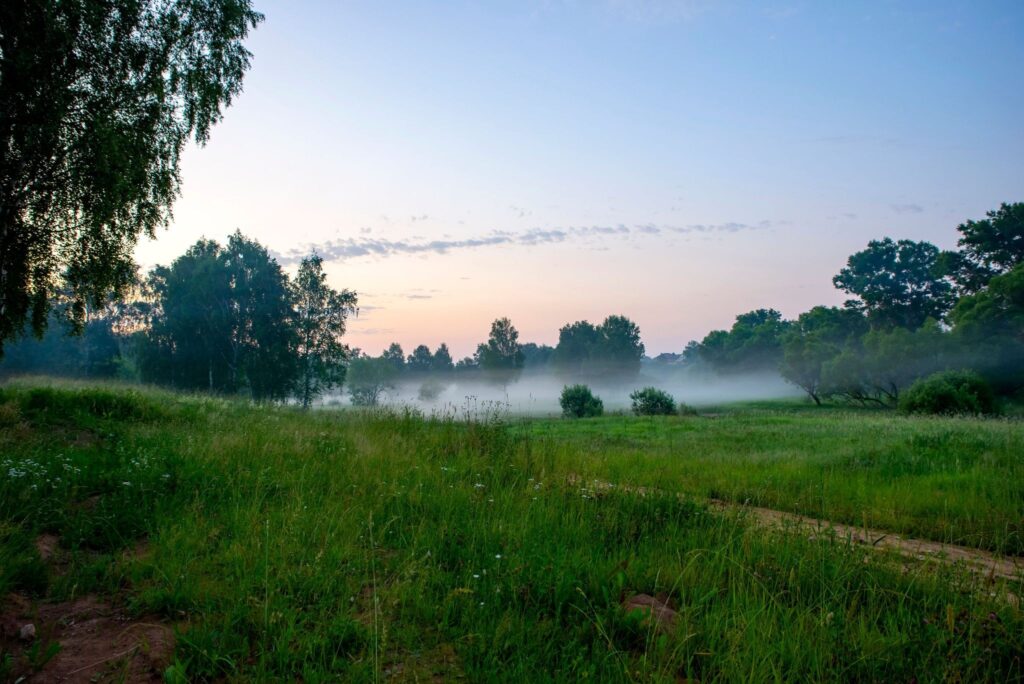
The main thing about this holiday is connected to its nighttime occurrence; bonfires are even secondary here. The summer night in the Russian North is short and bright, and staying awake through it is more of a pleasure. You're not supposed to work during this time, but rather to party until dawn and greet the sunrise with the entire village.
Folk logic here is clear. Night was considered a time when the boundary between the familiar world and the other world became thin, and therefore, according to beliefs, on Kupala Night everything came alive at once: mermaids came out of the water, witches gathered and spoiled milk, and evil spirits roamed wherever they pleased. Hence the protective measures: nettles on the threshold of the barn, wormwood tucked into belts, and fire, around which the whole village stayed.
This is also where the second, quite understandable aspect of the holiday comes from. On this one night, young people were allowed many things that were forbidden the rest of the year, including walking in pairs, bathing together, jumping over bonfires hand in hand, and singing until morning. Ethnographers usually note that Kupala celebrations functioned as a village matchmaking fair, and weddings were held afterward in the autumn.
Bonfire and jumping over the fire
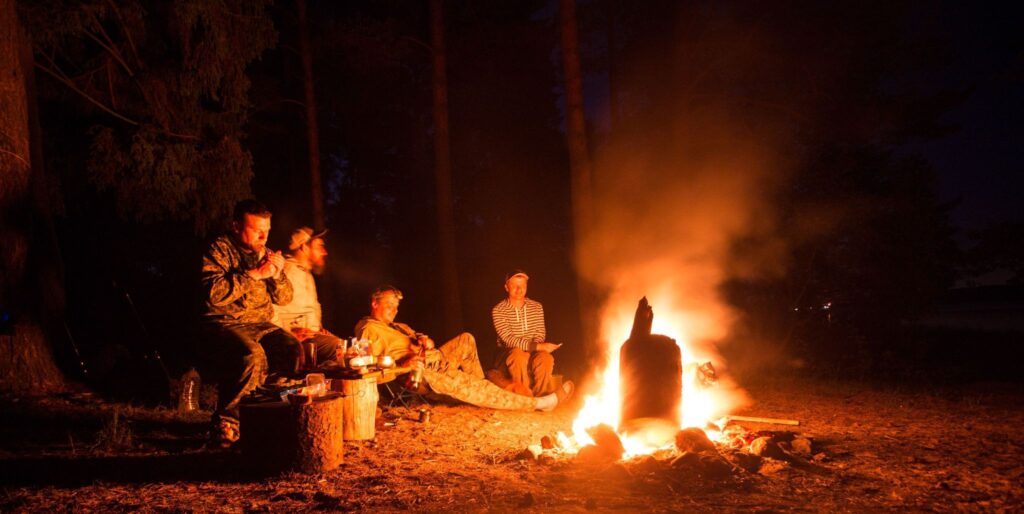
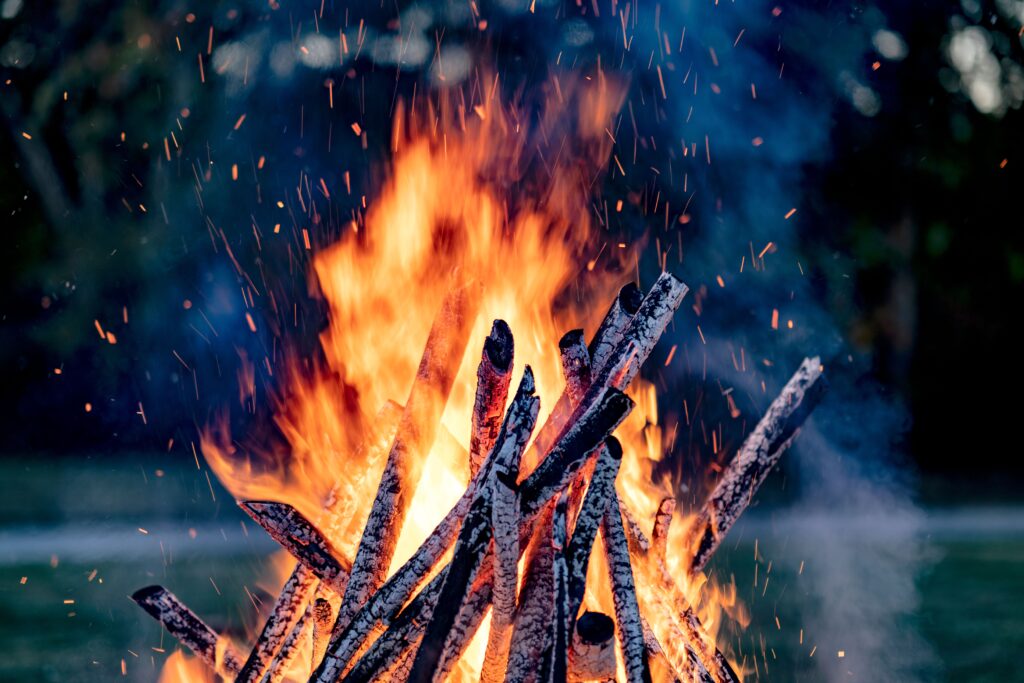
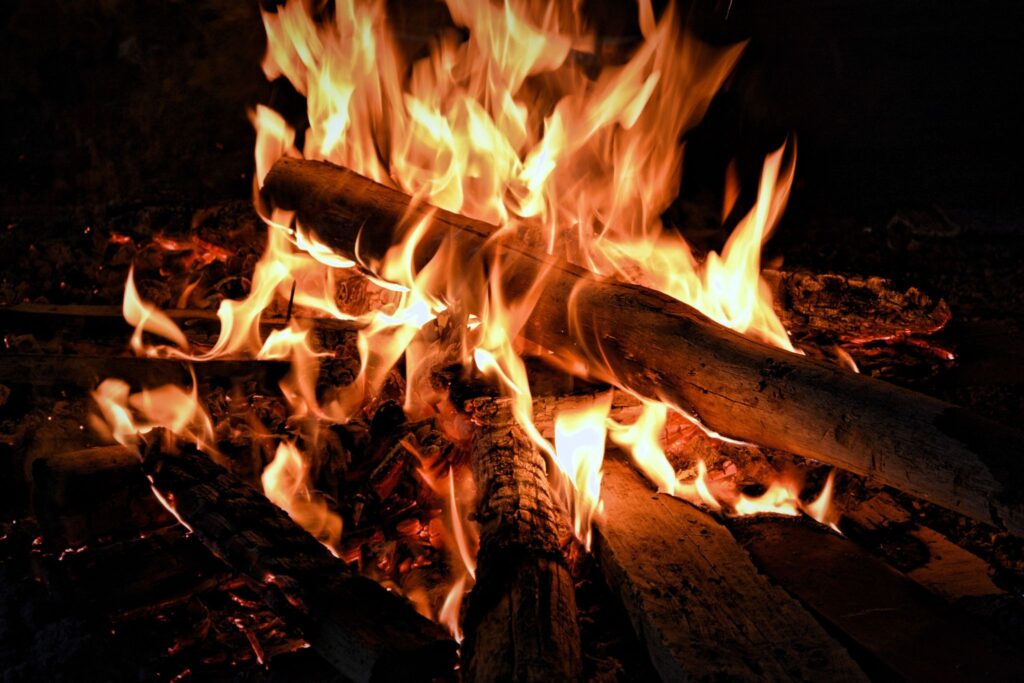
The bonfires on Kupala were not just any fires. The proper Kupala bonfire was supposed to be lit with a live flame, made by rubbing wood against wood. A fire brought from a stove was not suitable for this purpose, and the elders strictly enforced this rule. The bonfire was built on a high place near the river, so it could be seen by neighboring villages, and it burned all night, with old things and junk that people wanted to get rid of being thrown into it.
They jumped over the bonfire in various ways. Young men jumped one by one, showing off their bravery. Girls, hitching up their skirts, jumped next. Couples held hands, and this was when the most interesting part for the whole village began, because there was a belief that a wedding was promised to those whose hands didn't separate during the jump. If they separated, it meant it wasn't their destiny. The observers by the bonfire watched this more intently than the jumpers themselves.
In some provinces, a wheel was added to the bonfire. An old cartwheel was wrapped in straw, set on fire, and rolled down a hill towards the river, and the rolling fiery circle could be seen from afar. Ethnographers of the nineteenth century recorded this ritual in various places and usually associated it with the sun, although the peasants themselves explained it more simply, for fun and to ensure a good year.
The meaning of fire in folk beliefs was purifying. Cattle were driven through bonfires so they wouldn't get sick, children's clothes were held over the coals, and the shirts of the sick were thrown into the flames. Jumping over a fire meant the same thing for a person: to leave everything bad in the fire and come out clean on the other side.
It all ended towards morning. They raked through the burnt-out campfire, and the teenagers jumped over the coals without any ritual, just because it was fun.
Wreaths, water, and fortune-telling
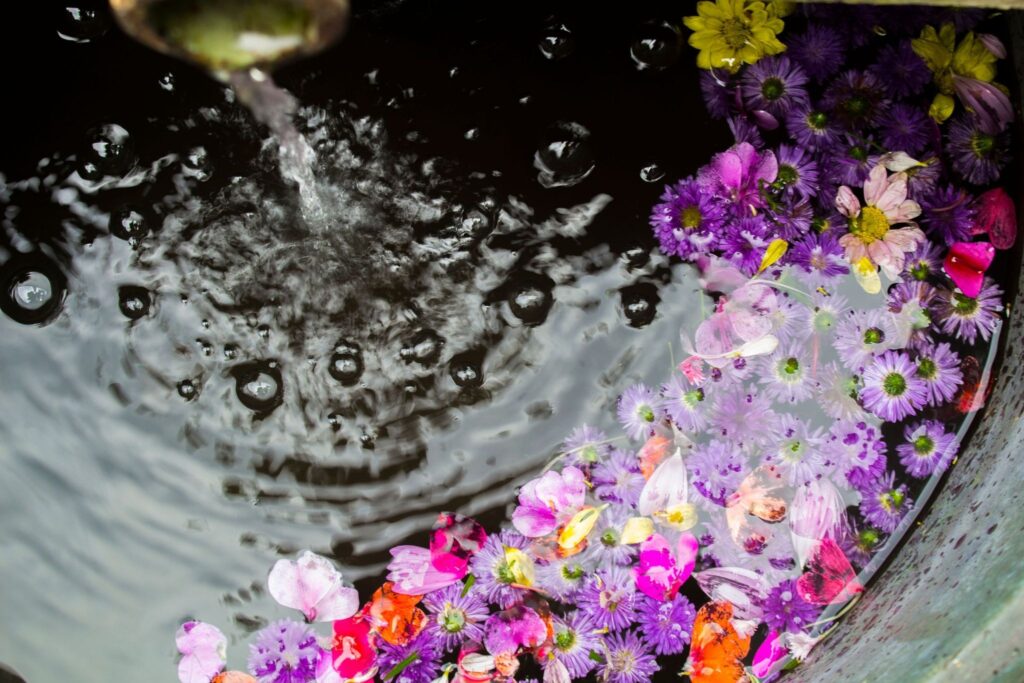
The second half of Kupala rituals is connected with water, and the main object here is the wreath.
The girls braided it during the day, from wildflowers and grasses, each for herself. From branches birches In some places, a large wreath was woven for the entire group. In the evening, the wreaths were floated down the river, often with a lit candle attached, and they watched what would happen. If it floated far and straight, it meant marriage was near. If it drifted to the shore, it meant they would have to wait another year. If it sank or the candle went out, the omen was considered bad, and the friends would quickly try to make light of the situation.
Sometimes a guy downstream would catch the wreath, which indicated a specific matchmaking, usually agreed upon in advance by both parties. Fortune-telling was fortune-telling, but village life was organized practically.
The wreath in Kupala rites was generally a multifaceted object. In some places, it was burned in a bonfire along with last year's one; in others, it was hung above the stable door to keep the livestock from getting sick; and in yet others, it was kept until the next summer as a protective charm. It wasn't woven from just anything; strictly specific herbs were used, and the knowledge of precisely which ones was passed down from mothers to daughters along with songs.
Bathing that night was also part of the ritual. It was believed that after Ivan Kupala, the water became safe and warm, and before the holiday, one should not enter the river. In some places, people would drench each other with water right on the street, regardless of whether they were dressed or not, and it was not considered offensive.
Herbs and a flower that doesn't exist
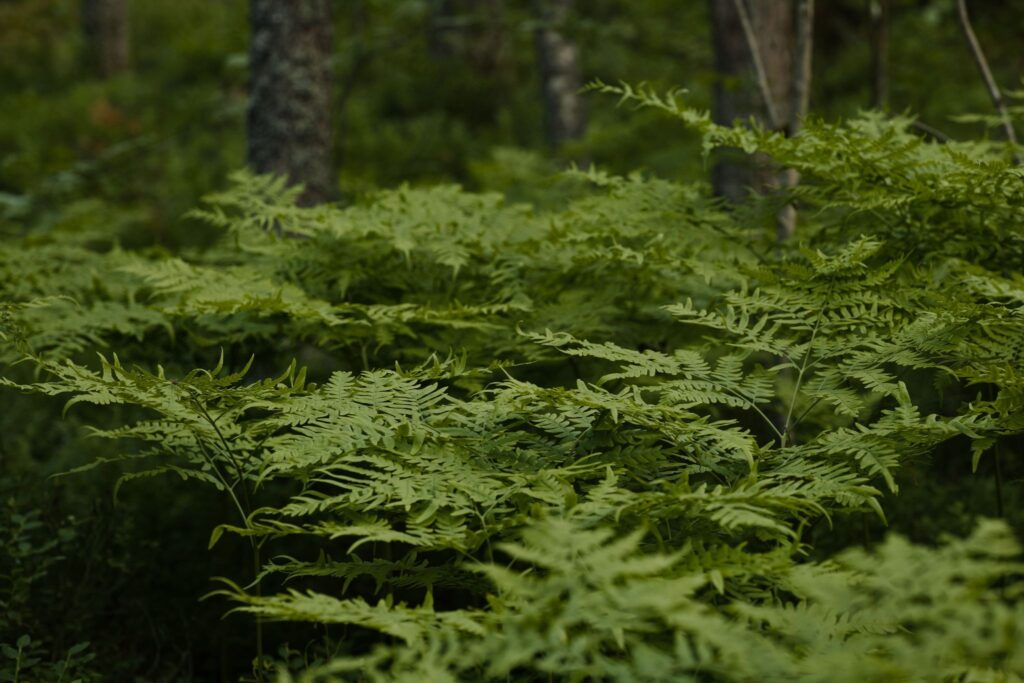
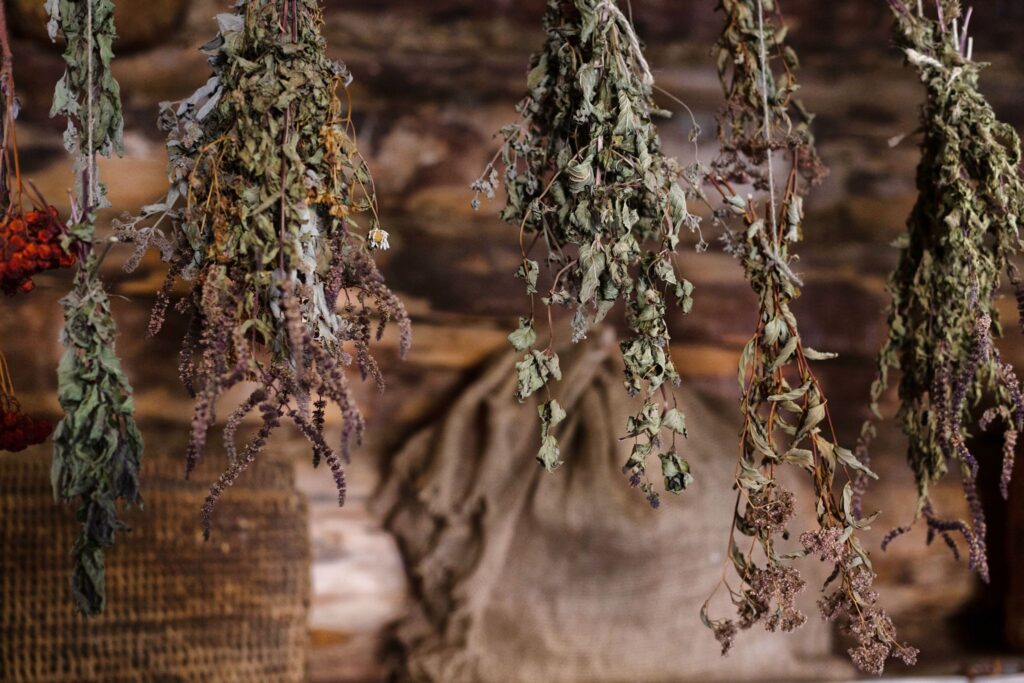
Kupala Night was considered the best time for gathering herbs. Healers and ordinary housewives went out into the fields before dawn because, according to common belief, herbs gathered on this night gained special power and would last until the following summer.
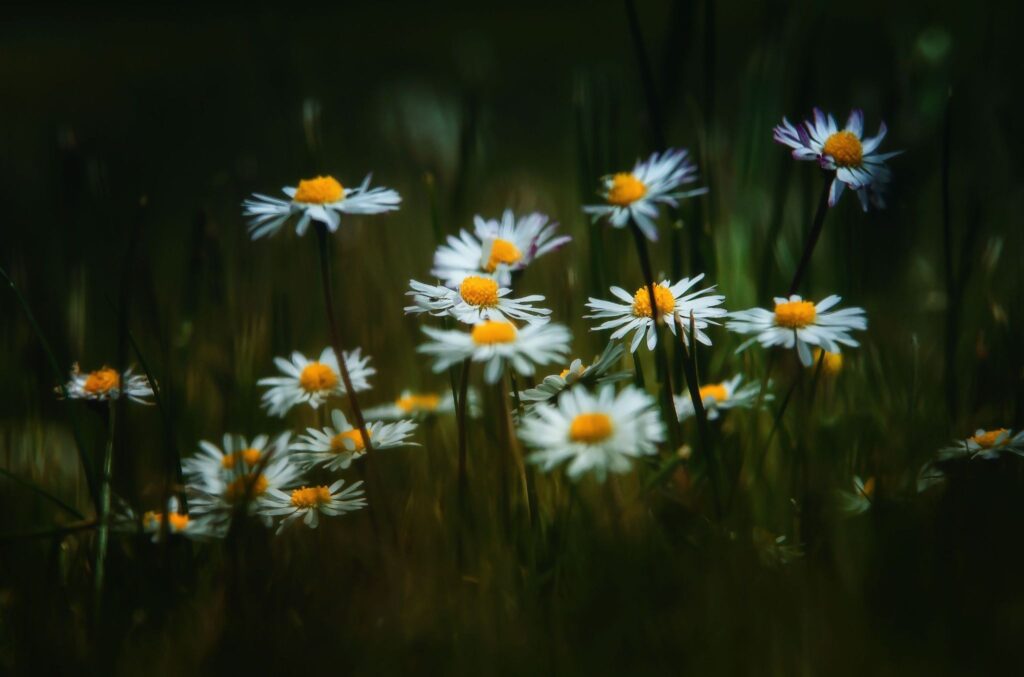
They gathered nettle and wormwood for protection, St. John's wort, thistle, and globe flower. A special place was occupied by a flower with two-colored petals, yellow and purple at once, which is called Ivan-da-Marya in the folk. The name stuck to it because of a legend about a brother and sister who did not recognize each other and fell in love. According to the tale, they turned into a flower with two different halves. There are several legends with this plot among the Slavs, and the Kupala night always appears in them.
Kupala dew deserves special mention. They went out to collect it before sunrise, gathered it with linen from the grass, and washed their faces, and with it, they wiped the faces and hands of the sick. It was believed that the dew of this night grants health and beauty for the whole year, and at the same time, housewives checked how much of it had fallen, because abundant dew promised a good cucumber harvest.
But the main herbal legend of the holiday, of course, is about the fern. According to belief, exactly at midnight, the fern blooms with a fiery flower, just for a moment, and whoever manages to pick it will receive treasures, understanding of animal languages, and power over evil spirits. Evil spirits, who try to scare the seeker as much as they can, prevent one from finding the flower, which is why it was customary to go for it alone, without looking back and without answering calls.
Botany here is ruthless. Ferns don't bloom at all; they reproduce by spores, and they don't and cannot have any flowers. The legend only wins from this. They searched for the inherently impossible, and all the value was in the very act of walking through the night forest until dawn. Nikolai Gogol built his early story «The Eve of Ivan Kupala» on this plot, where the found flower costs the hero a monstrous price, and the acquired treasure brings no happiness.
Kupala Night by the hour
Order of rituals from noon to sunrise, and the home version of each for a family without a village and river outside their window.
| When | Rite | How was this done | How to repeat with a child |
|---|---|---|---|
| The day before | Wreath making | Each girl wove her own, from strictly defined herbs, and the knowledge of the set was passed down from mother to daughter. | Weave a wreath of dandelions and clover in the yard, dry it between the pages of a book. |
| Before sunset | Gathering herbs and branches | Nettle and wormwood were carried to the stable threshold, thistles were stuffed into cracks, and globe flowers and St. John's wort were dried for future use. | Collect five plants from the lawn and label them in Russian on index cards. |
| Twilight | Live fire | A campfire was lit in a high place by the river by rubbing wood against wood; it wasn't allowed to bring fire from the stove. | Light candles on the table, and get the flame with a match, not a lighter. The difference can be explained in two sentences. |
| Darkness | Jumps and the Wheel of Fire | They jumped alone and in pairs, and they would set fire to a straw-wrapped wheel and roll it down the hill towards the water. | Jump over the ribbons laid on the grass, and draw or roll the wheel out of paper. |
| Midnight | Fern-gathering | Went into the forest alone, without looking back or answering calls, looking for what doesn't exist. | Read Gogol's story or its retelling aloud, and then search the internet for how ferns actually reproduce. |
| Closer to dawn | Wreaths on the water | They would set them adrift on the river, often with a candle, and see whose would float the furthest. | Float a wreath in the basin or bathtub, and replace the candle with an LED tealight. |
| Sunrise | Dew and washing | They gathered it with linen from the grass, washed themselves, wiped the sick, and checked how much had fallen. | Walking barefoot on the morning grass is the only ritual that works without any preparation. |
How the Holiday Came to Be Separated from the Solstice
Now for the promised arithmetic, which is worth returning to the beginning for.
The Russian Orthodox Church follows the Julian calendar, while civil life in Russia uses the Gregorian calendar. The difference between them is.
The sun has nothing to do with this translation. The Earth orbits the star regardless of which calendar people use, and the longest day remains where it was, in the twenties of June. So, the holiday doesn't really diverge from the sun. Two ways of recording the same date diverge. As a result, the holiday, which grew out of the rituals of the shortest night, is celebrated when the nights are already noticeably longer.
Things turned out differently for our neighbors. Latvia celebrates Ligo and Jāņi on June 23 and 24, Finland observes Juhannus at the end of June, and Sweden celebrates Midsummer on the same days. There, the calendar did not shift, and the holiday remained tied to astronomy. The Russian version turned out to be the only one in this group where the summer night is celebrated two weeks late, but with a full set of rituals that have survived to this day.
Where is tonight being celebrated today
The tradition of the entire village gathering by the river is long gone. However, there are many places where people are reviving this celebration.
Every summer, museums of folk life and ethnographic parks host Kupala celebrations, complete with wreaths, circle dances, and a real bonfire. In Belarus, Kupala is considered part of the official holiday calendar and is celebrated on a much larger scale than in Russia. The tradition is also alive in Ukrainian villages and at festivals, where the holiday is usually called Ivan Kupala.
A city festival looks different from a village one and revolves mainly around water. In Russian cities, the night of July 7 has long since become an excuse to douse passersby, which teenagers happily take advantage of, while adults steer clear of courtyards and parks on this day. The tradition has remained recognizable despite this transformation; water still plays the central role. The meaning, however, is now no greater than that of a snowball fight.
A curious thing happens for families abroad. Parents who never went out for Kupala Night in Russia start remembering wreaths and bonfires when they find themselves, for example, in Latvia or Finland, where the whole country goes out into the countryside in late June to grill meat and light fires by the water. The holiday feels like their own, even though it's called something different, and it's easiest to explain it to a child by comparison.
Words of Kupala Night and what's inside them
Six holiday words with English equivalents. Useful for a child who knows both languages and an adult learning Russian.
The name of the holiday and John the Baptist's nickname simultaneously. The root is the same as in «to bathe,» «to bathe oneself,» «font,» «bathing suit.» It's easy to show the whole chain to a child on your fingers.
The English word «bonfire» literally means «bone fire,» from the old custom of burning animal bones. Fasmer's etymological dictionary associates the Russian word with "kostra," the stiff remnants of flax and hemp used as tinder. This is not the only theory, but it is the most common one.
Kin to «crown» and the verb «to crown.» This is also the origin of the wedding meaning of Kupala divination, which otherwise would need a lengthy explanation.
In English, the word «fern» has no mystical connotations; in Russian, the word is associated with “pero” (feather), due to the shape of the leaf. A fern leaf, by the way, is called a “vaya.”.
A yellow meadow flower named after a holiday, and its cognate «swimsuit.» One word went into botany, the other into a beach bag, and they share a common root.
Midsummer dew was considered to have healing properties. In Russian, the word is short and ancient; it appears in «rosisty» (dewy), «rosinka» (dewdrop), and also in the saying about «honey-sweet dew.».
The common name for the solstice. The Russian word is a combination of «sun» and «to turn,» while the English word comes from the Latin words for «sun» and «to stand.» The two languages describe the same phenomenon using different verbs.
How to Cope with This Night with Your Child
The easiest way to start the conversation is with the fern, because the child will ask about it on their own. It’s best to answer honestly here—there is no flower and there never was one; a nine-year-old will figure that out right away and lose faith in the rest of the story. It’s much more interesting to ask the child why grown-ups went into the forest at night looking for something that doesn’t exist. The answers can be unexpected and are usually more accurate than the parents’ explanations.
It’s best to approach the supernatural elements of Kupala folklore without being too heavy-handed. Mermaids, witches, and voices in the night forest scare a child only as much as the adult speaking about them takes it seriously, and a calm tone turns the scary into something interesting. At the same time, it provides an opportunity to explain why people needed such stories in the first place. The nighttime forest and dark waters were genuinely dangerous places for villagers, and a scary story served as a warning just as effectively as a direct prohibition.
The songs also work well. Kupala songs are short, with repetitions and simple words, making them easy to pick up even with a small vocabulary, and the melody itself helps with pronunciation. It's enough to find a recording by a folk ensemble and listen to one verse a few times, and the child will usually start singing along without any prompting.
This holiday also holds a gift for families where Russian is a second language. It's worth placing «Kupala» and «kupat'sya» (to bathe) side by side, and the child will see for themselves that the holiday's name is derived from a verb they know. Such connections explain the structure of language more clearly than a rule from a textbook, and you can find about ten of them in Kupala vocabulary.
Our school includes the folk calendar in its culture classes, and we explore it through scenes and objects. The dates still don't stick in anyone's mind. Palme School works with children from four to seventeen years old. The groups are small, and the level is determined before classes begin. You can start with two free lessons. The first is with a methodologist who gets to know the child and selects a group, the second is a trial lesson in a group with a teacher.
What remains of Kupala night
Of all the rituals, only the simplest have survived to our day: fire by the water, a wreath, a sleepless night, and conversations until dawn. The complex ones disappeared because they were tied to the village way of life, which no longer exists, while the simple ones remained because they are tied to the summer night, which hasn't gone anywhere.
For a child growing up outside of Russia, this night doesn't offer a list of traditions to remember, but rather an occasion to go to the water in June, weave a wreath from what grows nearby, and hear that the words «to bathe» (kupat'sya) and «Kupala» share a common root. Things like this are remembered for a long time, unlike dates.
Ivan Kupala is celebrated on the night of July 6-7.
On the night of July sixth to seventh, according to the civil calendar. In the church calendar, it is June twenty-fourth, the Nativity of St. John the Baptist, and the thirteen-day discrepancy arises from the difference between the Julian and Gregorian counts of time.
Ivan Kupala is a pagan holiday.
Both layers are present simultaneously. The summer rituals with fire, water, and herbs are older than Christianity, and the name Ivan comes from John the Baptist, whose feast coincided with them in time. Thus, a dual name and a dual tradition developed.
Is it true that ferns bloom on Kupala Night?
No, and botany offers no hope here, ferns simply do not have an organ that could bloom. However, the belief has survived to this day better than many other Kupala rituals, and schoolchildren abroad most often learn about it from their grandmothers. Gogol made this legend the plot of his early story, and the flower there brings the hero nothing but sorrow.
Why did they jump over the bonfire?
For health and good luck. Fire was attributed the ability to burn away illnesses, which is why livestock were driven through bonfires, children's clothes were held over coals, and shirts of the sick were thrown into the flames. A person underwent the same procedure themselves, only by running. For lovers, a superstition about clasped hands was added to this.
On Ivan Kupala Night, women would typically float wreaths down rivers.
The wreaths had different fates. A wreath set adrift on the river served as a divination about marriage, while one kept at home was hung above the barn door to ward off livestock diseases or hidden until the following summer as a charm. In some places, wreaths were burned in the Kupala bonfire along with last year's.
Is Ivan Kupala celebrated today?
Yes, but differently than a hundred years ago. The ritual part with wreaths, round dances, and a living bonfire is shown in folk life museums and at summer festivals. In Belarus, Kupala Night is included in the official holiday calendar. In Russian cities, often only water splashing in the street remains of the holiday.