

In an American school during roll call, the teacher reaches a Russian family and stumbles. Listed are Ivanov and Ivanova, brother and sister, and by all local rules these are different last names, which likely means an error in the documents. There is no error; it's just that Russian last names change by gender, something English can never do. The teacher nods and admits that Russian last names are the hardest of all for him.
Next it turns out that there are even more oddities. There are more Smirnovs in Russia than Ivanovs. A huge portion of surnames ending in -ov do not derive from baptismal names at all, but rather from secular nicknames that went out of use several centuries ago. And many clerical surnames, like Rozhdestvensky, were invented in seminaries with a single stroke of a pen. Next, in order, is how this system came to be and what it tells us about people.
Fifteen surnames that are heard most often
Each one indicates what it grew out of and why there turned out to be so many speakers.
| Place | Last name | From what | Explanation |
|---|---|---|---|
| 01 | Smirnov | nickname | The secular name Smirnoy was borne by thousands of children across the country, and in sixteenth-century censuses it is found more often than many baptismal names. |
| 02 | Ivanov | baptismal name | Ivan was the most frequent name in the calendar of saints, and the memory of the Apostle and John the Forerunner was celebrated many times a year. |
| 03 | Kuznetsov | craft | Blacksmithing was the main technical craft of the village, and the blacksmith was popularly considered a man who knew the ways of fire and therefore was not entirely ordinary. |
| 04 | Popov | Church Life | A priest's son or a person from a priest's household. There are especially many such surnames in the Russian North and the Urals. |
| 05 | Sokolov | nickname and seminary | Dual origin. Among peasants, it comes from a nickname based on character or sharp eyesight; among the clergy, it comes from a seminary list of beautiful surnames. |
| 06 | Lebedev | nickname and seminary | The same story as Sokolov's. In theological schools, bird surnames were handed out readily; they were considered euphonious. |
| 07 | Novikov | status in the community | A "novik" is a novice, a newcomer, or a young man who has just been enlisted into service. |
| 08 | Morozov | circumstances of birth | Moroz was given to a child born in the cold, and also as a nickname for a harsh disposition. |
| 09 | Volkov | nickname | One of the old secular names given both as a talisman and for character. The wolf in such a name protected the child from trouble. |
| 10 | Kozlov | nickname | Livestock in nicknames occurs constantly, there was initially nothing offensive about this. |
| 11 | Solovyov | nickname and seminary | Among the peasants, it’s a nickname for a singer or a chatterbox; among the clergy, it’s once again a seminary nickname. |
| 12 | Vasiliev | baptismal name | Vasily remained in the top three names for several centuries in a row, hence the surname's place. |
| 13 | Zaitsev | nickname | A nickname for speed or timidity, found in censuses since the sixteenth century. |
| 14 | Petrov | baptismal name | Pyotr stood in the calendar of saints next to Ivan, and after Peter the Great, the name also acquired a state fashion. |
| 15 | Pavlov | baptismal name | Like Petrov, it grows from an apostolic name that is consistently popular in Russian families. |
The ranking varies across different surveys because some studies rely on telephone surveys, while others use data from civil registry offices and censuses. However, the top three remain the same.
Surnames appeared a full thousand years after first names
A person has always had a first name, a patronymic appeared early, but the last name in the Russian world is a recent thing. For long centuries, people were distinguished differently: Ivan the son of Peter or the blacksmith from Melnichnaya Street. Exactly how the patronymic is structured and why it still serves as a sign of respect is discussed in detail in separate article.
A hereditary surname passed down from father to son and further was needed first and foremost by the state. It was impossible to count taxes, keep lists of servicemen, and secure land to a lineage without such a name. Therefore, surnames appeared from the top down through the social strata, and the gap between the first and the last was a good five centuries.
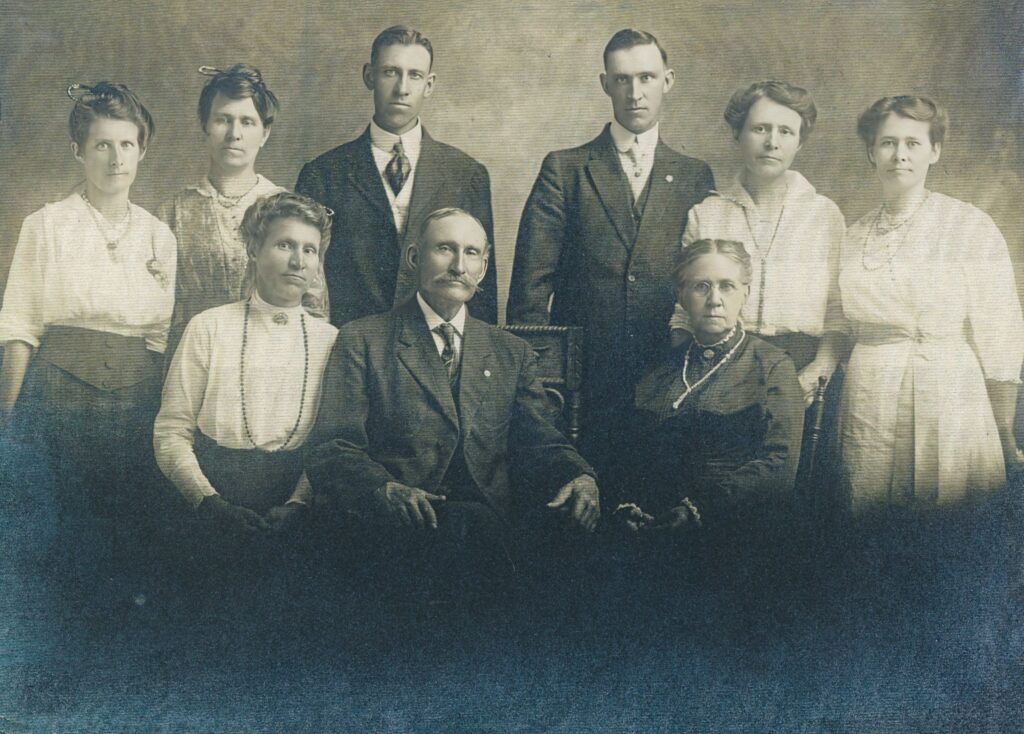
The noble families acquired them first, as early as the fourteenth and fifteenth centuries. They were followed by the service gentry, then the merchants, and then the clergy. The peasants, that is, the overwhelming majority of the population, received surnames last, and this happened en masse only after the abolition of serfdom, and was finally fixed only during the Soviet passportization in the nineteen-thirties. A great-grandmother born in a village before the revolution could easily have her surname fluctuate from one census to another, differing between herself and her own brother.
Father's name, nickname, trade and place
There are thousands of Russian surnames, but there are four main methods of formation, and almost any surname falls into one of these categories, excluding artificial ones, which will be discussed separately later.
Most surnames originated from the father's name. The mechanism here is direct; a person was recorded as the son of so-and-so, and the record eventually became fixed for all descendants. This is how Ivanov, Petrov, Vasilyev, Fedorov, and Mikhaylov came to be. This only works with Christian given names from the saints' calendars, and since thousands were baptized as Ivan in Russia, the surname came out on top in terms of recognition.
The second source proved to be much richer: nicknames. Until the eighteenth century, a person usually had another, secular name given by family or neighbors, in addition to their church name. Smirnoy, meaning quiet and obedient, alongside Nekras, Zayka, Solovey. Smirnov, Nekrasov, Zaitsev, Solovyov, Medvedev grew out of these. A nickname described temperament, appearance, habits, or birth order, and by it the village distinguished half a dozen Ivans from one another much more reliably than by the church calendar.
Occupational surnames are the easiest for a foreigner to understand. Kuznetsov, Goncharov, Bondarev, Melnikov, Plotnikov, Rybakov. A blacksmith was needed in every village, which is why the surname spread throughout the country, much like Smith in England, Schmidt in Germany, Ferrari in Italy, and Kowalski in Poland. The exact same craftsman gave a name to half of Europe.
Surnames based on location stand apart. Surnames ending in -sky most often indicate possession or origin, such as Vyazemsky from Vyazma, Shuysky from Shuya. Such surnames are rare among peasants, but numerous among the nobility and clergy.
How to identify the type of surname by its features
Four main sources plus artificial surnames that stand apart. For each, characteristics and non-obvious examples.
From the baptismal name
It's easy to find out, but not always
Larin grew out of Illarion, Gavrilov out of Gavriil, Lukin out of Luka. A separate group comes from pet forms of a name, resulting in Vanin, Sashin, Mitin, Grishin. Such a surname indicates that an ancestor was named according to the church calendar, but tells nothing about what kind of person he was.
From the secular nickname
The most numerous and most talkative
Until the eighteenth century, almost everyone had a second name given at home or by neighbors. Some of these names functioned as talismans: an infant was named Nekras ("ugly") or Zloba ("malice") to ward off the evil eye and avoid jinxing a good-looking child. Hence the surnames Nekrasov and Zlobin, even though their ancestors were neither bad nor evil.
From the craft
List of professions of a bygone country
Besides the obvious Kuznetsovs and Melnikovs, this category includes Bocharovs and Kozhemyakins, Shapovalovs, who used to make felt hats, Prasolovs, who traded livestock, and Yamshchikovs, who transported mail. From such surnames, one can compile a list of professions that no longer exist.
From place and people
Indicates where the ancestor came from
In addition to surnames ending in -sky, Donskoy and Volzhanin, named after rivers, also belong here, as well as Nemtsov, Tatarinov, Cherkasov, and Litvinov. The latter do not denote nationality in the current sense, but rather that the person came from afar and stood out in their village.
Artificial
Surname as an administrative decision
In addition to seminarists, this category includes the surnames of orphanage alumni, who were registered by the name of the institution, the month of admission, or simply by the whim of the superintendent. Surnames given at baptism followed the same path, which is why people without relatives often end up with unexpectedly beautiful surnames.
Why there are more Smirnovs than Ivanovs
The question of the most common Russian surname is not solved as most expect. Ivanov is well-known and features in jokes, but according to calculations from recent decades, the first place is more often taken by Smirnov, with Ivanov following right behind, sometimes even yielding to Kuznetsov.
The difference is explained by their origin. Ivanov stems from a single name, albeit the most popular one in the church calendar. Smirnov stems from a nickname given to a child across the entire country regardless of how they were christened, as parents praised quiet and calm infants the same way in every province. Add geography: Smirnovs are especially numerous in the Volga region and central Russia, from where they subsequently spread everywhere.
Another explanation, purely arithmetic, is also plausible. Ivan is such a frequent name that a multitude of parallel surnames were formed from it, from Ivanov and Ivashin to Vanin and Vanyushin. Their bearers dispersed into different surnames, and the total mass fragmented, whereas Smirnov remained almost monolithic.
Surnames given in seminary
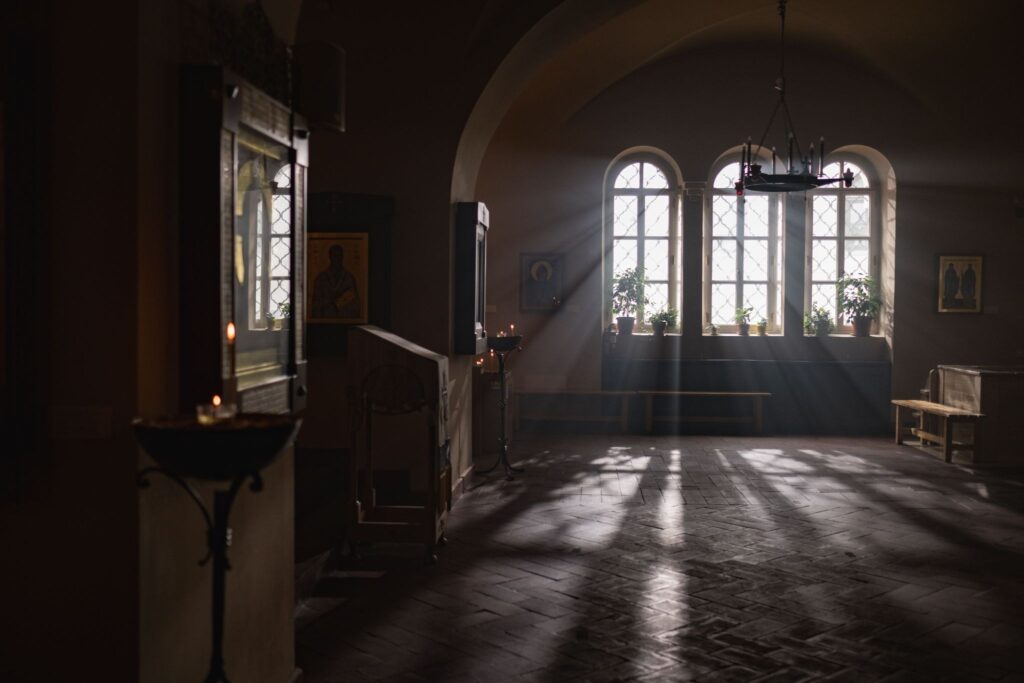
The clergy is a separate story, and it explains why there are so many resonant surnames with a solemn undertone in Russian culture.
Upon entering the seminary, the son of a rural priest was often assigned a surname on the spot, usually in the interest of euphony. They were named after the church where the father served, hence Rozhdestvensky, Uspensky, Troitsky, Voznesensky, Preobrazhensky. They were given names based on virtues and Latin, which is how Speransky appeared from the verb to hope, and Gilyarovsky from the word for cheerful. They were given names based on flowers and stones, as long as it sounded exalted, and Tsyparisov, Giatsintov, and Smaragdov appeared on the lists.
The sign turns out to be recognizable. The surname is solemn, bookish, with a church or Latin root, almost certainly meaning an ancestor from the clergy. At the same time, this explains why such surnames are often borne by people of intellectual pursuits, since the seminary provided education, and its graduates went on to become teachers, doctors, and civil servants.
What do suffixes say

The tail of a surname tells more about it than the root.
The endings -ov and -ev are the most common and derive from the father's first name or nickname, answering the question whose. The ending -in attaches to stems that end in a vowel, hence Ilyin, Kuzmin, Nikitin, and Fomin. The ending -skiy indicates a place or, among the clergy, a church. Siberian and northern surnames ending in -ykh and -ikh like Chernykh, Dolgikh, and Sedykh are structured differently from all others; they do not change by gender or case, and a wife named Chernykh remains Chernykh. Finally, there are rare indeclinable surnames like Durnovo and Khitrovo, where the stress falls on the final syllable and the form is frozen forever.
The female form is obtained by adding -a, hence the very pair Ivanov and Ivanova, which confuses foreign documents. The rule is simple, but does not apply to all types: last names ending in -ykh, -ko, and -ago have no female form at all.
What does the ending of a surname do
Seven types of endings, the feminine form of each, and declension behavior. This table makes it easy to understand why a brother's and sister's last names look different, while neighbors' last names look the same.
| Ending | Examples | Female form | How does it behave |
|---|---|---|---|
| -ov and -ev | Ivanov, Kuznetsov, Medvedev, Grigoriev | Ivanova, Medvedeva | They follow a mixed declension pattern: in most cases the nouns take nominal endings, but in the instrumental case an adjectival ending pops up, hence Ivanov and Ivanova. |
| -in and -yn | Ilyin, Kuzmin, Fomin, Ptitsyn | Ilyina, Ptitsyna | They behave the same way, except they attach to stems ending in a vowel or a soft sign. |
| -sky and -tsky | Vyazemsky, Dostoevsky, Troitsky | Vyazemskaya, Troitskaya | The only type that declines like a true adjective, and the feminine form here changes not just one letter, but a whole ending. |
| -ys and -ikh | Chernykh, Dolgikh, Sedykh, Kosykh | One size fits all | They don't change at all, neither by gender nor by case. They are widespread in Siberia and the Russian North, and originate from the genitive plural, that is, literally from whose. |
| -to | Shevchenko, Kovalenko, Bondarenko | One size fits all | Of Ukrainian origin, they are not declined in Russian. In men's colloquial speech they are sometimes declined, in women's never. |
| -ich and -vich | Mickiewicz, Rodziewicz | One size fits all | West Slavic trace, more often Belarusian or Polish. The suffix is the same patronymic one as in Russian patronymics, only among West Slavs it became fixed in the surname, whereas among East Slavs it remained in the patronymic, so Mickiewicz literally means son of Mick. |
| -ago and -ovo | Zhivago, Durnovo, Khitrovo | One size fits all | "Zhivago" and "Durnovo" are examples of archaic forms with a stressed final syllable—that is exactly how they are pronounced. There are only a handful of such surnames in the language, and almost all of them are aristocratic. |
What Happens to Your Last Name When You Move?
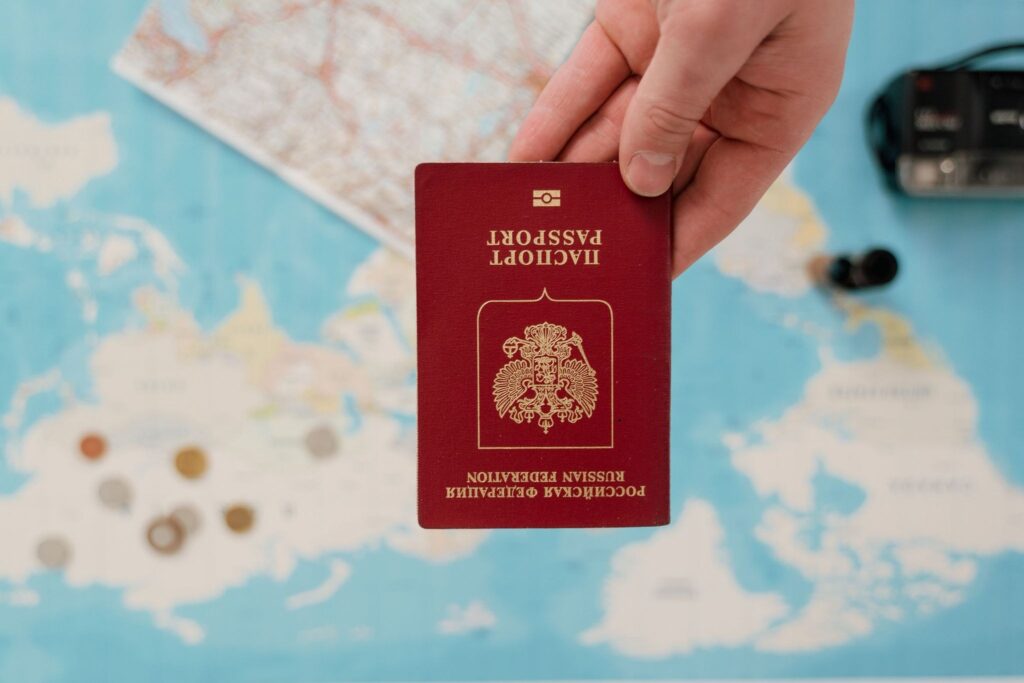
This is where the practical part begins—something every family living abroad is familiar with. In official documents, the last name is transliterated into the Latin alphabet, and that’s where its Russian logic ends.
The feminine form is the first to be lost. Ivanova becomes Ivanova, and to local authorities, this is simply a different last name, not the feminine form of the same one. For the sake of convenience, many families register everyone under the masculine form, and then a girl becomes Ivanov, which sounds incorrect in Russian but avoids questions at school and the airport.
Next, the pronunciation suffers. Shcherbakov becomes Shcherbakov—four letters instead of one—and the locals won’t even try to pronounce it. Zhukov becomes Zhukov; Khrushchev is spelled Khrushchev in the English-language tradition, and a search for the surname online yields different spellings for the same person.
The third point becomes clear when talking to locals. The parents of my classmates are usually convinced that every single common Russian surname ends in -ov, and they’re genuinely surprised when they encounter surnames like Chernykh or Zhivago. The actual list is shorter and more mundane, and it’s provided in the table accompanying this article.
Home
The Russian surname is a more recent development than the first name and patronymic, and arose from the needs of the state, which required keeping track of taxes and maintaining lists of government officials. The nobility adopted it in the fifteenth century, while peasants did not until the twentieth, and this five-century gap is still evident in the composition of surnames. They derive from a father’s name, a nickname, a trade, or a place—and nicknames are far more common than is generally thought: the most common Russian surname, Smirnov, derives precisely from a nickname. A separate category consists of “seminary surnames,” invented for the sake of euphony. Based on the suffix alone, one can immediately determine both the type of surname and, quite often, the bearer’s place of origin. Neighboring Russian names They are structured differently, and it's worth exploring them separately.
Where does your child's last name come from?
Talking about a child’s own last name reveals the family’s history faster than any textbook. Who was the ancestor whose nickname the child now bears? Which province is the family from? Why does Mom’s last name end differently than Dad’s? At Palme School, children ages four to seventeen study Russian online in small groups, where they explore such topics alongside the language itself, because a last name combines grammar and family history. You can see how it works at two free lessons, the first of which is an introduction with a methodologist who selects a group based on age and level, and the second is a trial lesson with a teacher and other students.
Frequently Asked Questions
How is a Russian last name written in Latin characters?
There is no single standard, and that is the main difficulty. Shcherbakov will appear as Shcherbakov in a foreign passport under current rules, but in older documents, it could be Scherbakov or even Chtcherbakov following the French tradition. One thing is important: the spelling in all documents of the same family must match down to the letter, otherwise banks and schools will consider you different people.
What to do if the daughter's passport has the male form of the surname?
There is nothing wrong with that; thousands of families abroad are registered that way. The masculine form for everyone makes life easier in institutions where the brother's and sister's last names must match. At home, nothing prevents you from calling the girl correctly in Russian, with the "-a" ending, and explaining to her that the passport has a simplified version.
How do princely surnames differ from noble surnames ending in -ov?
By origin. Princely surnames came from estates; Vyazemsky owned Vyazma, Shuysky owned Shuya, Obolensky owned Obolensk, and such a surname itself served as a document for land rights. Service gentry more often derived their surname from a nickname or an ancestor's name, hence the Romanovs from the boyar Roman and the Tolstoys from a nickname.
Do Russians have double-barreled surnames?
They do happen, but rarely, and their origins vary. Some arose from the merger of two dying lineages, when the heir gained the right to bear both surnames at once. Some were invented by writers themselves by adding a pseudonym to their real surname, which is how Mamin-Sibiryak and Saltykov-Shchedrin came to be. Today, a double-barreled surname is most often adopted upon marriage by hyphenating the spouses' surnames.
How to find out the origin of your surname?
It is best to start with the suffix and the root; they will suggest the type, whether it is a given name, a nickname, a trade, or a place. Next, family documents and parish registers help, some of which have been digitized in archives. There is no reliable dictionary for all occasions, and many surnames have several plausible explanations at once.