


Dad's colleague enters the house. The child looks up. «Hi.» The colleague smiles. Pause. Dad pretends not to notice. But he does.
This is not a question of upbringing. This is a question of vocabulary.

Bilingual children respond to Russian greetings usually One word. «Hi.» Nothing else. They aren't rude or ignoring you. They simply don't know that in Russian, this word doesn't work everywhere. In English, «hi» is universal. With a teacher, with a friend, with a stranger adult: one option for all situations. It won't work like that in Russian. There are words for "yours" and words for everyone else. A bilingual child often only knows the former.
Parents notice awkwardness and don't know what to do about it. To correct the child in front of guests: the child will get embarrassed. To remain silent: nothing will change. The third way works best. Simply enrich their vocabulary in advance, before the situation arises.
«Hello»: it's not as scary as it seems
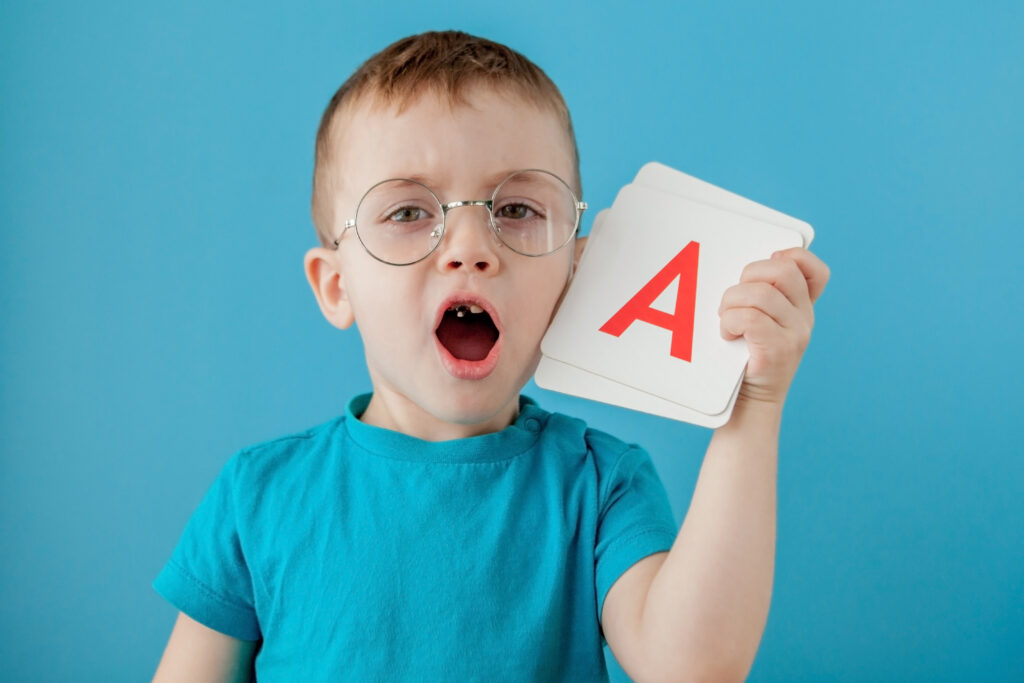
Many children avoid this word because they are unsure how it sounds. In everyday speech, almost no one pronounces the letter V in the middle. It sounds like «zdrastvuyte» or «zdrastye.» This is not a mistake, nor is it «bad»; even very educated people speak this way. The full form with a clear «zdrastvuyte» is only heard on stage or in very formal settings.
Stress: hello. The second syllable. Remember it once and don't go back.
«Hello» is simpler. HELLO. One accent, no tricks.
There's also «zdravstvuy,» without the «te» at the end. You'd use this with one person you know, but aren't close friends with. Like a neighbor, a classmate's parent, or an adult acquaintance. The tone is somewhere between «privet» and "zdravstvuyte." Bilingual children often don't have this form until they start hearing it from native speakers.
And separately: the phone. At the beginning, they say «hello» or just «yes.» Not «hi» and not «hello» (formal). These are their little rules that children learn only through practice, not from a textbook.
What word for whom

The easiest way to keep in mind is one guideline. «Privet» for friends, peers, and close ones. «Zdravstvuyte» for adults, strangers, and elders. If you're unsure, «zdravstvuyte» is safer. It won't be out of place anywhere.
It's fine with a friend in a chat. But not with your dad's colleague. A native speaker senses it immediately, even if they don't say anything.
| Greetings | Who is it for? | Tone |
|---|---|---|
| Hi! | To a friend, a peer, to loved ones | Informal |
| Hello | To an adult acquaintance | Neutral |
| Hello | Strangers, elders, teacher | Politely |
| Good morning / afternoon / evening | Good day/morning/evening to everyone, depending on the time | Warm |
| Hello / Yes | On the phone | Neutral |
«Hello» starts a conversation correctly, even when a child doesn't know what to say next. By saying «hello,» they've already broken the silence. That in itself is significant.
Morning, afternoon, evening

«Good morning» is appropriate before noon. «Good afternoon» is appropriate after noon. «Good evening» is appropriate in the evening. In casual conversation, the second word can easily drop off. You're left with just «dobroye» or «dobryy.» This is normal conversational Russian, not an error.
«Good morning, Grandma» on the phone: no longer just a greeting. A small warm moment. The child doesn't notice it. Grandma remembers.
Why a child gets stuck on one «hello»
He transfers English logic to Russian. One universal word for all cases. This is not rudeness or a lack of respect. It's a gap in the dictionary. An adult native speaker doesn't think about the choice: they see the situation and speak automatically. A child-bilingual doesn't have this automatism. They need to remember, choose, and decide to say the word. It's easier to say «hello» and not take risks.
The task isn't to explain the rule. The task is to make «hello» as automatic as «hi.» And that doesn't come from explanation, but from repetition.
| Greetings | When to speak | Colloquial option |
|---|---|---|
| Good morning | Until 12:00 PM | «Good» |
| Good afternoon | 12:00 — 18:00 | «Good» |
| Good evening | After 6 PM | «Good» |
How a word appears by itself

Explanations and lectures don't work much. Example is much more effective. When you yourself say «good day» to neighbors in front of your child, «hello» to teachers, «hello, Mommy» on the phone, they hear it dozens of times. At some point, the right word comes up on its own, without prompting.
The game works. «You're the teacher, I'm the student. How will you greet me?» The child tries on another person's role. Then they remember not the rule, but the feeling.
The ritual works. Every morning in Russian: «Good morning.» Just as a fact of the day.

One adult says «hello.» Another says «hello, how are you.» A third says «good afternoon» and shakes hands. A child sees different models and begins to understand that there is a choice. One mother does not create this diversity. It appears in live communication with different people.
At Palme School, greetings are part of the first block of any program. Each lesson begins with the children greeting the teacher and their classmates. It's a little different each time. The word ceases to be a task. It becomes a habit. The first two lessons are free.
Frequently Asked Questions
Hello, how do you do?«
In everyday speech, almost no one pronounces the letter V in the middle. You more often hear «zdrastvuyte» or «zdrast'e.» This isn't a mistake or «bad»; even very educated people speak that way.
The full form with a clear «hello» is only heard on stage or in very formal settings.
«Привет» is the informal «hello,» used with friends, family, and people your age or younger. "Здравствуйте" is the formal "hello," used with elders, strangers, superiors, or in any situation where you need to show respect.»
The easiest way to remember this is: «Privet» is for friends, peers, and those close to you. «Zdravstvuyte» is for adults, strangers, and elders.
If you're not sure, «hello» is safer as it's never out of place.
What is the form «zdravstvuy»
This is how you usually address one person you know, but not intimately. For example, a neighbor, a classmate's parent, or an adult acquaintance. The tone is somewhere between «hi» and «hello.».
This form is often simply absent in the speech of bilingual children until they start hearing it from native speakers.
Is it necessary to keep track of the time of day
«Good morning» is appropriate before noon, «good afternoon» after lunch, and «good evening» in the evening. In casual conversation, the second word easily drops off, leaving just «good morning» or «good day».
This is normal conversational Russian, not a mistake.
How to greet someone on the phone
The phone lives by its own rules. At the beginning of a conversation, you hear «hello» or a simple «yes.» «Hi» and «hello» appear more often after the first remark, once it's clear who's on the line.
Why does a child say «hello» to everyone they meet
He's applying the English logic of «hi for all occasions» to Russian. For him, it's a single, universal word. It's not rudeness or a lack of respect, but a gap in his vocabulary.
It's better than reprimanding someone in front of guests to show other options in real situations.
How to help a child say «hello»
Explanations and lectures hardly work. Example is much more effective. When you say «hello» to neighbors, teachers, and other children's parents in front of your child, they hear it dozens of times.
At some point, the required word comes to mind on its own, without any prompting.