

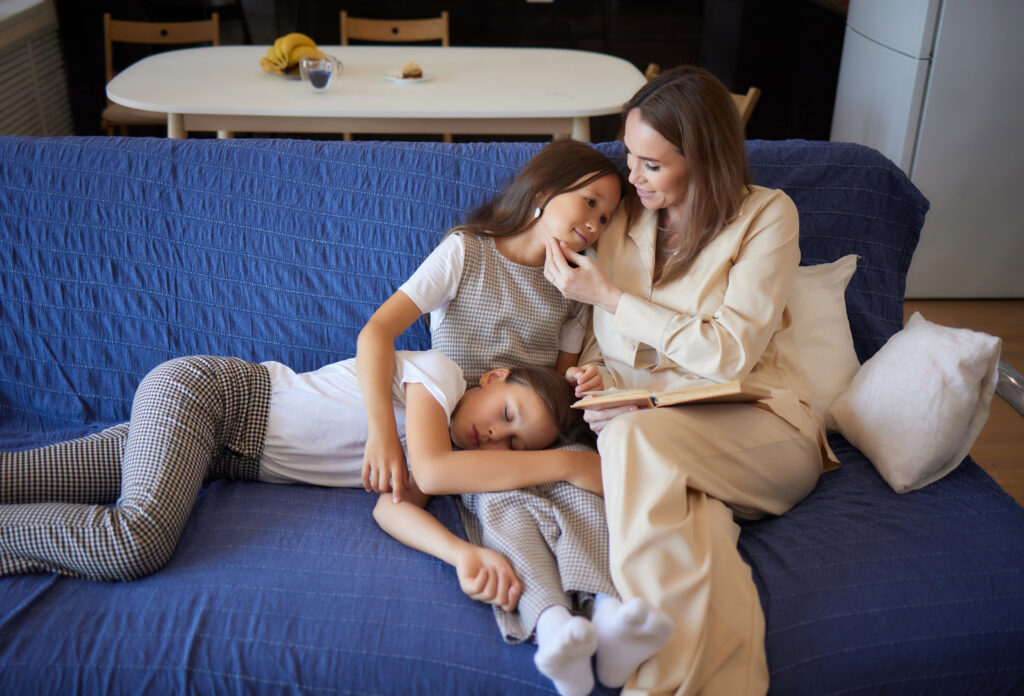

Mom is putting her daughter to bed. She speaks Russian. But at some point, «sweetie» slips out. Then «honey.» Then «sweetie» again.
The Russian words disappeared somewhere. Not on purpose. It just happened.
This happens to almost everyone who has lived in an English-speaking environment for a long time. Endearments are the first to go. Not because Mom stopped loving Russian. English ones just pop out, without a pause. Russian ones need to be recalled. Pause. Awkwardness. It's easier to say «honey.».
And the child is growing. And doesn't hear «bunny.» Doesn't hear «sunshine.» Doesn't hear «kitten.» Not because mom doesn't love them. The words just don't sound right.
This is not a disaster. But it is a loss. A small, almost imperceptible one. It is from such losses that the distance between With language and soul.
This isn't a question of upbringing. It's a question of vocabulary.

True close communication with a child is possible only in the mother's native language. This is not a pretty phrase. This is something mothers feel but cannot always explain.
Terms of endearment in Russian: it's not just tenderness. It's tongue temperature. «Bunny»: this is one of our own. «Sunshine»: this is very much one of our own. In English, «honey» is said to everyone: children, colleagues, strangers in a cafe. In Russian, terms of endearment are more personal. They are only said to those close to you.
When a child hears these words from childhood, they become theirs. Not from a dictionary. From memory.
The most vivid words
Bunny, little bunny. Small, soft. Said to both boys and girls. Very common.
Sunshine. The most universal. Ageless, genderless. It's said to a three-year-old and a thirty-year-old.
Kitten, pussy cat. Tenderly. More often for girls, but not a rule.
Sweetie, darling, honey. Fits everyone. Word from «paw»: soft, warm.
Baby, little one. Simple and warm. For the littlest ones.
Poopsik. A funny word, but that's exactly why it works. Kids love it.
Fish, little fish. Many are surprised. But in spoken language, it's normal. Just like «birdie,» «little mouse,» «little squirrel.» The Russian language loves animals as a source of tenderness.
Sweetheart. A bit old-fashioned, but very warm. That's how grandmothers talk.
Sweetie, honey. The most common between adult close people.
And separately: diminutive names. Sasha becomes Sashenka. Masha becomes Mashulya. This is not just a short form of a name. It's a level of intimacy. Mom says «Sashenka,» and the child hears something that isn't in the word «Alexander.».
| Word | For a boy | For a girl | For everyone |
|---|---|---|---|
| Sunshine | ✓ | ✓ | ✓ |
| Bunny / little bunny | ✓ | ✓ | ✓ |
| Sweetie | ✓ | ✓ | ✓ |
| Baby | Baby | Baby | |
| Kitten / pussycat | Kitten | Pussy, kitten | |
| Bogatyr / princess | Bogatyr | Princess | |
| Orylenok / Little bird | Eaglet | Bird | |
| Cute / Sweet | Cute | Cute |
Not a list, but living language
In Russian, almost any word can be made affectionate. Add a suffix, and the word changes. "Solntse" (sun) becomes "solnyshko" (little sun). "Zayats" (hare) becomes "zayka" (bunny). "Kot" (cat) becomes "kotyonok" (kitten).
The suffixes -ochek, -ushka, -yushka, -ik, -ka, -yonok make a word smaller and warmer. Mama becomes mamochka. Papa becomes papulya. Grandma becomes babulechka.
A child who hears these words often begins to grasp their logic. They don't memorize a list, but understand the language from within. This is living Russian.
| Word | Transliteration | Meaning / analog |
|---|---|---|
| Sunshine | Sunshine | Little sun / sunshine |
| Bunny / little bunny | Taste / bunny | Little bunny |
| Kitten / pussycat | Kitten | Kitten / kitty |
| Sweetie | Sweetie | Darling / sweetie |
| Baby | Baby / baby | Baby / little one |
| Baby | Baby | Cutie / little doll |
| Fish | Little fish | Little fish |
| Bird | Birdie | Little bird |
| Sweetie | Little darling | Dear soul / sweetheart |
| Cute / Sweet | Darling | Dear / darling |
| Crumb | Crumb | Tiny one / little crumb |
| Princess | Princess | Princess |
| Bogatyr | Bogatyr | Little hero / warrior |
| Eaglet | Orlyonok | Junior eagle |
| Mouse | Myshka | Little mouse |
| Doll | Cocoon | Little doll |
| Sweet | Sweet | Sweet / sweetie |
| Squirrel | Squirrel | Small squirrel |
| Native | Native | My own / my dear |
| Berry | Berry | Little berry |
How to get words back into speech

Explanations don't help. «Now I'll say «bunny»» and three days later it's «honey» again. No language works that way.
Habit helps. One word. One you like. Start saying it during everyday moments. «Go eat, sunshine.» «Goodnight, bunny.» «Well done, darling.».
In a few weeks, the word becomes its own. Then add the next one. Then the third.
Children don't notice how they memorize. They just hear their mom speak. Once. Twice. A third time. At some point, the same word appears in their speech: to their dolls, to their toys, then to their own children.
Children who hear affectionate words in Russian from an early age use them easily later on. Children who start hearing them later are sometimes embarrassed. The word seems foreign because it isn't from their childhood.
So it was better before. But it's never too late.
One person is not enough as a source of language. If a child only hears «sunshine» from their mom, their vocabulary barely grows. One voice. One intonation. At some point, words become background noise. When there are different people and different situations around, language comes alive. One adult says «bunny.» Another says «kitty.» A third says «sweetie pie» and laughs. The child begins to understand that there are many words, that they can choose, that it's alive.

In classes at Palme School, children hear affectionate terms from teachers as part of natural communication. Not as a lesson. They just talk like that. «Good job, bunny.» «Well done, sunshine.» The word enters their speech through context, not explanation. The first two lessons are free.
The most common Russian terms of endearment
Sunshine, bunny, kitten, sweetie, baby. These work for anyone at any age. Sunshine is especially versatile.
How to affectionately name a child in Russian
It depends on the age. For young children, they say «malysh» (baby), «pupsik» (cutie), «kroshka» (crumb/little one). For older children, «zayka» (bunny), «solnyshko» (sunshine), «kotyonok» (kitten). Or a diminutive form of their name: Sashenka, Mashenka, Vanechka.
Are there differences in terms of endearment for boys and girls?
Some words are neutral: «sunshine,» «bunny,» «sweetie.» For girls, they more often say «princess,» «doll,» "little bird." For boys, "hero," "eaglet." There are no strict rules.
Sweetie«
A very warm address. Similar to «darling.» Used for both children and adults. The word comes from «paw»: soft, warm.
Why don't bilingual children use these words in their speech?
Because they come from real-life communication, not from textbooks. If people at home say «honey» and «sweetie,» Russian equivalents simply don't appear. Children learn what they hear. If they don't hear it, they don't say it.
«Fish» is okay
It's normal. In spoken Russian, it's a common affectionate word. Just like «little bird,» «little mouse,» or «little squirrel.».
How affectionate words are structured in Russian
Through suffixes: -ochek, -ushka, -yushka, -ik, -ka, -enok. Sun: solnyshko. Hare: zajka. Cat: kotenok. Knowing the principle, you can come up with words yourself.
Where to start if you haven't spoken Russian affectionately in a long time
Choose one word and start with it. Every day, in ordinary moments. «Goodnight, bunny.» «Go eat, sunshine.» After a few weeks, the word will become familiar. Then add the next one.