

Your child chatters away fluently in Russian: tells jokes, argues with grandma, even curses sometimes. But as soon as a book is opened, the nightmare begins. They read syllable by syllable, mix up letters, lose the plot. «Why read when you can just watch a video?» they think. Sound familiar? Parents of 7-12 year olds experience this all the time.
Bilingual children often have better oral language skills than their peers, while their written skills lag behind. This is not due to laziness or because «Russian is lagging.» It's a systemic issue: the brain switches between languages, and the Russian alphabet and spelling present additional barriers. The good news: the barrier is surmountable. Palme School knows how to do it.
Spoken and written language
Speaking and reading require different skills. Spoken language exists in sounds: intonation, gestures, context. A child hears «Ma-ma,» feels the emphasis, and understands the meaning. Writing requires abstraction: symbols on paper turn into sounds, and then into meaning.
It's harder for bilinguals. English is phonetically honest: «cat» is pronounced [kæt]. Russian is full of traps: «moloko,» stress changes vowels, «zamok» (castle) and «zamok» (lock) are spelled the same but mean different things. A child's brain gets overloaded: «How do I put this together into a word?»
At ages 7-9, children are just learning to decode. Bilingual children expend twice the effort switching between Cyrillic and Latin alphabets. The result: they read slowly, get tired, and lose interest.
Spelling creates the main barrier
Russian is one of the most difficult languages to write. 10 rules without exceptions? No, hundreds of exceptions with rules. Bilinguals suffer especially:
Alternating vowels: «zamok» (building) and «zamok» (type of key). English does not have this.
Unstressed vowels: «spoon» or «little spoon»? It's hard to hear, and I'm too lazy to check.
Homonyms-homophones: «luk» (weapon/vegetable), «kosa» (tool/hairstyle). The meaning is lost.
Stress: 5% words are written by the rules, the rest from memory.
Children aged 10-12 are already comparing: «English is easier.» The school curriculum is overwhelming with its volume, and there's no support at home. The child thinks, «Why suffer?»
Why is 7-12 years old a crisis age?
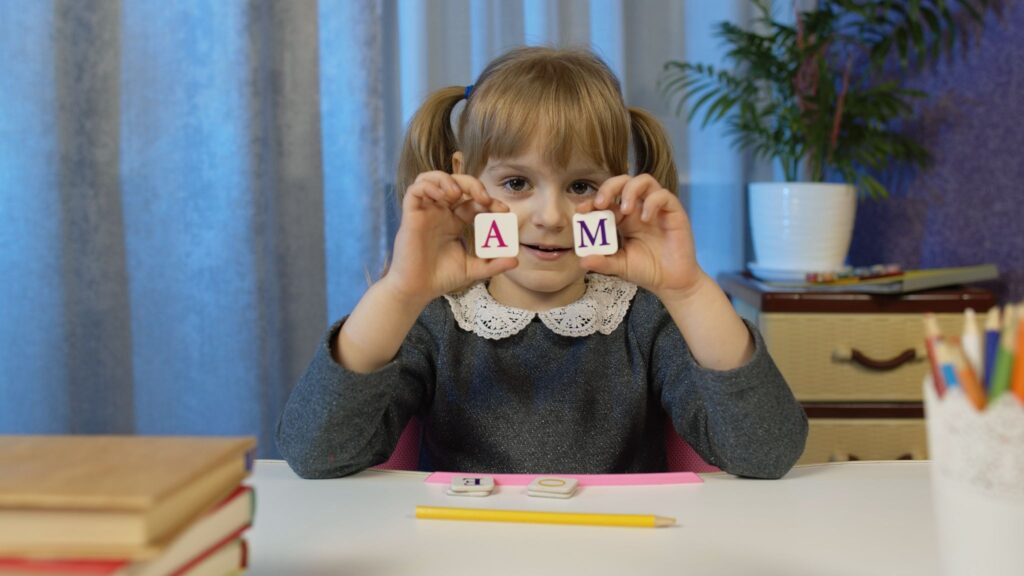
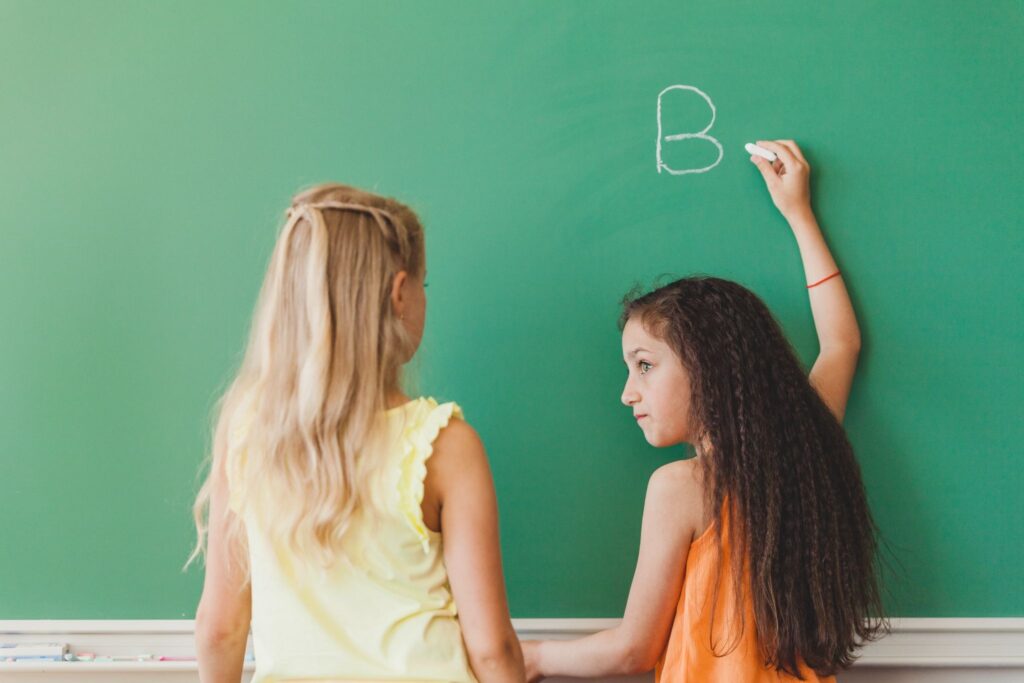
7–9 years old (1st-3rd grade): They learn letters separately. Bilingual children know the sounds from spoken language but don't see the connection: «B» is [b], not [bay]. Syllables don't come together: «m-a-sh-a» → «may-a-sha.».
10–12 years old (4th–6th grade): Requires fluency. The child reads but doesn't understand. Speed is low, grammar is weak. Classmates are ahead in English.
Children of emigrants see Russian as a «background» language. School teaches literacy in English. Russian is spoken at home. The «sound-letter-meaning» connection is not formed.
Palme School breaks the barrier
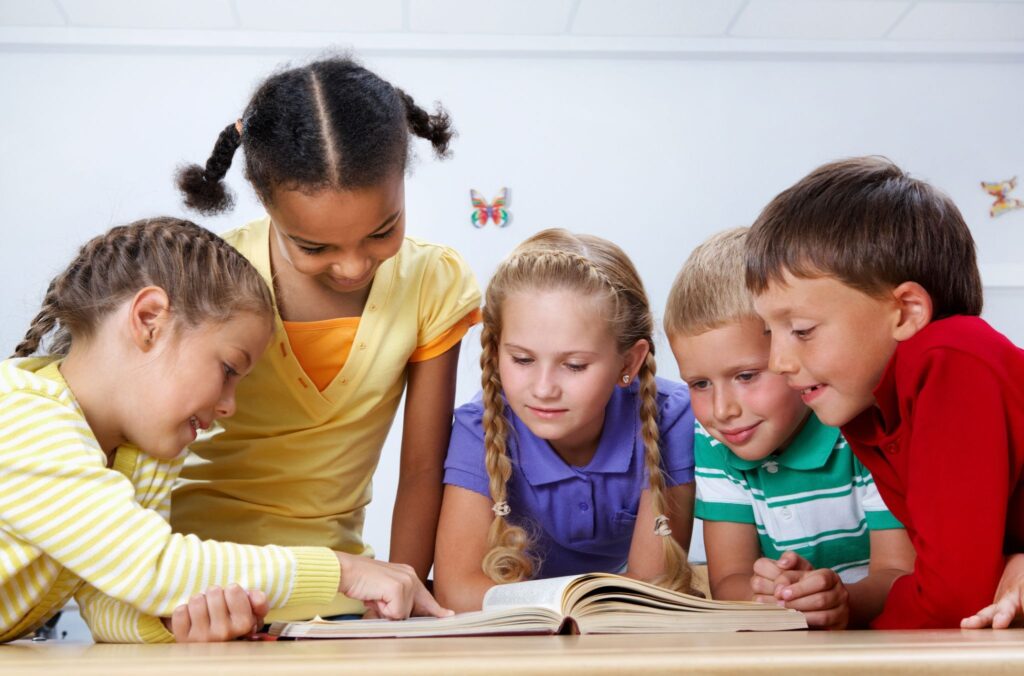
We don't cram rules. We teach through practice, where reading = games + results. Here's how our method works:
Reading School (ages 7-12):
- Syllabic reading through pictures. The word «cat» + photo + sound. The brain connects all three.
- Intonation from the very first lessons. We read dialogues like in a cartoon. Stress comes naturally.
- My cat is a notorious thief. He stole my favorite sock yesterday and hid it under the bed. I don't know how he manages to get into everything. He's so sneaky but also incredibly cute. I can't stay mad at him, even when he's being a little rascal.
- Small groups (4 people). To each a word, to each praise.
- Homework in Telegram. 5 minutes of reading + voice recording «repeat after me.».
Result: After 8 lessons, the child reads a paragraph without hesitation. After 3 months, a book. Parents write: «Yesterday he picked up «Timka and Tomka» himself!»
The difference between spoken and written language
| Spoken language | Written speech |
| Intonation helps | Only letters |
| Gestures, facial expressions | No context |
| Mistakes are forgiven. | Spelling is important |
| Speaks quickly | Reads slowly |
| English helps | Cyrillic is annoying |
Bilinguals are strong in oral communication: they hear, speak, and understand. Written skills lag by 1-2 years. Palme evens them out in 4 months.
Common parenting mistakes

- They teach letters as names: «Be-a-es» → they don't read syllables. Teach sounds: [b][a][s].
- Pressured by speed: «Read faster!» The child withdraws.
- Do they give adult books: «War and Peace» at 8 years old? Start with «A Kitten Named Woof» (50 words per page).
- Okay, read whatever you want. Russian is established as «difficult.».
These errors lead to a refusal to read. The child chooses YouTube.
How to understand if a method is working
In 4 lessons: Reads syllables without pauses. Knows 50 words.
In 8 lessons: Paragraph in 2 minutes. Understands the meaning.
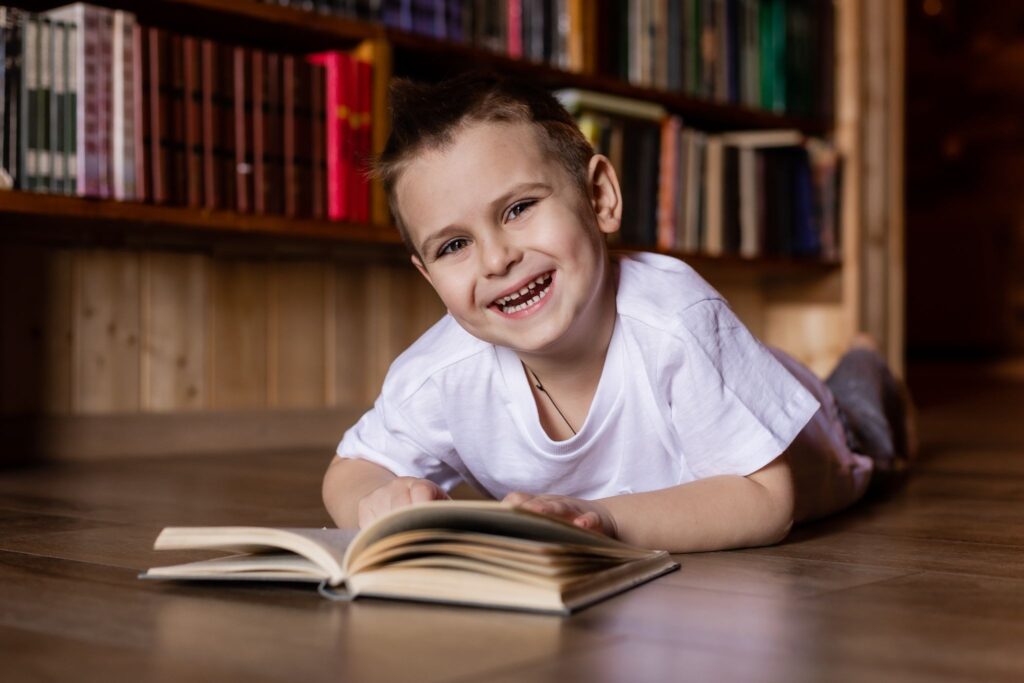
In 3 months: 50-page book. Asks for a second one.
At Palme, we see this daily. «He used to mix up letters, and yesterday he read «The Tale of Fedot the Archer» and laughed.» Dad: «He took the dictionary himself and looked up «sharks.» I'm proud!»
Science confirms

Research shows: Bilinguals with support catch up to monolinguals in 6 months. Palme uses the «sound-to-letter mapping» method: sound → letter → meaning. No rote memorization.
The Russian alphabet is mastered in 12 lessons. Spelling through associations: «ло́жка» = a spoon with a long handle.
Come to a trial reading lesson

See for yourself: how a teacher teaches a child to read a paragraph in 45 minutes where there was panic at home. The child isn't afraid of mistakes and looks forward to the next lesson.
What's happening in class:
- Diagnostics (reads 3 texts of varying difficulty)
- Individual plan (both at home and during lessons)
- The first results are already visible during the trial lesson.
Come to a trial reading lesson and see how it works in practice. Your child will love books.