

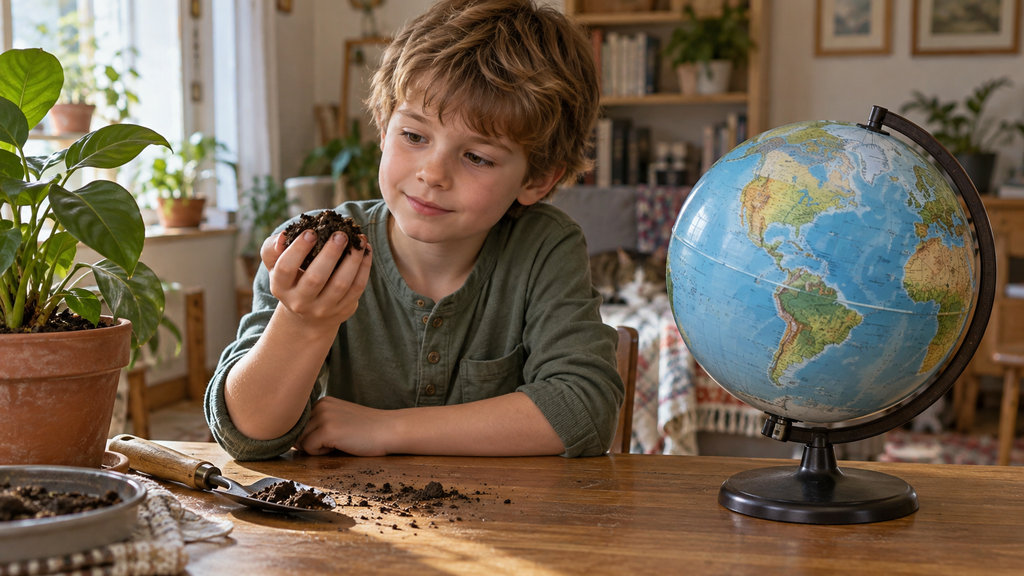
If you give a child a globe and ask them to find the Earth on it, the task sounds strange.
He already has the whole Earth in his hands.
But the word asks us to look for something brown or green, because we call the ground what we walk on. And on the globe, there is mostly blue.
And this is not an illusion of the drawing. Water covers about 71 percent of our planet's surface. Land accounts for approximately 29 percent.
The answer begins not with astronomy, but with the word itself.
The earth beneath our feet and Earth with a capital letter
In Russian, one single word does several jobs at once.
You can brush the dirt off your boots.
After a long voyage, one can see land.
You can buy a plot of land.
Yes, you can say that.
In the first cases, we are talking about soil, land, or territory. In the last one, it is the name of the planet. Dictionaries keep these meanings side by side: "земля" (land/earth) is contrasted with water as dry land, and at the same time called "Земля" (Earth) when referring to our planet.
The child doesn't necessarily need to be told the history of the word here. It's much more interesting to point out that the familiar name doesn't describe what color is most abundant on the planet.
A planet can be called Earth and at the same time look mostly blue from space.
Seventy-one out of one hundred pieces will be blue
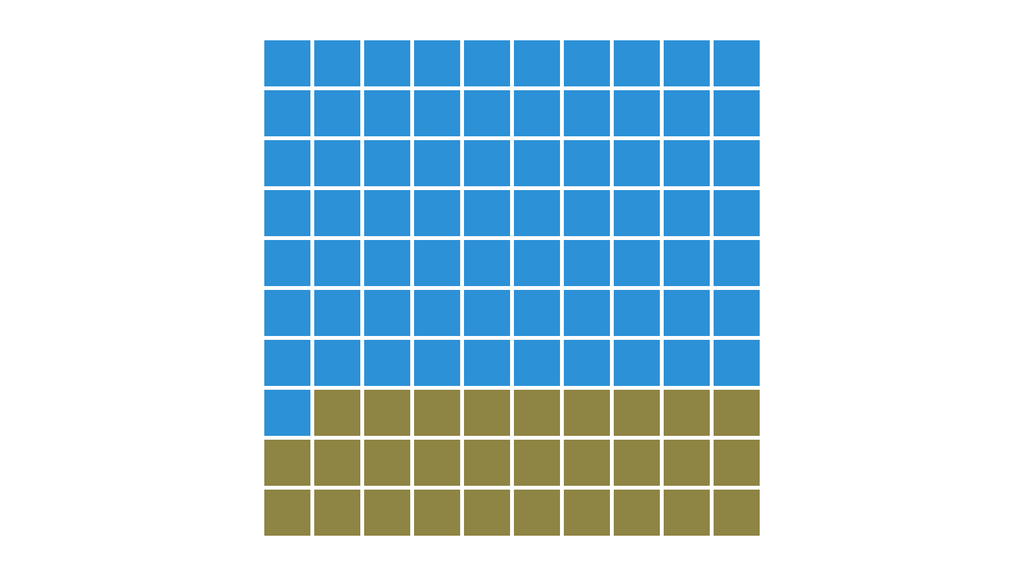
The number 71 is hard to visualize as long as it remains a percentage.
Try to mentally cut the Earth's surface into one hundred identical pieces.
About 71 will be water.
About 29 on land.
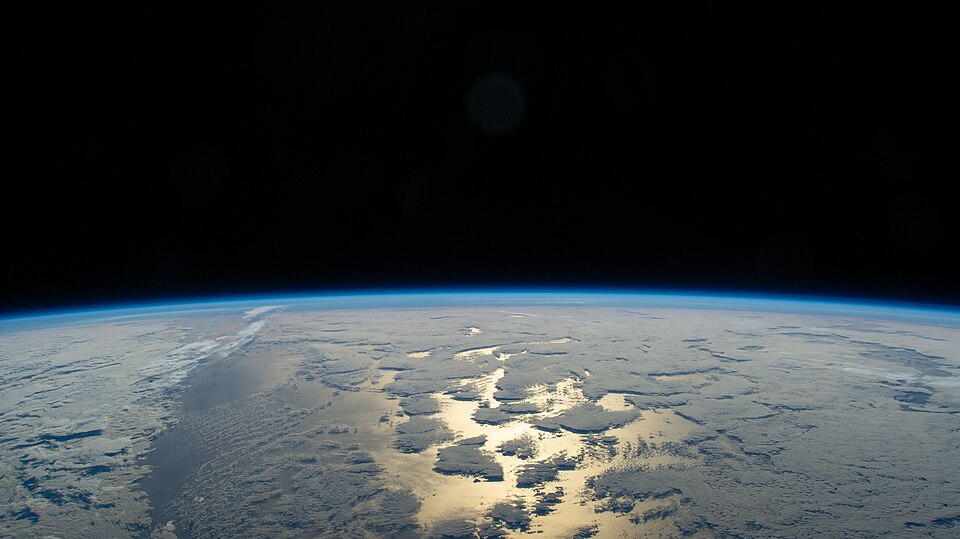
That is precisely why photos of Earth from space often look blue: water covers most of the surface.
But there is a catch here.
This does not mean that 71 percent of the planet itself is made of water.
It's only about the surface.
If you imagine the Earth as a huge sphere, the ocean turns out to be a relatively thin layer on top. Beneath it lies the solid Earth's crust, and deeper down are completely different parts of the planet.
Blue takes up a lot of space on the map, but the ocean doesn't fill most of the globe from the inside.
Continents do not lie on top like crackers in soup
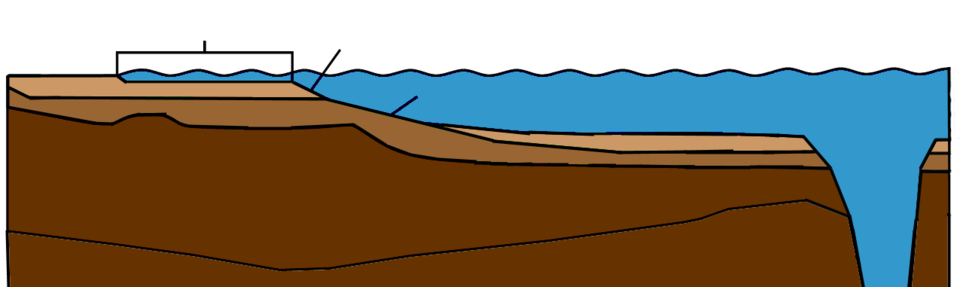
On a children's globe, it is easy to see a different picture: blue water, with the continents lying on it as separate pieces.
Because of this, one might imagine that Africa, Eurasia, or South America are floating on the surface of the ocean like large islands.
That's not how it works.
Both the ocean floor and the land are part of the solid outer part of the Earth. It's just that some areas of the surface are located higher and others lower, and the largest depressions are filled with ocean water.
Therefore, the shore is not the edge of the solid planet.
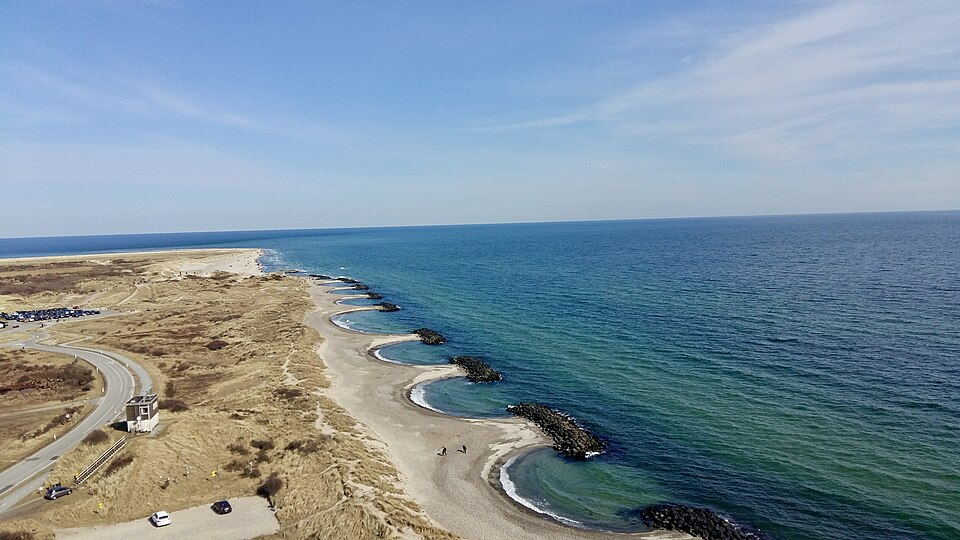
If you walk from the beach into the sea, the ground underfoot does not disappear. It continues underwater as the seabed.
Here, the globe can for the first time be read not only by colors.
Blue does not mean «there is no Earth here.».
It means: here the Earth's surface is covered with water.
Why then are the continents considered separately
Continents are not distinguished because they lie on water. It is simply convenient to call the largest landmasses on the planet's surface that way.
We discussed how many there are and why school traditions differ in a separate article about continents and parts of the world.
And the ocean is actually one
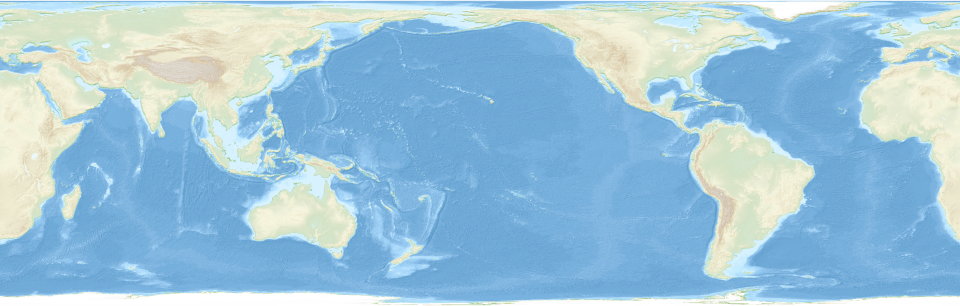
On the globe, a child reads several names: Pacific, Atlantic, Indian, Arctic, Southern.
It looks like five separate giant bowls of water.
But there are no walls between them.
Therefore, oceanographers speak of a single global ocean. It is divided into named parts for geographical and historical reasons.
You can trace your finger across the water around the globe and in many directions not encounter a border like a state one.
The name of the ocean will change, the water will remain.
For a young child, this is sometimes easier to understand than a list of five names.
First, there is a huge connected body of water around the continents. Later, parts of it get their own names.
Why oceans are considered to be either four or five was already discussed separately in our article about the Earth's oceans.
On the map, the child lives almost entirely in those very 29 percent
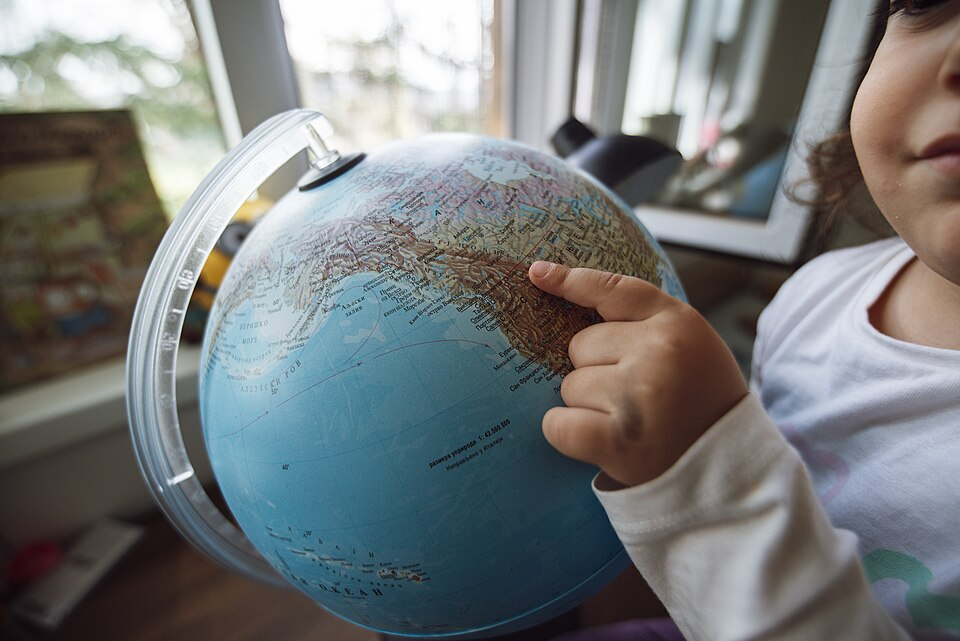
There is a reason why land might seem more important than water to an adult.
On land are a house, a school, roads, cities, countries, and almost all the places that a child names every day.
We are asking:
Where is Russia?
Where is Canada?
Where is grandma?
Where is Moscow?
And every time the finger lands on land.
The ocean often remains a large gap between the places we need to be.
Because of this, an inverse proportion easily forms in the head: land is the main thing, water is the background.
Globus corrects her with a single glance.
If you turn it slowly, there are positions where there is almost nothing but water before your eyes. This is especially noticeable over the Pacific Ocean.
Then it becomes visible that the continents occupy a smaller part of the planet's surface, although it is precisely on land that almost all of human everyday life takes place.
The word «suša» is sometimes more precise than the word «zemlja»
Here is another useful language difference.
If it is necessary to contrast the surface not covered by seas and oceans with water, the word land is more convenient.
«The animal came onto land.
«The ship is far from land.
«There is more water on Earth than land.
The last phrase at first sounds almost like a play on words:
On Earth, there is less land than water.
But if you replace one meaning of the word with another, the confusion disappears:
On planet Earth, land occupies a smaller surface area than water.
Even to a child, it is already clear that there is no contradiction.
One word is simply used for different things.
A globe can be rotated so that the familiar world disappears
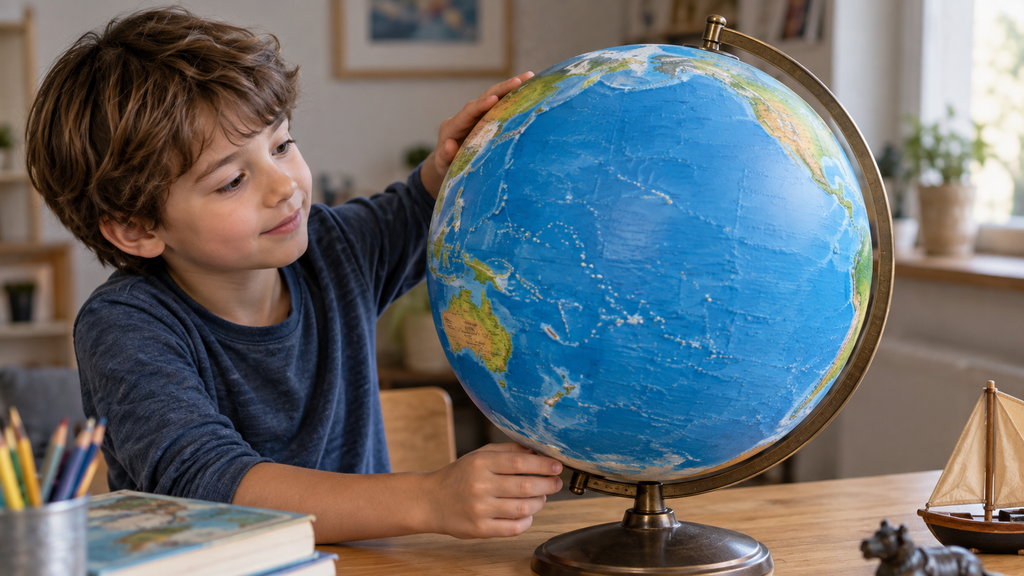
Usually, a globe is placed in front of a child with Russia, Europe, or the country where the family lives facing them.
Try turning it with the Pacific Ocean facing forward.
Most of the familiar continents will move to the edges.
A huge blue expanse with islands will remain before your eyes.
The planet is the same.
Just a different point of view.
Probably, this is the most useful thing one can understand before memorizing the names of continents and oceans.
The map does not have to start where we live.
And the Earth doesn't have to look primarily like land.
From space, this is a planet with the majority of its surface covered by water.
But under the ocean, the Earth still continues.
Three tasks with a globe, land, and water
You don't need to memorize the names of the continents and oceans here. The task is different: to see three things mentioned in the article.
Divide one hundred cells
Draw a grid of 100 small squares. Mark 71 squares as water and the remaining 29 as land.
What to check
Ask the child which turned out to be more. It is important to state: these are fractions of the Earth's surface. This does not mean that the entire planet is made of water 71 percent inside.
Walk from ocean to ocean
Find a water route from one ocean to another. Trace your finger across the globe without crossing land and watch when the name of the ocean changes.
What to notice
The name may change, but the continuous body of water persists. Thus, the idea of a single global ocean can be seen on the globe.
Hide the familiar world
First, turn the globe to the side where the child is used to looking for their home or Russia. Then, turn the Pacific Ocean toward you.
What to discuss
The Earth hasn't changed, only the point of view has. From the usual perspective, the land seems primary, but after turning around, a vast expanse of water appears before your eyes.
The main question after the tasks: what remained the same on the globe, even though we looked at the Earth differently each time?
First notice, then name
During classes, children work with maps and a globe, complete interactive tasks, discuss what they have seen, and learn to understand how the world works. This way, continents, oceans, and other geographical concepts become part of an understandable picture rather than just a list of names.
Try a geography lessonFrequently asked questions about Earth, continents, and oceans
Is it true that water covers 71 percent of the Earth?
About 71 percent of the Earth's surface is covered by water, and about 29 percent is land. This ratio refers specifically to the planet's surface, not its internal composition.
Why does the Earth look blue from space?
Most of the planet's surface is covered by water, so in photographs of Earth from space, the color blue often takes up more space than land.
Is there solid Earth under the ocean too?
Yes. Underneath the water is the sea or ocean floor. The blue color on the globe means that the Earth's surface at that location is covered by water, not that there is no solid surface there.
Why don't continents float on the ocean?
Continents do not lie on top of the water like separate objects. Land and the ocean floor belong to the solid outer part of the Earth; simply different areas of the surface are at different elevations.
Is there one ocean on Earth or five?
All ocean water is connected into one global ocean. For convenience, it is divided into named parts: the Pacific, Atlantic, Indian, Arctic, and Southern Oceans.
What is the difference between «zemlya» (land/Earth) and «susha» (dry land)?
The word «zemlya» has several meanings: it can be soil, territory, land, or the name of the planet Earth. «Susha» (dry land) is more precise when it is necessary to contrast the part of the surface not covered by seas and oceans with water.
At what age can you show a globe to a child?
You can show a globe at any age if the child is interested in it. As a learning tool, it usually becomes more understandable around seven to eight years of age, when the child already connects the map with real space. The age is relative: what matters more than learning all the names is understanding what the globe actually shows.