


Russian cuisine has words that trip up any phrasebook. Type "food in Russian" into a search engine, and you'll get a neat column: bread, milk, meat, cheese, apple. The first few entries are honest. But then the list reaches the dairy section and quietly gives up because tvorog, kefir, ryazhenka, and sgushchenka are waiting for a translation that English doesn't have for them. The cashier in a Russian grocery store is long accustomed to this, and translation apps still falter.
This is where the most curious part of the Russian food vocabulary begins. Behind every stubborn word lies not only a product, but also an entire eating habit, unique to each cuisine. An orange will translate without loss, but kisel will make the interlocutor frown and ask again, is it drunk or eaten? Below is an analysis of some of the most untranslatable Russian food words, from the dairy shelf to the tea table, and an attempt to understand why they resist the dictionary so much.
Words that have no English equivalent
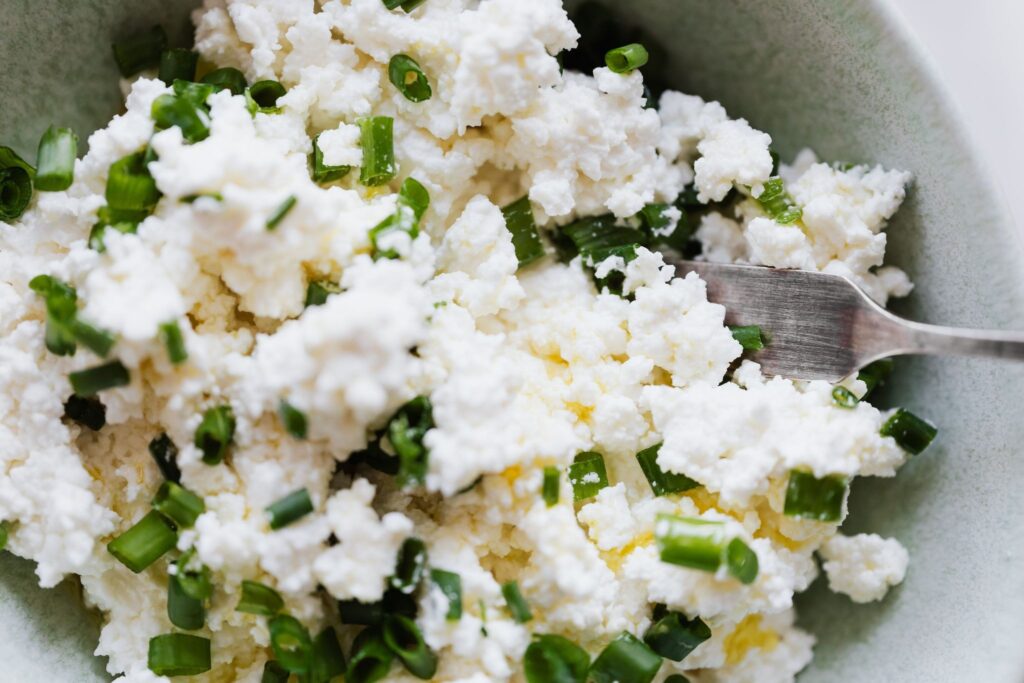
The dairy shelf holds the record for untranslatability. Take "tvorog." It's persistently translated as "cottage cheese," which is roughly like calling a violin a guitar because both have strings. Cottage cheese is wet, lumpy, and bland. "Tvorog" is drier, denser, and used to make "syrniki," baked casseroles, and fillings for "vareniki," while nothing similar can be made from cottage cheese. Closer in meaning are "farmer cheese" and "quark," but even native English speakers don't encounter them every day.
Smetana pretends to be "sour cream," and here the substitution is more subtle, and therefore more insidious. Smetana is thicker, fattier, and gets into literally everything, from borscht to blini, whereas "sour cream" in many cuisines appears once a year, a spoonful with nachos. Kefir, English didn't even try to translate and took the word whole, "kefir." And then the territory without a dictionary begins in earnest. Ryazhenka, which has no counterpart. Sgushchenka, that is, sweetened condensed milk, which has to be explained with hand gestures, because a can on the stove wasn't part of someone else's childhood. Glazed syrok, a children's treat, the mere description of which sends a decent restaurant menu into a stupor.
The cheese stands apart and has also managed to multiply. Hard varieties are difficult to translate, but processed cheese in foil, brined brynza, and Adyghe cheese make you think, because the single Western word "cheese" suddenly becomes too confining. And this is not to mention curd cheese snacks, which have almost nothing to do with cheese, but bear a similar name and confuse everyone.
One product and two names
There's a habit in Russian that baffles even diligent learners. Many products have two names, a formal and an informal one, and both are correct. For example, "картофель" (kartofel) and "картошка" (kartoshka) for potato. "Морковь" (morkov') sounds neutral, but in a recipe from grandma, it becomes "морковка" (morkovka). There's no error here; it's purely a matter of intonation. "Картофель" is requested on an invoice, while "картошку" is fried for dinner. Someone hearing both forms for the first time honestly tries to understand the difference in meaning and finds none, because it's all in the tone.
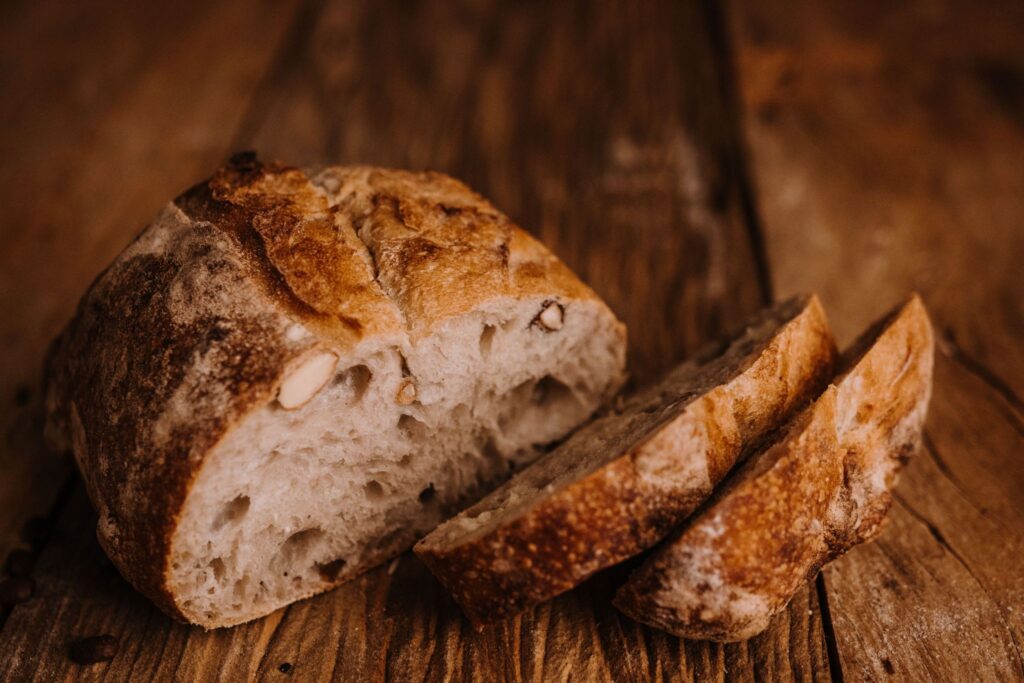
Bread adds its own confusion. The English "loaf" covers everything at once, while the Russian "polka" (shelf) demands precision. A "baton" is long and light, a "bukhanka" is heavy and dark, and the request to cut half a "baton" sounds completely different from "give me a loaf of black bread." Hence the famous beginner's trap, where "half a loaf of baton" in one phrase refers to two incompatible breads, and the saleswoman raises an eyebrow.
The doubling of names sometimes catches even those who grew up with the language. A "pomidor" in the kitchen and a "tomat" in ketchup or juice, even though it's the same vegetable. So, the juice is somehow "tomatny" (made from tomatoes), but a salad is with "pomidory" (tomatoes). There's no logic to be found here; a habit has formed, and both forms coexist peacefully.
Vegetables, herbs, and a shelf of preserves
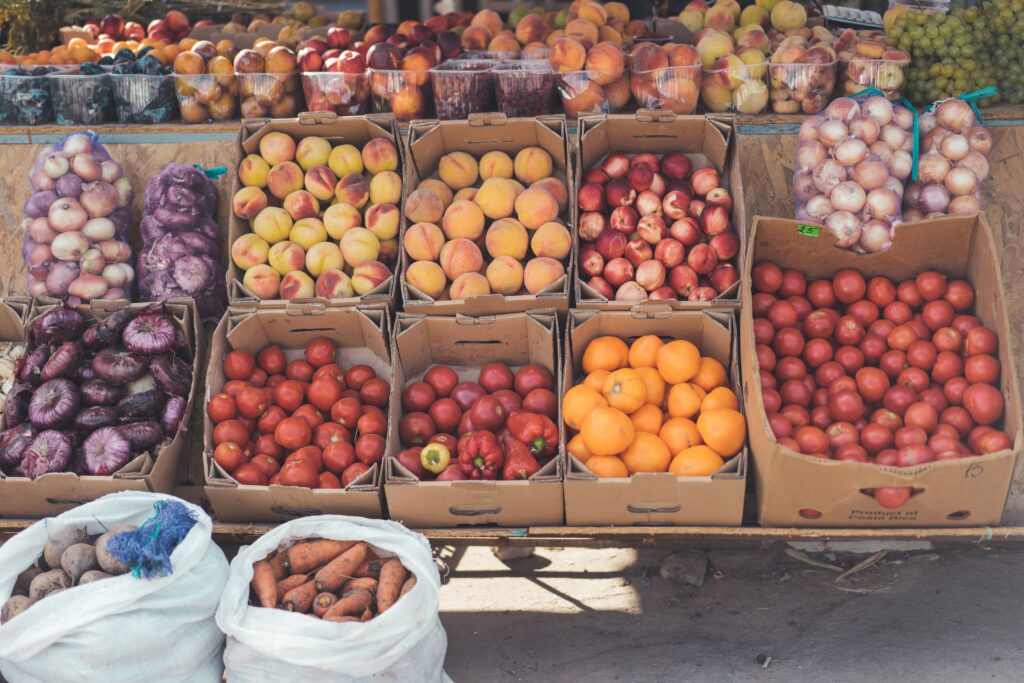
Russians are more merciful with vegetables. Potatoes, carrots, onions, cabbage, and cucumbers are used without any tricks. Beets, from which they cook Borscht, the only surprising thing is that it's eaten both sweet and in soup, but the word itself isn't a trap. There's only one hesitation, and it's a pleasant one. Greens. In Russian, it's a separate and respected category; dill, parsley, and green onions go with almost any dish, while the English word "herbs" sounds too dry and general, as if referring to a herbarium.
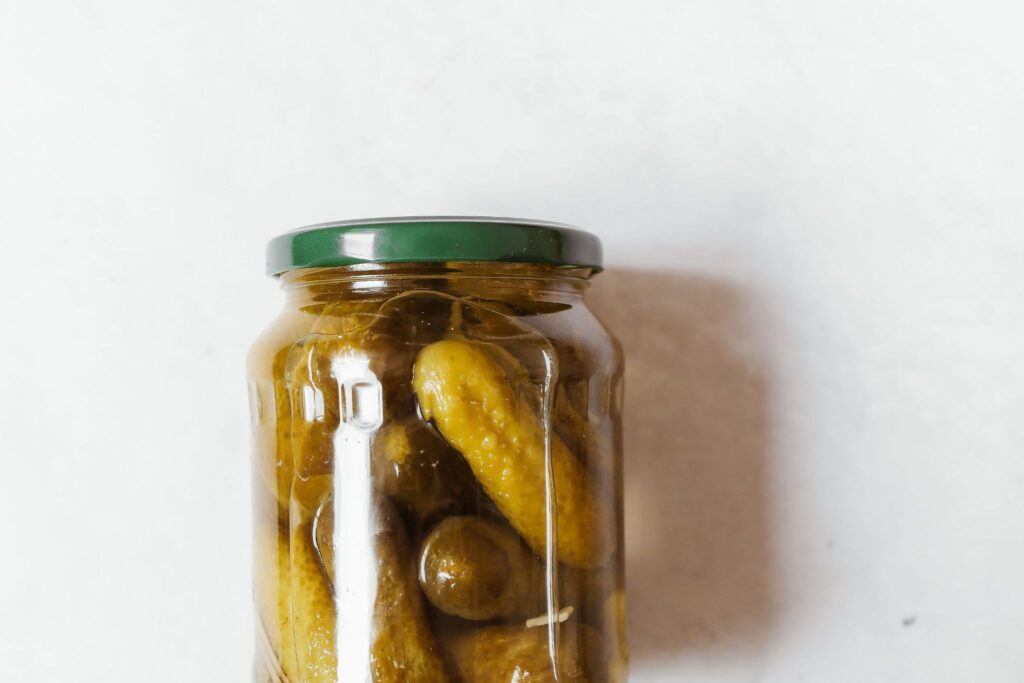
But the shelf of preserves can seriously puzzle. Salted cucumbers, sauerkraut, soaked apples, marinated tomatoes add up to a whole winter arsenal, and the Russian carefully distinguishes between salted, sauerkraut, and marinated where the English "pickled" lumps everything into one basket. Ask a native speaker how a salted cucumber differs from a lightly salted one, and you'll get a short lecture with a tasting, because for many, it's fundamentally important.
Where does the berry end in Russian?
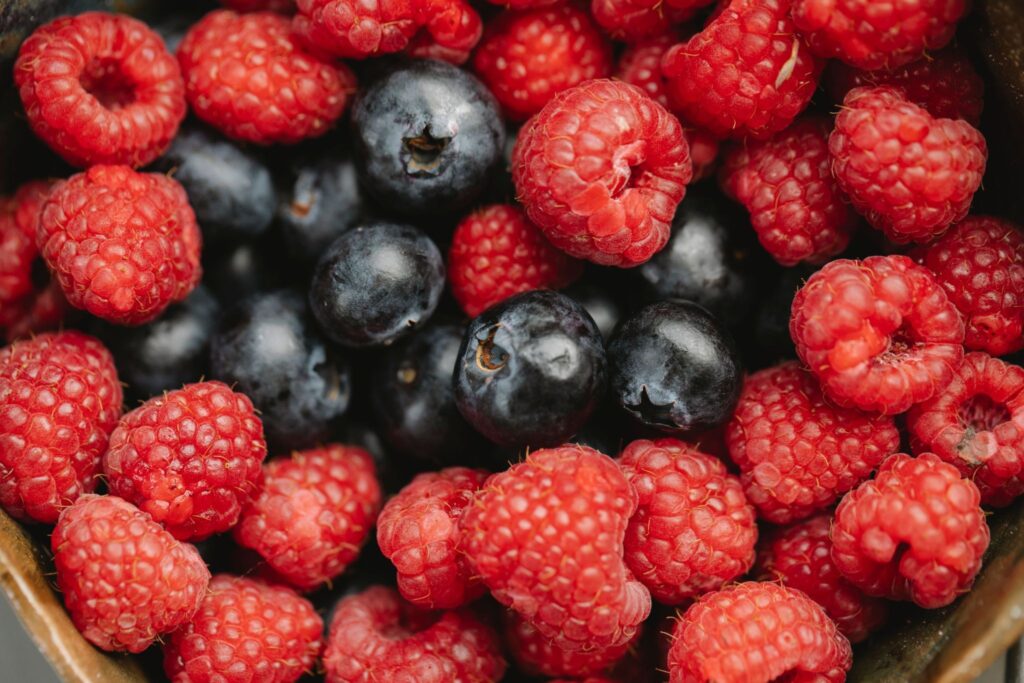
Berries in Russian live by their own laws, and their boundaries are drawn unexpectedly. For the English ear, strawberries and wild strawberries merge into one "strawberry," while in Russian, large garden berries and small forest berries have different names, and confusing them is considered almost impolite. Currants come in black, red, and white, and each is used for its own jam, as if they were three different berries. Raspberries, gooseberries, lingonberries, and cranberries each hold their own place, although native speakers themselves sometimes confuse cranberries and lingonberries, so in this confusion, it's easy to find yourself in good company.
And there's one item that sparks debate even at a Russian table. Watermelon. By habit, it's jokingly called a berry, and botany, strangely enough, rather supports this joke; a watermelon is closer to a berry than a strawberry, whose actual fruits poke out as tiny specks. In everyday life, of course, no one seriously considers a watermelon a berry; in summer, it's cut into huge slices, and no one glances at Latin. The tomato has fallen into the same company of paradoxes: botanically it's a fruit, culinarily a vegetable, and in Russian, it's unhesitatingly put into salads.
Fruits, nuts, and a dry shelf
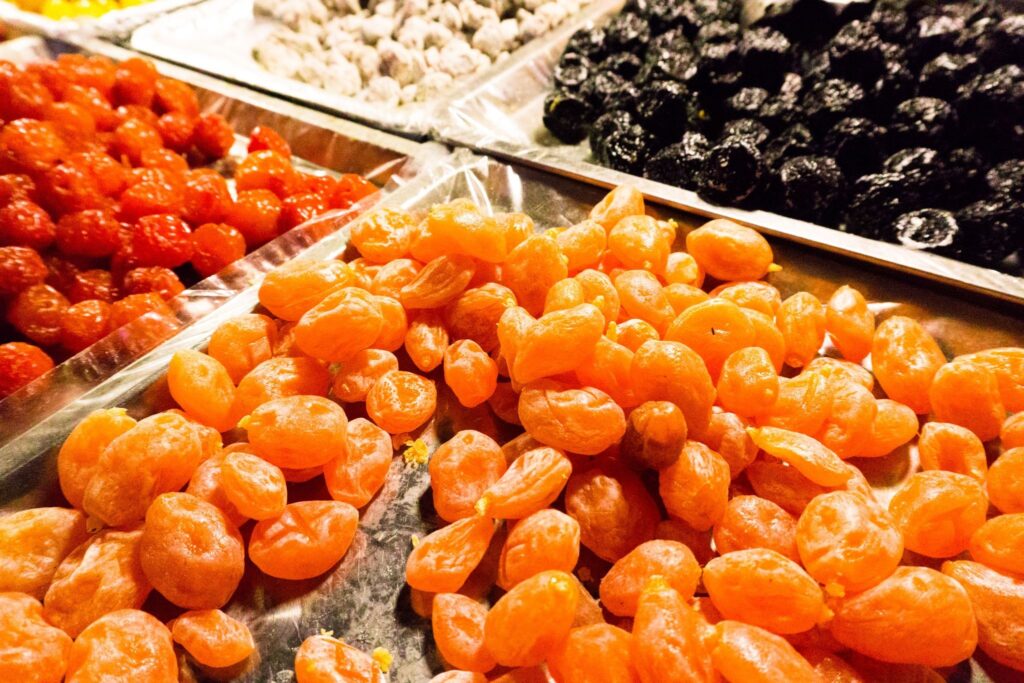
Fresh fruits translate easily into Russian. Apple, pear, plum, and grape are not finicky and rarely pose any difficulties. A real surprise awaits on the dried goods shelf. Dried apricots, prunes, and raisins are each represented by a single short word in Russian, while English requires "dried apricot," "prune," and "raisin." Nuts have the same situation; a walnut is called by its own name, while "walnut" remains "walnut" without any poetry. Seeds are a special case, cracked open by the handfuls, and "sunflower seeds" describe the product but not the activity itself. It might seem minor, but it clearly shows how differently two languages "carve up" the same counter.
Meat that remembers who it belongs to
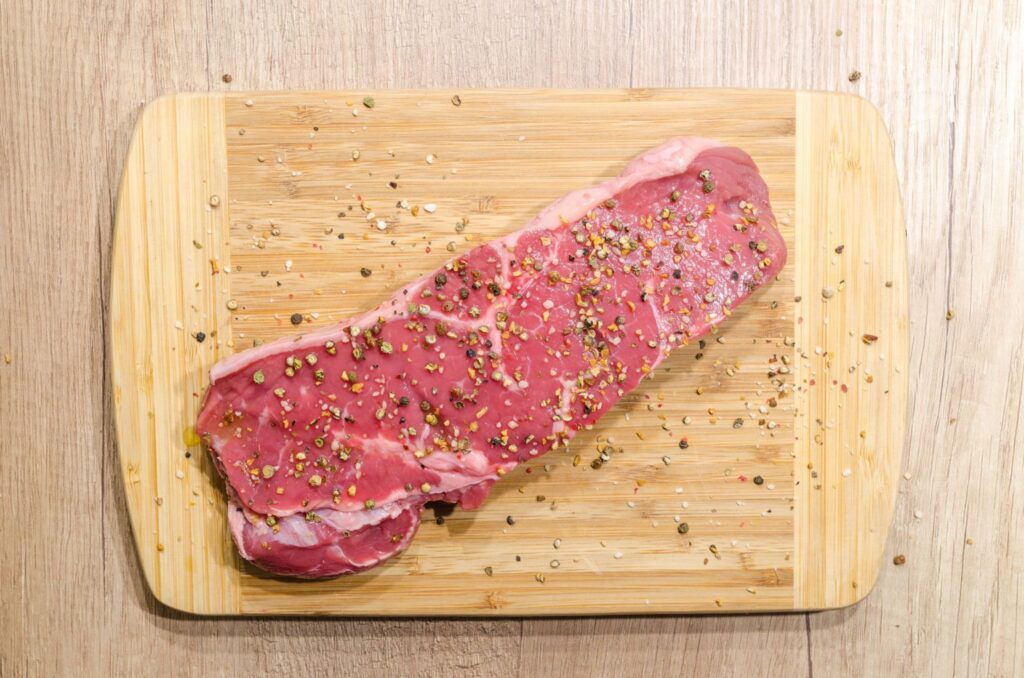
In the meat department, the Russian language behaves surprisingly logically. The name often reveals the animal from which the meat was taken. Beef from a cow, pork from a pig, lamb from a sheep, chicken from a chicken. After English "beef" and "pork," where the connection to the living creature has long since been erased, such clarity is even touching. Chicken, at the same time, remains both "chiken" (live bird) and "kuryatina" (meat), depending on whether you're talking about a live bird or one already in the pot. They form cutlets from meat, which only resemble the English "cutlet" in spelling, but in taste are soft, minced, closer to a patty. And pelmeni, which have no honest translation at all, so on foreign menus they are written in Latin letters, "pelmeni," giving up on translation. Fish brings with it its own scattering of words: "sel'edka pod shuboy" (herring under a fur coat), "krasnaya ryba" (red fish), "vobla" for beer – each has its own context that "fish" alone cannot capture. And sausage and wieners are an entirely separate genre, where boiled, smoked, and dry-cured are strictly distinguished, and "doktorskaya kolbasa" (doctor's sausage) for those who grew up on it sounds almost like a proper noun.
Lunch by floor

A Russian meal is served in courses, which is a revelation in itself for someone accustomed to a single main dish. Soup is served for the first course, and here, soup is a full meal – thick, hot, and aspiring to be the star of the table. Borscht, shchi, solyanka, rassolnik – each has its own reputation and fans. Before the soup, at a festive table, appetizers, Olivier salad, and vinaigrette are served. Abroad, these are often labeled simply "Olivier" because trying to call it "Russian salad" only confuses people. The second course is a hot dish with a side dish – meat or fish next to buckwheat, potatoes, or pasta. The third course is a drink, kompot or kisel, and the question "What's for the third course?" can stump even someone who speaks Russian quite well.
The side dish deserves a special mention, and the first among side dishes is buckwheat. Buckwheat is an infrequent guest in English-speaking cuisine, but here buckwheat porridge appears on the table so often that it has become almost synonymous with home cooking. And indeed, porridge is a whole family: semolina, oatmeal, millet, rice, and each one brings its own morning with it. Among soups, fish soup stands out. I can't bring myself to translate it as "fish soup" because too much is lost.
Breakfast and dinner are simpler, but they also have their own traditions. The morning often starts with porridge or a sandwich, and the word "sandwich" itself, according to one version, comes from the German "Butterbrot," literally "bread with butter," although in Russian, anything can be put on a sandwich. Dinner adheres to a calmer rule; heavy hot meals are not encouraged towards the end of the day, so the evening meal is usually lighter than lunch.
Drinks and sweets that put translation in a bind

Towards the end of the meal, Russian presents the translator with a final exam: homemade drinks. Kompot, a boiled and chilled fruit drink, has no English equivalent. Mors (cranberry or lingonberry juice) is in the same predicament. And kisel, a thick, starchy berry drink, makes things absurd because it can be so dense that the person you're talking to genuinely doesn't know whether to drink it or use a spoon. Kvass, a sour drink made from fermented bread, not only lacks a direct translation but also serves as the base for Okroshka, the very same cold soup that fills novices with quiet horror.
Tea stands apart here; it's easy to translate, but difficult to explain. Having tea in a Russian home rarely means drinking a cup and leaving. And tea is brewed seriously here; strong tea concentrate is diluted with boiling water to taste, and the word "zavarka" again finds no direct English equivalent. More often, it's an occasion to sit at the table for an hour, with jam in a small vase, gingerbread cookies, dried biscuits, and bagels. And the sweets themselves speak in their own way. Jam with whole berries doesn't match the pureed "jam," fruit leather and marshmallows have no Western counterparts, and explaining glazed curd bars has to be done anew for everyone. Honestly, it's simpler to just offer them.
| Category | In Russian | English | Note |
|---|---|---|---|
| Dairy | cottage cheese | farmer cheese / quark | not cottage cheese |
| Dairy | sour cream | sour cream | Thicker and fatter |
| Dairy | kefir | kefir | borrowed in its entirety |
| Dairy | Ryazhenka | - | There is no English couple. |
| Dairy | sweetened condensed milk | condensed milk | sweetened condensed milk |
| Dairy | glazed curd bar | Glazed curd bar | Children's treat |
| Dairy | Brynza | brined cheese | Brined cheese |
| Bread and grains | loaf | white loaf | Long, blond |
| Bread and grains | loaf | Dark loaf | black, brick pattern |
| Bread and grains | buckwheat | buckwheat | Garnish and porridge |
| Bread and grains | porridge | porridge | semolina, oatmeal, millet |
| Vegetables | potato | potato | Strict and home name |
| Vegetables | beet | beet | for borscht |
| Vegetables | cucumber | cucumber | |
| Vegetables | tomato | tomato | doublet of names |
| Vegetables | dill | dill | greens |
| Berries and fruits | strawberry | garden strawberry | |
| Berries and fruits | strawberry | wild strawberry | small, forest |
| Berries and fruits | currant | currant | Black, red, white |
| Berries and fruits | lingonberry / cranberry | lingonberry / cranberry | often confused |
| Berries and fruits | watermelon | Watermelon | botanically closer to a berry |
| Berries and fruits | apricots / prunes / raisins | Dried apricot / prune / raisin | one word each |
| Meat and fish | beef | beef | from a cow |
| Meat and fish | pork | Pork | from a pig |
| Meat and fish | chicken | Chicken | Live bird and meat |
| Meat and fish | cutlet | patty | not cutlet |
| Meat and fish | pelmeni | Pelmeni | No translation |
| Meat and fish | Herring | herring | |
| Beverages | Compote | stewed fruit drink | Drink it cold |
| Beverages | Cranberry juice drink | Berry drink | cranberry, lingonberry |
| Beverages | kissel | Kissel | between drinks and dessert |
| Beverages | Kvass | kvass | Okroshka base |
| Beverages | tea concentrate | brewed tea base | There is no English couple. |
| Sweet | jam | preserve | whole berries, not jam |
| Sweet | gingerbread | gingerbread | |
| Sweet | dry bagels / bagels | Dry ring biscuits | for tea |
| Sweet | pastila / zefir | marshmallow / zephyr | There are no Western counterparts. |
Click on the card to see the translation. The stress is marked, and "yo" is preserved.
A kitchen where words aren't lost

There's one catch with all these words. They stay in the language longer than many, but they also fade away particularly quietly. While at home they cook borscht and buy tvorog, the words live on their own. As soon as a family moves, the product on the table remains, but its name slowly becomes English: cottage cheese instead of tvorog, yogurt instead of kefir. For a child, this happens imperceptibly and quickly.
At Palme School, Russian for children aged four to seventeen is built around living speech, the kind that is heard in the kitchen and at the table. You can start with two free lessons, First, an introductory meeting with a methodologist who will determine the child's level and select a group, and then a trial lesson in a group with a teacher. Words about food in such a speech are reinforced by themselves, attached to the plate and to the conversation at it.
Home

Russian words about food almost never translate into English exactly, one-to-one. The dairy shelf, berries, soup, and tea table have their own logic, and a dictionary entry cannot encompass it. For those learning the language, these words are easier to grasp along with the product and situation rather than in isolation. And in a family where a bilingual child grows, it is precisely the kitchen that turns out to be the place where the Russian word lingers the longest, as long as there's a willingness to say it out loud.
Food will be "еда" in Russian. And yes, it is one word.
Most often it's 'еда' (eda), a common and versatile word. There's also 'пища' (pishcha), which sounds more formal and is appropriate in texts about nutrition or health. And when talking about what you buy at the store, people say 'продукты' (produkty). So, the single English word "food" breaks down into several words in Russian depending on the situation.
Because cottage cheese is not always the same as tvorog. Tvorog is a fresh, unripened farmer's cheese made from soured milk. It has a granular texture and a slightly sour taste. Cottage cheese, on the other hand, is a curd cheese made from skim milk. It typically has a smoother texture and a milder flavor. While the two cheeses are similar, they are not interchangeable.
Because they are different products. Cottage cheese is wet, lumpy, and usually bland, while tvorog is drier, denser, and serves as the base for syrniki, casseroles, and fillings. Farmer cheese or quark are closer in meaning, but there isn't a familiar one-to-one equivalent in English, so it's more honest to explain tvorog rather than translate it.
What's the difference between a baton and a loaf?
By the shape and type of bread. A baton is long, light, made of wheat flour, and convenient to slice diagonally. A bukhanka is usually dark, brick-shaped, more often rye or rye-wheat. In English, both will be reduced to "loaf," but in Russian, these are two different purchases and two different requests at the counter.
What do first, second, and third mean in a Russian menu?
This is the order of dishes in a meal. For the first course, they serve soup, borscht, shchi, or solyanka. For the second course, it's the main hot dish with a side dish, meat or fish with groats, potatoes, or pasta. For the third course, there's a drink, compote, or kissel. And to ask what's for the second course means to ask specifically about the hot dish.