


At the end of the message, the person adds:
«P.S. I'll be later tomorrow»
If you type PS without switching from the Russian keyboard layout, you get ЗЫ. In messaging, this notation is also used intentionally.
Two letters from a different keyboard layout
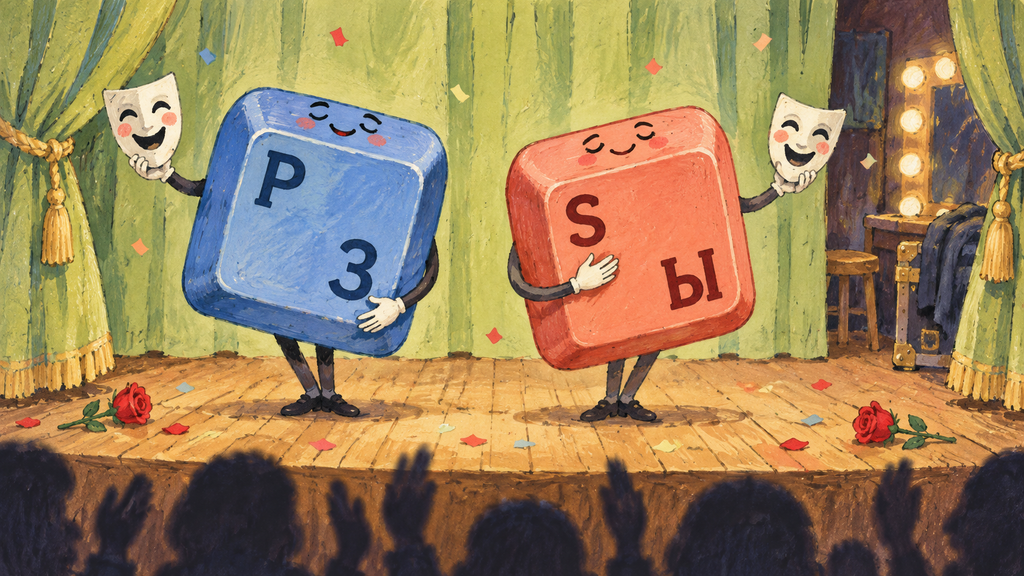
Does this entry mean the same thing as P.S., a postscript after the main message? It has variations too. Some write «ЗЫ», others «З.Ы.», with dots, like in the original.
The person knows that the Russian keyboard layout is active and still presses those keys because the other person will understand.
What stands behind these two letters is also interesting. P.S. itself is an abbreviation from the Latin post scriptum, meaning «after what has been written.» In other words, the Russian spelling of the Latin abbreviation, typed on a Russian keyboard layout, took root in chat.
Where did the vowels go
Let's take a regular line from a messenger:
«thx, normal. imho tomorrow. PS call»
Four abbreviated entries, and each is broken in its own way. These forms belong to Russian texting abbreviations, but are formed in different ways.
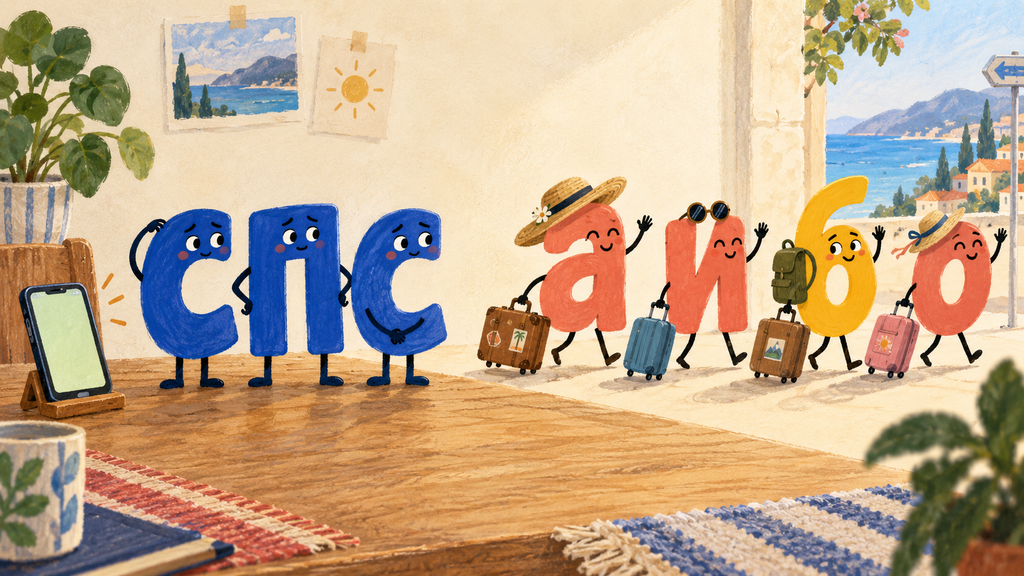
In «спс» from «спасибо» (thanks), three consonants remain. Here all vowels and some consonants are removed. Similar abbreviations are «пжлст», «нрм», «крч».
A familiar abbreviation is easier to understand from context. But deleting the vowels from any word and getting a universally understood entry will not work.
And «KMK» is structured differently
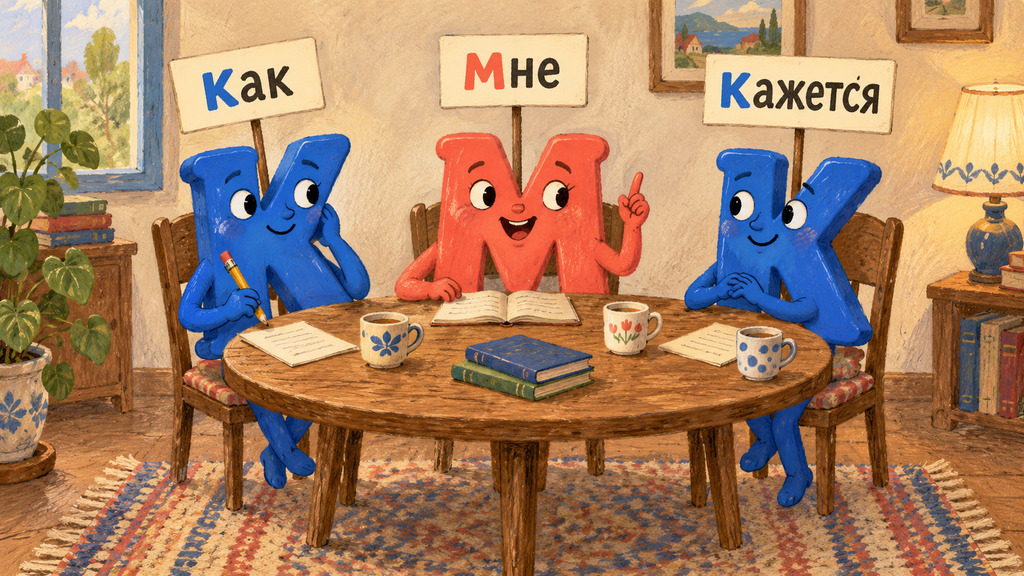
The same message contains «kmk» (in my view), and that is already a different mechanism.
Nobody threw anything away here. They shorten a whole phrase here, and «as it seems to me» turns into «IMHO».
Nearby is «imho», which has the same meaning but a different background. It came from the English IMHO, «in my humble opinion». Both Latin and Cyrillic spellings were used in Russian-language online correspondence.
And here is an interesting point. «IMHO» has caught on so much that people write it in lowercase letters too. The abbreviation has become a common word placed at the beginning of a phrase, just like «in my opinion.».
With «lol» it went even further. The English LOL, laughing out loud, can be used in Russian as a declinable masculine noun. Wiktionary gives its plural form as «loly» and the example «besides lols and brushing off facts,» and records the slang verb «lolirovat» in a separate entry.
The words are familiar, but the message isn't
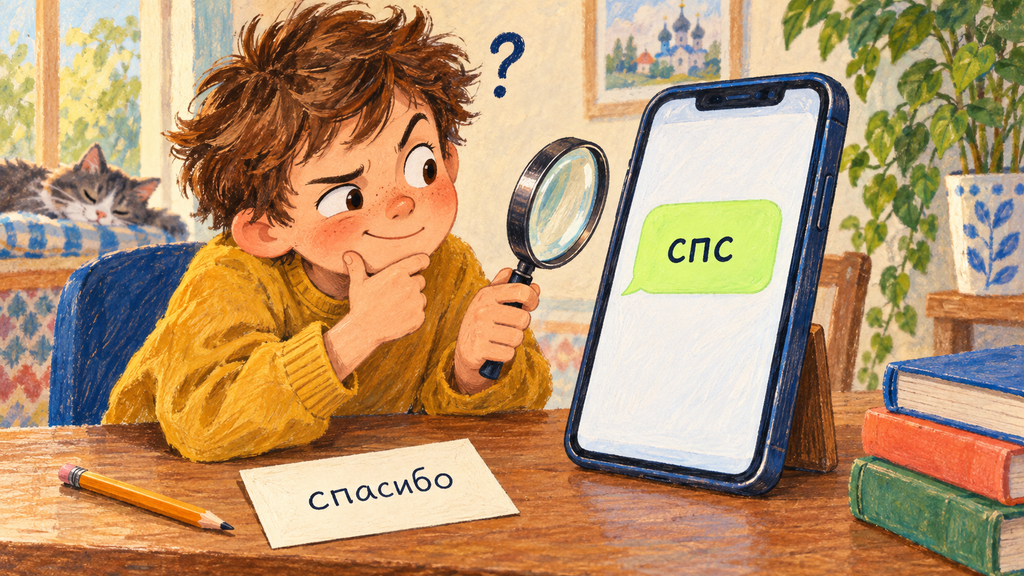
Here lies the trap for children who grow up abroad. To understand Russian chat slang, knowing the full words might not be enough.
A child might be great at reading «thank you,» «please,» and «it seems to me.» But if they have rarely seen Russian text messaging, they might not recognize the abbreviations for these words, and «sps» will turn out to be just three letters in a row for them.
It turns out to be a strange situation. The words are familiar, but the message is not clear.
Where does this game end

The appropriateness of such forms depends on the interlocutor and the situation. They are more common in a friendly conversation than in official communication, and «thx» in an email to a teacher or employer looks different than in a chat.
At the same time, business correspondence does not forbid abbreviations at all. «Etc.,» «i.e.,» «rub.,» and «yr.» are common practice; they existed in the language long before messengers and are written with periods. Chat abbreviations like «thx» and «plz» are not carried over there.
We have information on how the tone of Russian writing is structured and how business differs from personal writing separate analysis.
P.S.
And yet the strangest specimen in this message is neither «thx» nor «IMO».
«Sps» lost some letters. «Kmk» is assembled from the first letters. «Imho» came from another language and russified.
And «ZY» keeps both letters of the original abbreviation, just in a different keyboard layout. Here, it wasn't the number of letters that changed, but the way to type them.