

What was on for lunch?
If the child went to a Russian-speaking kindergarten abroad, he heard this question every day. At lunchtime, they asked in Russian.
In September, the child goes to a regular school. In New York City, for example, kindergartens accept children who turn five this calendar year; in other places, the rules are different. There, the child might hear the word snack and the conversation about what they ate will be in English.
The road home
Recall what the child himself told us on the way from the garden. What they were building. Who brought a new toy. Who played with whom. What the teacher read to them before the quiet hour.
There will also be a road from the school. Only the child will discuss the events of the day at school in English.
What's left at home
The houses still speak Russian. Mom, dad, maybe grandma on video.
But the teachers and the children from the group are no longer there. There are no people who saw his day in Russian and could ask about it.
After the garden, there are fewer people and situations where the child uses Russian.
What is known about this
In a 1991 paper, Lily Wong-Fillmore described a survey of about a thousand families in the United States where people did not speak English at home. work It was about what happens to a family's language when a child starts learning English early. The preschool programs for the children in the survey were different; they were in English, in two languages, and in Spanish.
In families with children from English-language programs, parents were more likely to report that home interaction is shifting towards English. This does not mean that every child will lose the family language. The study focuses on changes in communication, not on a single response in another language.
What he himself was telling
Take a sheet of paper and write down what the child said on the way from the garden without asking any questions.
Specifically.
Buildings. Who was moaning today. What happened at noon. What book was being read and who was in it with whom. Who is friends with whom.
These are his Russian themes. The ones he already speaks about himself, with pauses, with English words in the middle, but he still speaks.
Now ask him yourself. What would he like to tell his grandmother or Misha from the group about? He might not answer right away; suggest something from your list.
Of what matched, leave three.
Or one. Three is a reserve for later use; one conversation is enough for one.
The ongoing topic
Check each topic for one condition.
It should continue after the garden.
The construction continues. Tonight a new tower is standing on the floor, and it can be described in the same way as the garage in the group.
Talks about food also continue. Even if the child now calls a snack a snack, you can ask about it in Russian.
The theme of the book continues if you read it before bed. The theme of animals if there is a cat at home or a dog in the neighbor's yard.
Next to each topic, write where they live now.
It’s not necessary to ask about the garden every week. If the child remembers it on their own, listen to them. But new stories should come from a new life.
Who will ask?
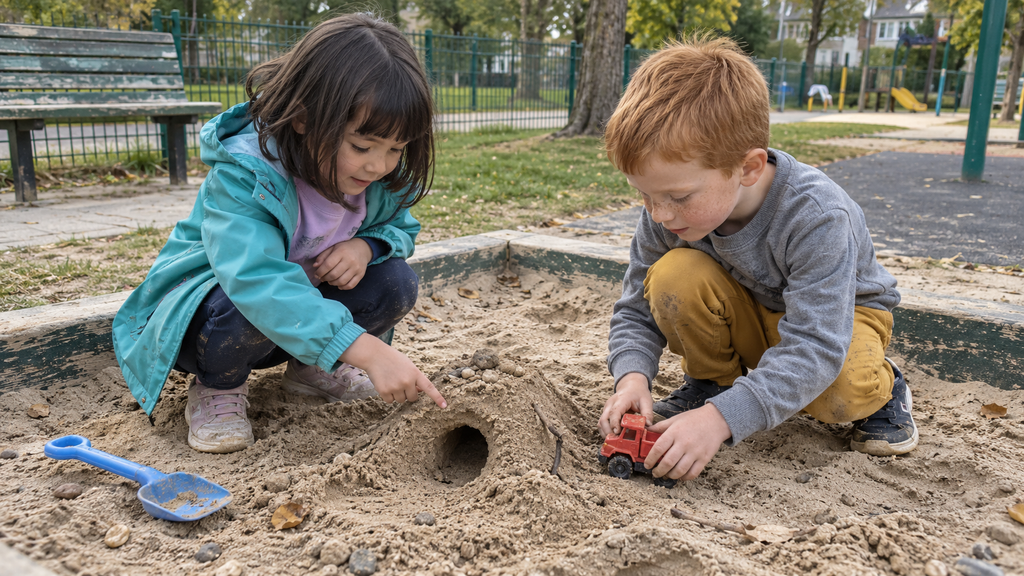
Try to find another person with whom the child can show the tower and tell how it was built.
First, take a look at the garden. A friend from the group with whom you are in contact. The teacher, if she agrees to a short phone call once a week. A familiar person is better than a new one; you don't have to get used to them again.
If no one is left in the garden, anyone who the child feels comfortable talking to in Russian will do. Grandma in the video. A neighbor. A godmother.
The grandmother comes along. But she can’t replace a peer; with a peer, a child talks differently, argues, boasts, interrupts.
Why not a cartoon?.
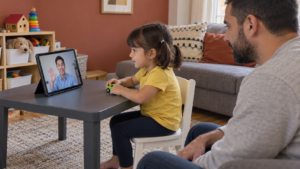
The cartoon won’t ask who lives in the tower. The interviewer will ask. And if he doesn’t understand, he’ll ask again. Video calling here is considered a live conversation with a person on the other end.
You can start with just one person.
A recurring motif
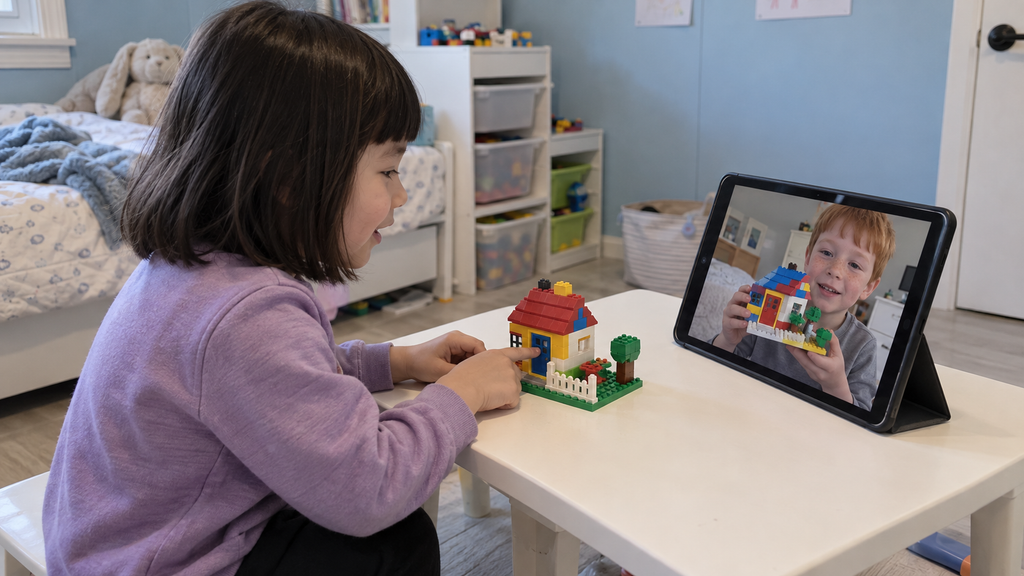
Agree on a matter that repeats itself.
Every time we show each other a new construction. Every time we bring a book to the screen and show where each of us is. Every time we tell about who we met at the playground.
The correspondent is also participating. Mishya shows his tower. Grandma shows that she baked it.
To start, you can try a short meeting of ten minutes with one topic. If the child is tired or doesn't want to talk about the tower, finish the meeting or move on to another topic.
This is not a garden. A few hours of Russian a day won't bring back that call. It's one occasion a week that's convenient to start with.
How to know when it’s time to stop. The child has something to show, he answers and asks himself: next time he will bring something of his own to the screen. This is about how comfortable he is speaking. So far, this doesn’t prove anything about the preservation of the language.
A sheet for the interlocutor
Below you can fill out a sheet. The name of the person you are talking to, the general subject of the meeting, the child’s interests and what he/she might show. There are questions for the adult for each topic. One or two are needed; the rest are for backup. The sheet is printed on one page; it can be sent to the grandmother or Mishina’s mom in advance.
The questions are simple. What did you build? Show me where the entrance is. Who lives here.
You don't need to ask every question. Choose one or two, listen to the answer and then talk about your own.
Write down who the conversation partner will be, what your common interests are, and when the next meeting is scheduled. Choose from one to three topics. For each topic, there are five questions to answer; you need one or two of them, the rest are for your own use. Write down what the child will show. A sheet is prepared to the right; you can print it out on one page or send it to the conversation partner in advance. The answers in the sheet are not checked or evaluated. For each topic, you can answer no more than two questions, and in each field you can write up to forty-five characters, so that the sheet fits on one page.
Sometimes there are no one left in the garden, and grandma is away and busy. Then you can have regular Russian conversations during the classes. At the «Russian for Bilinguals» course at Palme School, children from the age of four work with certified teachers, and there are new opportunities to speak Russian every week.
The garden won't replace it, but it will give the child people with whom Russian is necessary. You can start with two free lessons, They will determine the level and select a program.
Sign up for free lessonsFrequently asked questions about Russian after kindergarten
What should I do if there are no Russian-speaking children I know nearby?
Start with an adult who the child can show and tell something about. An elderly relative via video link, a neighbor, godmother, former teacher. In parallel, look for children: parent chat groups of Russian-speaking families in your city, Saturday schools, online chat groups. You can start with just one regular conversation partner.
Will Grandma be able to communicate with you via video call?
Yes. On the other end is a living person who hears the answer and asks again and then tells his own story. This is the main difference from a cartoon. The grandmother does not replace the peer; the child talks differently with the peer, argues, and boasts. Meeting a grandmother should be avoided only when a friend from the garden is available.
How should you react if your child answers the conversation in English?
Relax. The interlocutor accepts the answer and continues the conversation; you can ask the question in Russian one more time. You don’t need to demand a Russian answer or interrupt the meeting; the pressure can discourage the desire to meet. If the interlocutor doesn’t understand, you can ask to be shown or help the child explain. What to say in the first few seconds after the English answer, we discussed in a separate article.
Is it possible to start after a few months from the garden?
Yes, you can. The intake is not tied to the first weeks. Choose topics that your child is interested in talking about right now. You can build on familiar conversations from the garden, if they continue in the new life.
We discussed five ways to respond when a child answers in English in an article. about the next ten seconds.