

The teacher called the child’s name during a trial lesson and asked them to show a toy. For example, the first lesson might begin. The most interesting part then happens, and it’s easy to miss it.
Skipping it because you’re watching the teacher. Is the explanation good, is the child having fun, did the child repeat a single word?.
It’s worth watching for something else: what happens between them after that proposal.
First sentence
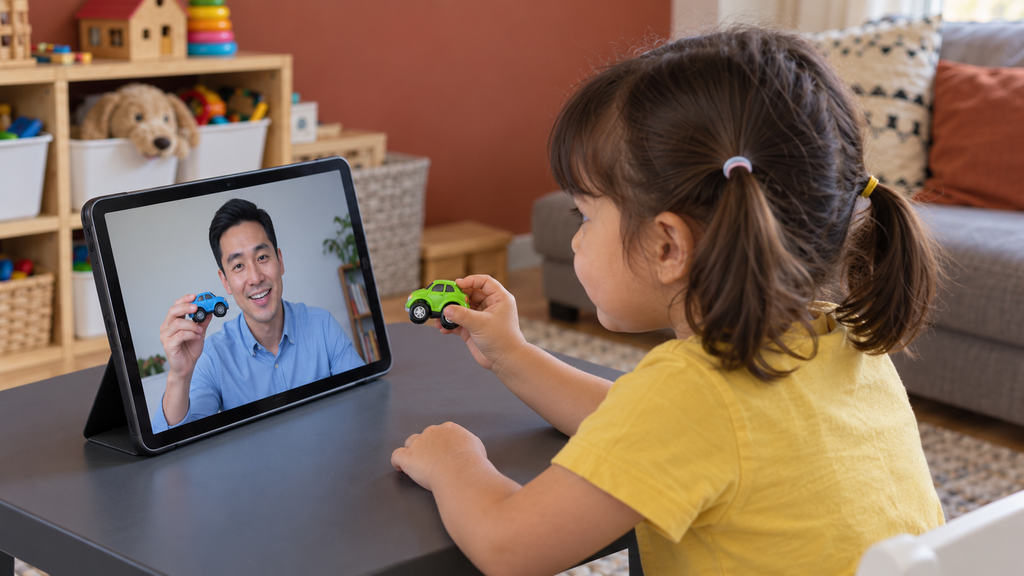
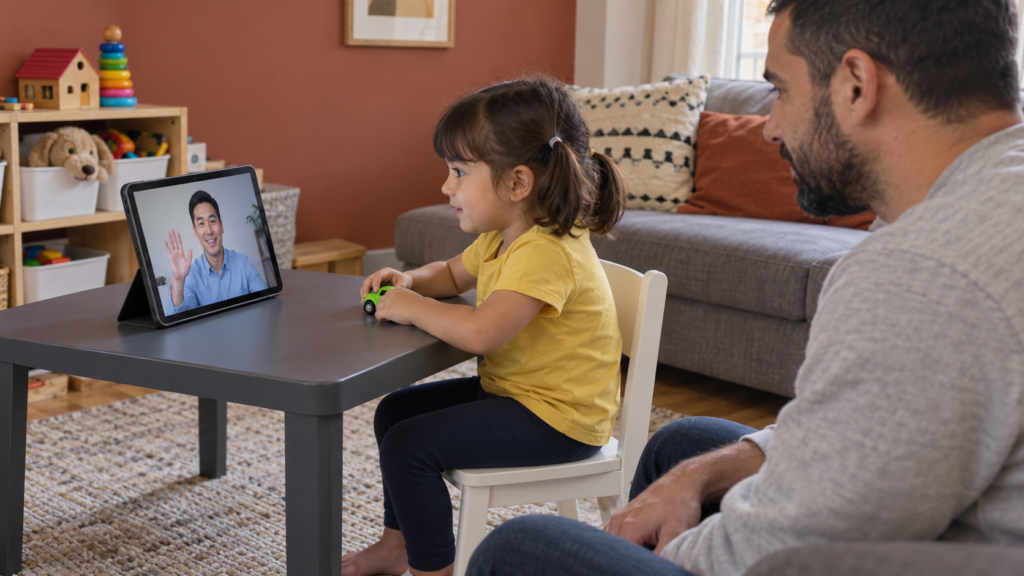
The child is holding a toy car. The teacher asked what he was holding in his hands.
Anything is possible next. He lifted the machine towards the camera. He said «the machine.» He said car. He stared blankly at the screen. He turned to his mother. He walked away from the table.
None of these responses alone tell you whether it’s suitable for online learning. Take a look at how the teacher reacted and what the child did in response.
The teacher picked up the machine, was delighted, and asked what color it was. The child answered or did not answer, but remained on the screen. This episode can be recorded in the observation sheet.
Staring at the screen, the teacher showed his machine. The child picked up his own. Here, the child was helped by a demonstration instead of words.
It is these kinds of patterns that need to be monitored. What the teacher suggested, what the child did, what helped.
Three things that can be written down
To ensure that there is no general «like normal» after the lesson, keep three lines in mind. These are places for observations; there are no evaluation points in them.
Contact. Does the child respond to the person on the screen? In other words, with a word, a gesture, or the displayed object, with their question. If the teacher responded to their machine, and the child continued to communicate afterward, there is contact, even if not a single Russian word was heard.
Understanding the task. What was needed for the child to take on the task. After a verbal request, he didn’t start; after showing, he did. He chose the picture with a gesture, although he didn’t answer with words. For the teacher, this is a clue on how to talk to him.
Stress and support. Where it started and where it ended. I turned away, but after the class changed, I turned back again. I participated while my mother sat next to me. I asked her to finish the lesson at the twenty-minute mark. All of this should be recorded along with what happened before and what help was needed.
The common thing about the three lines is one thing. In each one, a sequence is written down. The teacher suggested it, the child did it, and that helped.
What these lines fail to measure
They don't measure whether the child is suitable for online learning at all.
One trial lesson does not show whether he will continue studying for a year. It shows what happened in the interaction with this teacher that day, what hindered it, and what can be tried to change.
Therefore, «rephrasing the word» is one observation that is not enough to draw conclusions. What matters more is how he came to that word and what help was needed.
And «sitting quietly and listening» is also not an answer. It doesn't mean good or bad. A four-year-old's participation can look like listening, like a word, like a gesture, like choosing a picture, like jumping. Jumping isn't necessary.
Which in itself does not provide an answer
Where the child looks. At the teacher’s face, at the picture, at their own image in the corner, at their mother. The gaze itself doesn’t prove anything; contact can happen even without looking into the camera.
How long he/she takes to pause after a question. This is not an endurance test. It is more useful to observe whether the teacher gives time to answer and whether the way of explaining changes when there is no answer.
How many words he said in Russian. It's not the main thing in the trial run.
If nothing worked out
It happens. The child left the table within five minutes, and we couldn't get him back.
This is not a verdict. Before deciding that online isn’t for him, take a look at the conditions. He’s tired; the lesson was after school. An unfamiliar adult who he hasn’t had time to get used to. Russian is too difficult for his level. The sound is poor. It’s going too fast. There are too many children in the group.
Discuss what can be changed before the next attempt. Another time, a different assignment, mom present during the first lessons, a different teacher, one-on-one instead of a group.
There is no universal «try later» deadline. There is talk of changing things.
After the lesson
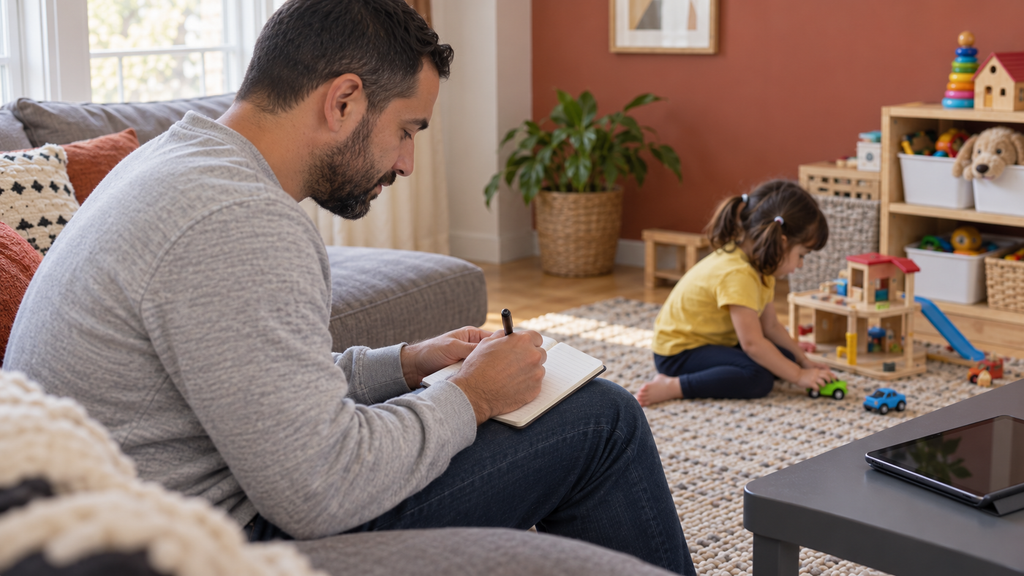
Write down three lines, as long as you can remember them. Discuss them with your teacher or school administrator.
The conversation will be substantive. Not «he liked it,» but «after the presentation, he did it; after the words, there are no more of them,» and the teacher will know where to start at the next meeting.
Observation sheet
Below you can fill out a sheet for a trial lesson. Three columns: contact information, the clarity of the task, the workload, and support. There are three fields in each column. What the teacher suggested, what the child did, what helped. There is space at the bottom for the teacher to ask questions. The sheet is printed on one page; there are no marks or conclusions in it.
Three lines, three fields each, up to 45 characters. You can fill in during the lesson or immediately afterwards. The prompts in the fields are examples; your own entries will be different. To the right is a sheet that can be printed on one page and used for conversation with the teacher or methodologist.
1. Contact
2. Comprehension of the task
3. Load and support
A question for a teacher or a methodologist
At Palme School, children from the age of four are enrolled. When selecting the program, we take into account the child's level of Russian and age. If the child already speaks Russian at home, this is the «Russian for Bilinguals». If you learn the language from the very beginning, the course «Russian as a Foreign Language».
On the pages of both courses, you can sign up for two free sessions. When registering, please tell us how your child understands Russian and speaks it. You can take the observation sheet from this article with you for a conversation after the classes.
Russian for Bilinguals Russian as a Foreign LanguageFrequently asked questions about the trial online lesson for four-year-olds
From what age is it appropriate for children to take online Russian lessons?
At Palme School, groups start at four years old, and lessons are conducted in a game-like format. But there is no general readiness level for the screen. For one four-year-old child, contact with the teacher through the screen is established on the very first lesson; for another, they need a mother nearby and several meetings. Therefore, it is worth watching the particular child during a trial lesson.
How long should an online lesson for a four-year-old last?
There is no one length that suits everyone. School lessons last 40 minutes. If your child gets tired earlier, that doesn’t mean the format isn’t suitable. Write down the minute and what happened after that, and discuss with the teacher how to structure the next lesson.
Is it necessary for the mother to sit next to her at the trial lesson?
It’s often necessary, especially in the first few sessions. Mom helps with the buttons and gets the child used to them. At the same time, you can arrange in advance with the teacher to do a familiar task that the child will try to complete directly with him/her.
What should I do if the child leaves the table after five minutes?
Don’t make a conclusion about the format. Look at the conditions. After a garden class, an unfamiliar adult, too difficult Russian, bad sound, fast pace, many children in the group. Each of these is discussed with the teacher or methodologist before the next attempt. Another time, a more understandable task, mom nearby, another teacher, or an individual format changes the picture.
Is it harmful for a four-year-old child to spend screen time in class?
During a live session, the child can answer the teacher's questions and receive help. It is important to take into account the child's overall workload, movement, sleep, and other activities. If the child is tired, discuss postponing the trial lesson.
What should I record in the trial lesson so that I have something to talk about with the teacher later?
Three lines. Contact, clarity of the task, workload, and support. One line for each. What the teacher suggested, what the child did, what helped. For example, after a verbal request he didn’t start, after showing the pictures he chose with a gesture. These kinds of notes give the teacher material for the next meeting, and there are no grades or final judgments in them.
As for choosing an online school in general, we wrote about it here. Check list of eight points, and about when to start learning Russian, in Breaking down by stages.