


Your child opens an AI learning app in class. Who checked that it's safe? That it doesn't harm their psyche, doesn't leak children's data, doesn't serve up unnecessary content? The answer is disheartening. No one.
Until now, there was simply no such standard. Schools are offered smart programs, they promise miracles, but in reality, no one from the outside has checked what's inside. Now they've decided to fix this.
What did you come up with

Boston is getting serious about this. Boston University, together with the non-profit Just Horizons Alliance, announced that they will build an artificial intelligence ethics index for schools. The agreement was signed for three years.
The idea is this: a team of programmers, engineers, and sociologists will analyze AI applications sold to schools and children and evaluate them using clear metrics: how they affect a child's psyche, whether they comply with child privacy laws, and what's actually going on under the hood of the program. The results will be compiled into an open database where each product will have its own rating. It will be something like a seal of approval: this application has been tested and is safe, while this one raises questions.
Why was it needed at all. The essence of the organization's position is simple: currently, teachers are offered to use artificial intelligence based only on the sellers' assurances, not on independent verified data. Simply put, schools are being sold technology, testing it on children in real time. The Index must stop this.
Why is this even a problem?
And because artificial intelligence has burst into schools faster than anyone could understand the consequences. The Silicon Valley principle is well-known: release first, fix later. Only this time, children are the test subjects.
And the anxiety isn't unfounded. Studies are emerging that link long hours in front of screens with slower brain development in children. Add to that privacy concerns: children's data is leaking out to unknown destinations. And emotions: a child gets accustomed to chatting with a helpful bot instead of a real person. So, it turns out that under the guise of progress, something is entering schools that hasn't yet been evaluated or supervised.
And for now, there is no index

There's something important here. The index itself has already been launched, and it even has its own website. But for now, it's just a framework: the database of app ratings is only just starting to be populated, and there isn't a ready-made catalog with ratings next to each program yet. And children are already using these apps today. This means that for now, the only one truly watching what a child is holding is the parent.
And here's what's worth keeping in mind. The younger the child, the less they need an artificial companion and the more they need a real one. A bot will answer a question, but it won't teach them to think, it won't truly argue, it won't sense when a child is struggling. This is especially true for language. Spoken language is born in conversation with a person who hears and responds, not in correspondence with a program, no matter how eloquently it speaks.
Where is our parental interest here

Our families have a different twist on history. A child won't learn Russian through an app, no matter what the developers promise. Language lives in communication, not in exchanges with an algorithm.
The temptation is great. To download a program, seat a child in front of it, and let them learn Russian on their own while the parent relaxes. But it doesn't work that way. An app will drill words and tests into them, but speaking, understanding subtle cues, and feeling the language will only be learned with a real person. This is the very difference that the safety index is designed to address: a machine and a human mentor are not the same, especially when it comes to a child.
The Palme school will help with
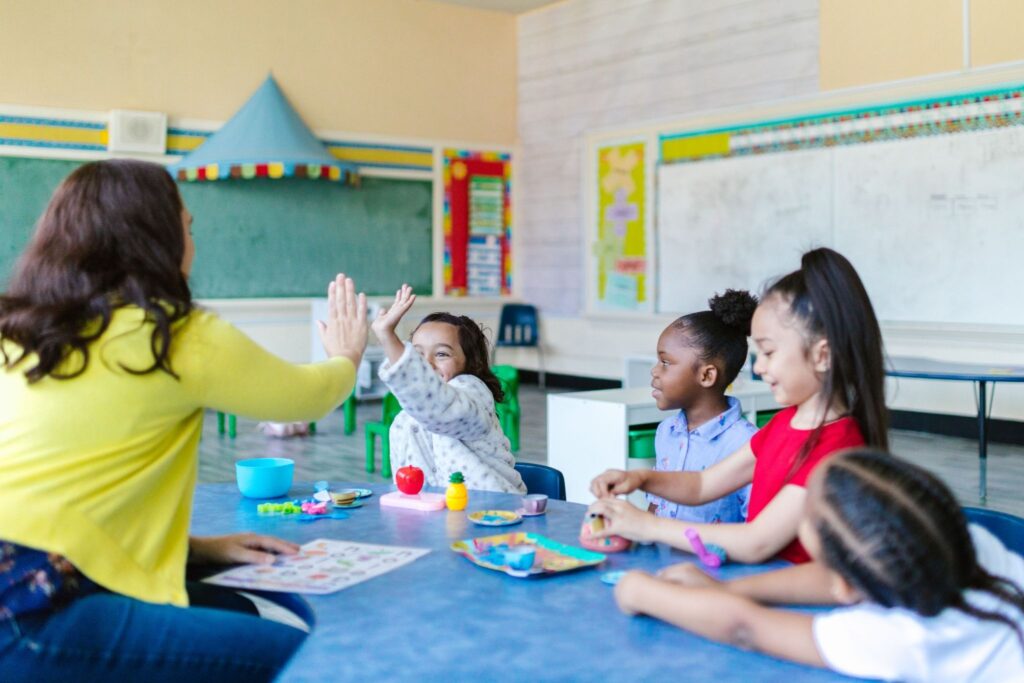
This is where our line is drawn. At Palme School, a living educator stands behind the learning, and that's the essence of it. No shady apps that collect children's data and affect their psyche in unknown ways. Only a real teacher, a live conversation, a small group where children speak, argue, and laugh in Russian.
We take children from four to seventeen years old. Program for bilinguals, if Russian already sounds at home. Is there Russian as a foreign language course, if the language is still foreign to the child. The format is simple: online, small groups, forty minutes. And you don't have to pay to try it out. First, a methodologist will call the child to understand their level. Then the child will attend a trial lesson directly in the group. These two steps are enough to determine if our format is suitable for the child and for you.
Home

This is the first attempt to check if smart school applications are safe for children, as such a check has simply not existed until now. While the index is being built, the only reliable filter is the parent. And here it is useful to remember a simple thing: no matter how smart a program is, it will not replace a live teacher for a child, especially in a language that is born only in conversation with a person. The creation of an artificial intelligence ethics index for schools was reported by Axios.
What is the AI Ethics Index for Schools?
This is an assessment system for smart applications offered to schools and children. It is being created by Boston University and the non-profit organization Just Horizons Alliance. Each tool will be checked against several metrics: how it affects a child's mental well-being, whether it complies with child privacy laws, and what's inside it. The results will be compiled into an open database with ratings so that schools and parents can see which apps can be trusted and which cannot yet.
Why check school AI apps at all?
Then, because no one has independently tested them yet. Schools are offered technology, relying on vendor promises rather than verified data. At the same time, there are alarming signals: issues of child privacy, psychological impact, the connection between long screen time and slower brain development. The index should provide schools and parents with an independent assessment instead of marketing promises.
Can an app replace a child's live language teacher?
No, especially when it comes to language. The program will help learn words and practice tests, but a child will only learn to speak, understand the interlocutor, and feel the language through live communication with a person. This also applies to Russian: it is maintained through conversation, not through correspondence with an algorithm, however smart that may seem.