


Fly to Moscow, connect to the local internet, and glance at your bus neighbor's phone. Half of the familiar icons are gone. Neither the blue letter 'f', nor the Instagram camera, nor the green WhatsApp icon in its usual form. But everywhere else, there's the VKontakte blue square, the Telegram paper airplane, the Odnoklassniki orange circle. Welcome to Runet, the Russian-language internet, which is called that in the English-speaking world, and which has long been living its own separate life.
Russia is one of the few countries where local networks have not only survived the onslaught of Californian giants but have even outperformed them in some aspects. Those who first search for "Russian social media" or "Russian internet" usually expect familiar platforms with Russian captions, but instead stumble upon an entire parallel world with its own stars, its own rules, and its own language. Let's step into it for a moment and take a look, from the old .ru domain to today's blockages, and at the same time understand why VKontakte means roughly the same to Russians today as Facebook means to the rest of the world.
Where does Runet begin

This parallel world has a birthday, April 7, 1994. That's when the .ru domain was assigned to the country, and from that short pair of letters, everything essentially kicked off. The word "Runet" itself was cobbled together from two words, Russia and net, and it stuck like glue.
It grew quickly and arbitrarily. In the 2000s, all of thinking Russia moved to LiveJournal, writing poems, denunciations, and declarations of love there, and communicating amongst themselves in a deliberately distorted dialect where "preved" replaced "hello," and the highest praise was "author burns." That era is gone, but the habit remains. Runet stubbornly creates its own things today as well – its own idioms, its own idols, its own services. And before LiveJournal, there were forums, guestbooks, and portals like Rambler, where Runet learned to talk to itself. Many things from those years are remembered with a smile, but it was then that the main characteristic here was solidified: the desire to do everything in its own way.
And the services here truly are their own. Imagine a typical morning in Moscow. A person wakes up their phone, orders a car using the Yandex app, listens to music from the same app on the way, orders groceries for home in between tasks, asks the voice assistant if it will rain, and searches for something using the search engine, which is again Yandex. They likely created their email account long ago on Mail.ru. Google and Gmail are present nearby, but they simply didn't become the center of this person's universe. This habit of relying on one's own services has turned the Russian internet into a separate territory with its own population and its own stars, living slightly apart from the rest of the world. Russia has long been living with mobile internet; people primarily access the internet from their phones. Fast and inexpensive access has reached even small towns, so this entire parallel world is now in most people's pockets.
The person who built both VKontakte and Telegram
The two main platforms of the Runet have one creator, and this is already almost a legend. In 2006, St. Petersburg student Pavel Durov created VKontakte. It was immediately dubbed the Russian Facebook, although something entirely its own grew out of it, with a bottomless music library that people listened to almost for free in the early years, with public pages for every taste, and a special sense of freedom. Today, nearly a hundred million people visit VKontakte every month, essentially the entire Russian-speaking internet at once.
Over time, the network outgrew itself. Games, shops, money transfers, and short videos sprang up within it, so now it functions more like a jack-of-all-trades Swiss Army knife than a simple photo album. For an entire generation, VKontakte was once everything *but* just a website. The first correspondence, the first playlist, the first argument in the comments, the first shy message in private. Its own mythology grew around the network itself. Entire generations of memes and local celebrities emerged from it, and a popular image from a public page would spread across the country faster than any news. Music, which was downloaded almost for free in the early years, was eventually legalized through agreements with record companies and remains one of the reasons it's so hard to completely leave VKontakte.
Durov's own fate took a more dramatic turn. He came up with Telegram even before his current fame, back in 2013, with his brother Nikolai. From the outset, he focused on private messaging and encryption. He parted ways with VKontakte in 2014. According to his own account, he was forced to leave. He was pressured to hand over user data and shut down communities. He refused, and in the end, he lost both his creation, which went to owners close to the government, and the ability to live peacefully in the country. Meanwhile, Telegram grew to hundreds of millions of users worldwide, and its creator became an exceptionally controversial figure. To some, he is seen as a champion of free speech; to others, a perpetual headache for governments.
His character matches his biography. Back in 2011, when Durov was asked to shut down several opposition groups on VKontakte, he responded by posting a photo of a dog in a hoodie with its tongue sticking out, and the groups remained open. Later, he deliberately portrayed himself as a libertarian and gave almost no interviews, although in the spring of 2024, he unexpectedly opened up in a long conversation with a well-known American journalist, discussing pressure from various governments and his nomadic life between countries. The technical backbone of both platforms was largely conceived by his older brother Nikolai, a mathematician whose algorithms formed the basis of Telegram's encryption.
The messenger's relationship with the Russian authorities has also been complicated. In 2018, Roskomnadzor attempted to shut down Telegram when it refused to hand over encryption keys. Durov called for resistance, his engineers hid the messenger behind thousands of foreign addresses, the regulator chased after it, and in the process took down access to a bunch of innocent websites, but Telegram stubbornly continued to work. Two years later, that block was quietly lifted, essentially admitting its failure.
And then 2024 struck. On that August evening, Durov arrived by private jet in Paris, and the French gendarmerie met him right at the gangway. The accusation boiled down to the fact that he wasn't doing enough to combat criminal content on his platform. A few days of arrest, then bail, over a year under a ban from freely leaving the country, and only by November 2025 were the travel restrictions lifted. The case itself remains unresolved. And at the beginning of 2026, Russia also opened its own criminal case against him, for aiding terrorism, accusing Telegram of not deleting dangerous content at the authorities' request, and simultaneously significantly slowing down the messenger. The entrepreneur himself calls all the accusations absurd and speaks of pressure on freedom of speech, while Russian departments insist it's about citizen safety. The dispute about where private correspondence ends and platform responsibility begins is far from being solely around Durov.
Grandmothers on Odnoklassniki, youth on Telegram
Each platform on the Runet has its own age and its own character. Almost everyone is on VK, from schoolchildren to pensioners, and in terms of reach, the network covers almost the entire Russian-speaking internet. Odnoklassniki, the peer of VK, has become the kingdom of the older generation and the provinces. Here, aunts and grandmothers send each other postcards, cat GIFs, and virtual gifts, billions of which accumulate in just one quarter. A "good morning" postcard, a cat sticker, a virtual birthday cake – this is what daily communication is made of here. And this is what is important for a family scattered around the world.
Through this very Odnoklassniki, a grandson in Toronto sees his grandmother in Samara blowing out candles, and seemingly unfamiliar platforms suddenly become the main bridge between generations. It's there that a child who grew up far away first notices what the extended Russian family looks and sounds like all together. Odnoklassniki has also experienced an unexpected second wind. When Telegram was under threat, some young people suddenly remembered the old network and rushed to restore long-forgotten accounts, so the respectable platform for grandmothers suddenly got younger.
Telegram has carved out a special niche. It's already a messenger and a news feed at once, a kingdom of channels you subscribe to yourself, from dry official reports to anonymous insiders with millions of readers. Young people and professionals have largely moved there. Telegram has also developed its own life, with thousands of stickers, bots that order food and check the weather, and channels that have replaced television and newspapers for many. And the language there is its own again, with memes and slang like "krinzh" and "rofl" appearing so frequently in correspondence that it's sometimes harder for a parent abroad to understand a teenager's chat than a strict textbook. In turbulent years, it was precisely through Telegram that a significant portion of what people read and discussed spread, with channels outpacing both television and official websites in speed. For some, this became a symbol of free speech, for others a headache, and the debates surrounding the messenger have not subsided since.
Over the past year, MAX, a new government-backed messenger, has been added to this picture. It's being integrated into public services and schools and actively promoted as a domestic alternative to foreign ones. Video has also moved forward: Russian VK Video, according to the platform's own data, has already surpassed the familiar YouTube in viewership. There's also the recommendation platform Dzen and the video service RuTube, which is being grown as an alternative. The picture as a whole is diverse and dynamic, with some platforms soaring over the year while others quietly fade away.
When did the familiar icons disappear
A separate and somber topic is why some familiar services in Russia today are either not working or are experiencing interruptions. It started a long time ago, back in 2016, the business network LinkedIn was shut down. Since 2022, Instagram and Facebook have been banned, and their parent company, Meta corporation, has been declared an extremist organization by the court, so even mentioning these platforms in Russian texts is usually done with a special disclaimer. This is where the seemingly strange habit of putting an asterisk and a note next to their names stating that they belong to a company banned in the country comes from; you'll find such a mark in almost every Russian article. Later, other services were restricted, and starting in 2025, they began slowing down WhatsApp and Telegram itself, and by the beginning of 2026, using them had become noticeably more difficult.
Everyone evaluates all of this differently, and it's more honest to show both sides. The state explains these steps by caring about security and so-called digital sovereignty, a desire to protect people from prohibited content, and to not depend on foreign platforms. Critics and many users see restrictions on access to information in the same measures. The agency named Roskomnadzor oversees this sphere, and the legal basis was provided by a law adopted in 2019, which is popularly called the sovereign Runet law.
No matter how anyone feels about it, the average person has long since adapted. For them, all these bans most often turn into minor everyday hassles. A favorite website suddenly won't load. An app has to be updated indirectly. A familiar blogger suddenly moves to a new platform mid-week, and you follow them. Some people install a VPN and access what they're used to, some learn domestic MAX and RuTube, some return to the cozy Odnoklassniki. Runet isn't emptying from these shocks; the audience simply flows from one service to another. People install three messengers on their phones at once as a backup, keep a VPN ready, and are no longer surprised when another app starts acting up.
People here have long been accustomed to such changes. VPNs themselves exist in a gray area; they are periodically targeted, but many still use them, leading to an eternal game of cat and mouse. In the summer of 2024, incidentally, YouTube noticeably slowed down, causing some users to switch to Russian video platforms. The list of slowed-down and blocked services is updated so frequently that its latest version is practically worth checking every month.
| Data as of early 2026. The topic changes rapidly; statuses and figures should be verified before use. | ||||
| Playground | Latin | Type | Audience | Note |
|---|---|---|---|---|
| VKontakte | VK | Social network, super app | All ages, ~90 million per month | Founded by Durov in 2006, the leader of the Runet |
| Classmates | OK | Social network | Older generation, regions | VK's peer, a second wind in 2026 |
| Telegram | Telegram | Messenger, channels | Youth, news | Durov, 2013; slows down from 2025 |
| Messenger | Massive | Slowing down from 2025 | ||
| MAX | MAX | Messenger | Growing | State support, integrated into public services and schools |
| VK Video | VK Video | Video | Massive | According to VK, it surpassed YouTube domestically. |
| YouTube | YouTube | Video | Massive | Delayed since summer 2024 |
| RuTube | RuTube | Video | Growing | Domestic alternative |
| Zen | Zen | Feed of articles and videos | Massive | Recommendation platform |
| Yandex | Yandex | Search and Ecosystem | Massive | Search, Maps, Taxi, Music, Delivery |
| Mail.ru | Mail.ru | Mail and services | Massive | One of the oldest services in Runet |
| Social network | Through VPN | Blocked since 2022, Meta declared extremist | ||
| Social network | Through VPN | Blocked since 2022, Meta declared extremist | ||
| Business network | Limited | Closed in Russia since 2016 | ||
Why would a child between two cultures need this?
For a family raising a bilingual child, the entire colorful Runet is not an abstract political issue happening somewhere far away. It's a living thread connecting them to relatives and culture. Grandma's Odnoklassniki posts, the family Telegram chat, memes and music on VKontakte – all of this is the modern Russian language that can't be found in any textbook, but it's what the country speaks today. Understanding a meme from a cousin, hearing what grandma is discussing on a video call, reading family correspondence without a translator – this is the living language that stays with a person for life.
At Palme School, Russian is taught to children aged four to seventeen, and it's taught as a living, modern language, the way it's spoken right now. You can learn more at two free classes, First, an introductory meeting with a methodologist who will assess the child's level and select a group, followed by a trial lesson with the teacher in that group. This way, the connection with the Russian-speaking world, both with grandma in Samara and with a cousin in Moscow, remains strong, regardless of any platforms or restrictions.
Home
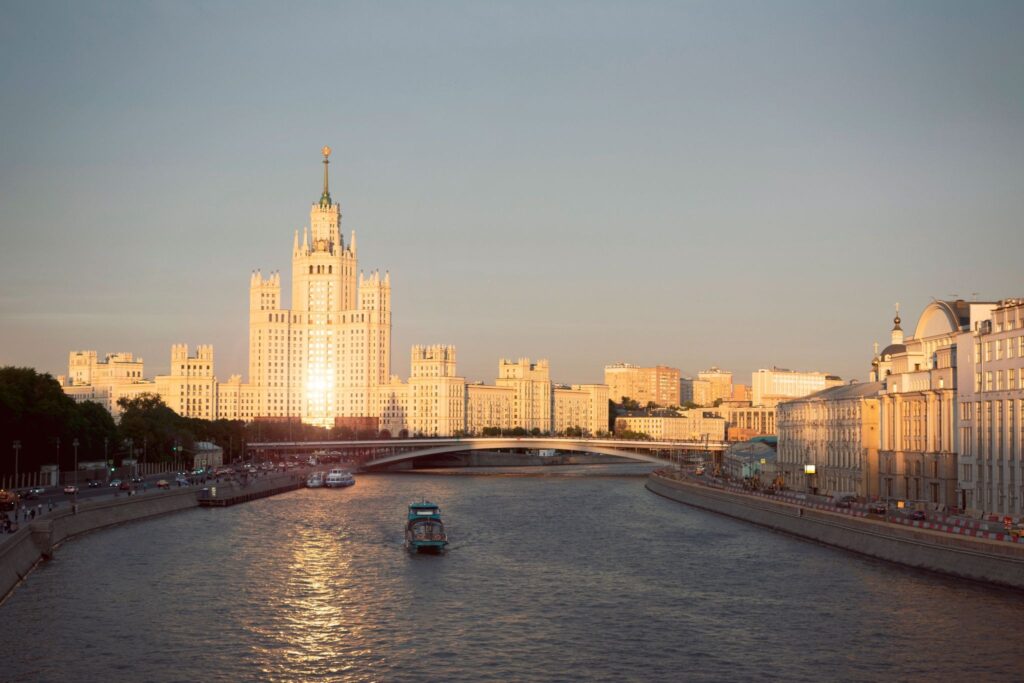
The Russian internet lives by its own rules and is very different from the Western internet. Its main platforms grew within the country; VKontakte remains a network for everyone, Odnoklassniki caters to the older generation, and Telegram has become both a messenger and a news feed. Two key services are backed by one person, Pavel Durov, and his biography alone could fill a novel. Some Western platforms are currently blocked or slowed down, and the debate around this continues, while people are moving from one service to another. The balance of power here changes almost every year, but the distinctiveness of Runet remains strong, making it a topic of interest far beyond Russia itself. Understanding Runet often means understanding the country today, its habits, its disputes, and its way of staying connected, as it is largely in its feeds, chats, and channels that it now converses with itself. For those learning the language or raising children away from home, Runet remains the living tissue of today's Russian culture, and knowledge of it is no less useful than grammar.
What is the most popular social network in Russia?
VKontakte holds first place by a wide margin, with over ninety million people visiting monthly, almost the entire Russian-speaking internet audience. Following closely are the messengers Telegram and WhatsApp, video platforms, and Odnoklassniki. In recent years, the trend has significantly shifted towards domestic services, and according to the platform itself, Russian VK Video has already surpassed YouTube domestically for video content.
What is Runet?
This is what the Russian-speaking part of the internet is called; the word was formed from Russia and net. April 7, 1994, is considered its birthday, when the country was assigned the .ru domain. A distinctive feature of Runet is that it acquired its own infrastructure early on. It has its own search engine, Yandex, its own mail service, Mail.ru, its own social networks, and today, a whole slew of services, from maps and taxis to government services, within which a significant part of a person's day occurs.
VKontakte was created by Pavel Durov. Telegram was also created by Pavel Durov.
Pavel Durov is behind both platforms. He started with VKontakte in 2006, and seven years later, in 2013, he launched Telegram with his brother Nikolai. He had to leave VKontakte and his home country entirely in 2014, reportedly due to pressure from the authorities, according to the entrepreneur himself. Fate then tossed him around even more. In the summer of 2024, Durov was detained in France due to issues with Telegram's moderation. By the end of 2025, travel restrictions were lifted, but in early 2026, Russian authorities opened a separate case against him for aiding terrorism. Meanwhile, the messenger itself spread across the globe to hundreds of millions of people, and it is these two platforms, with their such different destinies, that have made the Durov name famous.
Instagram is blocked in Russia because it was designated as an "extremist" organization by the Russian government, which led to its parent company, Meta, being banned.
Instagram and Facebook have been banned in the country since 2022, and their owner, Meta Corporation, was declared an extremist organization by a Russian court. According to the authorities, the reason is security, while their opponents call such measures censorship. However, some users still access Instagram via VPN, so the platform has not completely disappeared from the country. A similar story applies to several other foreign services; some of them are slowed down or blocked, so many people keep several apps ready.
What's the difference between Odnoklassniki and VKontakte?
VKontakte is universal and brings together all ages at once, while Odnoklassniki has become a platform for the older generation and residents of the regions, featuring more greeting cards, congratulations, and communication with distant relatives. Both networks are currently under the control of the same technology group, but their atmosphere and audience are completely different, making it difficult to confuse these two platforms even for a novice.
What is MAX?
This is a young Russian messenger that appeared very recently and is growing with state support. It's being integrated into government services and schools, and promoted as a domestic replacement for foreign applications. It appeared not long ago and gained an audience surprisingly quickly, although opinions are divided: some see it as a convenient service, while others are wary of its close ties to the state.