

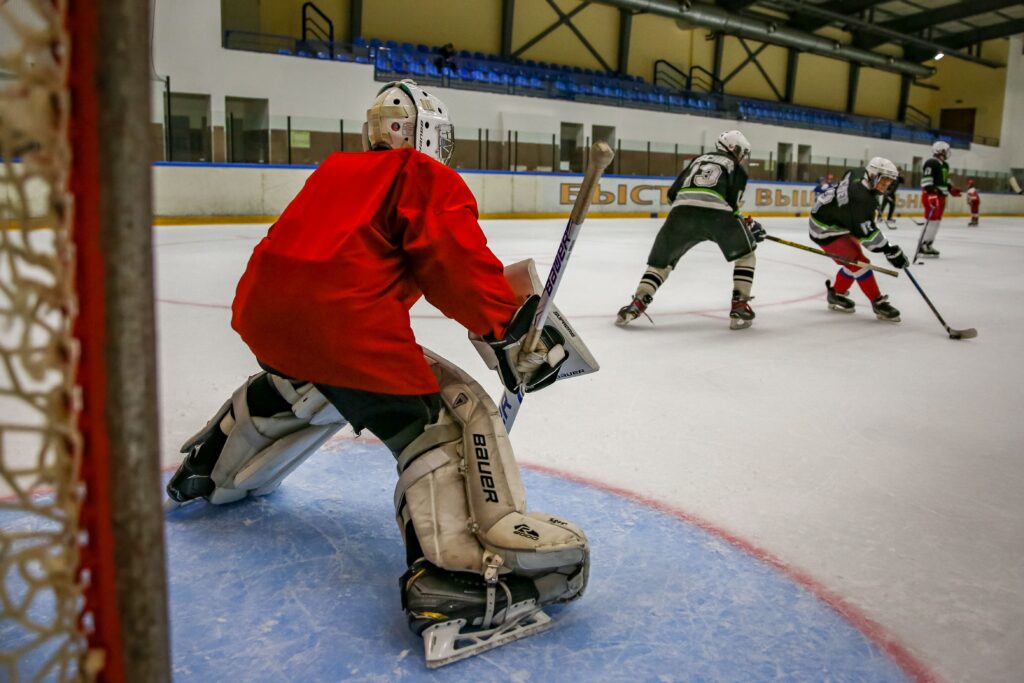

Put on an old black-and-white recording from September 1972, and you'll see a strange sight. Canadian professionals, the best hockey players on the planet, look around their own ice in confusion, while a team in red jerseys with the letters USSR on their chests races across the rink, dissecting their game with precision. The Canadians lost that first match 3-7 and were genuinely scared for the first time in their lives. From that evening on, the world realized that a completely different kind of hockey had emerged somewhere behind the Iron Curtain.
Russian hockey has long since turned into a separate planet. Type "Russian hockey" or "Soviet hockey" into a search engine, and you'll enter an entire living culture where the ice is made like a chessboard, where five players skate as one beast, where players grew up who reshaped the entire global game. The story continues about this planet, from the frozen backyard to Ovechkin's records overseas and today's heated battles in the league called the KHL.
Hockey reinvented
It all started modestly. The puck didn't reach the Soviet Union until the mid-forties, quite late by hockey standards. Before that, people across the country had been playing ball with sticks on a huge snowy field, a game still known in the world today as Russian hockey. There was no puck hockey school; they hastily adopted the basics from the Canadians, and by all estimations, they were supposed to be half a century behind them. But ten years were enough.
They didn't fall behind. The blame lies with one stubborn man, coach Anatoly Tarasov. He looked at the Canadian style, strong in power and single thrust, and went his own way. Speed. Short, no-stop passes. A line that thinks with one mind. Tarasov drove his players so hard that legends are still told today, making them juggle, box, and play basketball, all to hone their instincts and coordination. In the summer, to exhaustion on land; in the winter, until dark on the ice. The team that the whole world dubbed the Red Machine emerged from this meat grinder.
Then the victories began, and they were so frequent that one could get used to them. Already in 1954, Soviet hockey players won their debut World Championship, and two years later, they took Olympic gold, astonishing Canada and Europe at once. The world then first seriously spoke of the Soviet hockey miracle. And it rolled on. Dozens of titles, a scattering of Olympic medals, an entire era of dominance. Slip-ups were rare; the most bitter was the loss to the USA students at the 1980 Olympics, which in America is still called the miracle on ice. But just four years later, the Red Machine was back on top. Olympic gold in 1984 and 1988, dozens of world titles, and generations of invincible lineups built an almost fairy-tale reputation. Opponents faced the USSR national team already intimidated, as if up against a force of nature.
All that power was held by Moscow CSKA, the army club, where the best players from all over the country were brought together. Later, the national team was led for a long time by the stern Viktor Tikhonov, under whom discipline became almost barracks-like. Players lived at the training base for weeks, toiled to the point of breaking a sweat, and took to the ice as a single unit. For years, opponents puzzled over the secret of this machine. But there was no simple secret; there was a system taken to the point of obsession. Much of what Tarasov devised later migrated into Canadian and European hockey, and his style was analyzed by coaches on every continent.
Eight matches that made Canada go gray
For a long time, it looked like the masters were simply beating up amateurs. The real test came in September 1972. For the first time, the USSR national team went head-to-head with the team of the best Canadian NHL professionals, and these eight games went down in history under the name of the Super Series.
Canada waited for the holiday. Overseas, they assembled stars led by Phil Esposito and were already figuring out the score with which they would crush their guests. But they got a slap in the face in the very first game and then fought for almost a month as if the country's honor was at stake, which, in general, was not far from the truth. Four games in Canada, four in Moscow. With each game, it became clearer that the teams were equal. The Canadians pressed with toughness and individual class, the Soviet team responded with their carousel of passes and speed. And on the ice, there was a figure who made the Canadian defensemen's eyes go dark, a short, swift forward, Valeri Kharlamov. Once, he was simply chopped across the leg with a stick, just to slow him down, and this episode is still remembered in Canada with shame. For almost a month, eight games kept two countries on edge, and every goal scored was discussed as an event of national importance.
It was all decided in the final seconds of the eighth game in Moscow. Canadian Paul Henderson shoved the puck into the Soviet net, snatching victory in the series, a feat that is still remembered in his homeland today, almost like Americans remember the first step on the Moon. Canada exhaled. Though, they exhaled in a way entirely different from what they intended at the start. They realized they had almost lost, and that across the border, hockey had grown to be no worse than Canadian, and in places, even more beautiful. Since that autumn, the debate over which school is stronger has smoldered to this day.
A separate song, Moscow matches of the series. Imagine the Canadians in a foreign, utterly incomprehensible city, in a packed arena, to the whistling of the stands, with the feeling that the entire country was glued to the screens. That's how it was. They watched hockey at night, as a family, holding their breath, as if they were relaying front-line reports. And in the Soviet goal stood a very young Tretiak, whose calmness defeated the Canadians almost more than Halamov's feints. That series has since been remembered by name in both countries and replayed as if it were a textbook. For Soviet fans, it became the best proof that their hockey was on equal footing with any in the world.
The five who thought with one head
The strength of Soviet hockey always lay in its lines, not in individual players. The five-man units skated together for years and understood their partners with a glance, with a turn of the shoulder. The greatest line was assembled around Kharlamov; together with Boris Mikhailov and Vladimir Petrov, they harried the world's goaltenders. This line, with Petrov centering and Mikhailov and Kharlamov on the wings, was considered the best on the planet for years. Kharlamov remained the main face of that era. A national favorite, a idol for boys, a man whose dekes were imitated in every yard across the country. And he left us tragically early. In 1981, at thirty-three, he died in a car accident, and the whole country mourned. Much later, his story was made into a film, and millions watched it, so the forward's surname is known today even by those who have never followed hockey. His number seventeen in Russia has become almost sacred; it's protected and longed to be worn someday.
Behind the forwards stood a man the Canadians in 1972 couldn't get past. Goalie Vladislav Tretiak. As unflappable as if he were reading the forwards' minds, he seemed to anticipate the puck's trajectory in advance, and in those games, it was his calmness that wore down the Canadians, almost more than Kharlamov's feints. Among the Soviet hockey players, Tretiak was the first to earn a place in Toronto's Hall of Fame, and now he heads the national hockey federation. New great fives also emerged. In the eighties, the whole world marveled at the play of a line where Sergei Makarov, Igor Larionov, and Vladimir Krutov flew ahead, protected from behind by Vyacheslav Fetisov and Alexei Kasatonov.
They were nicknamed the "Green Machine" for their signature green sweaters, and it was almost impossible for defenses to break down that carousel. Larionov was respectfully called "The Professor" for his bright mind and intelligent play, and he remained at the highest level until his mid-forties, even impressing seasoned coaches. They were the ones who would first pave the way to the West. And the awards accumulated over these years were enough for an entire museum: three Olympic golds for Tretiak alone, a dozen world titles, and all of this with almost no setbacks. The goaltending school, in general, became a special source of pride; after Tretiak, the net was entrusted to equally unflappable and reliable players.
Journey to the West
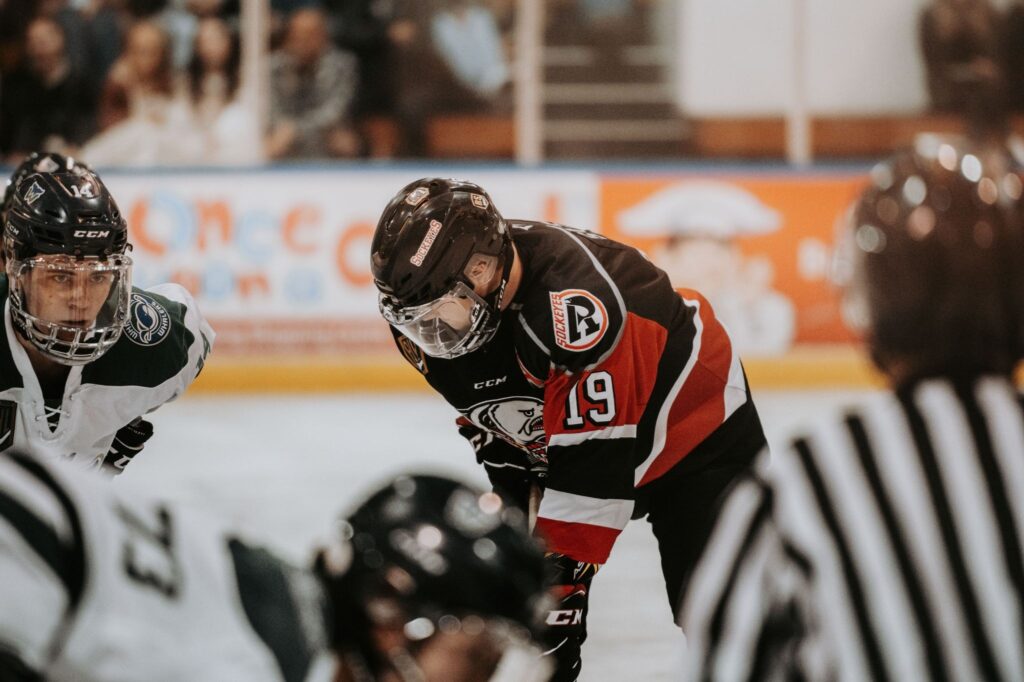
For many years, this path didn't exist at all. For a Soviet hockey player, going to the NHL was almost considered a betrayal, and the road overseas was completely blocked. Alexander Mogilny was the first to take a desperate step. In 1989, he secretly stayed abroad, opening the door a crack for others. Once in the NHL, he would score over seventy goals in a single season, proving the worth of pupils from the Soviet school. Following him, Fetisov began a long war for the right to play in the best league in the world. He didn't flee. He fought for the right to leave openly, endured persecution and disgrace, put his entire career on the line, and ultimately broke down the wall, through which a flood then poured. This quiet war waged by one stubborn defenseman against an entire system turned out to be more important than any of his goals.
The nineties became a Russian invasion of the NHL, and anyone looking for Russian hockey players today will first encounter this era. Pavel Bure, nicknamed "The Russian Rocket," scored sixty goals in a season twice in a row and brought the Vancouver crowds to their feet, with fans attending specifically to watch his devastating rushes from his own net to the opponent's. Sergei Fedorov became one of the league's best players and won the Most Valuable Player award. And in Detroit, the legendary Russian Five assembled, which, besides Fetisov, included Igor Larionov, Vladimir Konstantinov, Vyacheslav Kozlov, and Fedorov himself.
They brought the Stanley Cup to the club and forced North America to play the Russian way, through passing and combination play. The triumph had a bittersweet taste; shortly after the victory, Konstantinov was in a terrible accident and never skated again. A year later, Detroit would win the Cup again and bring it directly to the defenseman's hospital bedside, bringing tears to the eyes of seasoned fans. That Detroit line is still remembered in North America to this day.
And then came the one who took on the Canadian records. Alexander Ovechkin moved to Washington in 2005 and, for almost two decades, crept towards Wayne Gretzky's seemingly eternal summit. And he reached it. On April 6, 2025, his eight hundred and ninety-fifth regular-season goal pushed the Canadian into second place, and Gretzky himself came onto the ice to congratulate the Russian. Ovechkin didn't stop there; by the spring of 2026, he had surpassed the thousand-goal mark, including playoff goals, a feat only one other person had achieved before him, and continued to play even at forty years old. Goalies had long since memorized his signature shot from the left circle, from the spot humorously dubbed "Ovechkin's office," but it didn't make it any easier for them.
In addition to his sniper record, he also has the Stanley Cup, won with Washington in 2018, three MVP titles, and a whole shelf of top scorer awards. Fans on both sides of the ocean have long called him simply "The Great Eight," after his jersey number. His years-long pursuit of Gretzky was discussed by the entire hockey planet, and the finale of this story was befitting of a great career. Alongside him are Evgeni Malkin with three Stanley Cups, sniper Nikita Kucherov, and virtuoso Artemi Panarin. An entire generation of Russians has long since written themselves into the history of the planet's strongest league, and there's no end in sight to this procession. The school, once conceived by Tarasov, has borne fruit far from its native land.
| Player | Role | Years | What is [he/she/it] known for? |
|---|---|---|---|
| Valeri Kharlamov | Forward | 1967 to 1981 | 1972 Super Series symbol, line with Mikhaylov and Petrov, number 17 |
| Vladislav Tretiak | Goalkeeper | 1969 to 1984 | Three Olympic golds, the first Soviet player in the Hall of Fame, now head of the Ice Hockey Federation of Russia |
| Vyacheslav Fetisov | Defender | 1970s to 1998 | Green Machine, broke through to the NHL, Detroit's Russian Five, Stanley Cup |
| Igor Larionov | Forward | 1977 to 2004 | Professor, the "Russian Five", played into his early forties |
| Sergey Makarov | Forward | 1976 to 1997 | Green Link, one of the best wingers of his generation |
| Alexander Mogilny | Forward | 1988 to 2006 | He was the first to stay overseas in 1989, with over seventy goals in a season. |
| Pavel Bure | Forward | 1989 to 2003 | Russian rocket, twice sixty pucks per season |
| Sergey Fedorov | Forward | 1986 to 2012 | Russian Five of Detroit, Joe Louis Arena MVP award |
| Evgeni Malkin | Forward | 2003 to present | Three Stanley Cups with Pittsburgh |
| Alexander Ovechkin | Forward | 2001 to present | The best sniper in NHL history, surpassed Gretzky on April 6, 2025, Stanley Cup 2018 |
| Nikita Kucherov | Forward | 2011 to present | One of the best scorers in the modern NHL |
| Artemi Panarin | Forward | 2015 to present | Virtuoso winger of the modern NHL |
Gagarin Cup and ice in the yard
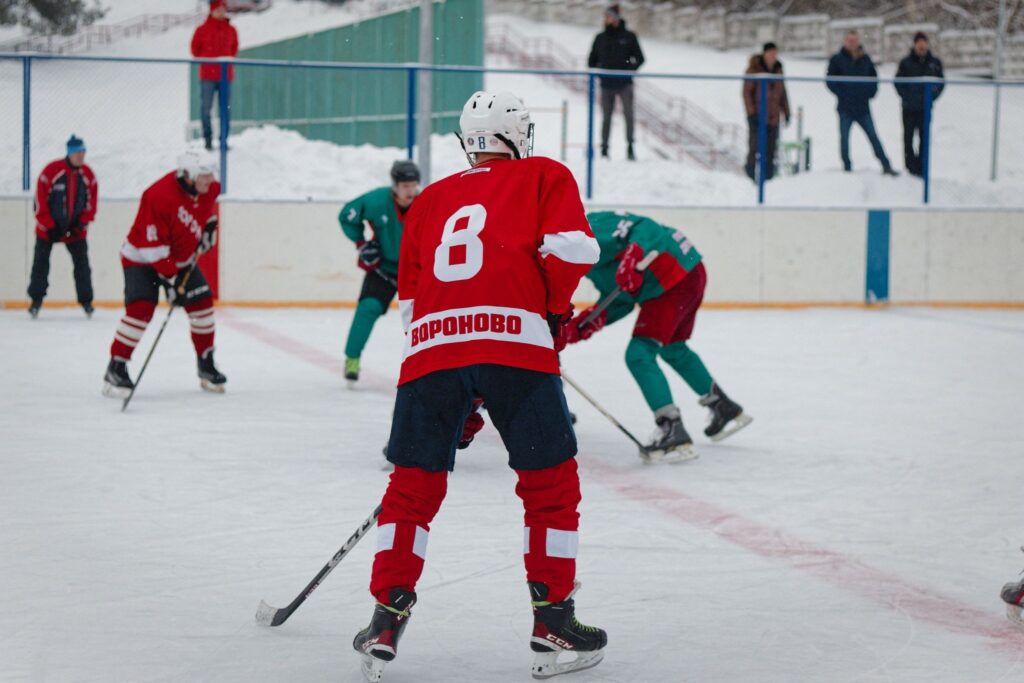
Big hockey has its own arena at home. The former Russian championships merged into the Kontinental Hockey League in 2008, known abroad by the short name KHL, and by class, it ranks just behind the NHL. In the spring, clubs battle for the Gagarin Cup, named in honor of the first cosmonaut, and in this struggle, Moscow's CSKA and Dynamo, St. Petersburg's SKA, Yaroslavl, Kazan's Ak Bars, and a good dozen teams from the Urals and Volga region compete. The two great leagues have different characters. Overseas, speed and physical play along the boards reign supreme; in the Russian league, patient combinations and the legacy of the Soviet school are still valued, and the rinks here have historically been wider, leaving more space for that very carousel.
The league has over two dozen clubs, scattered from the Baltic to the Pacific Ocean, and the spring playoffs draw millions to their screens. Each club has its own history of glory and pain, and in different years, foreign teams have also played under the league's banner. There's certainly more money and stars overseas, but the domestic league cherishes its character and its idols.
This hockey also has an unhealed wound. In 2011, near Yaroslavl, almost the entire Lokomotiv team was lost in a plane crash. The city reassembled the team, almost from scratch, and its return to the ice became a separate story of courage that is remembered in hockey for a long time.
A separate and difficult chapter of recent years is international isolation. Since 2022, the Russian national team has been barred from both World Championships and Olympics. The International Federation cites security concerns in light of events surrounding Ukraine. The Russian side considers the ban unfair and seeks its review, including through the courts. In the spring of 2026, one of the suspending decisions was overturned, although how the case will ultimately conclude remains unclear. The issue is constantly evolving, literally month by month, so it's worth following the latest news. However, this does not affect clubs or individual players; Russians continue to play on the ice in the NHL.
But what doesn't change is the love for the game. Go out into any Russian backyard on a winter evening, and you'll almost certainly hear the puck hitting the boards. A flooded rink, a pair of homemade goals, a gang of kids playing until dark. The mass amateur Night Hockey League for adults of all professions also works, children's tournaments like the Golden Puck discover new names every year, and families attend the matches. Hockey here has long since grown beyond just a game; it's discussed in kitchens and locker rooms, used to compete with neighbors, and argued about until hoarse. The frozen rink is still a part of millions of childhoods, and it was from there, from the backyard ice, that both Kharlamov and Ovechkin once emerged. A heap of films have been made about hockey in the country, which are watched by entire families, from the story of Kharlamov to retellings of that very Super Series, and the game has long been woven into national pride.
| KHL | NHL | |
|---|---|---|
| Founded | 2008 | 1917 |
| Where do they play? | Russia and neighboring countries | USA and Canada |
| The main trophy | Gagarin Cup | Stanley Cup |
| Style | Combination, the legacy of the Soviet school | Speed, physical struggle along the boards |
| Platform sizes | Historically broader | Already, more clashes |
| Level | Second in the world | The strongest league on the planet |
Why it's worth showing a child hockey
For families raising a bilingual child, hockey often becomes a surprisingly convenient bridge to language. A child who roots for Ovechkin or rewatches old goals by Kharlamov suddenly wants to understand what the commentators are shouting, what the fans are chanting, and how names and nicknames sound. Sports draw you into language subtly, through excitement and genuine interest, while familiar faces on the ice and simple words about goals and victories make the language immediately relevant and necessary.
At Palme School, Russian is taught to children ages four to seventeen, and the school strives to make the subject accessible and enjoyable through familiar and beloved activities, whether they be cartoons, games, or sports that the whole family enjoys. You can learn more at two free classes, First, there's an introductory meeting with a methodologist who will assess the child's level and select a group, followed by a trial lesson in the group with a teacher. This way, talking about a favorite team becomes another reason to speak Russian, easily and with pleasure, and the names Kharlamov and Ovechkin turn into living threads to a great culture. A child who wants to understand hockey commentary on their own learns the language in a completely different way than by force, and this benefits their native language more than any textbook.
Home
Russian hockey has long grown into a huge, independent tradition, with its own unique philosophy and its own great heroes. Tarasov's school focused on speed, passing, and teamwork, transforming the national team into the "Red Machine." The 1972 Super Series showed the whole world that this style of hockey was in no way inferior to the Canadian one. Harlamov and Tretiak emerged from this school, and later an entire generation of players conquered the NHL, culminating in Ovechkin, who broke Gretzky's seemingly unshakeable long-standing record. Today, the KHL reigns supreme at home, and international doors have temporarily closed, but the ice in the yard and the love for the game haven't disappeared. For a child growing up far from Russia, hockey can become a simple and joyful reason to connect with their native language, and for anyone who simply loves sports, this story offers dozens of great names and unforgettable matches that one wants to rewatch again and again. Such a blend of rich history, character, and skill is rarely found in sports.
Soviet hockey was considered so strong for several key reasons: * **Centralized and State-Sponsored System:** The entire sport was heavily supported and controlled by the state. This meant dedicated funding, resources, and a clear national development strategy. Unlike in North America where professionalism and individual teams drove development, in the USSR, the focus was on building a strong national team. * **Systematic Youth Development:** A robust and widespread network of sports schools and youth programs ensured a constant influx of talent. Children were identified early, trained rigorously, and progressed through structured levels of competition. This created a deep pool of skilled players. * **Emphasis on Team Play and Tactics:** Soviet coaches, particularly Anatoli Tarasov, revolutionized hockey by emphasizing superior skating, puck possession, intricate passing, and strategic depth. They viewed hockey as a science and a chess match on ice, focusing on collective movement and tactical formations rather than individual heroics. * **Intense Training and Discipline:** Players underwent incredibly demanding training regimes, focusing on fitness, conditioning, and skill development for many hours a day, year-round. Discipline was paramount, both on and off the ice. * **Unique Playing Style:** The Soviet style was characterized by fluid, graceful skating, exceptional puck handling, and a high degree of creativity and improvisation within a tactical framework. Their passing was often described as magical, and their ability to anticipate each other's movements was unparalleled. * **"Red Machine" Mystique and National Pride:** The sheer dominance of the Soviet national team created a powerful mystique. Victories were seen as a reflection of the superiority of the Soviet system, fueling immense national pride and further motivating players and coaches. * **International Competition Focus:** The Soviet Union primarily focused its efforts on international tournaments like the Olympics and World Championships, where they consistently dominated. While professional leagues existed in North America, the Soviet system's goal was national glory. * **Coaching Innovations:** Coaches like Tarasov were pioneers, developing new training methods, tactical approaches, and a "total hockey" philosophy that influenced the game globally. In essence, the Soviet Union built a hockey juggernaut through a combination of state-level investment, rigorous development, a unique tactical philosophy, and an unwavering commitment to excellence, which made their brand of hockey incredibly effective and difficult to beat.
The secret lies in a special school built from scratch by coach Anatoly Tarasov. He prioritized speed, short passes, and synchronized play for the entire five-man unit, so that the teams rolled as a single organism, pushing brute force to the background. From the mid-fifties until the country's collapse, the national team amassed a mountain of Olympic gold and world championship titles, earning them the nickname "Red Machine." Training at this school was grueling, and for years, opponents pondered how to stop the Soviet juggernaut.
The 1972 Super Series was a series of exhibition games played between the Soviet Union national ice hockey team and a team of NHL All-Stars. It was the first time that the best professional players from North America played against the top amateur players from the Soviet Union. The series was highly anticipated and was seen as a battle for supremacy in the sport of ice hockey.
Thus entered into history the confrontation of the autumn of 1972, when Soviet hockey players first came out against real professionals from overseas. They played eight matches in two countries, first in Canada, then in Moscow. Canada expected an easy stroll, but already in the opening match, they suffered a heavy defeat and then fought on nerves throughout the series. The Canadians snatched the overall victory only with a goal seconds before the final siren of the eighth match, which is remembered in their homeland almost as a national holiday. NHL stars played for Canada, and the fact that such a team almost lost was a shock for the originators of the game, and since then, Russian hockey has been viewed in the West with respect and apprehension.
Valeri Kharlamov was a Soviet ice hockey player.
The subject is a hockey player who was the obsession of the entire Soviet Union, a leading forward of the national team in the seventies. He was not tall, but he skated swiftly and deked so effectively that the defensemen were left without a chance. He truly burst onto the world stage in the 1972 Super Series. It all ended absurdly and early; in 1981, the thirty-three-year-old Kharlamov died in a car crash. Boris Mikhailov and Vladimir Petrov played on the same line with him, and many years later, a film was made about the national idol, which drew a huge audience.
Sergei Fedorov, Alexander Ovechkin, Pavel Bure, Vladislav Tretiak, Valeri Kharlamov.
The window to the overseas league, at the turn of the eighties and nineties, was carved out by Vyacheslav Fetisov and Alexander Mogilny, who defected in 1989. Following them, a wave of Russians flooded the league, with Sergei Fedorov and Pavel Bure making the loudest noise among them. Today, the main figure here is Alexander Ovechkin, who in 2025 rewrote Gretzky's eternal goal-scoring record. Simultaneously, Evgeni Malkin, who won three Stanley Cups with Pittsburgh, sniper Nikita Kucherov, and virtuoso Artemi Panarin are shining on the rinks.
What is the KHL and how does it differ from the NHL?
Behind these three letters stands the Kontinental Hockey League, Russia's domestic championship, which is the second strongest in the world after the NHL. It was born in 2008, replacing previous tournaments, and its clubs are gathered from both capitals to the Urals, the Volga region, and the Far East, so the distances between cities here are sometimes cosmic. Each season concludes with a battle for the Gagarin Cup. The difference from the overseas league is best heard in the playing style: there, they focus on speed and tough board battles, while here, they cherish patient combinations inherited from the Soviet school.
Has Ovechkin broken Gretzky's record?
Yes, it happened on April 6, 2025. On that day, his next puck in the regular championship was his 895th, and it elevated the Russian to the very top of the all-time scoring list in the league. This mark had been strived for years and was considered almost unreachable, so its fall echoed throughout the hockey world, and Gretzky himself came onto the ice to congratulate the new record holder.
The Russian national team is not participating in international tournaments due to sanctions imposed in response to the invasion of Ukraine.
Since 2022, the road to world championships and the Olympics has been closed to the national team. The international federation links this to security concerns due to events surrounding Ukraine. Russia considers the decision unfair and is contesting it. The situation is not static; in the spring of 2026, some bans are being reconsidered, so it's worth following the latest reports. Club hockey has not been affected; Russians continue to play in NHL clubs, and their own league operates domestically. The question of the national team's return remains open and is being decided on the fly.