


A Saturday morning somewhere far from Russia. On the screen, a figure skater, bathed in spotlights, approaches a jump, hangs in the air for an elusive moment, and lands so cleanly as if it's nothing. A child freezes with a spoon over a plate and asks who it is. And a minute later, you're already typing "Russian figure skating" or "Russian ice skating" into the search bar because the commentator said the name too quickly and curiosity has already awakened.
And almost immediately, you stumble upon a strangeness. Look at the list of winners of major tournaments over the last half-century, and you'll repeatedly find names from Russia or the former Soviet Union at the top. Pairs, ice dancing, and in recent years, women's singles – Russians dominate these disciplines so confidently that a win by anyone else seems almost like a fluke. From the outside, it looks like a miracle, but there's no miracle here.
Behind the results lies a school built over decades. Thousands of rinks, coaches whose names are passed down by word of mouth, a selection process that generations of children go through. Next is a story about how this machine is set up, from the first Soviet pairs to Eteri Tutberidze's group, and why in Russia a little girl on skates knows the price of real hard work from an early age. And the work begins long before the first medals, in freezing halls, where little ones are brought at six in the morning, while the city is still asleep.
Beauty that is immediately apparent
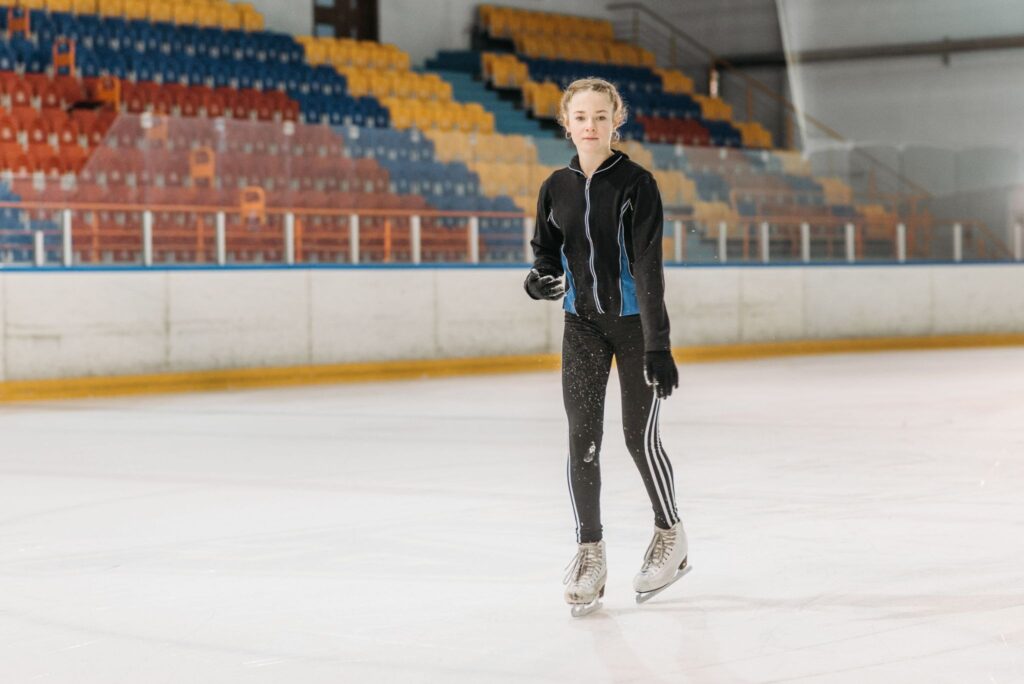
The beauty in Russian figure skating is special, and you feel it from the very first skate. It's not about sheer speed or a collection of tricks, but about how the body speaks to the music. This tradition began from the very start. In the sixties, Lyudmila Belousova and Oleg Protopopov skated so much like ballet dancers that the audience in the stands often forgot they were watching a competition. Their pair brought the country its first Olympic gold medal in pairs, and they won again four years later. Since then, a tradition has emerged where artistry is valued no less than jumps, and Russian figure skaters fight for it just as desperately as they do for technical difficulty.
And therein lies the secret to why the judging here is so demanding. Figure skating scores are made up of two halves: one for technique, the other for artistry, and weakness in either can cost you a place on the podium. The Russian school teaches from an early age to develop both sides simultaneously, and that's precisely why its graduates so often come out on top. A beautiful line can outweigh an extra rotation, while a flawless jump without artistry is almost meaningless.
Names you'll have to remember
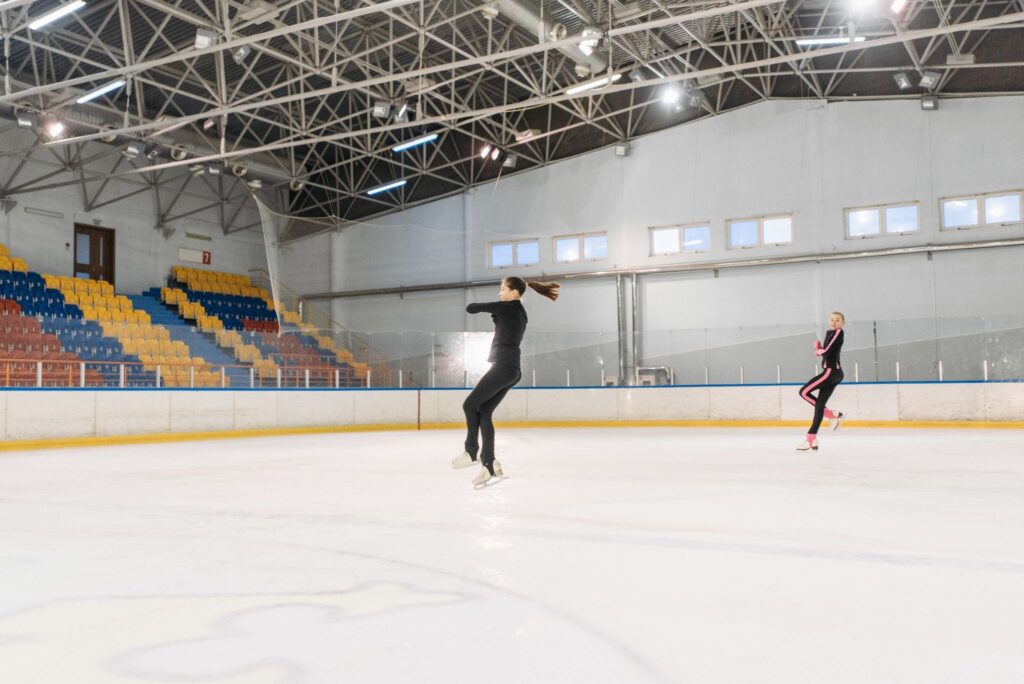
If you dig a little deeper, a string of names emerges that you can't ignore. We have to start with Irina Rodnina. Three consecutive Olympic golds, a dozen world championship titles, years without a single loss; her pairs seemed like an impregnable fortress that opponents stormed for decades, almost in vain. Young competitors faced her already defeated. Many remember the footage from 1980, when Rodnina couldn't hold back tears during the anthem at the awards ceremony, and those images circled the globe.
It's worth mentioning ice dancing, a territory that is uniquely Russian. When this discipline first entered the Olympic program, the first gold medal in it was won by Lyudmila Pakhomova and Alexander Gorshkov. After that, Soviet and Russian pairs succeeded each other at the top so routinely, as if it were the only possible outcome.
Men have their own loud chapter, and it was written primarily by Alexei Yagudin and Evgeni Plushenko. At the turn of the century, they staged one of the most bitter rivalries in sports history and competed to push the boundaries of difficulty in a way no one had tried before. Yagudin reached his peak at the 2002 Games, in a head-to-head duel watched by the entire planet. Plushenko responded with gold four years later, and then he returned to the ice for a long time, won team gold, and shone in shows when his peers had long since hung up their skates. Flexible, ironic, with quadruple jumps and theatrical presentation, he turned the image of the Russian figure skater into something recognizable worldwide. It was Russian men who accustomed the public to quadruple jumps as something ordinary and pushed the whole world into a mad race for complexity that continues today.
What happened in a Moscow group
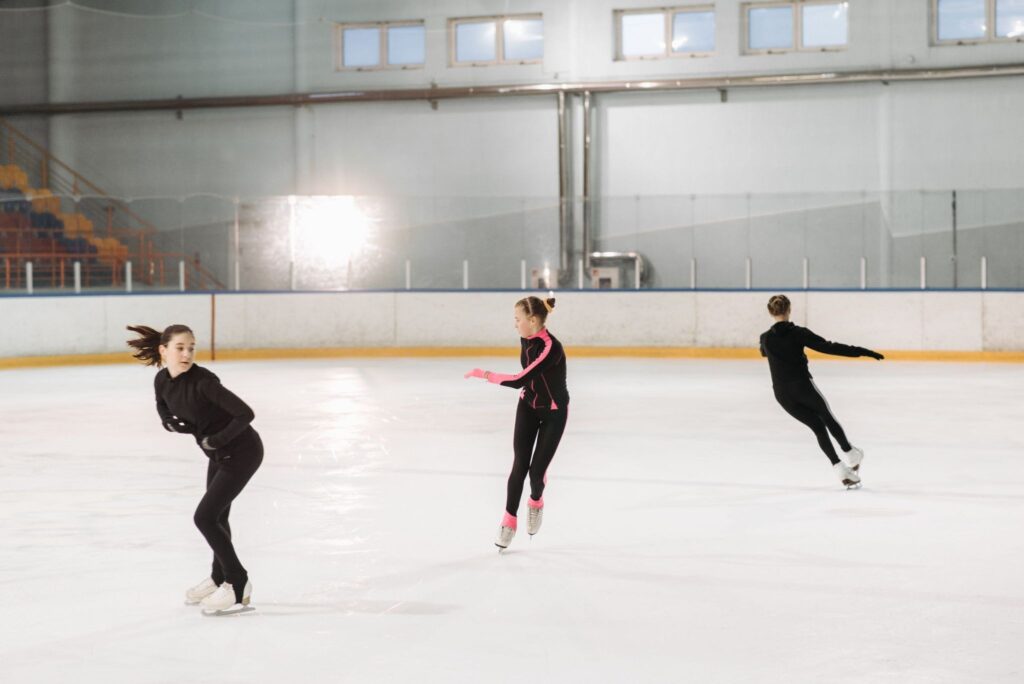
And then women's figure skating was turned upside down, and it happened in Moscow, at a rink with an unremarkable sign. Coach Eteri Tutberidze began to produce champions one after another, as if on an assembly line. Evgenia Medvedeva, Alina Zagitova, Anna Shcherbakova, Alexandra Trusova, Kamila Valieva — her students took Olympic and world championships and performed jumps that were yesterday considered exclusively a male domain. Zagitova won the 2018 Games as a mere girl, beating Medvedeva by fractions of a point in a head-to-head duel that the world watched with bated breath. Trusova performed several quadruple jumps in a single program. Shcherbakova took gold at the 2022 Games, and Medvedeva became world champion twice. All of them came from the same group, and the world of figure skating had never before seen such a concentration of talent in one person's hands.
The secret, in part, is that the most difficult jumps are mastered here very early, while the body is pliable and movements come easily. After this, women's figure skating changed forever, the bar was raised so high that rivals from other countries had to catch up urgently, and yesterday's fantasy turned into a mandatory program. The method also has a downside, which is debated worldwide. The students are usually very young; for the fantastic complexity, they pay with enormous workloads, and their careers are often short. Some see this as harsh child exploitation, while others, on the contrary, admire the discipline and results. There is no ready answer, there is a difficult question that the sport itself has not yet found a solution to. One way or another, the name Eteri Tutberidze is now known far beyond Russia, and the height set by her group is now being attempted by the whole world.
| Athlete | View | Years | What is [he/she/it] known for? |
|---|---|---|---|
| Belousova and Protopopov | Pairs | 1950s-1960s | The first Olympic gold in pairs, ice ballet-style skating |
| Irina Rodnina | Pairs | 1969 to 1980 | Three consecutive Olympic golds, the main symbol of an era in pairs skating. |
| Pakhomova and Gorshkov | Ice dancing | 1970s | First ever Olympic gold medal in ice dancing, 1976 |
| Alexei Yagudin | Men's singles | 1990s to 2002 | 2002 Olympics gold, the famous duel with Plushenko |
| Evgeni Plushenko | Men's singles | 1990s to 2010s | 2006 Games gold, quadruple jumps, team gold |
| Evgenia Medvedeva | Women's singles | 2010s | Two-time world champion, student of Tutberidze |
| Alina Zagitova | Women's singles | 2010s | The gold medal at the 2018 Games, very young, a student of Tutberidze |
| Anna Shcherbakova | Women's singles | 2010s | 2022 Games Gold, Tutberidze's student |
| Alexandra Trusova | Women's singles | 2010s | Several quads per program, a student of Tutberidze |
| Eteri Tutberidze | Coach | 2010s to present. | She raised a galaxy of Olympic champions in women's singles. |
Why are there so many champions?
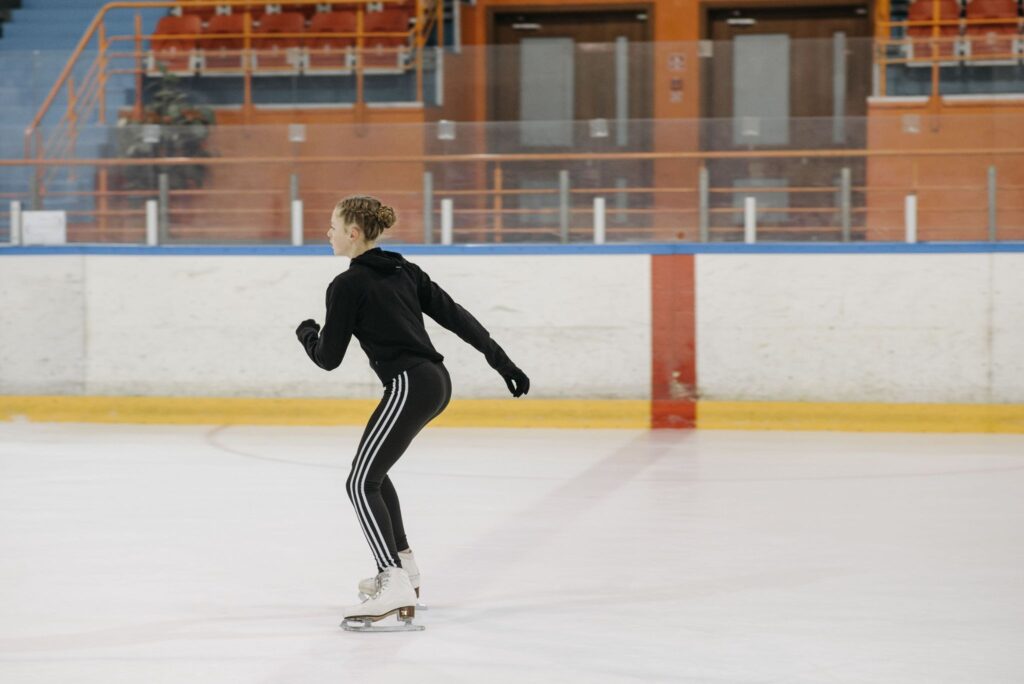
So what is the reason after all? Why do the Russians take home the medals year after year? There is no simple answer, but there are several threads that intertwine into one knot.
It all starts with mass participation. Children are put on the ice early, there are many skating rinks across the country, and tens of thousands of youngsters go through them, from whom the most persistent and gifted are then selected. The coaching tradition follows this mass participation, where experience is passed down from generation to generation, from Tarasova and Mishin to Tutberidze, so a young figure skater ends up in the hands of people who know almost everything about skating. Strong schools have long risen not only in Moscow and St. Petersburg, but also in Kazan, Perm, and other cities, and internal competition has only become fiercer as a result. And the whole structure is based on the cult of labor, because Russian skating has never been an easy ride, and discipline is instilled here almost before complex elements.
There are also things that cannot be bought with skates or money. This is the environment in which a child grows up among champions, sees those they want to emulate every day, and from a young age learns the simple idea that the path to the top is one, through patience and sweat. Programs for Russian figure skaters are often choreographed by individuals from the world of ballet, and the connection between the ice and the stage is felt here as something natural. The cycle closes on its own: success breeds interest, interest brings in new children and new money, and they train the next champions. The country watches this closely, millions tune in to their screens, the best coaches and sponsors are drawn here, and the regular Russian championships often do not yield to the world championships in intensity.
Ice and high politics
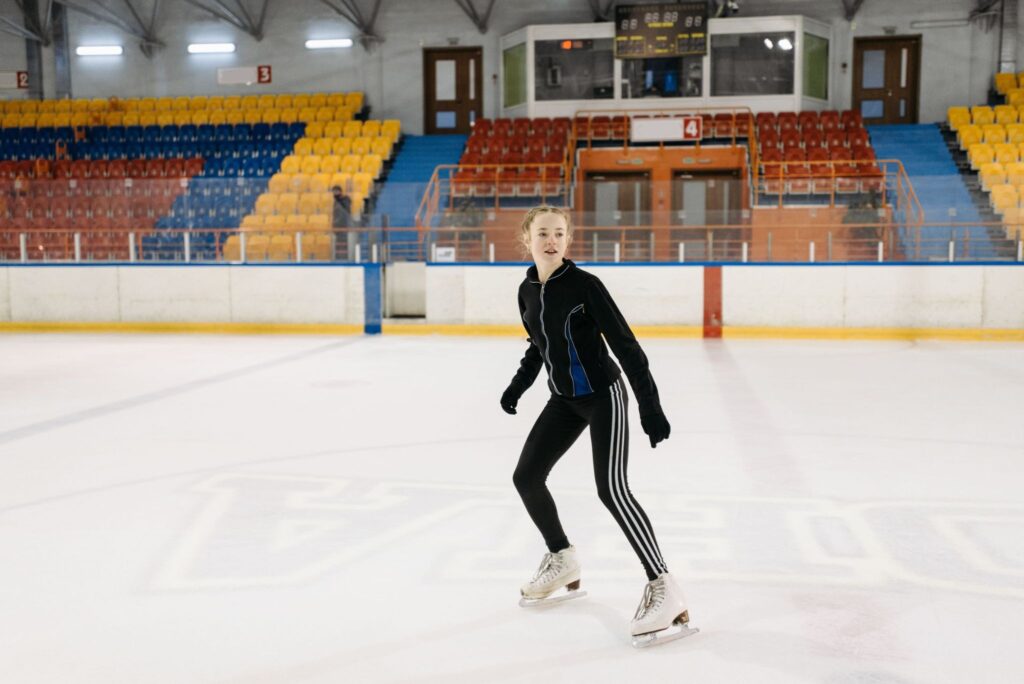
The past few years have added a bitter chapter to this story. Since 2022, Russian figure skaters have been barred from international tournaments. The International Skating Union cited security concerns regarding the events surrounding Ukraine as the reason for the decision. For several seasons, the world's strongest school of figure skating had to train in isolation, showcasing its best programs only at home. In the summer of 2026, the door opened slightly, and Russians were again allowed to compete, but only individually, under a neutral status, and with a long list of restrictions. Only a handful managed to qualify for the 2026 Olympics in this capacity, undergoing a separate selection process, while most of the top athletes had to watch the Games from afar. It cannot yet be called a full return, and as is often the case in such narratives, the situation changes month by month, so it's best to follow the latest news.
During those years, there was also a loud doping scandal surrounding one of the very young stars, which became the main topic for a long time. It is more honest to present such stories without hasty judgments, as there is too much controversy and too much live, human element in them. After serving her suspension, the figure skater eventually returned to the ice, changing her coaching staff, and continued her career in a new capacity. And figure skating in Russia has not disappeared. Children still come out on the ice before dawn, coaches still mold champions out of them, the stands at tournaments are still full, and ice shows are sold out. Champions are recognized on the street, their names are discussed as heatedly as hockey or football results, and successful programs are then broadcast on television for a long time.
Why show this to a child?
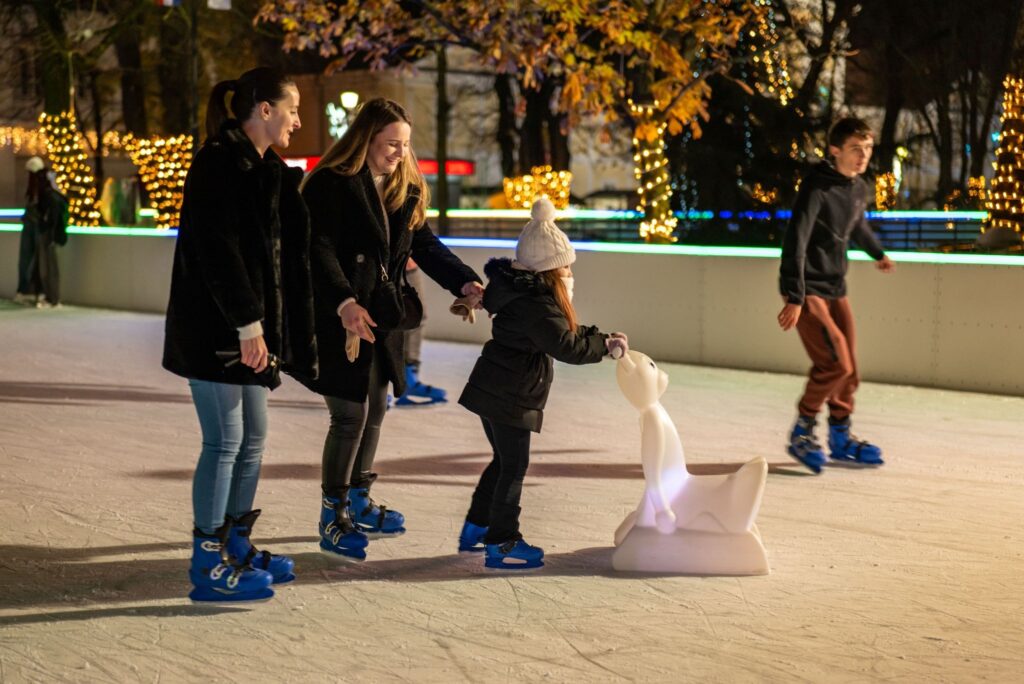
In a family with a bilingual child, a beautiful sport can often become an unexpected gateway to language. A child who gets captivated watching their favorite figure skater's routine or who tries skating for the first time might suddenly want to understand what the commentators are babbling about, what the jumps are called, and why points are deducted. The excitement on the ice is mesmerizing, and along with it, the Russian speech surrounding it subtly draws them in.
At Palme School, Russian for children aged four to seventeen is taught through familiar and beloved subjects, be it sports, cartoons, or music. You can get acquainted with the school through two free lessons. First, there's an introductory meeting with a methodologist who assesses the child's level and selects a group, followed by a trial lesson in a small group with a teacher. This way, admiration for a beautiful skating performance turns into another lively reason to speak Russian.
What lies behind the medals
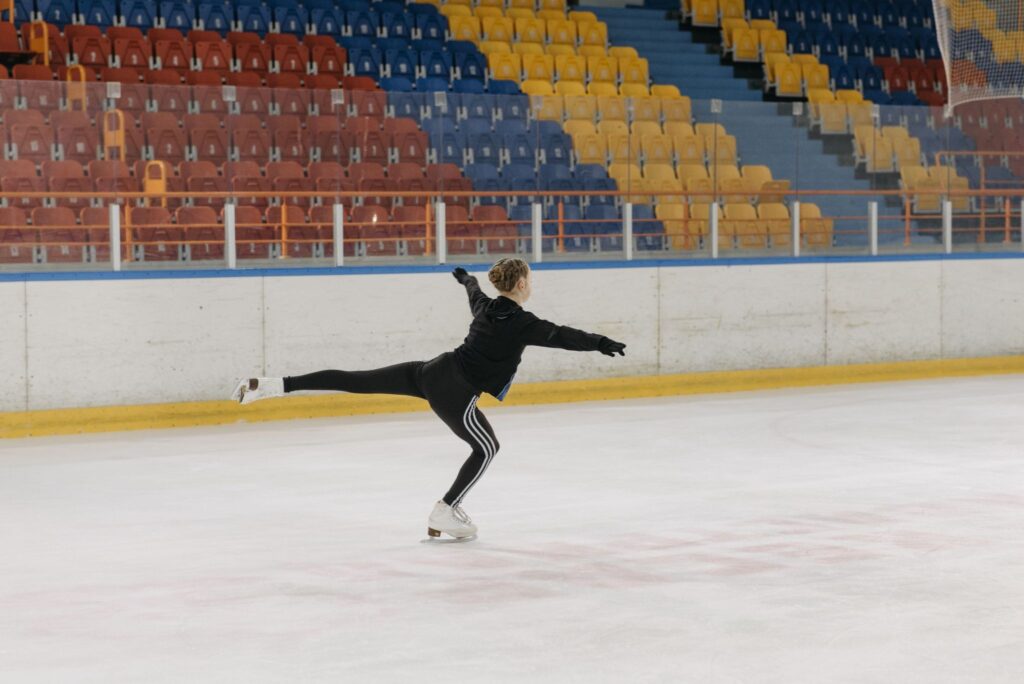
Russian figure skating has long grown into a separate, major tradition, with its own philosophy and entire generations of heroes. It all began with the beauty of Soviet pairs and ice dancing, with the invincible Rodnina, continued with daring men like Plushenko, and culminated in the phenomenon of the Tutberidze group, which revolutionized women's figure skating. Behind the sparkle of medals lies a clear system: an early start, the strongest coaches, and a cult of labor. Luck has almost nothing to do with it. International doors are only half-open now, but the ice, the skates, and the love of beauty on it have not disappeared anywhere. For a child growing up far from Russia, this sport can become an easy and joyful reason to reach for their native language. And for anyone who loves beauty and character, Russian figure skating offers dozens of names and performances that take your breath away. In this sport, a person's nature is visible from the first movement on the ice, and the Russian school has proven this time and again. As long as children across the country take to the cold ice every morning, the story is definitely far from over.
Why are Russians so strong in figure skating?
The reasons are not singular. Children are put on the ice early, there are many ice rinks in the country, and tens of thousands of young athletes pass through a rigorous selection process. The strongest coaches, from the old Soviet school to current mentors, pass on their experience. Add to this a culture of discipline, a long-standing love for artistry on ice, and extremely fierce domestic competition where there's a struggle for a spot on the national team, and you get that very inexhaustible stream of champions. The habit of combining sport with art is also important; figure skating values not only jumps but also beautiful lines. When combined, these factors yield results that the whole world envies.
Who is Eteri Tutberidze?
This is the name of a Moscow coach from whose group emerged a whole series of Olympic and World champions, including Alina Zagitova, Anna Shcherbakova, and Alexandra Trusova. Her name became famous in just a couple of seasons, and now even those who only tune into figure skating for major tournaments will mention her last name. Eteri Tutberidze's group has staged a real revolution in women's figure skating, mass-producing ultra-difficult jumps. At the same time, her methods are controversial, primarily due to the enormous strain on very young athletes and the short careers. World figure skating does not yet have a definitive answer as to whether this is a blessing or a misfortune.
The most famous Russian figure skaters include: * **Irina Rodnina:** A legendary pair skater, she won 10 consecutive European Championships and 3 consecutive Olympic gold medals. * **Katarina Witt:** While German, she was a dominant force in the sport during her career and is often mentioned in discussions of top female skaters. However, focusing strictly on *Russian* skaters: * **Irina Slutskaya:** A two-time World Champion and two-time Olympic silver medalist. * **Alexei Yagudin:** The 2002 Olympic gold medalist and four-time World Champion. * **Evgeni Plushenko:** An Olympic gold medalist and three-time Olympic silver medalist, known for his technical prowess and longevity. * **Adelina Sotnikova:** The 2014 Olympic gold medalist in ladies' singles. * **Alina Zagitova:** The 2018 Olympic gold medalist and 2019 World Champion. * **Evgenia Medvedeva:** A two-time World Champion and two-time Olympic silver medalist. * **Tatiana Navka and Roman Kostomarov:** A highly successful ice dancing partnership, winning Olympic gold and two World titles. * **Ekaterina Gordeeva and Sergei Grinkov:** Beloved pair skaters who won two Olympic gold medals and two World titles. This list represents a mix of historical and more recent stars who have achieved significant international success and recognition.
There are quite a few names. In pairs and ice dancing, first and foremost is the legendary Irina Rodnina with her three Olympic golds, as well as pioneers Belousova and Protopopov, and Pakhomova and Gorshkov. In men's singles, Alexei Yagudin and Evgeni Plushenko were world-renowned for their famous rivalry. In recent years, Alina Zagitova, Evgenia Medvedeva, Anna Shcherbakova, and Alexandra Trusova have shone in ladies' singles, many of them students of Eteri Tutberidze.
In Russia, children typically start figure skating lessons at around 4-5 years old.
Usually very early, often as early as three to five years old. An early start helps establish technique and flexibility while the body is pliable, and allows coaches to identify talented children in advance. Only a select few out of a huge number of toddlers taking their first steps on the ice reach elite sports, but the selection process is extremely strict. Luck in finding a good coach and a family's patience, ready for many years of training, play a significant role. However, an early start guarantees nothing; you'll still have to fight for your place at the top for many years.
Russian figure skaters have been banned from international competitions following the invasion of Ukraine.
The roots are the same as in the rest of the sport. In the spring of 2022, the governing body of world figure skating banned Russians from its competitions, citing safety concerns related to events in Ukraine. For several seasons, the country's top figure skaters were sidelined. Only a select few managed to qualify for the 2026 Games, individually, through a separate selection process and without their national flag or anthem. Closer to mid-2026, the tone softened, and they were allowed to compete again, albeit only in a neutral status and with a long list of conditions. The situation continues to change, so it's best to get the most up-to-date picture from the latest reports.
In figure skating, scores are awarded for two main components: technical execution and artistic presentation.
The score consists of two parts. One is responsible for technique, for the difficulty and cleanliness of jumps, spins, and footwork sequences, where each element has its own base value. The other is dedicated to artistry, for which judges award points for skating, choreography, musicality, and performance. It is this balance of technique and beauty that makes this sport so special, and the Russian school is traditionally strong in both. Falls, mistakes, and under-rotations, on the other hand, cost the figure skater precious hundredths of a point, and the final result is sometimes decided by fractions of a point.