Palme School

Online Russian Language School in the USA and Canada
Online school in Russian for bilingual children and teenagers
💡 Get bonuses with us! Referral program

Modern Russian Children’s Authors Worth Reading

Remember the classics — like Karlsson-on-the-Roof or Winnie the Pooh? Reading with your child is one of the most powerful tools for development.

And when you're raising a bilingual child outside of Russia, reading in Russian becomes even more important — it helps preserve language, culture, and identity. If you walk into a bookstore today, you’ll see shelves packed with children’s books — from old favorites to new names you’ve probably never heard of.

Think modern books can’t compete with the classics? Think again.

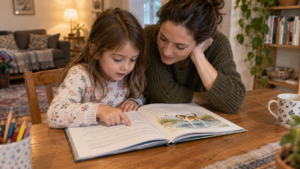
Girl poking her finger in a book / Freepik

What Are Modern Russian Children’s Books Like?

Today’s children’s literature has changed — just like childhood itself. You probably won’t find kids playing tag in the yard or spending summers with grandma in the countryside.

Now, stories often involve smartphones, the internet, and the modern-day emotions kids experience. But that doesn’t make the books any less valuable. Literature evolves alongside culture — and reflects the world children live in today.

✍️ Meet Some of Today’s Most Interesting Authors

1. Asya Petrova

A young fiction writer who creates heartfelt short stories for children. Her work captures the pure curiosity and confusion kids feel as they explore the adult world.

These stories help children feel understood — and give adults insight into how kids really think.

2. Ivan Zayanchkovsky – “Elephant on a Bicycle”

Basically part of the book Shepherds and Performers, and tells the story of a circus elephant who unexpectedly ends up in snowy Ufa. It’s a touching, almost poetic tale — one that will move both kids and grown-ups.

3. Anastasia Strokina – “The Whale Is Heading North”

A beautifully written philosophical tale about finding yourself and your true calling. Though it's told as a children’s story, the message is universal — and can resonate at any age.

Cover of the book "The Whale Sails North" by Anastasia Strokin / vse-svobodny

🧠 How to Choose the Right Book for Your Child

There are no strict rules — but here’s one golden principle: The best book is the one your child actually wants to read.

Pick something that fits your child’s age and interests. That’s how you nurture a love for reading — and for learning in general. Even more important: be a role model. When children see you enjoy reading, they’re more likely to value books themselves. Reading together can become a cherished daily ritual — a time when it's just the two of you, bonding over shared stories.

Many parents stick to the classics — and that’s great. But don’t overlook modern authors. Contemporary stories help children understand the world around them as it is today. They’re also often written with the latest insights from child psychology in mind, which means they can gently help children process emotions, fears, or questions.

At Palme School, we use both classic and modern literature to support language learning and cultural understanding. We even wrote a special article on books for bilingual kids — check it out here.

Ready to get started? Sign up for a free trial lesson below and let us help your child explore the world of Russian language and stories.

Do you want to support child's successes In studies?
Helping to develop knowledge, confidence, and a love for learning through modern Russian language classes and beyond.
Ordinal numerals in Russian are formed by taking the root of the cardinal numeral and adding the appropriate ordinal suffix. These suffixes agree in gender, number, and case with the noun they modify. Here's a breakdown: **1. Basic Structure:** * **Cardinal Numeral + Ordinal Suffix** **2. Ordinal Suffixes:** The suffixes are generally based on the endings of adjectives. * **Masculine:** -ый (e.g., первый - first) * **Feminine:** -ая (e.g., первая - first) * **Neuter:** -ое (e.g., первое - first) * **Plural:** -ые (e.g., первые - first) **3. Examples:** Let's look at the first few numbers: * **Один (one):** * Masculine: первый (pervyy) * Feminine: первая (pervaya) * Neuter: первое (pervoye) * Plural: первые (pervyye) * **Два (two):** * Masculine: второй (vtoroy) * Feminine: вторая (vtoraya) * Neuter: второе (vtoroye) * Plural: вторые (vtoryye) * **Три (three):** * Masculine: третий (tretiy) * Feminine: третья (tret'ya) * Neuter: третье (tret'ye) * Plural: третьи (tret'i) * **Четыре (four):** * Masculine: четвёртый (chetvyortyy) * Feminine: четвёртая (chetvyortaya) * Neuter: четвёртое (chetvyortoye) * Plural: четвёртые (chetvyortyye) **4. Numbers 5 and above:** For numbers five and higher, the formation is more straightforward. You take the root of the cardinal numeral and add the standard adjectival endings. * **Пять (five):** * Masculine: пятый (pyatyy) * Feminine: пятая (pyataya) * Neuter: пятое (pyatoye) * Plural: пятые (pyatyye) * **Десять (ten):** * Masculine: десятый (desyatyy) * Feminine: десятая (desyataya) * Neuter: десятое (desyatoye) * Plural: десятые (desjatyye) * **Сто (one hundred):** * Masculine: сотый (sotyy) * Feminine: сотая (sotaya) * Neuter: сотое (sotoye) * Plural: сотые (sotyye) **5. Compound Numbers:** When forming ordinal numerals for compound numbers (e.g., twenty-first), only the last part of the cardinal number changes to an ordinal. * **Двадцать один (twenty-one):** * Masculine: двадцать первый (dvadtsat' pervyy) * Feminine: двадцать первая (dvadtsat' pervaya) * **Сто двадцать три (one hundred twenty-three):** * Masculine: сто двадцать третий (sto dvadtsat' tretiy) * Feminine: сто двадцать третья (sto dvadtsat' tret'ya) **6. Pronunciation and Spelling Changes:** You might notice some spelling and pronunciation shifts, especially with the softer vowels and consonant changes in the first few numbers. These are typical sound changes in Russian. **7. Case Agreement:** Like all adjectives, ordinal numerals must agree with the noun they modify in case. * **Nominative:** первая страница (the first page) * **Genitive:** первой страницы (of the first page) * **Dative:** первой странице (to the first page) * **Accusative:** первую страницу (the first page - direct object) * **Instrumental:** первой страницей (by the first page) * **Prepositional:** о первой странице (about the first page) **Key Takeaways:** * Ordinals are formed from cardinals with specific suffixes. * They agree in gender, number, and case with the noun. * The first few ordinals (первый, второй, третий) are irregular and have unique forms. * For compound numbers, only the last numeral becomes ordinal.

Do you want your child to love learning?

At Palme School, classes are held online in live groups with experienced teachers. Choose a subject and sign up for a free first lesson.

Sign up for the newsletter
We at Palme Online School fall in love with the Russian language and Russian culture

Leave a request for a free call

Sign up for a free lesson.
Apply for a free introductory lesson to get acquainted, determine your goals, and find a suitable group.
Sign up for a free lesson
Submit a request for a free first session with a guidance counselor to get to know each other, determine your goals, and match your child with an educator
Sign up for a free lesson
Submit a request for a free first session with a guidance counselor to get to know each other, determine your goals, and match your child with an educator
Sign up for Russian Dictation
Sign up for a free lesson
Submit a request for a free first session with a guidance counselor to get to know each other, determine your goals, and match your child with an educator
Sign up for a free lesson
Submit a request for a free first session with a guidance counselor to get to know each other, determine your goals, and match your child with an educator
Sign up for a free lesson
Submit a request for a free first session with a guidance counselor to get to know each other, determine your goals, and match your child with an educator
Sign up for a free lesson
Submit a request for a free first session with a guidance counselor to get to know each other, determine your goals, and match your child with an educator
Sign up for a free lesson
Submit a request for a free first session with a guidance counselor to get to know each other, determine your goals, and match your child with an educator
Sign up for a free lesson
Submit a request for a free first session with a guidance counselor to get to know each other, determine your goals, and match your child with an educator
Sign up for a free lesson
Submit a request for a free first session with a guidance counselor to get to know each other, determine your goals, and match your child with an educator
Sign up for a free lesson
Submit a request for a free first session with a guidance counselor to get to know each other, determine your goals, and match your child with an educator
Sign up for a free lesson
Submit a request for a free first session with a guidance counselor to get to know each other, determine your goals, and match your child with an educator