


While American universities are cutting DEI programs and Canadian colleges are laying off faculty, the Canadian federal government has made an unexpected move in the opposite direction. In December 2025, Ottawa announced its biggest bet on international science in decades. Concurrently, starting in January 2026, graduate and doctoral students will be excluded from general foreign student quotas. All together, this sends a clear signal to the world: Canada is limiting the mass influx of students into colleges, but rolling out the red carpet for top academic youth. Let's break down what's happening and why parents of teenagers should be aware of it now.
What happened in December 2025
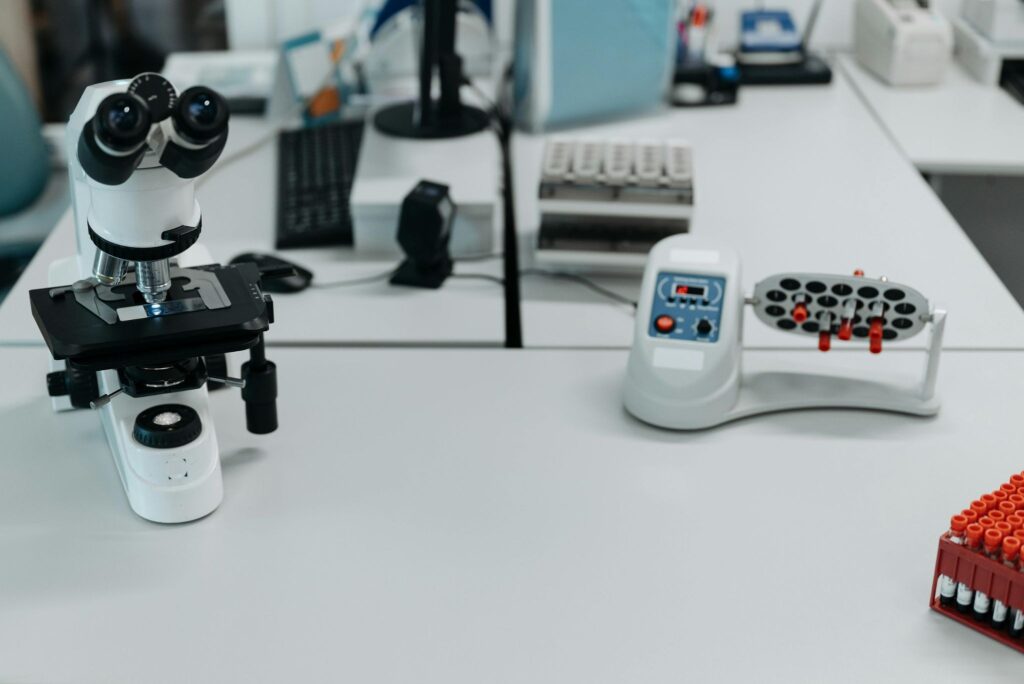
On December 9, 2025, the Canada Global Impact+ Research Talent Initiative was launched in Montreal. The official announcement names the figures1.7 billion dollars for twelve years. The program's goal is clearly stated: to attract more than a thousand leading scientists to the country, including Canadians who are currently building their careers in foreign academic institutions.
The program itself includes four streams. Canada Impact+ Research Chairs, with $1 billion: 100 new chairs at Canadian universities for world-class researchers, each receiving $4 or $8 million for eight years. Next is Canada Impact+ Emerging Leaders, with $120 million: a program for early-career scientists. Canada Impact+ Research Infrastructure Fund, with $400 million: new laboratories and equipment. And separately, Canada Impact+ Research Training Awards, with $133.6 million: a fund for international doctoral students and postdocs.
The priority areas are clearly defined: AI, quantum technologies, climate and clean energy, biomedicine, defense, democratic institutions. Universities submit applications in two waves: the first closes in March 2026, the second in June.
Who is the government betting on
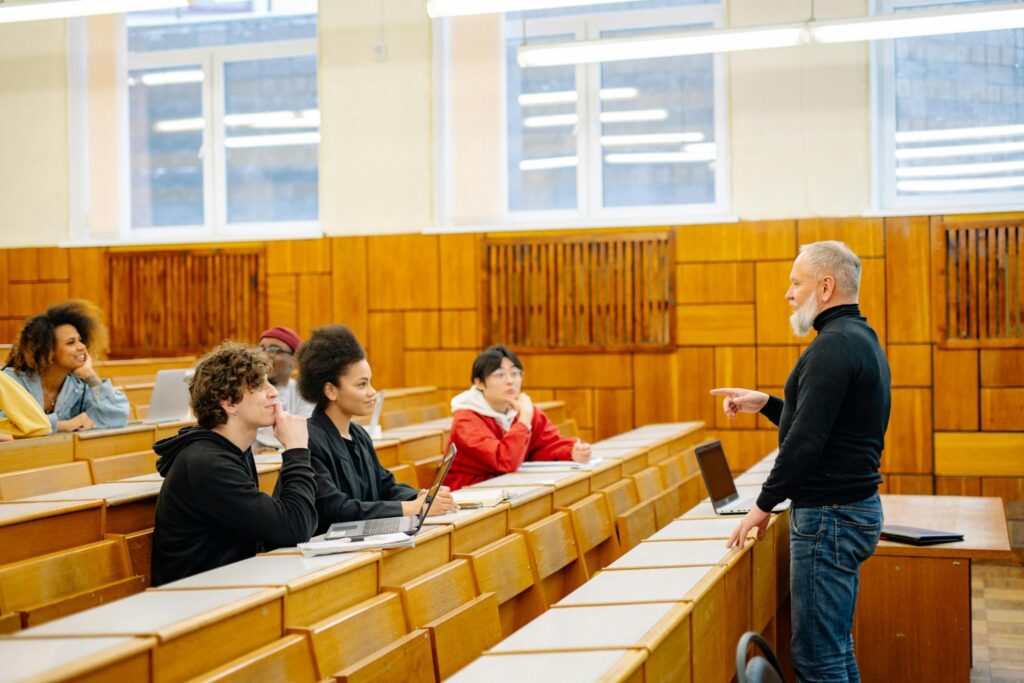
In one phrase: quality over quantity. Canadian Minister of Industry Melanie Joly directly called the program a response to tightening immigration policies in the US and pressure on academic freedom. The idea is to redirect to Canada those scientists who, under other circumstances, would be going to Stanford or MIT.
This clearly defines the age and qualification spectrum. The program covers three levels at once. The top level is occupied by established professors and lab directors (Research Chairs). In the middle are young scientists who have recently defended their dissertations (Emerging Leaders). At the base are graduate students and postdocs in the development stage (Research Training Awards). This creates a complete talent development pyramid, from the first research work to leading a large laboratory.
What is changing for graduate students and doctoral candidates starting January 1, 2026?
Simultaneously with the research program, the rules for international students changed. According to information The PIE News, Starting in early 2026, master's and doctoral students at state universities will be exempt from the national quota for study visas.
What does this mean in practice? First, these students no longer need to obtain a Provincial Attestation Letter, which became the main barrier for bachelor's and college students. Second, applications from doctoral students and their families are processed on an accelerated basis within two weeks instead of the usual months. Third, these students are not counted at all in the overall cap of 155,000 study permits for 2026 for all other categories.
The contrast with the situation of college students is stark. Bachelor's and college students are struggling for dwindling quotas, with visa rejections reaching 65 percent in 2025, and provinces distributing only 180,000 spots nationwide among themselves. Master's and doctoral students in state universities have none of this; they follow a separate track, without restrictions.
What does this mean for families with bilingual teenagers?

The main conclusion is simple. Canada clearly shows what profile of candidate it needs in 5-10 years: top academic background, STEM fields, research capability. Not a mass student who paid for tuition at a mid-tier college, but specifically a high-class scientist. The course is set for the long term: the program is designed for 12 years and is unlikely to change with the next government change.
For a family with a bilingual teenager from the US or Canada, this is a signal for practical preparation right now. If the child is 12–15 years old, you have 5–7 years until university admission. During this time, it's realistic to build a foundation that puts them on the path to becoming a Research Chair or Emerging Leader in ten to fifteen years. This foundation has three key elements: strong academic preparation with an emphasis on mathematics, physics, and computer science; fluent English at the level of academic writing and presentations; and maintaining their native language as an advantage in the international academic environment.
The third item is Maintaining Russian in a bilingual child, and here Russian-speaking families already have an advantage that others don't. A child fluent in Russian hears it at home; all that's needed is to prevent it from regressing to the level of colloquialisms and to reinforce it with literate writing and reading. Bilingualism in an academic environment provides access to a larger body of literature, opens up international collaborations, and broadens one's social circle. It doesn't guarantee a Research Chair position, but it genuinely works in favor of it. At Palme School, we specifically help bilingual children from the US and Canada maintain their Russian actively and bring it to a level where the language functions not as a childhood remnant, but as a fully capable second tool. Programs are designed for children from 4 to 17 years old, classes are held in groups by proficiency level, plus there are Personal exercise machine for self-practice.
How many years until this really starts affecting university admissions?
The Canada Global Impact+ program will launch in December 2025, with the first Research Chairs appearing in Canadian universities in 2026–2027. For today's 12–15 year olds, the real impact will begin by the time they enter graduate school in 8–10 years. By then, the ecosystem of research institutions in Canada within priority areas (AI, quantum technologies, clean energy) will be operating at full capacity.
What specific majors should a bilingual child consider?
Of all the program's directions, bilingual teenagers should primarily focus on AI and machine learning, quantum computing, bioinformatics, climate technologies, and biomedicine. In these fields, a second language is not just a line on a resume, but a working tool: in joint publications, grants, and collaborations with European and Asian groups, it truly changes the game.
Does the exemption from quotas apply to children currently attending school?
This applies for now to those entering master's or doctoral programs starting in January 2026. For those who reach this point in 5-7 years, the specific rules might be adjusted, but Canada's focus on academic youth is embedded in both the Immigration Levels Plan 2026-2028 and the twelve-year budget horizon. A reversal here is unlikely.