



The package from Moscow has arrived. The box is big, heavy, with handwriting on it. The child impatiently pulls at the tape in the hallway. Mom is nearby. They opened it. On top is a book, some kind of package, and a jar of jam. And underneath them is a brown fur hat. With ear flaps and ties.
Mom picks it up and freezes for a second. Her father wore this hat. She remembers the smell, remembers how she loved to hide her face in this fur as a child. And now the hat is here, in New York. And her child, who is seven years old and only speaks Russian «yes and no», Looks and asks, «Mom, what's that thing?»
This is not a question of the hat. It's a question of what's left of the grandfather.

Nostalgic moms have these moments often. Grandma sends a package, and inside is something very personal. Jam in a jar, wrapped in newspaper. A knitted wool sweater. Old postcards. Grandfather's fur hat. Every item holds memories that a mother wants to share with her child. But the child just sees an item. And reacts to it as just an item.
At this moment, something clenched inside the mother. It made absolutely no sense, as they say in narrow circles. The child had grown up breathing different air. He didn't recognize what was a part of her very being. And the mother didn't know how to explain it without turning it into a lecture or shedding a tear.
We wrote this article not about a hat as an item of clothing, but about what to do in such a moment. Because through such moments, a thin thread is drawn, which is called «roots.».
What is this at all?
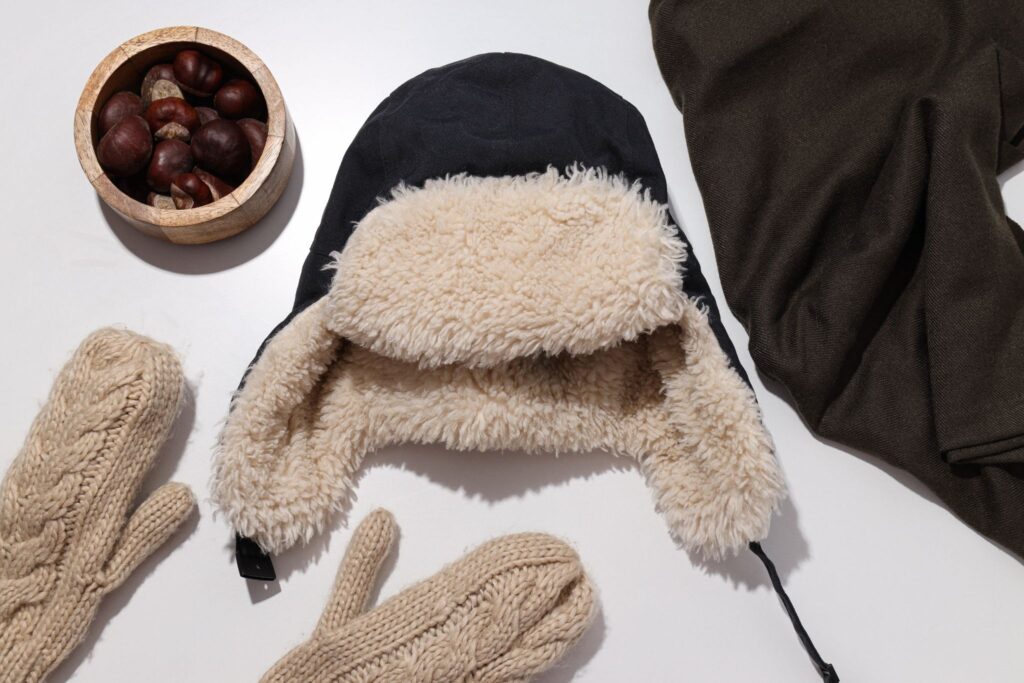
To put it simply and in a childlike way, an ushanka is a hat that kept people's ears from freezing even in the harshest frost. It has fur inside, flaps to cover the ears and neck, and ties. In Russian, the word is simple: «ushanka» comes from the word for «ear.» In English, it's often not translated. Like a samovar or a matryoshka doll. The hat in English has remained «ushanka» because they don't have their own word for it.
The story of this hat is short. After a very cold winter in '39-'40, the army realized that budenovkas were no longer viable. The hat with flaps saved the situation. At first, soldiers wore it, then everyone started wearing it because it was simply impossible to get through a Russian winter without such a hat.
By the eighties, it had become an item by which Russia was recognized in any Western film: put a ushanka on a character, and it was immediately clear where they were from. Today, in Russia itself, young people wear it less often, increasingly opting for hooded puffer jackets. But it lives on in grandmothers' closets, in photographs, and in the parcels that arrive here.
Why does it appear out of nowhere for us in America?

In Canada and the US, ushankas are rarely bought in stores. They arrive in families. Grandma puts one in a suitcase when her daughter comes for a visit. Auntie finds one in grandpa's closet and decides to send it so it doesn't go to waste. Family friends pass it along through someone who is traveling.
This is important. A down jacket from Costco doesn't have such a story. It has no author. But a ushanka does have an author. It always belonged to someone. Grandfather wore it, grandmother wore it, someone bought it as a gift for an anniversary. That's precisely why such a hat becomes the very «cultural code» that Russian mothers in emigration often talk about.
One mother told us how she received a ushanka hat that belonged to her deceased grandfather. Her daughter is seven years old. At first, she refused to wear it, saying she didn't want to. But the hat remained on the shelf. And a week later, the daughter approached her herself: tell me about grandpa. Who was he? What was his name? What did his voice sound like? The conversation lasted forty minutes. Then another, later that evening. A month later, the daughter asked for photos and started asking about the whole family. Russian began to return, not through a textbook, but through questions about her own person, who was no longer there.
How to explain to a child if they asked

No textbook needed. No lessons about the Red Army and Tula. The child doesn't need it, and they feel it immediately.
Try it on. The child puts it on. Looks at themselves in the mirror. Laughs or is surprised. While the hat is on their head, the conversation flows naturally.
It's a hat that kept people's ears from freezing in the coldest winter. A six or seven-year-old would hear that and want to touch the fur inside. An older child might ask where it came from. Then you can say your grandfather wore it. Or your grandmother. Or that your whole family wore hats like this when you still lived there.
If there's an old photograph, show it. The child sees: «Here's your dad in the picture, and he has the same hat on his head.» And the hat, made from some «unclear thing,» becomes part of your family history. They can no longer say "this isn't mine" because they see: "This is yours, and therefore it's mine too.".
How can one hat pull a whole dictionary behind it
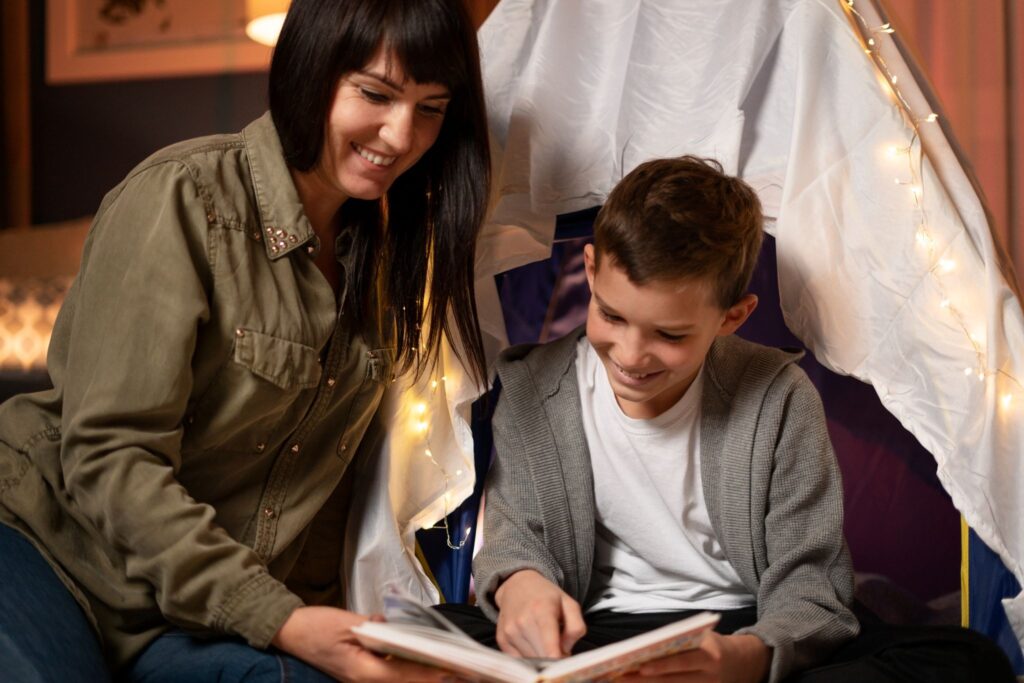
This is what we do in class at Palme School almost every week. One subject, ten words, twenty minutes of live conversation.
«Ear»: because «ushanka» comes from this word.
«Fur»: What it is, what it's made of, and from what animal.
«Frostbite»: When it occurs and what the sensation is like.
«Valve, ties, lining»: construction, feel with our hands.
«Grandma, Grandpa, package, gift: where it came from in our home.
A mother from Boston shared that her son learned the words «fur,» «frost,» «warm,» «hat,» and «mittens» in one evening. None of the words were a «lesson.» It all happened because he put on and took off his hat himself.
A different technique works with teenagers. Strange facts. During the Cold War, Western agents in Moscow were instructed: buy a ushanka and wear it like everyone else. If you lower the ear flaps according to regulations, locals will immediately see you as a foreigner. Russian cosmonauts are still met with such a hat after landing in the Kazakh steppe. These are small facts that are not in textbooks. A teenager hears this and thinks for the first time: oh, this isn't a boring story. There's something alive here.
Types
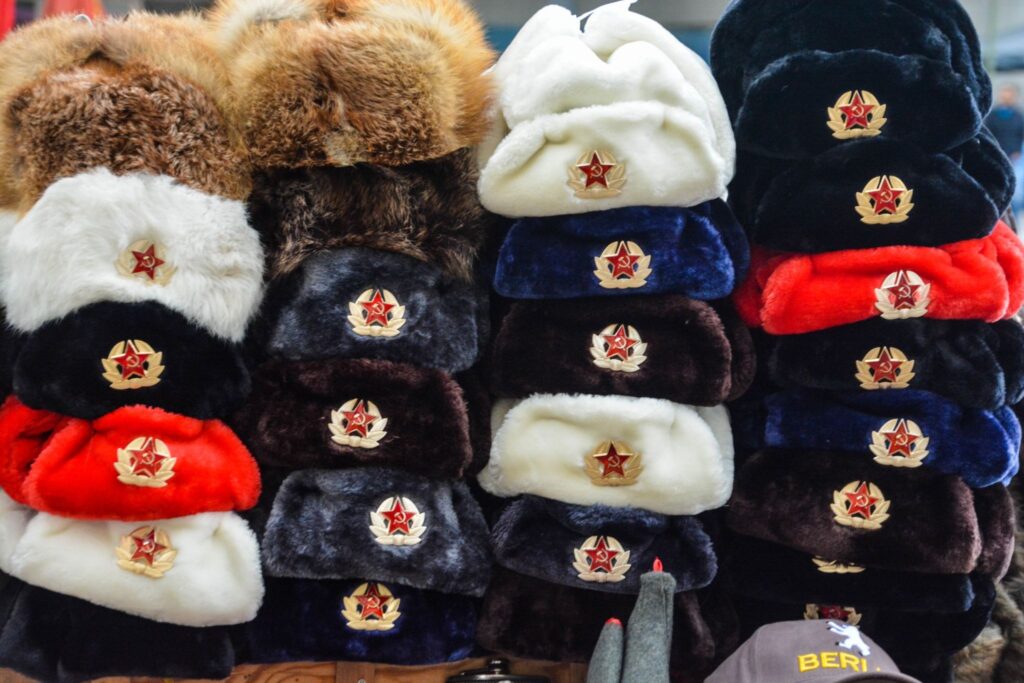
There are three variants, the rest are in the closets as inheritance.
| View | Fur | What is it suitable for |
|---|---|---|
| Military | Short, tough | Strict, with a cockade, in old photos of a grandfather officer |
| Rabbit | Soft, light | Masse-produced, heats up to minus twenty. |
| Synthetic | Artificial | Lightweight, for a warm winter and photo shoots |
Military, short stiff fur, often gray or black, with a cockade on the crown. Strict, dressy, it can be seen in old photos of a grandfather officer. Rabbit, soft light fur, the most common, keeps warm down to minus twenty degrees Celsius. These are the hats most common in families. Synthetic appeared in the nineties, faux fur, light and cheap, good for warm winters and photo shoots. In severe frost, it starts to let the wind through.
Rabbit fur for the city. Military for formal occasions. Synthetic for photos. Astrakhan and fox are rare today; they are more often seen on grandmothers as a reminder of Soviet style.
How to wear

If the child agrees to try, the rules are simple and gentle.
| Weather | What is done with the valves | When appropriate |
|---|---|---|
| Severe frost | Lower them, tie them under the chin | Real Canadian winter, Toronto, Montreal |
| A typical winter | They lift, tie at the top of the crown | Urban classic view from Soviet films |
| Wind | Only the rear valve is lowered | So it doesn't blow down your neck |
| Bright sun | Lower the front valve like a visor | At the dacha, skiing, in the mountains |
In very cold weather, the ear flaps are lowered and tied under the chin. The ears and neck are covered. This is how soldiers wore them, and this is how they are worn today in a real Canadian winter. In an ordinary winter, the ear flaps are raised and tied on top, at the crown. The silhouette is classic, recognizable from Soviet films. In strong winds, only the back flap can be lowered to prevent drafts from getting down your collar. And on a bright winter day, the front flap is lowered like a visor, to block the sun.
Hats are removed indoors. They are not worn with an evening suit as it's not formal wear. The best wardrobe companions are a long coat, a sheepskin coat, or a puffer jacket. With a short jacket, the silhouette looks strange, and the hat visually overpowers it. Young people in Toronto and Brooklyn often wear them with jeans, sneakers, and a bright jacket. You can show a teenager photos like these on Instagram; sometimes, it changes their attitude towards hats.
Where can I get it if there's none in the family
First, the easy way. Call your grandmother or aunt in Russia, ask them to find it in a store and send it to you. The price will be Moscow prices, without a tourist markup. She'll check the quality herself.
If such a possibility doesn't exist, a friend from Toronto buys fur hats at a small shop on Bathurst near Wilson subway station. Similar shops can be found in New York near Brighton Beach Ave. You can go and try them on.
Lately, eBay has been working well: some sellers, like Ushanka LLC, send genuine hats from Russian factories, sometimes even with a ruble price tag on the label as proof. They cost more than Moscow prices, but you don't have to wait for a package across the ocean.
What to look for when buying. The fur should be dense, without bald spots. The seams should be even. The hat should feel weighty. Real rabbit fur is noticeably heavier than synthetic fur and feels warm even in your hands. A twenty-dollar souvenir with a «Russia» sticker is almost certainly plastic, no matter how it's sold.
What do we do with such topics at Palme School

In lessons, we often work through objects. A hat, a samovar, grandma's Christmas ornaments, old fairy tales. The teacher shows, the child touches or sees it on the screen, and a conversation builds around it.
It works particularly well with a fur hat. We ask: who has one at home. One remembers that their grandmother does. Another, that it's in a box in the top cupboard. A third, that they saw it in a great-grandfather's photo. The conversation then moves to family. On its own. It's enough for the teacher to throw in a couple of questions in Russian.
This is how language is perceived not as a school subject, but as something spoken among one's own, dear, and close people. For nostalgic mothers who want a heartfelt connection with their child, this is the most important thing. Not grammar, not the alphabet. But for the child to be able to ask in Russian, «What was Grandpa's favorite joke?».
In Palme School, the first two lessons are free. You can simply see how such a conversation works and decide if it's suitable for your family.
Ushanka«
From the word «ear». The ear flaps cover the ears, which is why the hat is named that way. The same word is used in English, without translation: ushanka. Like samovar and matryoshka, it entered English directly.
Your child is six years old, how can you explain what a ushanka is
Let them touch it. Let them try it on. Say: «This is the hat that kept ears from freezing in the coldest winter.» Show an old photo, if you have one. That's all that's needed at that age.
Grandma sent us a ushanka hat, but the child doesn't want to wear it. What should we do?
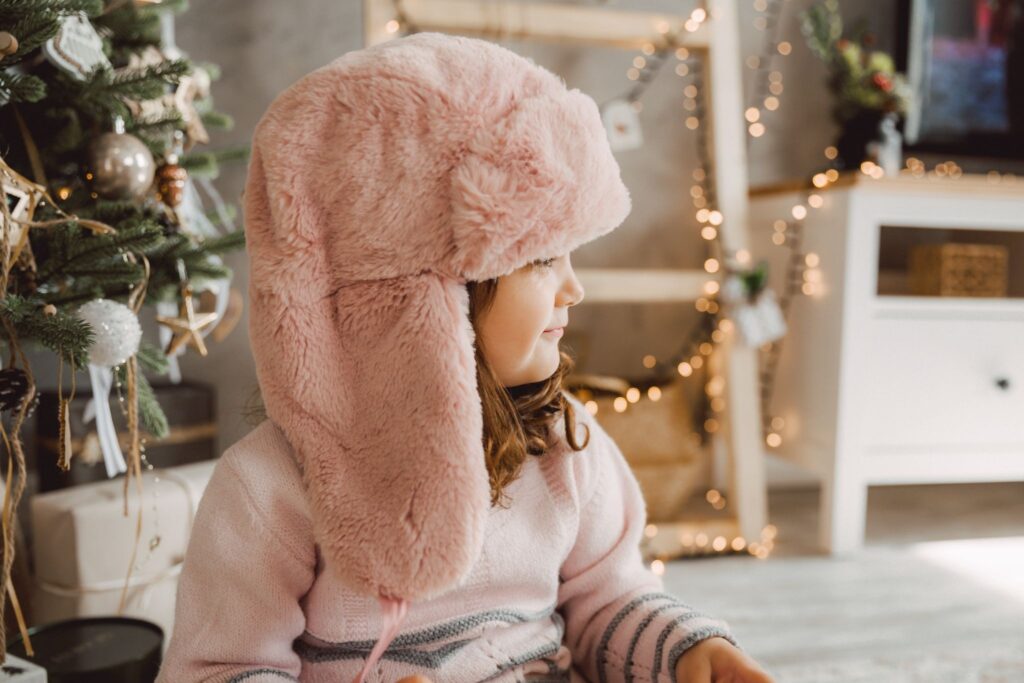
Don't insist. The hat can live at home, on weekend walks, in family photos. One photo under the tree with a package from grandma is worth ten attempts to force it.
How to learn Russian words with such a hat
Because the child touches things with their hands. «Fur,» «ears,» «frost,» «grandmother,» «package.» One hat easily expands into ten words in a live conversation. Without exercises.
Which fur is warmer?
Rabbit fur holds up well to minus twenty degrees Celsius, and most families have the most hats made of this material. Synthetics are suitable down to minus fifteen degrees Celsius; beyond that, they start to let the wind through.
Can it be washed?
Natural cannot be washed, only dry cleaning once a season. Synthetic can be machine washed on a delicate cycle, in cold water, without spinning.
Where to buy if you don't have relatives in Russia
An acquaintance from Toronto picks them up on Bathurst near Wilson subway station. In New York, you can find them next to Brighton Beach Ave. eBay works online: sellers like Ushanka LLC ship authentic hats from Russian factories, sometimes even with aruble price tag inside.
What to do if a child laughs at someone's hat
This is a normal reaction. He finds it funny because it's unusual. Laughter doesn't mean disrespect. It means the hat is alive and can be talked about. That's already a lot.