

Palme School

Online Russian Language School in the USA and Canada
Online school in Russian for bilingual children and teenagers
💡 Get bonuses with us! Referral program

Why Mother Language Day Matters (And What It Has to Do With Russian)

Language reflects the culture of every people and the way they live. But have you ever wondered — where did languages even come from? And why are they so different?

There’s an old legend that says everyone once spoke the same language. But during the construction of the Tower of Babel, people began to argue. As punishment, God made it so they could no longer understand one another — and that’s how languages were born.

Whether that’s true or not, we do know this: languages developed based on geography, lifestyle, and history.

🌍 There Are 8 Major Language Families in the World:

  • Indo-European
  • Afroasiatic (Semitic-Hamitic)
  • Caucasian
  • Turkic
  • Austronesian
  • Finno-Ugric
  • Sino-Tibetan
  • Papuan

And yes — even today, new languages are being created! For example, Interslavic (a mix of Slavic languages) has only been around for 20–30 years. Language reflects culture and diversity — and that’s exactly why International Mother Language Day was created.

People communicate with each other / Freepik

When Is International Mother Language Day?

In 2000, the UN declared February 21 as International Mother Language Day. The date honors those who died in the fight to make Bengali the official language of Bangladesh. The UN also celebrates its six official languages with their own special days:

  • Arabic Language Day — December 18
  • French Language Day — March 20
  • Chinese Language Day — April 20
  • English and Spanish Language Day — April 23
  • Russian Language Day — June 6
Friends chatting sitting on the floor, drinking drinks / Freepik

Why Should We Learn and Keep Our Native Language?

Even if you live abroad, your native language matters. It’s your roots — and roots should never be forgotten.

Kids growing up in a different country may learn many languages… and gradually forget Russian. Especially if they don’t have anyone to practice with regularly — or if they were born abroad and never learned Russian at all.

This is especially true for bilingual kids. Their minds are already juggling multiple languages — and Russian might get pushed aside.

International Mother Language Day already passed this year, but don’t forget to celebrate it next time! ⠀

Read Russian books, both on your own and with your kids. Russian is the language of literary giants. It’s a treasure worth preserving — and constantly improving.

How to Keep Russian Alive at Home? The key is simple: practice. Speak it at home, even just a little. Watch cartoons and movies in Russian. Play games. Read together. Or — sign up for online Russian classes for kids at Palme School!

We know how important it is to preserve Russian in a child’s life. Our lessons are fun and interactive, so kids enjoy learning — and see real results. Learn more about our school and pricing here.
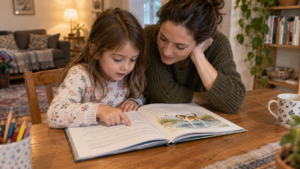

Do you want to support child's successes In studies?
Helping to develop knowledge, confidence, and a love for learning through modern Russian language classes and beyond.
Ordinal numerals in Russian are formed by taking the root of the cardinal numeral and adding the appropriate ordinal suffix. These suffixes agree in gender, number, and case with the noun they modify. Here's a breakdown: **1. Basic Structure:** * **Cardinal Numeral + Ordinal Suffix** **2. Ordinal Suffixes:** The suffixes are generally based on the endings of adjectives. * **Masculine:** -ый (e.g., первый - first) * **Feminine:** -ая (e.g., первая - first) * **Neuter:** -ое (e.g., первое - first) * **Plural:** -ые (e.g., первые - first) **3. Examples:** Let's look at the first few numbers: * **Один (one):** * Masculine: первый (pervyy) * Feminine: первая (pervaya) * Neuter: первое (pervoye) * Plural: первые (pervyye) * **Два (two):** * Masculine: второй (vtoroy) * Feminine: вторая (vtoraya) * Neuter: второе (vtoroye) * Plural: вторые (vtoryye) * **Три (three):** * Masculine: третий (tretiy) * Feminine: третья (tret'ya) * Neuter: третье (tret'ye) * Plural: третьи (tret'i) * **Четыре (four):** * Masculine: четвёртый (chetvyortyy) * Feminine: четвёртая (chetvyortaya) * Neuter: четвёртое (chetvyortoye) * Plural: четвёртые (chetvyortyye) **4. Numbers 5 and above:** For numbers five and higher, the formation is more straightforward. You take the root of the cardinal numeral and add the standard adjectival endings. * **Пять (five):** * Masculine: пятый (pyatyy) * Feminine: пятая (pyataya) * Neuter: пятое (pyatoye) * Plural: пятые (pyatyye) * **Десять (ten):** * Masculine: десятый (desyatyy) * Feminine: десятая (desyataya) * Neuter: десятое (desyatoye) * Plural: десятые (desjatyye) * **Сто (one hundred):** * Masculine: сотый (sotyy) * Feminine: сотая (sotaya) * Neuter: сотое (sotoye) * Plural: сотые (sotyye) **5. Compound Numbers:** When forming ordinal numerals for compound numbers (e.g., twenty-first), only the last part of the cardinal number changes to an ordinal. * **Двадцать один (twenty-one):** * Masculine: двадцать первый (dvadtsat' pervyy) * Feminine: двадцать первая (dvadtsat' pervaya) * **Сто двадцать три (one hundred twenty-three):** * Masculine: сто двадцать третий (sto dvadtsat' tretiy) * Feminine: сто двадцать третья (sto dvadtsat' tret'ya) **6. Pronunciation and Spelling Changes:** You might notice some spelling and pronunciation shifts, especially with the softer vowels and consonant changes in the first few numbers. These are typical sound changes in Russian. **7. Case Agreement:** Like all adjectives, ordinal numerals must agree with the noun they modify in case. * **Nominative:** первая страница (the first page) * **Genitive:** первой страницы (of the first page) * **Dative:** первой странице (to the first page) * **Accusative:** первую страницу (the first page - direct object) * **Instrumental:** первой страницей (by the first page) * **Prepositional:** о первой странице (about the first page) **Key Takeaways:** * Ordinals are formed from cardinals with specific suffixes. * They agree in gender, number, and case with the noun. * The first few ordinals (первый, второй, третий) are irregular and have unique forms. * For compound numbers, only the last numeral becomes ordinal.

Do you want your child to love learning?

At Palme School, classes are held online in live groups with experienced teachers. Choose a subject and sign up for a free first lesson.

Sign up for the newsletter
We at Palme Online School fall in love with the Russian language and Russian culture

Leave a request for a free call

Sign up for a free lesson.
Apply for a free introductory lesson to get acquainted, determine your goals, and find a suitable group.
Sign up for a free lesson
Submit a request for a free first session with a guidance counselor to get to know each other, determine your goals, and match your child with an educator
Sign up for a free lesson
Submit a request for a free first session with a guidance counselor to get to know each other, determine your goals, and match your child with an educator
Sign up for Russian Dictation
Sign up for a free lesson
Submit a request for a free first session with a guidance counselor to get to know each other, determine your goals, and match your child with an educator
Sign up for a free lesson
Submit a request for a free first session with a guidance counselor to get to know each other, determine your goals, and match your child with an educator
Sign up for a free lesson
Submit a request for a free first session with a guidance counselor to get to know each other, determine your goals, and match your child with an educator
Sign up for a free lesson
Submit a request for a free first session with a guidance counselor to get to know each other, determine your goals, and match your child with an educator
Sign up for a free lesson
Submit a request for a free first session with a guidance counselor to get to know each other, determine your goals, and match your child with an educator
Sign up for a free lesson
Submit a request for a free first session with a guidance counselor to get to know each other, determine your goals, and match your child with an educator
Sign up for a free lesson
Submit a request for a free first session with a guidance counselor to get to know each other, determine your goals, and match your child with an educator
Sign up for a free lesson
Submit a request for a free first session with a guidance counselor to get to know each other, determine your goals, and match your child with an educator
Sign up for a free lesson
Submit a request for a free first session with a guidance counselor to get to know each other, determine your goals, and match your child with an educator