


«In a black-and-black city, on a black-and-black street, in a black-and-black house…»
After that, many parents will make their own arrangements. The narrator's voice becomes quieter. A black-and-black room, a black-and-black table, a black-and-black coffin. The audience moves closer.
And then the narrator grabs someone by the hand and shouts.
Everyone gasps. Then everyone laughs.
Such stories were told in the camp after the expulsion, at the dacha, in the entrance hall. About the black hand, the red spot, the coffin on wheels. Eduard Uspensky even wrote a novel based on them, titled «Red Hand, Black Sheet, Green Fingers.».
It's scary, but for show
The horror story is cleverly constructed. The listener is truly frightened, their heart races. And yet they are sitting on their bed among their peers. In the familiar horror story, the listener can expect a scream at the end, and then laugh along with everyone else.
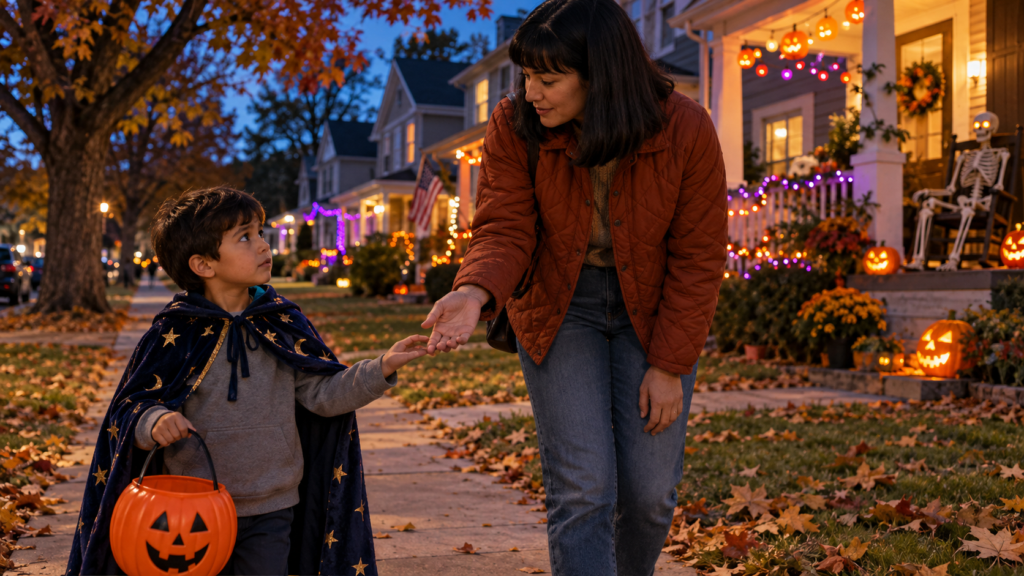
Halloween in America is like a horror movie, only bigger, covering an entire street. A skeleton in the neighbor’s yard glares at you, turns its head and laughs hoarsely as you pass by. A witch at the door swings a rope. A hand sticks out from the bushes.
Many children like that. They like to be afraid little by little.
«I'm scared, but I'm curious.».
Both halves of this phrase are true at the same time.
When it ends in a fake way
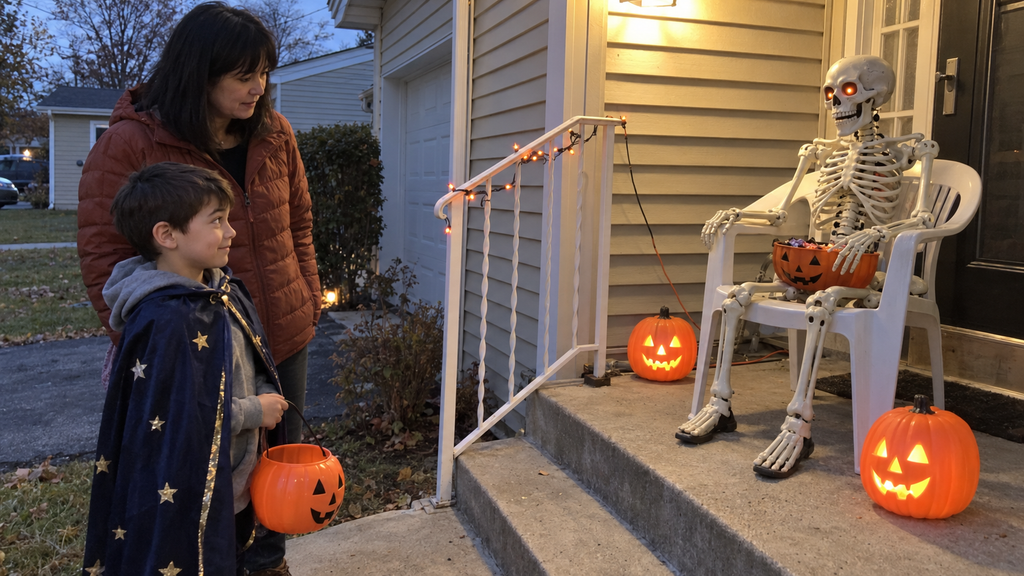
Sometimes something breaks. The child kept walking, kept walking, and stopped on the sidewalk.
One of them holds up a hand, silently, towards an adult. The other says I’m scared. The third simply stops walking.
I’m scared directly refers to fear. The outstretched hand asks for contact. The reason for the stop has yet to be understood.
They take the outstretched hand. That is the answer.
«I'm close by. We can step away.».
If the child just stops, the adult should also stop nearby. You can offer a hand: «Do you want a hand?»
No translation, repetition, or explanation is required from the child at this moment. If he/she said in English, they were understood.
A frightened hand and an adult's hand
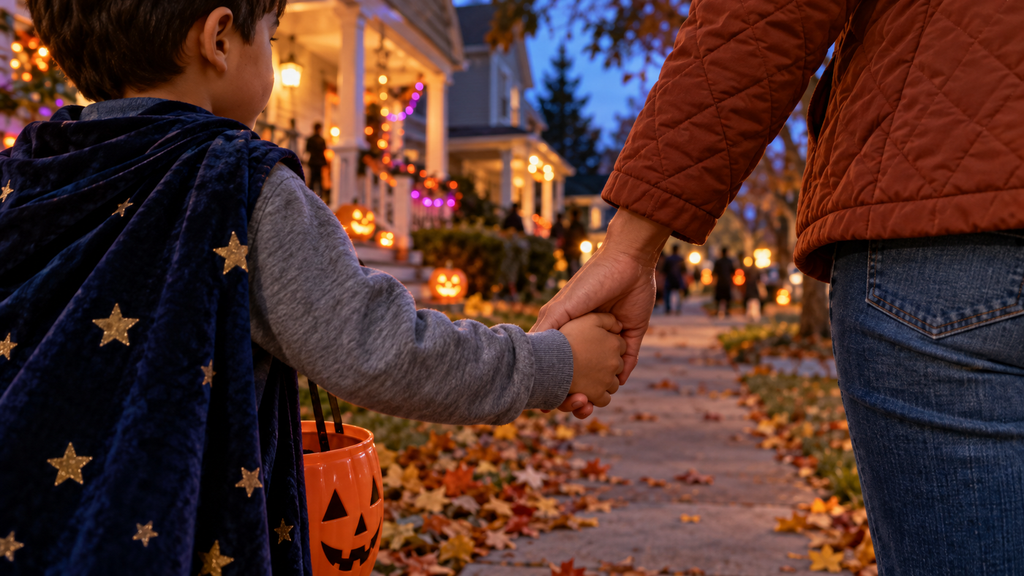
In the horror story, a hand is scary. A black hand comes out from under the bed; at the most silent moment, the narrator grabs hold of its wrist.
On the evening of October 31, there is another task on my hands.
«Take my hand.».
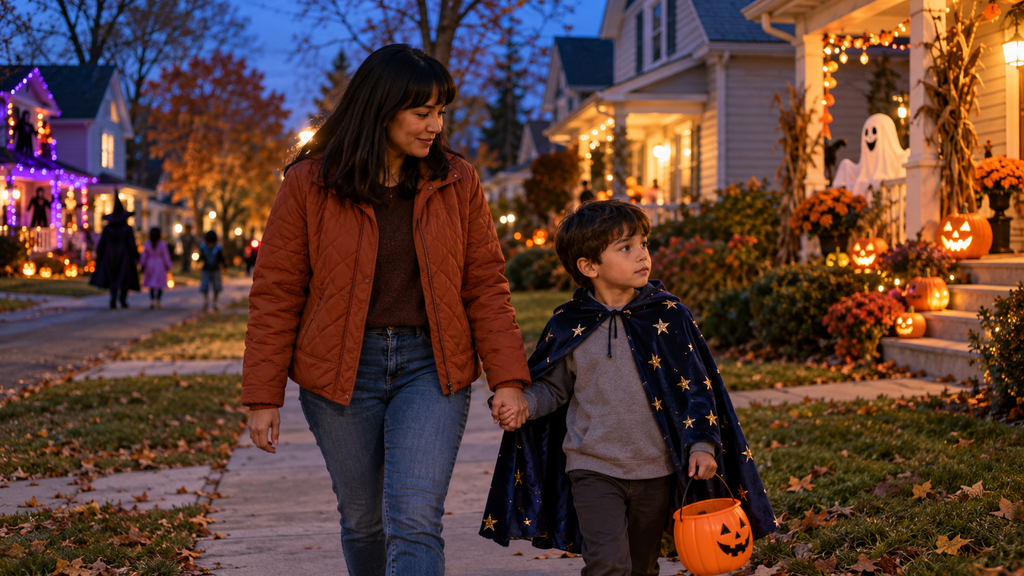
This phrase calls for clear action, and it can be taken immediately. The adult hears it and takes it. There is no need to clarify where to go or what to do next.
It’s also okay to just shake hands. «Take my hand.» Or with a single word and a gesture, «Hand!».
Taking someone’s hand doesn’t mean going to the skeleton. Someone, holding on to an adult, will come closer to see how the eyes light up. Someone will stand and watch from afar. Someone will want to go to the other side of the street. All three endings are normal, and the child chooses one.
If you don't understand, you can ask.
«Do you want to watch from here or should we move?»
The skeleton is scary, and I am afraid.
In the horror film, these two words are always together. The black coffin is scary. The listener is afraid.
«The Skeleton is Scary» tells about a skeleton. The eyes glow, the head spins.
«I'm scared,» tells about who is speaking.
One thing does not necessarily lead to another. A child may say «Skeleton is scary!» and stare at it for another five minutes. Or they may remain silent about the skeleton and say «I’m scared.» For an adult on the sidewalk, the second phrase is more important. It’s about the child.
If the child is already familiar with the English pair scary and scared, they can take a cue from it. The skeleton is scary, that’s about the skeleton. I’m scared, that’s about myself. The same distinction applies in Russian.
About the skeleton or about yourself?
Read the sentence out loud and decide together with the child who it is about. About an object or a character or about the person who is speaking.
«Strashny» describes an object or a character. «Mne strashno» tells about who is speaking.
It's convenient to play at home, before a walk. In the evening, you don't need words on the street; a stretched out hand is enough.
I don't want to go there
The child took the adult's hand, but doesn't want to go to the gate.
«I don't want to go there.».
This phrase is taken the same way as a stretched hand. No one asks why. No one explains that the skeleton is plastic and they turn it off at nine o'clock. They go to the next house.
The child should not be explaining what exactly he or she was afraid of. Maybe they’ll tell you at home. Maybe they won’t.
A horror story at home, before a walk
You can suggest Russian phrases in advance, during a relaxed conversation. For example, the day before the holiday, when it comes to costumes and the skeletons next door.
If the child likes these kinds of games, you can tell him a short scary story. About a black-and-white house, very small, with no grave. In the quietest place he can say «I’m scared!» himself, and the storyteller will stop right there and take his hand. If the child doesn’t like that, the scary story isn’t necessary; a simple conversation will suffice.
You could say that if it gets scary out on the street in the evening, it’s enough to reach out your hand or say «Take my hand.».
For this conversation, it is enough to offer the phrase once. There is no need to wait for the child to remember it in the evening. On the street, he will say it the way it will be expressed. In Russian, in English or simply by extending a hand.
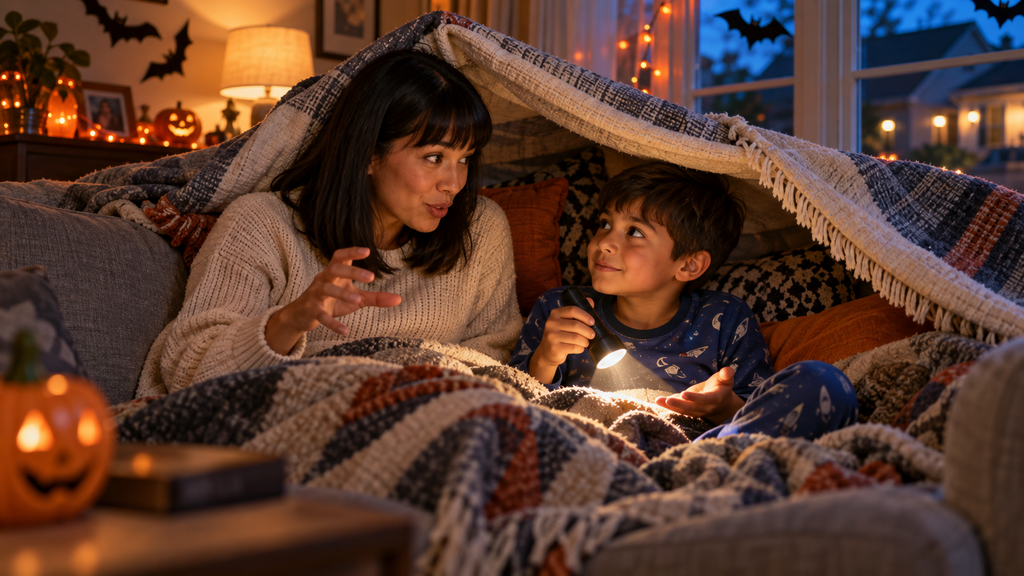
How the evening ends
After a scare, you can laugh together. But that doesn't always happen, and that's also true for Halloween.
Another thing makes for a successful evening. The adult understood what the child needed and helped. He took her hand, stopped, and walked away with her.
The child may still be afraid afterwards. The fear of holding the hand does not have to be passed on, and there is no need to promise it.
It is also worth noting how the child reacted. With a gesture, an English word, or a Russian phrase. This is an observation from one evening, not a conclusion about how the child speaks Russian or how they cope with their fear.
The skeleton will be removed by November. The phrase «Take my hand» will remain, and it will also come in handy when crossing the street.
It’s easier to say what you’re feeling in Russian when the language isn’t just spoken at home. At the «Russian for Bilinguals» course at Palme School, children aged four to seventeen are learning online in groups of up to eight people.
You can start with two free lessons. First, the methodologist determines the child's level and helps choose a program. Then you can meet the teacher during a free lesson.
Sign up for free lessonsFrequently Asked Questions about Halloween Fears
How to say in Russian: I’m scared?
«I'm scared.» This phrase tells who is speaking. The fear is expressed differently: «The skeleton is scary.» In English, the similar pair is scared and scary.
What to do if a child is scared and says it in English or just extends a hand?
Take a hand and help: stop, step aside, be there for him. At this moment, there is no need to ask to be translated, repeat in Russian, or explain what he was afraid of. Russian phrases can be discussed later, in a calm atmosphere.
At what age are the phrases «I'm scared» and «Take my hand» appropriate?
For children aged four to eight approximately. The age here is a guideline. What matters most is that the child understands short everyday phrases in Russian and that the adult is nearby. There is no need to read and construct the full sentence yourself.
Is it possible to tell a little child scary stories?
Only if he likes such games. Stop with the short introduction about the black-and-white house. If the child says «I’m scared,» the story is immediately stopped. If he doesn’t like scary stories, you can do without them.
What to say after the holiday, explained in the article about how to tell a child about their costume in Russian.