


In mid-February, a child growing up far from Russia brings home paper hearts and Valentine's cards from school, because Valentine's Day is everywhere in a foreign country, impossible to avoid. And somewhere far away, in the height of summer, on the eighth of July, a grandmother celebrates a completely different day of love, quiet and almost imperceptible from here. And its symbol is not a scarlet heart or a rose, but a simple white daisy from a summer meadow. This day is called beautifully and old-fashionedly, the Day of Family, Love, and Fidelity.
Those who hear about this holiday for the first time or search online for "Day of Family Love and Fidelity" are usually surprised by how different it is from the familiar Western Valentine's Day. This holiday isn't about dates and romantic confessions, but about enduring, familial love that has stood the test of years and hardships. Behind the holiday lies a touching ancient story of a prince and a simple girl, and the pressing question of how to explain all of this to a child for whom Russia is somewhere far away. Read on to learn about the origins of the Russian Day of Love, the legend behind it, the significance of the humble chamomile, and how this warm summer holiday is celebrated.
Russian Valentine's Day response

This holiday appeared quite recently, although its roots go back eight centuries. It was invented in the ancient city of Murom, where its patron saints of family have long been honored, and in the mid-two-thousands, the townspeople proposed to make the local celebration a nationwide one. The idea was supported, and for the first time throughout Russia, the Day of Family, Love, and Fidelity was celebrated in the year two thousand eight, and it officially became a state holiday quite recently, in the summer of two thousand twenty-two, by presidential decree. It did not become a day off, however.
This day was conceived largely as a Russian response to Valentine's Day, which many perceived as a foreign and imported holiday. The difference between them is indeed significant. Valentine's Day is all about infatuation, about the first tender feelings and dates, while the Russian holiday looks further, towards love that has grown into a family and withstood the test of time. It's no coincidence that the date chosen is in the summer, July 8th, the day of remembrance of Saints Peter and Fevronia of Murom, who were considered patrons of marriage in Rus' for centuries. It is their story that has become the heart of the entire celebration.
The Prince Cured by a Humble Girl

The story of Peter and F.
In a dream, it was revealed to Peter that he could be healed by a simple girl, Fevronia, the daughter of a beekeeper from a remote Ryazan village. She was not only beautiful but also unusually intelligent for her age and knew how to heal with herbs. Fevronia agreed to help the prince recover, but with one condition: that he marry her. Peter promised, but after recovering, he was in no hurry to keep his word, as marrying an equal was one thing, but marrying a commoner was quite another. Wise Fevronia seemed to foresee this and did not fully cure one of his ailments. The illness returned, and the prince had to beg the girl for help again, and this time he kept his promise. And then, having gotten to know his wife, who was hardworking, kind, and sensible, Peter found himself falling in love with her with all his heart without even realizing it.
Love is stronger than the crown and death itself

The young couple’s misfortunes did not end there. When Peter became prince of Murom, the haughty boyars refused to bow to a princess of common birth and presented the prince with a choice: banish his wife or abdicate the throne. Peter did not hesitate for a moment and chose Fevronia. The couple left the city together, embarking on exile along the river. It was on this very river that one of the most memorable scenes of the entire story occurred. A noble companion gazed too long at the princess, and Fevronia, divining his thoughts, told him to scoop up and taste water from one side of the boat, and then from the other. The water tasted the same on both sides, and the wise princess remarked that a woman’s nature was much the same, and therefore, there was no point in gazing at other men’s wives, forgetting one’s own. Ashamed, the man no longer dared to look her in the eye. But without the wise prince, strife and turmoil immediately broke out in Murom, and soon the boyars themselves, filled with shame, went to call the exiles back. Peter and Fevronia returned and ruled for a long and happy time, in peace and harmony, doing good and caring for their people.
And the most touching thing happened at the end of their journey. Growing old, the spouses together took monastic vows, taking the names David and Euphrosyne, and began to pray to God for one thing: to die on the same day and hour. And so it happened. According to legend, they indeed passed away on the same day, and they willed to be buried in a common grave. The monks considered this improper for recluses and placed the bodies separately, but in the morning the saints miraculously found themselves together. They were separated again, and again they reunited, and then the people had to fulfill the spouses' last wish. Thus, they were buried side by side, and much later, the church canonized Peter and Fevronia as saints. Since then, they have remained in Rus' as an image of love that proved stronger than human pride and death itself.
Chamomile instead of a scarlet rose

Every holiday has its flower, and for the Day of Family, Love, and Fidelity, it is the chamomile. This choice is not accidental and is very Russian. Where the Western holiday of lovers is crowned by a lush scarlet rose, a symbol of passion, here they have chosen a modest wildflower that grows in abundance in Russian meadows and fields. The chamomile is simple, pure, and unpretentious; it has long been used to divine love by plucking its petals, and in this simplicity, it has turned out to have much more in common with quiet and true love than any hothouse rose.
The chamomile has also become the main symbol of the holiday; it is depicted on postcards, posters, and medals. Yes, yes, this day also has its own award. On July eighth, couples who have been married for twenty-five years or more, raised children, and set an example of a strong family for others are awarded a medal with a beautiful name, «For Love and Fidelity.» On one side of it is the very chamomile, and on the other, Peter and Fevronia, who have not lost their fame in eight centuries.
How is this day celebrated
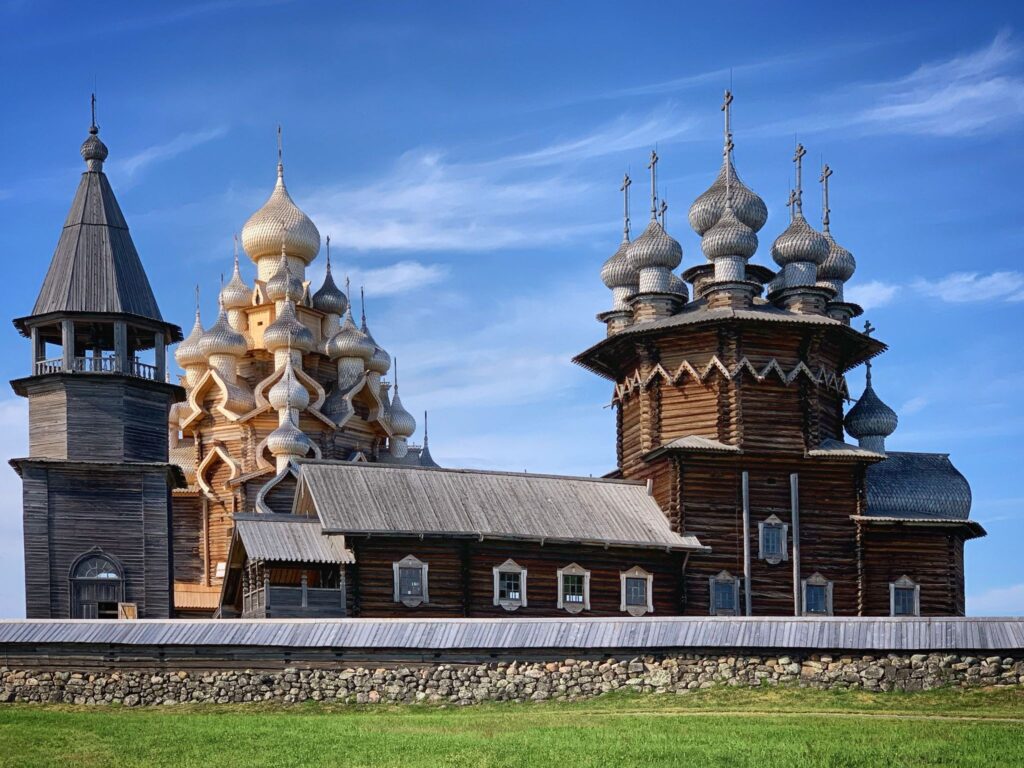
The heart of the holiday remains ancient Murom, which receives many guests on this day. Fairs and folk festivals are held here, scenes from the lives of saints are performed, and believers come to venerate the relics of Peter and Fevronia and ask them for harmony and peace in the family. A monument with a kind name, «Union of Love - A Wise Marriage,» has also been erected near the city registry office, and newlyweds enjoy taking photos with it. Throughout the country, families are honored on this day, and concerts and good celebrations are organized for children and adults.
July eighth has long been a favorite for newlyweds, as according to popular belief, a marriage concluded on this day will be long and happy under the patronage of the holy spouses. True, a church wedding won't be possible on this day, as it falls during Peter's Fast, when weddings are not performed, so people celebrate their wedding and postpone the sacrament for later. Nevertheless, for thousands of couples, this summer day becomes the beginning of their own family history, which, one likes to believe, will have a happy ending just like that of Peter and Fevronia.
How to tell a child who is far from Russia about this day

For a family raising a child in a foreign land, such a holiday is a wonderful occasion for a warm conversation. Behind one ancient story lies a great deal, including love, fidelity, the ability to forgive, and the idea that a true family is more precious than any crown. Telling this tale to a child, showing them a chamomile flower, and crafting a card together means conveying something important to them without any moralizing about native culture and about life in general, and even in your native language.
This is precisely how they teach Russian, through stories that are lively and relatable to children, in Palme School, where children from Russian-speaking families, aged four to seventeen, are introduced to the language not through dry rules, but through culture, holidays, and good fairy tales. You can get acquainted with the school through two free classes. First, an introduction and assessment with a methodologist, where it will be clear what the child is already capable of and where they need help. Then, a trial class in a live group, along with other children. With no obligations whatsoever, just to see if this format is right for you.
A brief overview of the Day of Family, Love and Fidelity

Russia has its own Day of Love, and it's celebrated not in winter, like Valentine's Day, but in the middle of summer, on July 8th. It grew out of the ancient veneration of the Murom saints Peter and Fevronia and speaks not of fleeting infatuation, but of the fidelity that binds a family for life. At its heart lies the very tale of a prince and a peasant woman who healed him, who walked hand-in-hand through exile and slander and, according to legend, left this life on the same day. The humble chamomile was chosen as the symbol of the day, and couples with long and happy marriages are awarded the medal «For Love and Fidelity.» For a child growing up far from Russia, this ancient love story becomes a warm and understandable window into their native culture and language.
July 8
The date of the holiday is fixed, July eighth, and it falls on the church day of remembrance of Peter and Fevronia of Murom. It became All-Russian in two thousand and eighth, and a decade and a half later, in two thousand and twenty-second, it also received the status of an official state holiday. However, people still have to work on this day, as July eighth was not declared a day off.
Who is this holiday in honor of and who are Peter and Fevronia?
Two saints from Murom, Prince Peter and his wife Fevronia, stand behind the holiday. They have been revered since ancient times as defenders of the family. Legend tells of a noble prince who married a simple peasant woman who cured him of a serious illness, and how this couple, enduring banishment and human malice, lived a long and harmonious life together. In the end, both became monks and, according to tradition, left this world on the same day.
Why did the chamomile become the symbol of the holiday?
Chamomile was chosen as a simple and pure Russian field flower, which is closest to the spirit of this holiday. Unlike the lush rose, a symbol of passion in Western Valentine's Day, chamomile speaks of quiet, sincere, and faithful love. Love fortunes have long been told on it, and therefore it was so fitting for the day dedicated to family and fidelity. Chamomile is also depicted on the medal «For Love and Fidelity.».
How is this day different from Valentine's Day?
The main difference lies in the very essence of the holiday. Valentine's Day is dedicated to infatuation, dating, and first romantic feelings, while the Russian Day of Family, Love, and Fidelity speaks of mature and family love, tested by years. It was conceived as a Russian replacement for St. Valentine's Day, relying not on European tradition, but on its own ancient history of Peter and Fevronia.
When did this holiday appear?
The tradition of honoring Saints Peter and Fevronia on July 8th is very old, but the modern holiday is new. It was revived in Murom in the nineties and 2000s, first celebrated nationwide in 2008, and it officially became a state holiday in 2022 by presidential decree.
How is the Day of Family, Love and Fidelity celebrated?
The holiday is celebrated most lavishly in Murom, where guests and pilgrims gather, and festivities and fairs take place in the streets. In the rest of Russia, the day is more modest, but warm in its own way: long-married couples are awarded commemorative medals, concerts and entertainment are organized for children, and lovers often choose July eighth for their weddings, hoping for a lucky omen. Thus, the quiet summer day has gradually acquired its own traditions.