

Imagine a stoker. A basement, a rusty furnace, a shovel, a mountain of coal, a long night shift, a face covered in black dust. Now imagine that this very stoker is known and loved by an entire vast country. That teenagers across town are copying his songs from one cassette to another. That in the summer he'll take the stage at a stadium, and seventy thousand people will sing along with him. None of this is made up. The stoker's name was Viktor Tsoi, the boiler room in Leningrad was nicknamed "Kamchatka," and today, in its place, is a small museum where people bring flowers, even those who were born after his death.
It is from this strange neighborhood, stadium glory and a coal furnace, that one should begin a conversation about Russian rock. Because its entire essence is hidden right here. For a child growing up abroad, the name Tsoi is most often a blank slate. They might know Western musicians by heart, but have never heard ours at all. And yet, Russian rock music was not background noise for several generations, but almost air. Here's how the star ended up at the furnace, and how to introduce this music to a child so that a distant song becomes close to them.
There was no music in the stores
To understand why the celebrity was waving a shovel in the basement, one must recall how this music lived. Rock didn't appear in the country yesterday. One of the first, back in the late sixties, was Andrey Makarevich's Mashina Vremeni, but its real flourishing came in the seventies and eighties, and almost all of it went underground. In the Soviet Union, rock was considered foreign and suspicious for a long time. Records were almost never released, it wasn't played on the radio, and they weren't allowed on the big stage. It was impossible to go to a store and buy an album by your favorite band because it simply wasn't there.
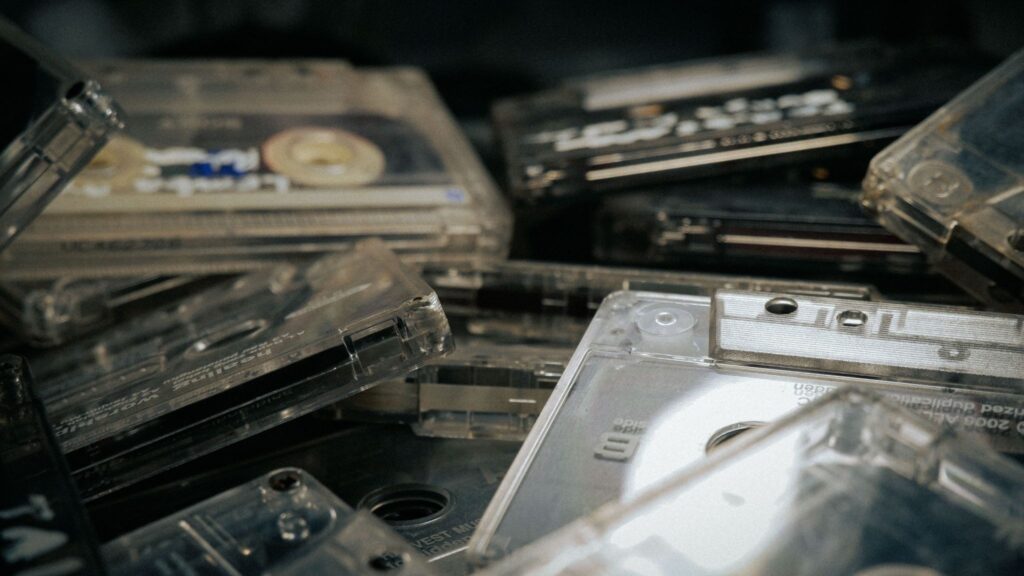
And the music went around, from hand to hand. Records were copied at home, from one magnetic tape to another, given to a friend, who made a copy for himself and passed it on. Thus, one tape was distributed among hundreds. The sound became duller each time, the hiss increased, but the songs got through. A good cassette was listened to until it wore out, the tape broke, it was repaired and listened to further. This method even had a name: magnitizdat. A child should be told this in simple terms. You couldn't buy your favorite music or play it with a click; it had to be obtained and cherished, like something secret and valuable. And it was sometimes recorded in makeshift studios. In Leningrad, for example, there was Andrei Tropillo's studio, assembled from equipment decommissioned from the state record company Melodiya, and bands like Kino and Aquarium passed through it.
Playing live was even more dangerous. The concert could be broken up at any moment. And a person couldn't just do music, being a rock musician wasn't considered a profession. So, during the day, these future legends worked whatever jobs they could find — janitors, custodians, stokers — and wrote songs at night. That's where Tsoi's boiler room story comes from. Before that, he managed to wash more than one public bathhouse and even worked on the restoration of a royal palace near Leningrad. The hands of an ordinary man who, at night, became the voice of an era. Things got a little easier in 1981 when the Leningrad Rock Club opened on Rubinstein Street, the first place in the country where rock was officially permitted. Although, with reservations. To get on stage, a band had to submit an application, pass an audition, pay small fees, and show their lyrics in advance. The musicians were quietly watched. Freedom, but under strict supervision.
American woman, cassettes, and the first record in the West
And now for the most incredible page of this story. While rock was languishing in basements, it was secretly smuggled overseas, and this was done by a young American woman. Joanna Stingray, a budding singer from a wealthy Californian family, came to Leningrad in the mid-eighties, fell in love with the local underground scene, and became close friends with Tsoi, Grebenshchikov, and others. She didn't take souvenirs home, but rather tapes of their songs, hidden in her luggage, and brought back Western guitars, which later sounded on famous albums.
In 1986, a double album was released on a small American label, simply titled Red Wave. It featured four Leningrad bands: Aquarium, Kino, Alisa, and Strange Games. This was the first record of Soviet rock music to be released in the West. The cover depicted the musicians in fighting stances, with St. Basil's Cathedral and the Kremlin walls visible behind them, the entire image seeming to shout that from behind Iron Curtain something lively and daring can be heard. Stingray even sent a record to both leaders, American and Soviet. For this daring, she was banned from the Soviet Union for six months.
A child will love this story. A stranger girl smuggled music, which had been hidden away in boiler rooms at home, across the border and showed it to the whole world.
From Kamchatka to the stadium

Tsoi himself started out exactly the same way, from the bottom. He was born in Leningrad into a family with Korean roots, and the surname Tsoi itself, one of the most common in Korea, sounded unusual and was memorable from the first time. His band initially bore the absurd name "Garin and Hyperboloids" and only later became the short and sonorous "Kino." Their sound was unlike anyone else's. Instead of a live drummer, the guys often used a drum machine, which made their songs sound even and precise, as if for marching. Kino recorded their first real album, aptly named "Forty-Five" after its playing time, in 1982. Boris Grebenshchikov, already a well-known musician at the time, helped them, recognizing the talent in the young Tsoi.
And then fame followed like an avalanche. In 1987, the film "Assa" was released. In its finale, Tsoi's character walks out to a huge crowd, the song "Peremen" plays, and the crowd sings along. This song instantly became the anthem of a time when the whole country was truly waiting for change. This was followed by the albums "Gruppa Krovi" in 1988 and "Zvezda po imeni Solntse" in 1989, songs that even now any Russian-speaking teenager knows by heart. In the summer of 1990, Kino filled Moscow's Luzhniki Stadium, with seventy thousand people holding up lighters. The sea of these lights in the darkness of that evening remained one of the symbols of an entire era. The journey from a basement boiler room to the country's main stadium took only a few years. Tsoi also managed to become a film actor. In 1988, the film "Igla" was released, where he played the main role, and on screen he was just as laconic and captivating as on stage. He also painted, and not at all amateurishly, as he had initially studied to be an artist.
The whole secret was in the words
It's time to say the main thing here: what makes Russian rock different from Western rock, and this is worth explaining to a child separately. In the West, sound, power, and drive are often paramount in rock, and the lyrics can be quite simple. In our case, everything turned out the opposite. The lyrics ended up being at the center.
The reason is partly simple, even impoverished. Early bands didn't have good equipment, they couldn't compete with Western sound, and therefore they bet on what they did best: the word. Many rockers were true poets. Their lyrics are taken for quotes, printed in books, studied almost as literature. It's no wonder Russian rock is often called Poetry with a guitar. Collections of these texts are published as separate books, and some lines have long become part of everyday speech and sound almost like proverbs. Tsoi's songs are an excellent example of this. His words are short, honest, clear, without a single unnecessary flourish, and that's why they are so easy to pick up. He didn't create fictional worlds, but sang about what he saw around him, about the night, about the road, about fatigue and hope, and in this everyone recognized themselves. For a child who is just learning Russian, this is a gift. A sung line sticks in the head more firmly than any memorized rule.
The Day the Country Didn't Believe
And then happened what nobody wanted to believe. On August 15, 1990, just a month and a half after his triumph at Luzhniki, Tsoi died in a car accident in Latvia, returning from a fishing trip. He was twenty-eight.
The country was stunned. Tens of thousands of people came to say goodbye to the musician, the city seemed to freeze for several days, and a short inscription crawled up the walls of houses, which can still be seen today: "Tsoi lives." In Moscow, on Arbat Street, a whole Tsoi Wall appeared, completely covered with lines from his songs, and people still come to it with guitars and flowers. Similar memorial walls have sprung up in other cities, and dozens of monuments to Tsoi have been erected throughout the former Soviet Union. Few musicians have received such lasting, stubborn, unquenchable love. This part can be presented to a child without being overly dramatic, but honestly. The man who wrote such vibrant songs died very young, and that is precisely why his voice, for many, seems frozen forever. The last songs that Tsoi managed to hum alone with a guitar were finished by the musicians of Kino without him, and the album that followed was made entirely black, as a sign of mourning. But his songs have not aged; new artists still sing them and they are used in films, and each generation of teenagers discovers Tsoi anew.
Kino's Main Albums
| Album | Year | Briefly |
|---|---|---|
| 45 | 1982 | The debut, recorded with Aquarium's participation, is named after the number of minutes |
| Kamchatka Chief | 1984 | Named after the boiler room where Tsoi worked |
| Night | 1986 | One of the band's early albums |
| Blood type | 1988 | Hymns, the pinnacle of Kino's glory |
| A star called Sun | 1989 | One of the most famous albums |
| Black Album | 1991 | The last one, written without Tsoi, with a black cover as a sign of mourning |
Aquarium, Zemfira, and everything that came after

Russian rock did not end with Tsoi's death; on the contrary, it was just emerging from underground into the light. It's worth at least briefly mentioning his peers on the scene. Boris Grebenshchikov, already mentioned, with his Aquarium, which he formed back in 1972, sang very differently from Tsoi, not with choppy slogans but with hazy, mysterious imagery that makes you think. He's even called one of the grandfathers of Russian rock. Nearby were Yuri Shevchuk's DDT, the Urals' Nautilus Pompilius with their "Chained Together," and the feisty Alisa.
And at the very end of the nineties, a new voice arrived. In 1999, the first album by singer Zemfira from Ufa was released, and it exploded instantly. It's an almost fairy-tale story; her demo tape reached Ilya Lagutenko from the then-popular band Mumiy Troll through acquaintances. He believed in her and helped record everything. Zemfira sang differently than the previous rock; it was nervous, delicate, and very personal, and young people immediately loved her. Thus, Russian rock gained a female face. The 2000s followed with Mumiy Troll, Splin, and Bi-2, when rock was already blasting from every radio. Names and fashion changed, but the essence left by Tsoi's generation can still be heard in this music today.
Russian rock bands by era
| Group | Time | What is it known for |
|---|---|---|
| Time machine | late 1960s | One of the country's first rock bands, Andrey Makarevich |
| Aquarium | Since 1972 | Boris Grebenshchikov, poetic and mysterious songs |
| Movies and cartoons | 1980s | Viktor Tsoi, simple honest songs, and the anthem of Changes |
| DDT | 1980s | Yuri Shevchuk, songs about the Motherland and autumn |
| Nautilus Pompilius | 1980s | Ural group, Chained Together |
| Alice | 1980s | Konstantin Kinchev, energetic drive |
| Zemfira | since 1999 | New female face of Russian rock |
| Mumiy Troll | turn of the millennium | Ilya Lagutenko, rock on the big stage |
Which song to start with at home
The easiest way to introduce a child not to a story, but directly to a song. And it's most convenient here again with Tsoi, because his lyrics are simple and his melodies are catchy.
A good start would be "Blood Type," "Star Called Sun," "Cuckoo," and, of course, "Changes." You can just listen together and then pick one line and discuss what it's about. Older children often get drawn in themselves, as it sounds modern and very unlike a boring textbook. A parent who once typed "viktor tsoi" into a search engine, just to recall a forgotten melody, might rediscover him with their child. After that, you should let them listen to others as well, like the pensive Grebenshchikov, or the resonant Zemfira, and let the child decide for themselves what resonates with them. For those who want to delve deeper, you can trace the entire history of Russian rock, from underground cassettes to current concerts. But it's better to start not with history, but with live sound.
Language is easiest to learn through song.

The hardest part about raising a child outside of Russia is not the grammar, but the living connection to the language, the feeling that Russian isn't foreign to them, but their own. And songs work here like little else. Through a melody that grabs them, the words come in on their own and stick around for a long time. The child won't even notice how they memorize a dozen lines, and along with them, living phrases and intonations.
At our school, Palme School, children from Russian-speaking families from four to seventeen years old, they are taught not only language, but also the culture from which the language grew. Music, movies, history, everything that makes a language alive. Not dry rules, but conversation, where a Russian song stops being incomprehensible noise and becomes familiar. To see how it works, you can attend two free classes. First, an introduction and assessment with a teacher, where they can see what the child is already good at and where they need support. Then, a trial lesson in a group, along with other children. No obligations, just to see if this format is right for you.
Russian rock will remain alien noise to a child until someone shows what lies behind the songs. And once a song is understood, it becomes a key, and behind it opens a whole language, alive, honest, and resounding throughout the stadium.
If you remember one name

Russian rock music grew out of basements and boiler rooms, spread on copied cassette tapes, and became the voice of several generations. Its unofficial center is Viktor Tsoi, a stoker from Leningrad's Kamchatka, whose simple and honest songs are sung by heart throughout the country, even more than thirty years after his death. Next to him is Grebenshchikov with the enigmatic Aquarium, and following them is a whole string of names, all the way to Zemfira and the bands of the 2000s. This music relies more on words than on sound, and therefore it's an excellent, not at all boring, gateway to the language. Play one Tsoi song for a child and analyze at least one line together, and distant, foreign music will suddenly become familiar, and through it, the living Russian language will be revealed.
Who is Viktor Tsoi and why is he so loved?
Viktor Tsoi led the band Kino and remains one of the most beloved Russian rock musicians. He wrote honest songs with short, clear lyrics, and his "Peremen" (Changes) and "Gruppa Krovi" (Blood Type) became anthems for an entire generation. Tsoi lived only twenty-eight years and died in a car crash in 1990, but his songs are still sung today, and you can still see the inscription "Tsoi zhiv" (Tsoi is alive) on walls.
Why did Russian rock emerge in the underground?
In the Soviet Union, rock was long considered foreign and suspicious music, almost never released or allowed on the big stage. Because of this, songs circulated unofficially on rewritten cassette tapes, and concerts were often broken up. Things became a little easier after 1981, when the first rock club opened in Leningrad, although even there, musicians were watched closely.
What is magnetic susceptibility?
This is what an unofficial way of distributing music in the Soviet Union was called. Since there was nowhere to buy records, they were copied at home from one magnetic tape to another and passed from hand to hand. Each new copy sounded a little worse, but the songs still reached listeners all over the country. Essentially, it was the same samizdat, but with music instead of books.
What's the difference between Russian rock and Western rock?
The main difference is that for us, text comes first. Early bands didn't have good equipment to compete with the Western sound, so they bet on the word. That's why Russian rock turned out very literary, and its songs are often called poetry with a guitar and analyzed almost like poems.
Who else in Russian rock is worth listening to?
Beyond Tsoi and Kino, the golden fund usually includes Boris Grebenshchikov's Aquarium, and close to it are DDT, Nautilus Pompilius, and Alisa. Closer to our times, you should listen to Zemfira, who burst onto the scene in 1999, and the rock of the 2000s, from Mumiy Troll to Splin and Bi-2. They sound different, but they all have common roots.
How to get a child growing up abroad interested in Russian rock music?
The easiest way to start is with one clear song, preferably by Tsoi, who had simple and straightforward lyrics. You can listen to it together, sing along, and then analyze a couple of lines to understand what they mean. Then, you should introduce more diverse musicians, like the quiet Grebenshchikov and the vibrant Zemfira, and let the child choose what resonates more with them. A live song captures interest in the language more effectively than any textbook.