
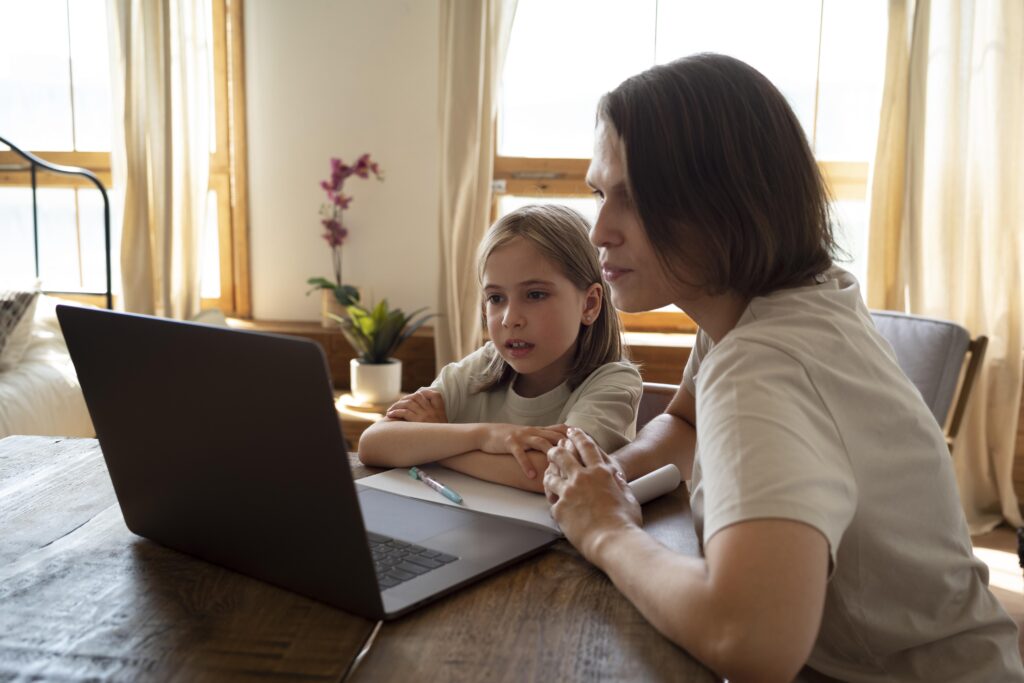

Grandma joyfully says via video call: «Come visit in the summer, I'll take you to the banya.» The seven-year-old grandson watches, nodding. Mom in the background is already smiling quietly because she knows what the conversation will be like in a minute. The child hangs up and asks, «Mom, what's a banya? Is it like a sauna?» Mom freezes. No, it's not a sauna. But how do you explain that to a little boy from Boston who has never seen anything like it.
This is not a question of bathing. It is a question of ritual.
There are Russian words that cannot be translated because they lack an equivalent experience. «Poparit'sya» (to steam oneself), «poddat» paru« (to add steam), »khlestat' venikom" (to whip with a venik). There are no equivalents for them in English, not because the language is poorer, but because American life lacks what these words describe. Banya is not a shower, not a sauna, not a spa. It is a separate genre of life that operates by its own rules and leaves a very specific mark on the memory.
For a nostalgic mother who grew up in Russia and remembers how the whole family went to the banya (traditional Russian bathhouse) on Saturdays, this isn't an abstraction. It's the smell of birch, her grandmother's voice, the feeling after the first session when you go out to the river and understand what lightness is. And she wants to somehow pass on this story to her child, who was born in Canada and the most they've seen of «hot and humid» is a humidifier in their room.
What is a banya
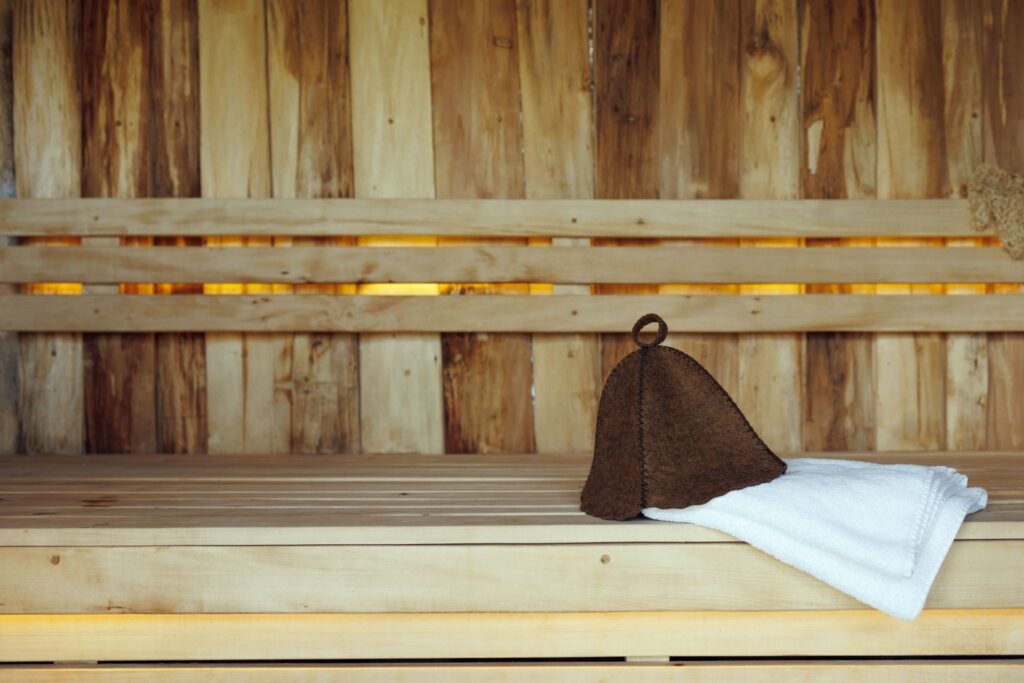
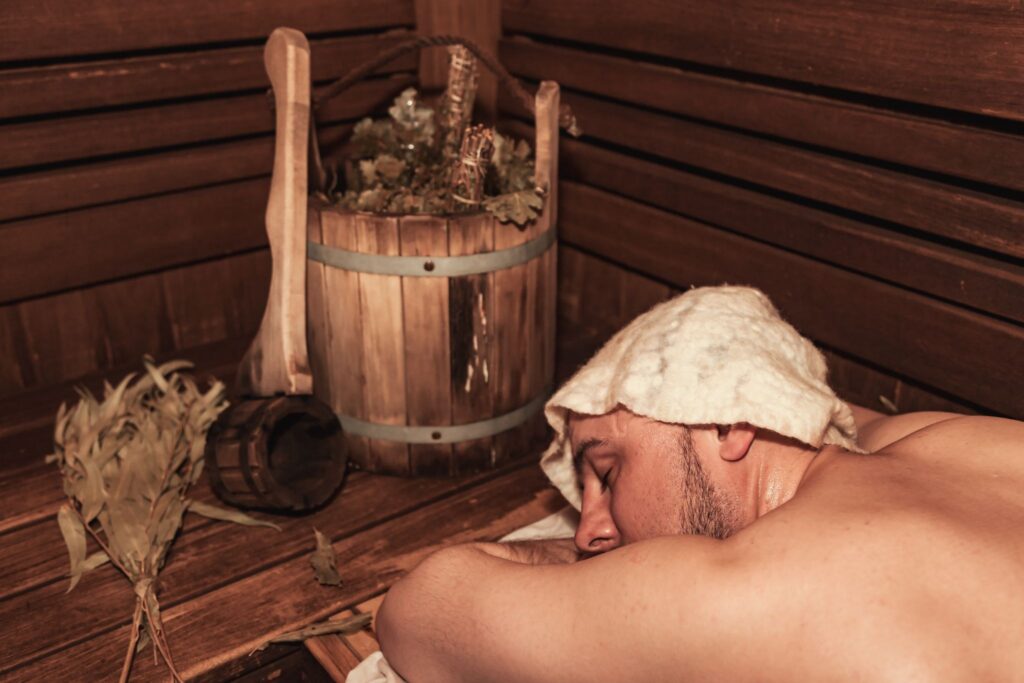
In a nutshell: it's a wooden house or room where very hot, humid air is specifically maintained. The temperature is from eighty to one hundred degrees, with high humidity. Water is poured onto heated stones, and the room fills with dense steam. People sit in this steam, sweat, and beat each other with birch or oak veniks, then come out, douse themselves with cold water or jump into a snowdrift, and go back in. Several such rounds, long breaks for conversation, then tea with honey and raspberry jam follow.
In English, it is usually called a Russian banya or Russian bath. When asked "What is a banya?", English-language websites most often answer using the word "sauna," and this is the most common source of confusion. The Finnish sauna is a close relative, but not an exact duplicate. The differences may seem minor, but they have a big impact on the experience.
It's hard to explain a banya abroad
In North American life, there's no direct equivalent. Saunas exist in every gym, but they have dry air and short sessions. Spas are found in hotels, but they focus on massages and manicures. Hot tubs are for backyard jacuzzis. None of these places capture what a Russian banya truly is: a space where half a day is spent slowly and unhurriedly, where families bond, where important conversations happen, and which concludes with tea, not a bill.
That's why bilingual child The word «banya» usually comes across as an empty shell. He knows it's a thing in Russia that adults go to. Sometimes he imagines it as something between a bath and a sauna. If he's never been there, the word remains beautiful, but empty inside.
Banya and Sauna: What's the Real Difference
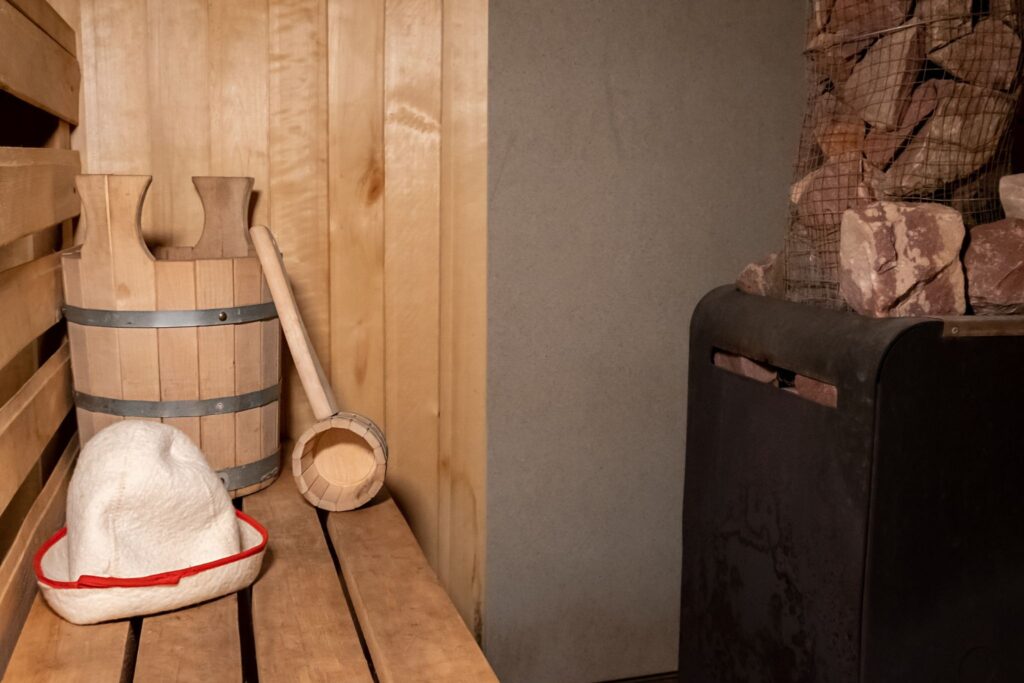
The Finnish sauna is indeed similar to a banya in its setup, but it works completely differently.
| Parameter | Russian banya | Finnish sauna |
|---|---|---|
| Temperature | 80-100 degrees | 90-110 degrees |
| Humidity | High, dense steam | Low, the air is dry |
| Broom | Required attribute | Not used |
| What do they do after sunset | Ice water, snow, ice hole | Cool shower |
| Number of entries | 3-5 with long breaks | 1-2 times for 15-20 minutes |
| Atmosphere | Conversations, tea, company | Silent relaxation |
| Duration | Half the day, a whole ritual | 30-60 minutes |
| After the banya | Tea with honey and jam | Shower, rest, drink |
In the sauna, the air is dry. The temperature can be higher, up to 110 degrees Celsius, but the humidity is low, and water is rarely poured on the stones. In the banya, it's the opposite: the temperature is moderate, but the humidity is high, the steam is dense, and the body warms up deeper and slower. These are different sensations. Finns say there's nothing to breathe in the banya. Russians say the sauna is too hot and dry.
In a sauna, people usually sit in silence and just warm up. In a banya, it's an active process. You use a venik, a real one, gathered from birch or oak branches, tied and steamed. You gently pat it against your body, and it's not a punishment, but a massage and aromatherapy at the same time. This is not at all possible in a sauna.
In a sauna, after heating up, people take a shower. In a banya, they pour ice-cold water over themselves, jump into a pond, or roll in the snow. The temperature contrast is a key part of the process. Without it, a banya isn't a banya.
And finally, a banya is always about company. People go with friends, family, or children. Between sessions, they sit, drink tea, eat cucumbers with honey, and talk. Saunas in North America are typically about a quick wellness session alone or with a couple of buddies. A banya is about a long evening together.
How to properly steam: step-by-step
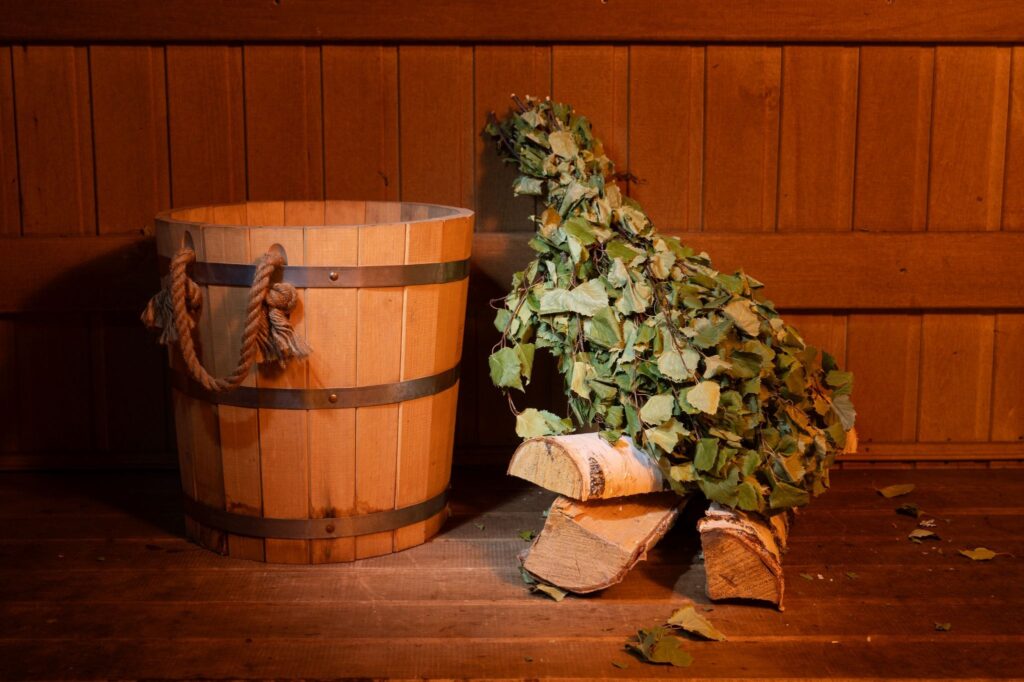
Beginners are usually anxious: what if I do it wrong, embarrass myself, overheat. I reassure them: experienced bathhouse attendants rarely judge anyone, and the process itself is flexible. But there are still rules, and if you know them, your first experience will go much better.
How to properly steam
Three phases, eight steps, the whole ritual takes an hour to an hour and a half.
To the bathhouse
Snack
in an hourSteam a bath broom
15 minIn the banya
First attempt
5-7 minutesBreak
10-15 min2nd with a broom
8-10 minIce water
contrastThird attempt
as desiredAfter
Tea with honey
and conversationAir temperature during the ritual
Step one. Before the bathhouse, it's good to have a light snack, but don't overeat. It's difficult to be in the steam room on a full stomach, and it's also not recommended to go on an empty stomach. A cup of tea with a sandwich an hour before your visit is optimal. Alcohol before the bathhouse is strictly prohibited; this is a safety rule.
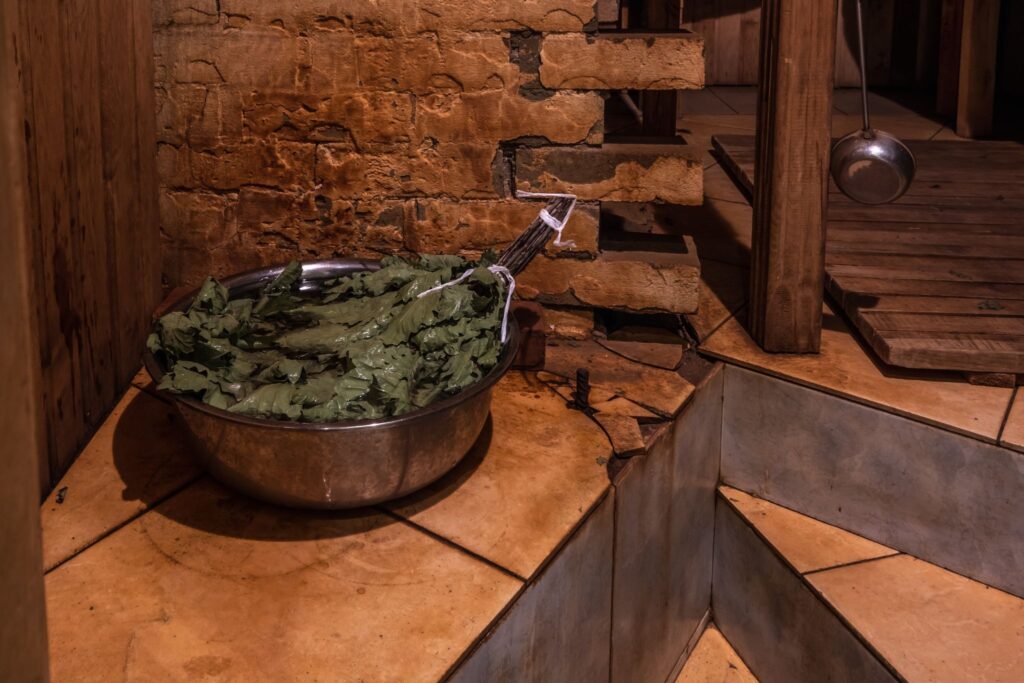
Step two. Prepare the broom in advance. If the broom is dry, soak it in a basin of warm water for about fifteen minutes. The water should turn yellowish, the broom will steam, and the leaves will become soft. If the broom is already prepared, rented from the banya, skip this step.
Step three. The first session is the shortest and most cautious. Five to seven minutes, no more. Sit on the lower shelf, where it's cooler. The goal is simply to warm up, open pores, and get used to the temperature. Your head must be covered with a felt hat; it's not for decoration, it's for protection. Without a hat, you can get heatstroke in three minutes. Come out, rinse off with a cool shower, not an icy one, sit in the ante-room, and drink water or weak tea.
Step four. A ten to fifteen minute break. During this time, the body cools down a bit and the heart rate calms down. An important point for beginners: do not rush. The rest between sets should be comfortable. If you feel weak, it is better to skip the next set.
Step five. The second round with the broom. This time you can linger longer, eight to ten minutes. If you have an experienced companion, you can ask them to «steam» you, which is the main event of the banya evening. The person lies on the shelf, and their partner gently waves the broom over them, first on their back, then on their legs, then on their chest. This isn't hitting, it's fanning hot air. The leaves touch softly, releasing their aroma. After this procedure, you emerge completely relaxed.
Step six. Contrast. After the second session, it's time for icy water or a plunge pool. A drenching from a bucket, a jump into a pool, or into snow in winter. It's scary at first, but this contrast is what gives the main sensation of the banya: lightness and renewal. The body perceives this as a strong signal, and after it comes the famous «banya» state of peace.
Step seven. Third round. Optional. If the first two went well and you have the energy, you can go again. If you're already tired, it's better not to push yourself. Going overboard in the banya leads to a headache, so no.
Step eight. Tea and conversation. A banya without tea is only half a banya. It's brewed strong, always with honey or jam. You can add herbs: thyme, oregano, St. John's wort. People sit, breathe, and don't rush to get dressed. The best conversations happen during this part, conversations you don't have in cafes or at home.
General safety rules. Do not overheat, leave before you feel unwell. Do not jump into cold water if you have heart problems. Drink plenty of fluids between sessions, but not cold. Pregnant women can only do so after consulting a doctor. Children can do so from four to five years old, but very carefully, on the lower shelf, for one to two short sessions.
Why do bilingual children remember their first bath for life
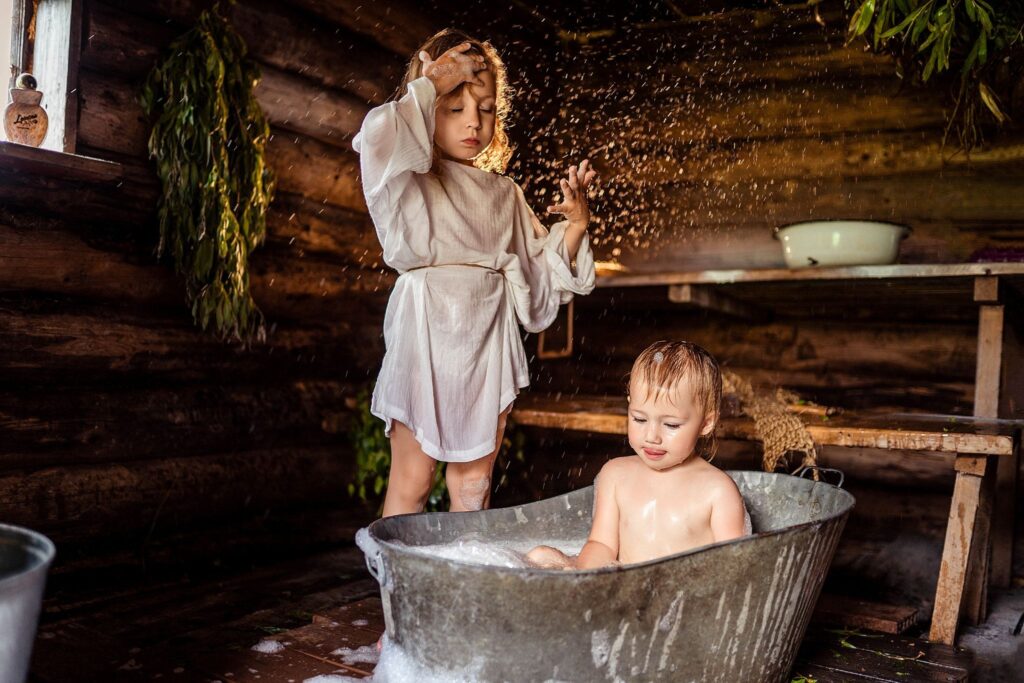
At Palme School, during our lessons about Russian culture we often ask: what's your most vivid memory related to Russia? Predictably, it's about grandma, about jam, about cartoons. And then almost every second child says: the banya.
This is amazing because a banya doesn't seem like a «child's» place. But that's precisely why it's so memorable. A child goes there once when visiting their grandmother or at the dacha, and the sensations are unlike anything in their everyday life. The heat. The smell of steamed birch. Grandmother, who suddenly becomes the main person in charge and knows exactly what to do. The cold water, which hits you so hard it takes your breath away. And the silence afterward, when you sit on the bench in a towel and realize that something important has happened.
A mother from Toronto told a story about taking her ten-year-old daughter to the banya for the first time during a summer trip to Russia. The girl had previously hated everything «Russian,» complained about the language, and refused to speak with her grandmother. After the first banya, she asked to go again. After the second, she started collecting birch branches for a venik herself on the property. By the end of the summer, she was telling her friends on FaceTime about «the banya» with as much pride as if she were talking about a secret club. Her Russian improved after the trip because she now had words she wanted to share with her American friends.
This is the mechanics of it. A child won't love a language on command. But if they have a strong sensory experience connected with Russian, the language will start to function as access to that experience.
Untranslatable bath words.
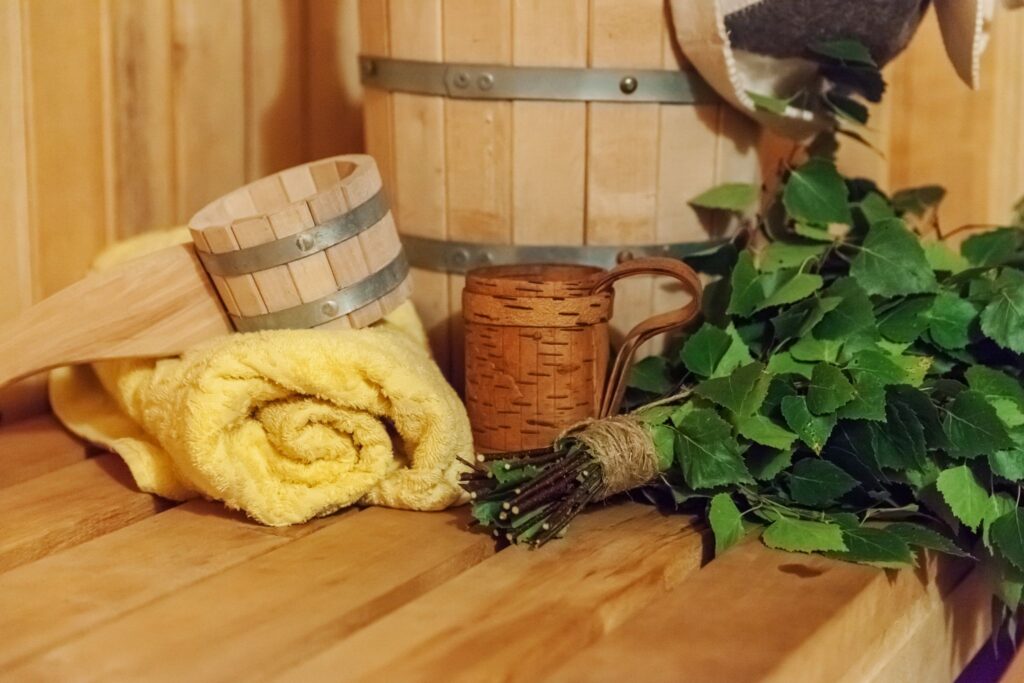
When a family goes to the banya, a whole layer of Russianness surfaces that isn't present in everyday life.
To steam, to add steam, steam, bath broom, steam room, anteroom, hot, cold, cool, very hot, weak steam, strong steam, enjoy your steam. The last is a wish to someone going into the steam room. They reply «thank you.» A short exchange, but culturally rich.
The verbs are particularly interesting. Klyostat«, khlopat», stegat«, stelit», okatit«, pliesnut». In English, these actions are either described with long phrases or lose their nuances. «Klyostat» venikom" isn't "to hit with a broom," it's a gentle rhythm on the back, with care. "Okatit' kholodnoy vodoy" isn't "pour cold water," it's a sharp, decisive movement, familiar to anyone who has ever stepped out of a sauna.
For a child trying to get a feel for the Russian language, bathhouse vocabulary is a gift. The words are short, visual, and tied to bodily sensations. They are remembered faster than anything else.
Bathing traditions
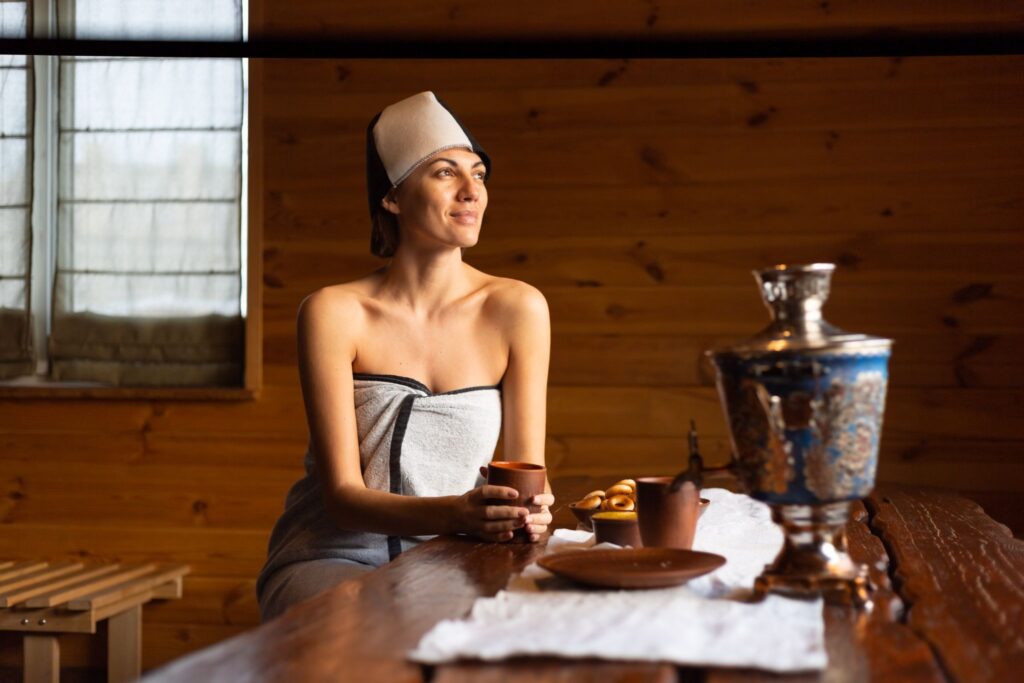
There are little things that distinguish a banya from just a hot room.
| Tradition | What is that | Why is it necessary |
|---|---|---|
| Shelf | Wooden bench in the steam room | The higher up, the hotter. Children and beginners are seated below. |
| Felt hat | Cap with a rounded brim | Protects the head from overheating while the body warms up |
| Birch broom | Bundled birch branches | Massage and aroma, a classic |
| Oak broom | Bound oak branches | Denser, lasts longer, strong smell |
| Linden bast broom | Bound linden branches | Soft, good for colds |
| Enjoy your steam | Wish after the Russian steam bath | Ritual formula, responding «thank you» |
| Tea with honey | Strong tea with honey and jam | Recovery, conversations, the concluding part of the ritual |
| Separate days | Men's Day and Women's Day | In villages and small towns, families steam in their own time. |
A *polok* is a wooden bench where one sits or lies down. The higher it is, the hotter it is. Children and beginners sit on the lower shelf. Adults can climb to the top shelf, where the steam is dense and hot.
A banya hat is no joke. Made of felt, with rounded brims. It's needed so the head doesn't overheat while the body is warming up. People laugh at it the first time, but then they can't do without it.
A broom is a separate universe. Most often birch, but there are oak, linden, eucalyptus, fir. Each has its own smell and its own effect. They are gathered in mid-summer, dried, then soaked before use. Knowing which broom to take when is part of a tradition that grandmothers pass down to their granddaughters personally, not on the internet.
Tea after a banya is almost a mandatory part. Usually with honey, with raspberry or cherry jam, with herbs. They drink it slowly, talking. In this part, the banya turns into what the samovar was in the 19th century: a place for slow conversation.
And one more detail. In villages and small towns, the banya is often separate: a women's day and a men's day. Or one family bathes at their own time. This isn't about modesty, it's about a different cultural code around the body, which differs from the American one.
Where to find a real banya in Canada and the USA
Good news: these baths exist in major cities with Russian-speaking immigration. Bad news: there are fewer of them than one would like, and the quality varies.
In New York, the most famous place is the Russian and Turkish Baths in the East Village. It has been operating since the late nineteenth century, has survived several eras of emigration, and still holds its standard. There are several other bathhouses in Brighton Beach and Brooklyn.
In Chicago, Red Square Spa is well-known. In Los Angeles, there are several establishments in the West Hollywood area. In Seattle, there's Banya Five. In Toronto and Montreal, there are small banyas in areas with large Russian-speaking communities.
The quality varies everywhere. Somewhere there's a real Russian banya with steam and a broom, somewhere it's just a sauna with a Russian sign. Before your first visit, it's good to call and ask: is there a broom for rent, what kind of steam is there, do they do steaming. The answer usually immediately shows the level of the place.
How do we use the bathhouse theme at Palme School

In our lessons, we regularly talk about the banya, even if none of the children have ever been there. Because even without direct experience, this topic works: it has strong imagery, strange words, funny rules, and a warm family connection. We show photos, read excerpts from children's books that mention the banya, and act out a scene called «Grandma takes her grandson to the banya for the first time.».
For a child, this conversation is a small adventure. They will learn what a broom is, why a hat is needed, what «to add steam» means, and how to say «enjoy your bath» afterward. The next time they go to Russia or visit a Russian bathhouse in America, the words will no longer be empty. There will be recognition.
This is an important moment for mothers too. Many nostalgic mothers say that such topics in class give a child something they themselves find difficult to provide at home. In daily life, people don't really talk about the banya. But in class, it becomes a subject of discussion and gains significance.
At Palme School, the first two lessons are free. You can come and observe how conversations are structured when the topic is cultural rather than linguistic. Sometimes, even the parents themselves are surprised by this.
A Russian banya is a traditional steam bath. The word "banya" (баня) in Russian literally means bathhouse or sauna.
A Russian banya is a wooden room with a stove and hot stones, onto which water is poured to create dense, hot steam. People sit in this steam, slap themselves with a venik (a bundle of leafy twigs), and then douse themselves with cold water or jump into the snow. Between sessions, they drink tea and talk. The same word, banya, is used in English, like samovar and matryoshka, without translation.
How is a Russian banya different from a Finnish sauna?
In a sauna, the air is dry and the temperature is high; water is rarely poured on the stones. In a banya, the opposite is true: the temperature is lower, but the humidity is high, creating dense steam. In a sauna, you simply warm up. In a banya, you use a venik (a bundle of twigs), douse yourself with cold water, go in and out several times, and drink tea. It's a different process and a different mood.
Why is a broom needed in a bathhouse
A venik is a bundle of tied birch, oak, or linden branches. They are gently tapped on the skin. This is a massage that improves blood circulation, and at the same time aromatherapy, because the steamed leaves give off a strong scent. The venik is not hit, but «steamed,» carefully, according to the rules.
Enjoy your bath/shower«
This is a wish said to someone who has just left the steam room or the banya in general. Literally: «We hope the steam was not heavy.» In meaning, it's closer to «Enjoy, we hope you liked it.» The response is «thank you.» This is a stable phrase known to all Russian speakers.
Can children go to the banya?
It's possible, but with caution. Little ones are placed on the lower shelf, where it's cooler. The sessions are short, a few minutes, followed by a mandatory break. They don't do sharp contrast showers, only a warm shower. Many children tolerate the banya perfectly from four to five years old, if an adult is nearby monitoring the time.
There are a few ways to explain the Russian bath (banya) to an American friend, focusing on different aspects depending on what you think they'll find most interesting. Here are some options: **Option 1: Focusing on the Experience and Relaxation** "It's called a 'banya,' and it's a traditional Russian steam bath experience. It's a lot more than just a sauna. You go into a very hot, steamy room, and it's designed to make you sweat a lot and cleanse your body and mind. We often use 'venik' – these are bundles of leafy branches, usually birch or oak. You gently beat yourself or have someone else beat you with them. It sounds a bit intense, but it's actually really good for circulation and helps release tension. After the heat, you typically plunge into cold water – like a pool or a snowdrift if it's winter! Then you go back into the heat. It's a cycle of intense heat and cold, which is invigorating and very relaxing afterward. It’s a social thing too, people often go with friends and family to chat and unwind." **Option 2: A More Direct Comparison to Western Concepts** "You know how we have saunas or steam rooms? A banya is like a supercharged, traditional Russian version of that. It's a very hot, humid steam room. The main difference is the 'venik' – these are branches of oak or birch that you use to lightly 'whip' yourself. It helps increase circulation and exfoliate your skin. After spending time in the heat, you cool down dramatically, often with a cold shower or even a dip in cold water. It's a really intense but refreshing cycle. People go to get clean, relax, and socialize." **Option 3: A Shorter, More Casual Explanation** "So, we have this thing called a 'banya,' which is a Russian steam bath. It's way hotter and steamier than a regular sauna. We use special leafy branches called 'venik' to sort of 'pat' ourselves down, which is supposed to be good for you. Then, after getting all hot and sweaty, you jump into cold water. It's pretty intense, but super relaxing afterwards. It's a whole ritual." **Key points to emphasize, depending on your friend:** * **Heat and Steam:** It's hotter and more humid than a typical sauna. * **Venik:** Explain what it is (leafy branches) and its purpose (circulation, exfoliation). Mention it might sound unusual but is pleasant. * **Cold Plunge:** This is a crucial and often surprising element for Americans. Emphasize the contrast and the invigorating feeling. * **Social Aspect:** It's often a group activity, like going out with friends or family. * **Health Benefits:** Mention detoxification, relaxation, improved circulation. * **Cultural Experience:** Frame it as a classic Russian tradition. Choose the option that best suits your friend's personality and interests!
The easiest way to explain it is by outlining the differences from a sauna and a spa. It's like a sauna, but humid, with a venik (a bunch of leafy twigs), followed by cold water, and then tea and conversation. It's not about forty minutes of relaxation, but about a half-day slow ritual. This usually helps people understand that banya is a separate genre, not a type of Finnish sauna.
Yes, there are traditional banyas in Canada and the United States.
Yes, in cities with a large Russian-speaking diaspora. The most famous is in New York on the East Village, and there are several also on Brighton Beach. They also operate in Chicago, Los Angeles, Seattle, Toronto, and Montreal. The quality varies, so before your first visit, it's worth calling and asking about the birch broom (venik) and steaming, as the answer indicates their level of service.
Why does mom want to take the child to the bathhouse so badly
Because it's one of the most vivid sensory experiences of her childhood, and many want their child to have the same feeling. A whole cultural layer passes through the banya: the venik (birch broom), cold water, tea with jam, family conversations. One visit is enough for a child to form their own memory and their own Russian vocabulary around this experience.