


Okay, hi. I’m Claire.
Nobody lands on a cat breed guide by accident. You’re here for a reason. Probably one of maybe four reasons, honestly, and I bet I can guess which. A Russian Blue got to you. Some specific one. You met her at a friend’s place and she sat on your lap for nine minutes and then you went home and couldn’t focus on anything for the rest of the week. Or you saw one on Instagram. Or you’re in bed at 1 a.m. reading about a breed of cat you do not yet own and probably should not yet be researching. It’s fine. I’ve been there. We’ve all been there. Reading breed guides at 1 a.m. is kind of its own thing, honestly. I do it too. So — welcome.
I’ve been writing about cats for a living for twelve years. Twelve. Weird to type that out. First thing I ever published about cats was in 2013 — a short thing for a regional magazine that folded a while back. Since then I’ve mostly done breed write-ups, talked to a lot of breeders, wrote one investigative piece about pet-insurance fraud which I hated and won’t be linking here. No vet school. Never bred a cat myself. The childhood piece: my mom’s Russian Blue was called Sonya, named for some great-aunt (I think on my grandfather’s side? nobody in my family agrees on this) and she ate tuna and only tuna. House reeked of it. Every day. For years. Sonya lived to seventeen and she bit me once, at nine years old, and I deserved it. That is my credential. Make of it what you will.
So now: Hudson Valley, me, David, three Russian Blues named Misha, Anya, Pepper. Misha is sitting on the corner of my desk right now, judging my typing speed.
Let’s do this.
Meet the Russian Blue: A Cat That Grows on You Slowly
First Impressions Can Be Misleading
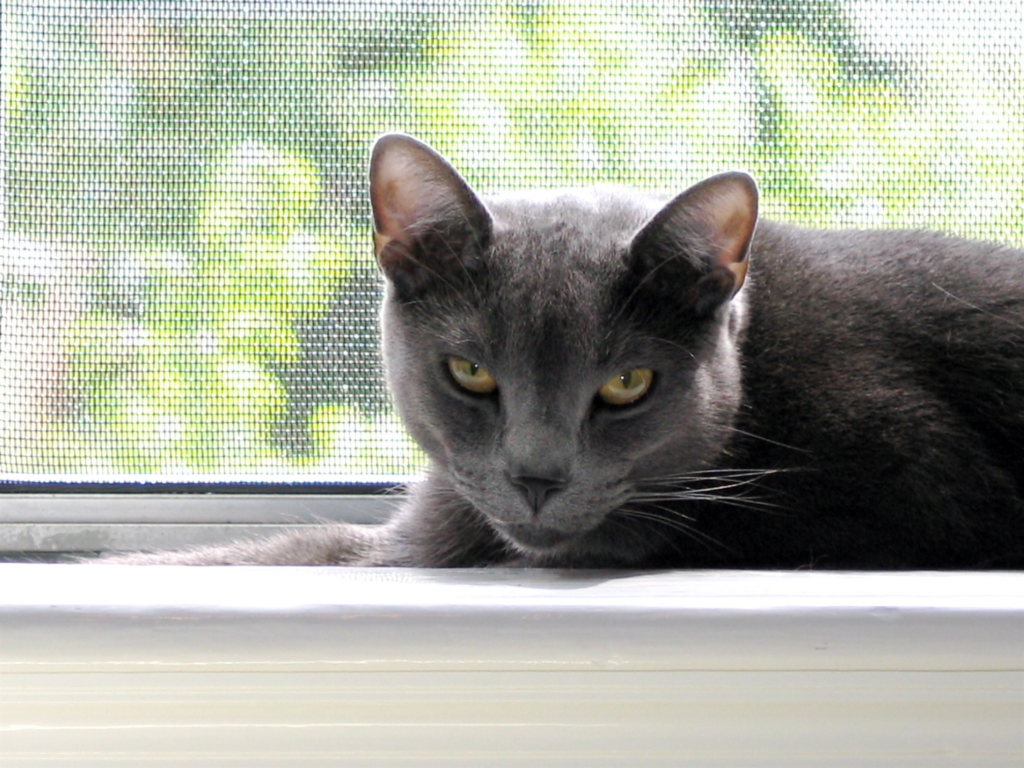
The first Russian Blue I ever met was a female named Vera.
So. October, 2013. Age twenty-seven. I drove up from Brooklyn one Saturday to a cattery out in Westchester. Car situation was a Honda Civic that smelled like rotting apple because I’d forgotten a McIntosh in the back seat in September and had only sort of gotten it out. And — I can’t defend this, I really can’t — I was wearing Flowerbomb. The perfume. The perfume. To a cattery. I think I thought I was going to a job interview. I don’t know. I was twenty-seven. Everything I did that year was wrong.
Vera spent the first twenty minutes of our meeting pretending I was a piece of furniture.
Top of a bookshelf. One ear kind of half-turned my way. Those huge green eyes pointed at a bit of wall somewhere to my left.
What I thought was: yep, she hates me, definitely the perfume, I should go. Minute forty-three on my watch (yes I kept looking, yes I felt stupid) — she came down. Not jumping. Walking. Like someone’s aunt going down a staircase at a wedding she wasn’t sure she wanted to attend. Got to me. Put her whole face into my shin.
The breeder actually laughed at me. Not subtly either. «They all do that,» she said. «She had to decide you were worth the trouble first.»
I have thought about that sentence roughly once a week for twelve years.
Russian Blues don’t audition for you. They audit you. Once they’ve decided you passed — you’re in, permanently. No take-backs.
Why They’re Called «The Doberman of Cats»
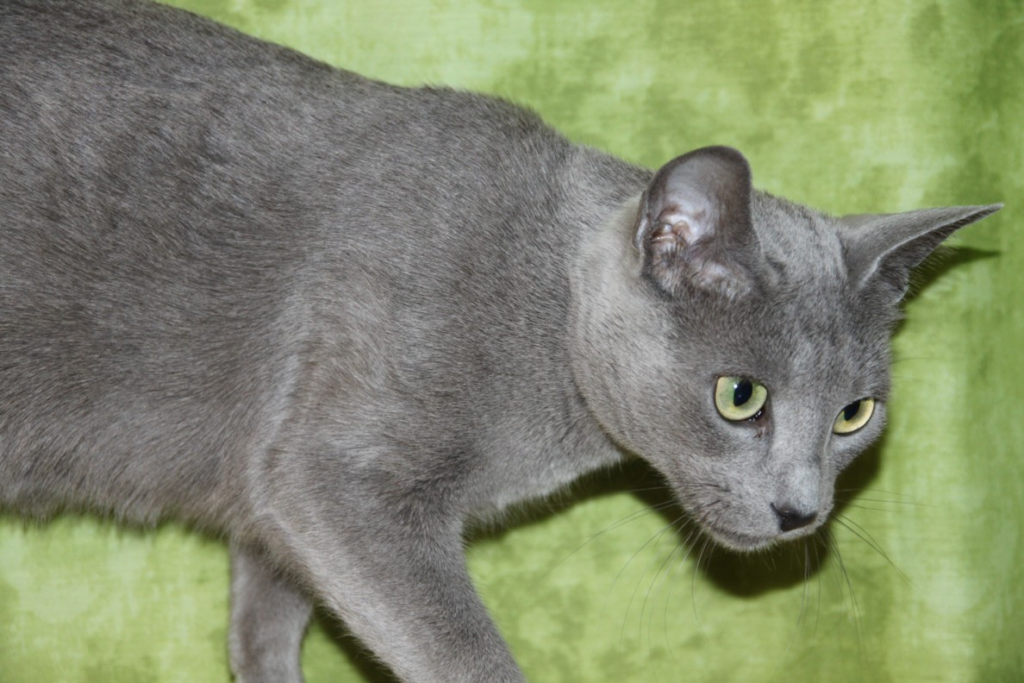
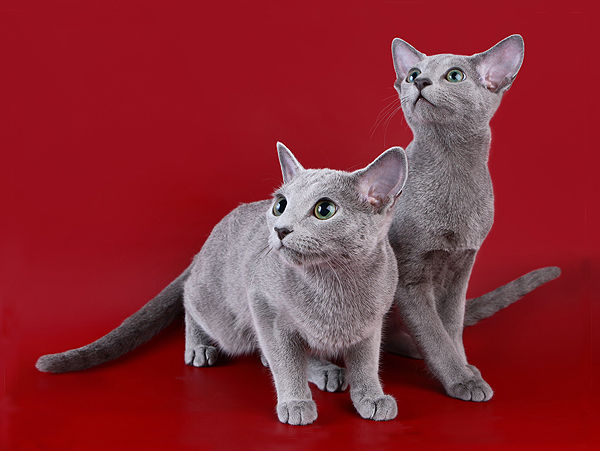
Pick one up for the first time and I promise you will be taken aback. Almost in a funny way. They look like these little plush grey cloud things. What’s actually under all that fur is ropey, stubborn, mulish muscle. In couture.
Old breeder nickname for the breed: «the Doberman Pinscher of cats.» Sounds ridiculous until you actually see one jump. The coat stands maybe a quarter-inch off the skin — so dense it makes every Russian Blue look bigger than she actually is. Take the coat away and what you’ve got is a long, fine-boned, genuinely athletic animal. They’ll clear a five-foot bookcase from standing, no run-up, and look unbothered about it afterward.
Last summer I watched Anya — she’s my middle cat, the silver bandit, temperament-wise sort of the middle child — go from the kitchen floor to on top of the fridge in basically one movement. No crouch. No windup. Nothing. I said «Anya, WHAT,» out loud, to an empty kitchen. She ignored me.
The Breed at a Glance
For the skimmers:
| What | Details |
| Weight | Males 10–12 lb, females 7–10 lb |
| Height | About 10 inches at the shoulder |
| Coat | Short, dense, silver-tipped double coat. One color. Just one. |
| Eyes | Emerald green in adults |
| Lifespan | 15–20 years (my cousin’s Russian Blue, Elsie, hit 22 — swear to god) |
| Shedding | Almost nothing. Truly. |
| Voice | Quiet but chatty — she’ll talk if you talk |
| With kids / other pets | Great, if intros are done patiently |
Breed History: From an Arctic Port to American Sofas
The Archangel Origin Story
Okay so the history. Stick with me because I love this part.
Most sources put the breed’s origin at Arkhangelsk — this wind-hammered port town up on the White Sea, about 150 miles below the Arctic Circle. That’s where the old English name «Archangel Cat» comes from. (A lot of cat people still use that name, by the way. If you meet a very old breeder at a show, and she says «Archangel,» that’s what she means.) Sailors are thought to have carried them to Britain somewhere in the mid-1800s, half-frozen and charmed out of their minds by these silvery, quiet cats that didn’t seem to mind the weather.
The breed’s first recorded appearance at a show was in 1872, at the Crystal Palace in London.
They lost. Year after year after year. For forty years, actually — they were lumped in with «any blue cat» classes and they kept getting beaten by the more fashionable British blues, because the judges didn’t know what to do with them. It wasn’t until 1912 that the Russian Blue got its own competitive class.
Forty years. Forty years of being told you’re almost but not quite the right kind of cat. I don’t want to over-read this, but. No wonder they’re reserved.
How World War II Almost Ended the Breed
Here’s the bit that makes me put the laptop down for a minute.
Up through the 30s, Russian Blues were mostly being bred in two places, the UK and parts of Scandinavia. Small programs, tight-knit. Everyone knew everyone. Then came the war and everything just fell apart. Rationing. No food to spare for breeding cats. By 1945 the gene pool was dangerously thin, and to keep the line alive, British breeders started quietly outcrossing what Russian Blues they had left with Siamese. It was a survival move.
Which is why — if you ever flip through very old pedigrees — you’ll see «pointed» Russian Blues. Pika Blu cats, people call them informally. Most registries now won’t register or show them. But they’re around, and they’re part of the quieter, more damaged part of the breed’s story.
And — genuinely — if you’ve ever noticed that Russian Blues are way chattier and way clingier than a reserved-on-paper breed ought to be? That’s not random. That’s the Siamese in there. Seventy-five years of bloodlines later, still talking.
Arrival in America and the Modern Type
So after the war the Americans took over. They brought cats in from England and also from Scandinavia, mixed those bloodlines, and by — what, 1960ish? — you had basically the cat people now mean when they say Russian Blue. Plush fur. Silver tipping. Those green eyes that, frankly, look Photoshopped. The Siamese bits got bred out, gradually, over maybe twenty years of careful work. When I came into the fancy around 2013 the American Russian Blue had been its own thing for a long time. Not borrowing from anybody. Settled.
Physical Characteristics: That Coat, Those Eyes
The Double Coat That Shimmers
Listen — I’ve been around a LOT of beautiful cats over the years. A lot of show halls. And still, every single time, when a Russian Blue walks past me in the aisle I stop whatever I’m doing.
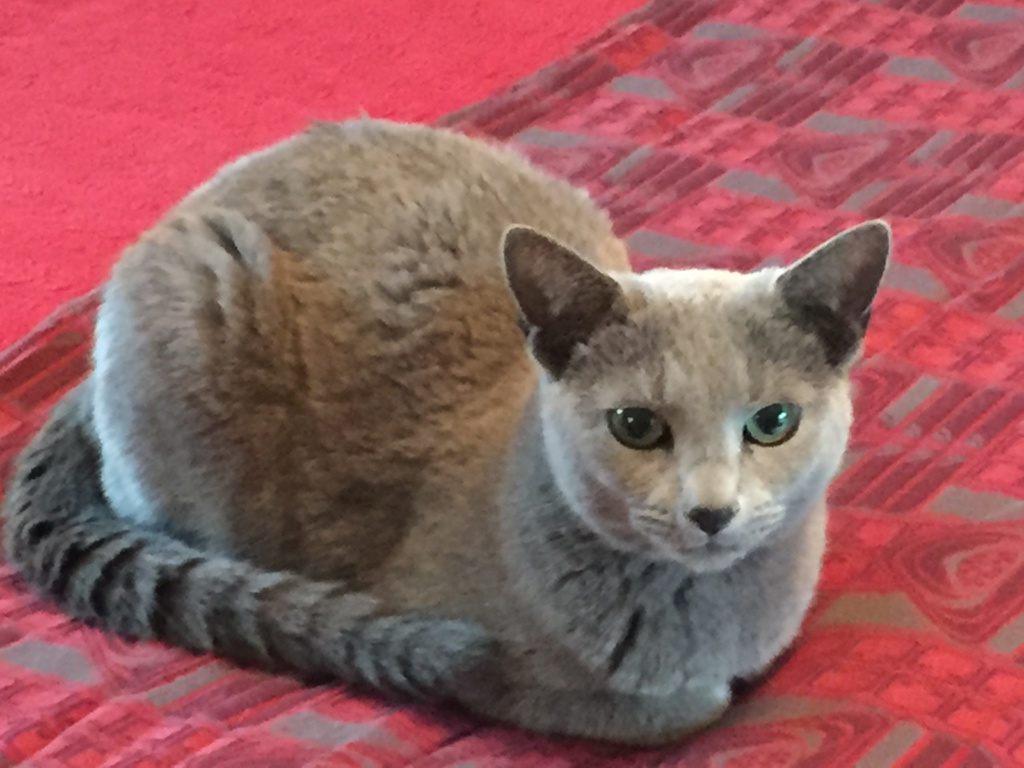
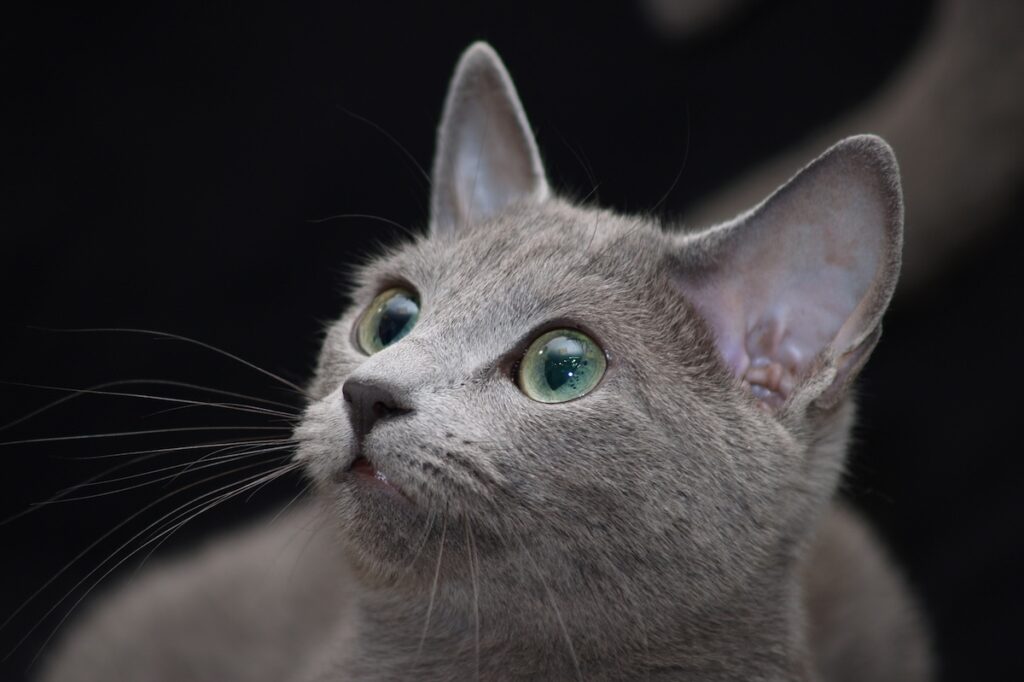
The coat just doesn’t work like other coats. It picks up light weirdly. Unfairly. Not grey. Not blue. Some in-between liquid thing that looks silver-ish in morning light and smokier, almost purple, at dinnertime. The secret is that every single hair has a silver tip on it — that’s where the shimmer comes from. And when you brush a hand backwards against it, the fur stays put. Doesn’t spring back. That’s the density I keep trying to describe. I’m not great at describing it actually. You really have to touch one.
Russian Blues come in one color. One. Not a range, not a family, not a selection. If somebody’s advertising a «rare chocolate Russian Blue» or a «tabby variant» or a «longhaired pointed show-quality Russian Blue with full paperwork» — please, listen. Close the tab. Go outside. Breathe. What you’re looking at is either a totally different breed, a mixed-breed cat, or outright fraud.
Emerald Eyes: When They Appear
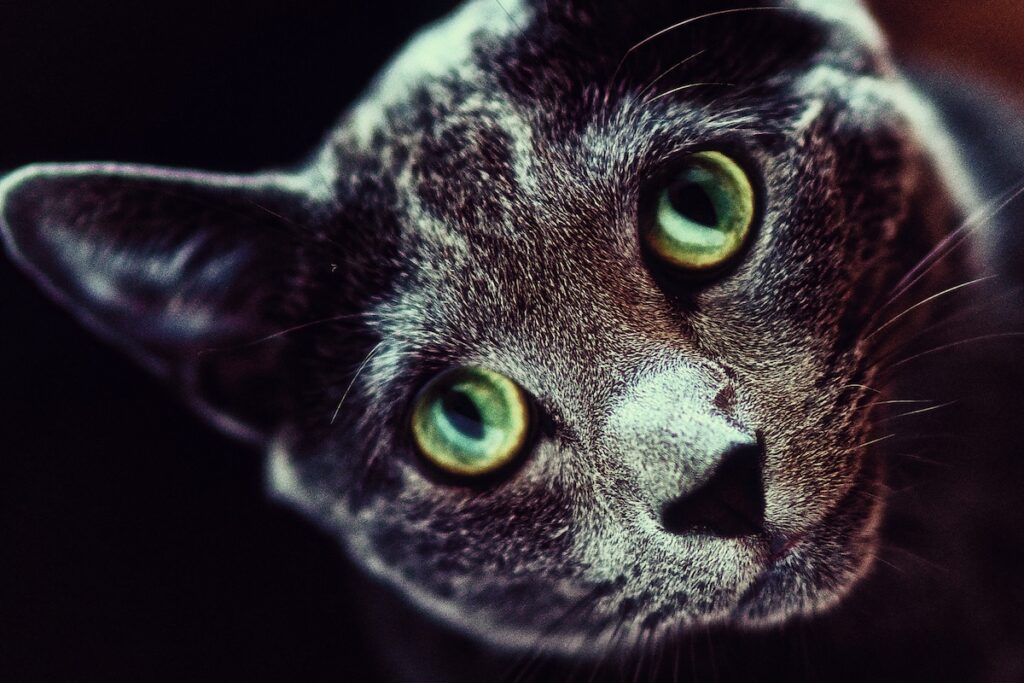
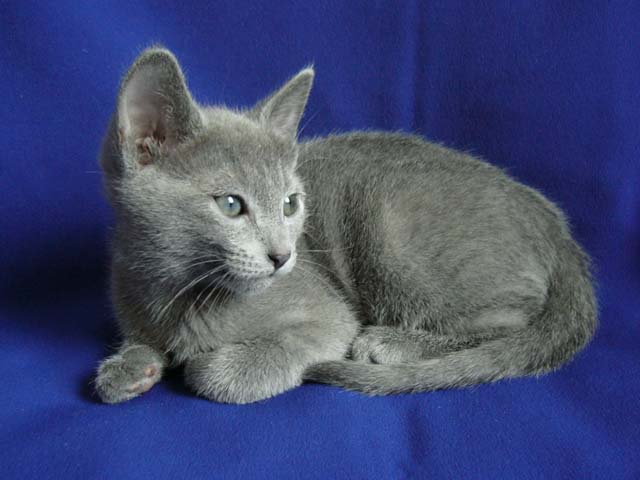
Quick thing, because this trips up a lot of first-time buyers: kittens are not born with the green eyes. They’re born with plain yellow ones. A green ring appears around the pupil around four months. That full embarrassing emerald green doesn’t really settle until she’s almost two.
So if you’re looking at photos from your breeder — twelve-week-old kitten, eyes kind of amber — that is totally normal. Good, even. It means nobody’s running Photoshop over the images. Hang tight.
Breed Standard vs Random Blue Cats
Gonna say a thing. It’ll annoy some people. Saying it anyway.
A grey cat is not a Russian Blue.
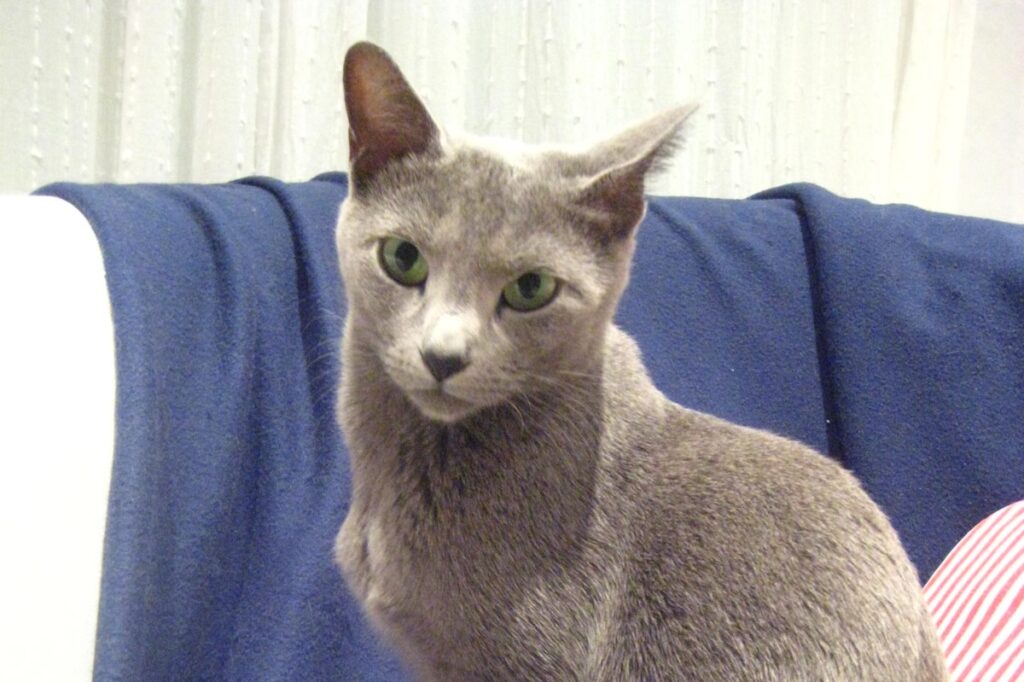
I say this with love. I say this knowing I will get emails. But there is a real, specific, pedigreed breed called the Russian Blue, with a very precise wedge-shaped head, wide-set pointed ears, a specific body length, that exact green eye color, and a dense double coat with silver tipping. And there are also millions of perfectly lovely grey domestic shorthairs who look sort of, kind of, vaguely similar in the right light.
If the seller can’t produce papers from one of the real registries — CFA, TICA, FIFe, another recognized body — then what you’re looking at isn’t a Russian Blue. It’s a grey cat.
(Which, again, is a wonderful thing to be. Grey cats are excellent. Please adopt them. Just not at Russian Blue prices.)
Russian Blue Temperament: What Living With One Is Actually Like
Reserved With Strangers, Devoted to Their People
Here is the single truest thing I know about this breed. I have written this sentence in approximately twelve versions of this article over twelve years. It has never been less true:
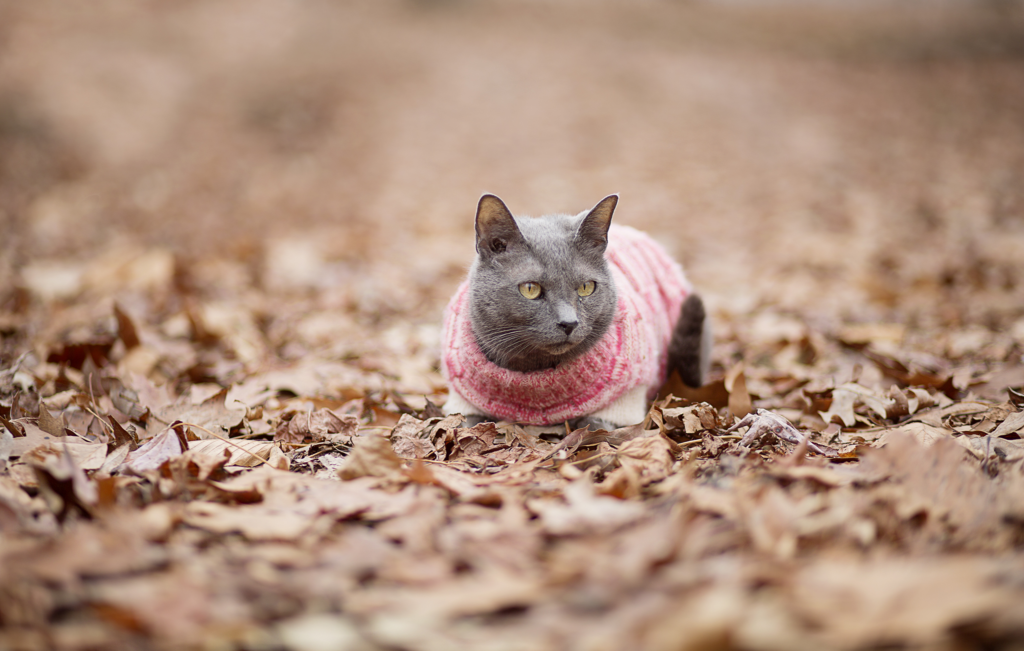
A Russian Blue picks a person.
And it’s almost never the person who feeds her.
Our setup at home: husband David (who does absolutely nothing to earn cat adoration and gets it anyway), me (who does literally everything and gets respectful-coworker energy in return), and three cats — Misha, Anya, Pepper. Misha belongs to David. One hundred percent. Not even a little bit mine. Unambiguously. When he comes home from work she trots to the door like a Labrador. Me walking in: she looks up from her nap, gives me maybe the courtesy a hotel concierge gives a guest who hasn’t bothered to tip, and closes her eyes again. In this house I am the kitchen staff, David is the VIP. I’ve mostly stopped being offended about it.
Strangers? Poof. Gone. Not scared exactly, more like they looked at the situation and decided, no thank you. David’s mom visited last spring for three days. Three days. She saw Pepper zero times. Zero. Pepper just lived under our bed the entire weekend like a tiny silver fugitive. Uber pulls away from the house on Sunday afternoon, and I swear to you — ninety seconds later — Pepper strolls into the kitchen like she’d been there the whole time. Completely casual. Tail up. Totally normal day, nothing to see.
The Intellectual Escape Artist
Let me prepare you for something.
Russian Blues are smart. Not just «oh she knows her name» smart. I’m talking figures-out-your-cabinet-locks smart. Actual-expenses smart. The kind of smart where, no joke, you will end up spending real money childproofing your kitchen.
Actual things my three cats have done, with witnesses:
- Anya — literally just by watching me do it, I think — figured out how to open the pantry door. Hooks one paw under the edge and pulls. I’ve reinforced that door twice. She wins every time.
- Pepper worked out that knocking my phone off the nightstand at 5:47 in the morning makes it land screen-up on the rug, lights the screen, and eventually gets me vertical. She does this maybe three mornings a week. I haven’t figured out how to stop her yet. I’m not sure I will.
- Misha watches me make coffee every morning. Not casually — like, studying. Quiet little scientist face. Back in November I walked in and caught her with one paw actually on the brew button. Not near it. ON it. I’ve been worried about it ever since.
Every Russian Blue owner I know has a pile of stories like this. Every one. They get into sealed treat bags. Open screwtop jars. Somehow — I really can’t explain how — they always know which specific drawer the tuna’s in. Witchcraft is a working theory.
So: puzzle feeders. Puzzle toys. Tall furniture. A functional sense of humor. Do not — really do not — skip the puzzle toys step. Because a bored Russian Blue absolutely will invent her own entertainment, and speaking from twelve years of personal experience here, you are not going to like what she picks.
Good With Kids, Pets, and Routines
They do fine with kids as long as the kids have been taught not to grab. They do fine with calm dogs. And they are, I’m not kidding, fundamentalists about routine. Zealots.
Feed one at 7 a.m. every day for half a year. Then, on some random Saturday, I dare you to try sleeping in past that time. By 6:58 you will have a small silver cat on your chest. She will be staring into your face. She will be meowing the specific, quiet, dignified meow that means I’m being polite right now. Please do not make me stop being polite. By 7:04 she’s on the keyboard. By 7:10 she is crying softly from the kitchen floor like an abandoned Victorian orphan whose mother died of cholera.
This is not a breed for chaotic schedules. I say this as someone who has been training her own chaos out of herself for twelve years to accommodate these cats. You do not win. Just feed them on time.
Health, Lifespan, and the Allergy Question
Why They’re One of the Healthiest Pedigree Breeds
Here’s what sold me on this breed, specifically, when I was trying to decide. They’re healthy. Like — embarrassingly healthy. Almost to the point where it raises questions.
No HCM the way Maine Coons have HCM. No PKD the way Persians have PKD. No squashed-face breathing problems. The gene pool is smallish, which carries its own worries — you can’t fully rule out inbreeding depression in a tight line — but no single disease follows this breed around the way HCM follows Maine Coons. Fifteen years is the normal lifespan. Eighteen is pretty common actually. My cousin’s Elsie hit twenty-two and I keep bringing that up because, come on, twenty-two.
Having said that — good breeders still run tests anyway. Ask to see results. If a breeder gets squirrelly about it, dodges the question, gets defensive — there’s your answer.
The Weight Problem Nobody Warns You About
Look. The actual single biggest health risk? They’ll eat you out of house and home. And then ask for seconds with enormous, wet, tragic eyes.
Russian Blues are notorious — NOTORIOUS — for being food motivated. They’ll beg. They’ll meow piteously from just out of your sightline. They’ll sit next to a bowl that was refilled ninety minutes ago and stare at you like they genuinely have been forgotten for their whole short lives.
I have watched, with my own two eyes, a healthy well-fed Russian Blue convince a dinner party of six reasonable adult humans that she was starving to death. She had eaten forty minutes earlier. She had the vet records. She had the receipts. She did not care and neither, in the end, did they. A woman in a cashmere sweater fed her salmon off her plate.
Measure the food. Kitchen scale. Don’t look at her face while you’re doing it. Seriously, I’m gonna say this twice because it matters: don’t look at her face. An overweight Russian Blue is a fast-track to arthritis, diabetes, shorter life — and eventually you’re sitting in an exam room hearing your vet say «she’s two pounds over, we need to talk about that,» and you’ll go home and lie awake feeling guilty about every treat you gave in.
Are Russian Blues Really Hypoallergenic?
Kinda. Sort of. Mostly. Let me actually explain this one because a lot of what you’ll read online about it is just wrong.
Zero cats are fully hypoallergenic. Just isn’t a thing. What Russian Blues do have going for them: they produce less Fel d 1 than most breeds (that’s the protein that actually triggers most cat allergies) and they barely shed, so less dander floats around your house in general. For a subset of mild-to-moderate allergy sufferers, that combination is workable.
My friend Rachel spent her whole twenties convinced she could never own a cat. She’d go to her college roommate’s dorm, last ten minutes, come out red-eyed and coughing. She now lives with a Russian Blue named Olive, going on three years, and is — in her words, texting me at 11 p.m. last week — «fine, truly, don’t tell my allergist.»
Whereas my other friend, Jess? She had a worse reaction to a Russian Blue than to literally any other cat she’d been exposed to before.
So. My actual advice. The real one. Not the internet one:
Before anything — before the contract, before the deposit, before you name her in your head — get yourself to a cat show or a cattery. Plan to stay two hours. Not fifteen minutes. Not a quick hello. Two full hours in the same room as these cats. Whatever your sinuses do in hour two will tell you everything you need to know, and they won’t be gentle about it. No article is going to do that work for you.
Daily Care: Grooming, Feeding, and Enrichment
The Easiest Coat in the Fancy
If you’ve ever had a longhaired cat, get ready to cry with relief.
A medium-tooth comb. Maybe once a week. Twice if you’re feeling dedicated. That’s the whole routine. There’s a spring shed — brief, nothing, nothing like what my Persian-owning friends deal with (they really do suffer, I feel for them) — and during that three-week window I bump it up to every other day. Then we’re back to once a week. That’s it.
I have bathed a Russian Blue exactly once in twelve years. Once. It was Pepper. She rolled in olive oil. I don’t want to talk about it. Ask me another time.
Nails every two to three weeks. Ears: check for wax. Teeth: brush if your cat lets you, which mine do not, so we use dental treats and we trust the process and we try not to think about it too hard.
Feeding Without the Guilt Trip
Mine eat twice a day, on the dot: 7 a.m., 6 p.m. I weigh portions out on a kitchen scale because if you just eyeball it, you’ll end up with a chunky cat. I’ve seen it happen. Base is wet food, decent quality. Dry food comes out only in puzzle feeders as enrichment. Fresh water in ceramic bowls — not plastic, never plastic, they loathe plastic bowls, and also plastic holds oils that can cause feline acne on the chin.
Can I tell you the single biggest mistake I see new owners make? The one I want to tattoo on a small inexpensive bracelet?
Using treats to stop the meowing.
Do it once and the war is lost. Lost forever. What you’ve just done is teach your very smart, very relentless cat that complaining works — and specifically, that it works in the form of snacks. Don’t. Be strong. Be boring. Be, for ten extremely long minutes, a deaf and unmoved stone. She’ll stop. I promise.
Mental Enrichment for a Clever Cat
Three things every Russian Blue needs. I will fight about this.
Height. A tall cat tree. Shelves on the walls. Permission to be on top of the refrigerator. She wants to watch her little empire from above, and if you do not give her an acceptable high perch, she will find an unacceptable one. My grandmother’s antique credenza was an unacceptable one. Anya broke it.
Puzzles. Treat balls, foraging mats, slow feeders, frozen lick mats — the whole genre. You need to rotate them weekly because she will solve every single one, and fast, and she’ll look a little insulted about how easy it was. Once it’s solved, it’s not a puzzle anymore. It’s just a bowl.
A window. Ideally with a bird feeder outside. We call it cat TV around the house. Pepper will zone out at the feeder for three-quarters of an hour straight. It is the calmest she ever gets. I sometimes watch her watching it and feel a peace I do not otherwise find in the modern world.
Russian Blue Prices in 2026: What You Actually Pay (and Why)
OK. Money section. This is the part where I’ve watched the most new owners get burned — both on their wallets and emotionally — so read closely.
Pet Quality vs Show Quality vs Breeder Quality
Quick vocabulary moment. Nobody explains this properly and then people feel secretly, stupidly insulted when a breeder uses the term «pet quality.» I’ve seen it happen.
Pet quality is not «defective.» I wish the fancy used a better term honestly. What it means in practice: the cat has something tiny cosmetic — ears set slightly wrong for the standard, a tail tip a little off, eye color shade too pale, stuff only a national-level judge would catch on a careful look — that takes her out of the show ring. Everything else about her is correct. Fully pedigreed. Real papers. Gorgeous in every way that matters in a living room. Most kittens placed with families are pet quality, somewhere around 90%. Yours almost certainly will be. Don’t read anything negative into the label.
Show quality — the kitten’s conformation matches the breed standard closely enough for the ring. Less common. Priced higher.
Breeder quality means she’s show-worthy and her breeder thinks her bloodline should continue. She’ll be sold intact, with breeding rights, on a different tier of contract entirely.
Almost every pet-quality kitten is sold with a mandatory spay/neuter clause. This is normal. This is ethical. Don’t take it personally. It’s not about you.
Price Factors: Bloodline, Region, Age
Here’s where the 2026 US market currently sits, based on breeder listings I’ve been tracking and the hallway gossip I’ve picked up at shows this past year:
| Tier | Typical Price (USD) | What You’re Paying For |
| Rescue / retired adult from breeder | $150–$600 | Older cat, already fixed, known personality — genuinely a bargain |
| Pet quality kitten, regional breeder | $1,200–$2,000 | Registered pedigree, vet-checked, spayed/neutered |
| Pet quality kitten, CFA champion lines | $2,000–$2,800 | Strong bloodline, genetic testing, breeder mentorship |
| Show quality kitten | $2,800–$3,500 | Breed-standard conformation |
| Breeder quality, imported lines | $3,500–$5,000+ | Intact, breeding rights, international pedigree |
A couple concrete numbers from the past year, just so this isn’t all vibes: a well-known Ohio cattery is currently placing kittens at $3,400. The broader survey data across the country puts pet-quality kittens somewhere between $800 and $2,000, with the upper tier over $2,000. Add about 15 to 20% if you’re buying in California, NYC, or the Seattle area — coastal markup is real. Prices in the Midwest and rural South tend to sit a bit below those averages.
Real quick side note — someone always asks. The Nebelung is the longhaired cousin breed, developed out of Russian Blue lines in the 80s. Prices run $1,200 to $3,500 and the wait lists are worse. Noticeably rarer breed. Genuinely hard to find a kitten.
Hidden Costs of the First Year
The kitten price is not the price. Budget, honestly, for:
- First vet visit and boosters: $150–$300
- Spay/neuter if not included: $200–$500
- Microchip: ~$50
- Starter stuff (tree, carriers, litter boxes, bowls, scratchers, a few toys): $300–$500
- Food for a year: $500–$900
- Pet insurance (yes it’s optional — but I once had a cat swallow a hair tie, so: I’d budget for it): $240–$480
If the kitten price itself makes you nervous — the first-year all-in number is going to genuinely hurt. Be honest with yourself about that before you fall for a photo.
Where to Buy a Russian Blue (and How to Avoid Getting Burned)
The Breeders Worth Your Wait List
Okay. This breed is rare. And I’m not saying that for drama, I’m saying it as fact. There are fewer Russian Blue breeders in the entire country than there are Maine Coon breeders in one decent-sized state. Most of the reputable Russian Blue folks are running wait lists between three and twelve months out.
And so: if a breeder is advertising kittens «available right now, pick your color, whenever you want» — that’s weird. Trust that feeling. What a responsible breeder actually does is plan her litters based on demand she already sees coming, and in most cases the kittens have families lined up before they’re even born.
Where to actually start looking:
Three places. CFA’s Find-A-Breeder at cfa.org — that’s the official roster of catteries registered with them. TICA keeps its own list at tica.org; those folks signed the TICA Code of Ethics which I like as a baseline filter. And then the Russian Blue Fanciers has its own members-only directory, smaller, more curated. Active catteries I’m aware of in that last group are scattered around — Arizona, Florida, Kentucky, Michigan, Minnesota, New York, North Carolina, Ohio, Oklahoma, Oregon, Illinois, Louisiana, Texas, Missouri, plus probably a few I’m forgetting.
I’m not naming specific catteries. The list changes. I don’t do endorsements. What I will tell you is what a good breeder looks like when you meet her.
She will sit at her kitchen table with you. Coffee. Dog-eared pedigree binder. She’ll ask you more questions than you ask her. Your other pets. Your work schedule. Whether you’ve ever had a cat before. Whether there are kids. Whether you’ve given up a pet before — and if so, what happened. What’s your plan if you got laid off next month. She’ll also quietly watch how you handle her cats when they come sniff at your shoes. You’re basically in a job interview.
Leave that visit feeling like you just got mildly grilled? Good sign. If you left feeling like it all went way too smoothly — worry about that.
Red Flags in Online Listings
Tattoo list. I want every single new buyer to have this tattooed on their forearm:
- Prices way below market. Any ad reading «Russian Blue kitten — $400» is either not actually a Russian Blue or it’s a straight-up scam. Doesn’t matter how sweet the photos look.
- No papers at all — or «papers are available for an extra fee.» Nope. A legitimate CFA or TICA kitten comes with her papers. That’s the deal.
- Anybody shipping anywhere sight-unseen, only taking cash or wires. That’s a scam. Don’t even answer.
- Kittens «ready to go home» at 6 or 7 weeks. Reputable breeders don’t place kittens before 12, and most not before 14. A seven-week-old kitten is still a baby and still needs her mother.
- Stock photos. Do a reverse image search. You’d be amazed what you find.
- Any breeder who refuses a cattery visit or even a video call. Hard no. Not open for discussion.
I know a woman — smart, a lawyer even — who got scammed on a listing last spring. She sent $850 via wire transfer to a «breeder» supposedly in Texas. Who then, of course, went silent. No kitten ever arrived. No refund. Nothing you can really do after the fact. She cried. I cried with her. Don’t be her. I say this with love. The entire reason I write these articles — the whole actual reason — is so you don’t have to be her.
Adoption and Rescue Options
Yes, you can rescue a Russian Blue. Set your expectations gently.
Actual pedigreed Russian Blues in shelters? Basically don’t exist. What you’ll find on Petfinder under «Russian Blue mix» is, almost always, a grey domestic shorthair with the general vibe. Those cats are great. They need homes. Adopt one if your heart’s leaning that way, no shame in it at all. Just — don’t pay pedigree money for a mixed-breed cat, and don’t tell yourself a story about what she is that isn’t true.
The cheaper path, if you know about it: retired adults from breeders. These are usually former show cats, or breeding queens winding down their careers, getting placed into regular homes somewhere around age five to seven. Spayed/neutered already. Up to date on everything. Personality is a known quantity. Most are placed for $400 to $900.
This — seriously — is the single best-value path into this breed. Hardly anyone writes about it. Ask around.
American Cat Shows: An Insider’s Tour
I’ve probably been to a hundred cat shows at this point. A hundred. Folding chairs. Weirdly overpriced pretzels. Me, notebook in hand, bothering breeders in their benching areas. So this is what I’d tell a friend:
The Big Three: CFA, TICA, and the International
CFA (Cat Fanciers’ Association). The old guard. Formal. They take it seriously. Strict standards. Judges work cats one at a time in individual rings, which yes is painfully slow to watch, but if you actually care about the craft it’s kind of mesmerizing. The top breeders in the US compete here. If your eventual goal is a show-quality Russian Blue, most likely her grandparents earned their titles at CFA.
TICA (The International Cat Association). Newer organization, looser feel, friendlier vibe overall. Much more welcoming to first-time visitors. They recognize a wider range of breeds too. If you’ve never been to a cat show and want a gentle intro, start at TICA. Bring the kids. These shows are honestly great weekend plans.
The CFA International Cat Show & Expo in Cleveland has historically been the biggest pedigree show in the country. Thousands of cats. Tens of thousands of human visitors. It’s basically the cat world’s version of the Met Gala. However — and this is important if you’ve got it on your calendar — the 2026 CFA International got pushed to October 9–10, 2027. Adjust your plans.
Shows Worth Traveling For in 2026
The ones I’d actually drive for this year:
World of Pets (East Coast, late January). An 18-ring TICA show tucked inside a bigger pet expo. Good first-show setting. Busy, fun.
Seacoast Cat Club, Concord, NH (early May). Small, well-run CFA show with a friendly atmosphere. This is a great one if you want to meet breeders and not feel hurried about it.
Rebel Rousers Cat Club, Lawrenceville, GA (early May). A steady CFA weekend down in the Southeast.
CatCon, Pasadena, CA (October 10–11). Totally different beast. Not really a pedigree show in the traditional sense — more like, I don’t know, ComicCon but for cat people. Celebrity cats (yes that’s a thing). Seminars. Adoption corners. A cat costume contest. Lots of glitter. Russian Blue presence bounces around year to year but the whole thing is just a lot of fun. Wear walkable shoes and don’t plan on keeping your dignity intact.
McKenzie River Cat Club, Portland, OR (March 21–22). Good Pacific Northwest CFA show.
Your local TICA weekend. These happen pretty much every weekend somewhere across the country. Pull up tica.org’s calendar. Odds are high there’s one within a two-hour drive of wherever you’re sitting right now.
What to Expect as a First-Time Visitor
Get there early. Bring cash — entry is usually $5 to $15. Bring more cash for the vendor booths, because I’m telling you right now: you will not leave empty-handed. It never happens. (My worst-ever purchase: a hand-painted porcelain food bowl for $65 from a woman in Vermont. I do not regret it. It’s still on my counter. Pepper hates it.)
Do not — and I cannot say this enough — touch cats without asking. Yes I know they’re sitting right in front of you. Yes I know they look bored and touchable. But a lot of these cats are about to go to a judging ring, and sanitation at a cat show is no joke. Use the hand sanitizer — there are dispensers set up everywhere, you’ll see them.
The real move, if you’re scouting for a breed: head to the benching area, find where the Russian Blues are caged up (there won’t be many, it’s easy), then wait. Don’t rush her. Wait for a beat where the breeder isn’t running a cat to a ring or grooming one. Walk over. Say hi, say you’re looking into the breed. Ask if she’s got a wait list going.
Here’s a thing nobody tells you. For free, because I’m in a decent mood today: don’t ask about the price first thing. Not in the first ten seconds, not in the first two minutes. That’s tourist behavior and breeders clock it immediately. Ask about her cats instead. About temperament. About the current litter — anyone have the ear thing, anyone silly, anyone shy. Ask what she thinks is the most common mistake new owners make. Breeders gossip with each other about applicants — they really, really do — and you want to be the applicant they’re saying nice things about. The price conversation happens on its own eventually. By then she’ll want to place a cat with you.
Is a Russian Blue Right for You?
The Ideal Home for This Breed
- You work from home, or at least you’re home on a predictable schedule
- Your home is more «quiet evenings with a book» than «loud dinner parties till midnight»
- You’ve got the patience to let a new cat take her time warming up — two, three weeks
- You’ll actually put up the cat tree and rotate the puzzle toys — not sit on the sofa thinking you should
- You can afford a first-year all-in of $2,500–$4,500
- You appreciate affection on the cat’s terms, not yours
When a Russian Blue Is the Wrong Choice
- Your house is Grand Central Station for guests, parties, contractors
- You travel more than a week a month with no sitter
- You want a cat that’s instantly cuddly for your kids — please, get a Ragdoll, I say that lovingly
- You actually want a dog (you want a dog)
- Your youngest is under five and still pulling tails
- Your schedule changes week to week
Final Verdict From Somebody Who’s Had Three
Here’s my honest take, for what it’s worth.
A Russian Blue is not a flashy cat. Not a Bengal. She is not the kind of animal that’s going to bolt to the door when you get home and flop onto her back for a belly rub. What she is instead — from my perspective after twelve years in this — is probably the most quietly rewarding breed in the whole fancy. She treats you like somebody worth taking seriously from the first day. She takes it seriously. And she expects you to match that, every day, no exceptions.
Misha is on my keyboard. Right now. Pressing her small silver forehead into my wrist. Meowing softly because I’m late with her dinner by nine minutes. She is deeply, absurdly, almost Victorianly unimpressed with me. She’ll always be a tiny bit unimpressed with me. That’s just the arrangement we have. And honestly? Twelve years in — no, I wouldn’t swap it for anything else in the world.
Frequently Asked Questions
How much does a Russian Blue cost in 2026?
Budget around $1,200–$2,000 for a pet-quality kitten from a solid CFA or TICA breeder.
Show quality is usually $2,800+ and can go well over $3,500.
The hidden option almost nobody mentions: retired adults from breeders, often $400–$900.
Expect higher prices on the coasts and lower prices in the Midwest or rural South.
Are Russian Blue cats truly hypoallergenic?
No cat is truly hypoallergenic.
Russian Blues often produce lower Fel d 1 levels than many breeds, and they shed very little. That combination makes them workable for plenty of allergy sufferers.
But reactions vary enormously person to person. Spend real time with the breed before committing.
How long do Russian Blue cats live?
Most make it to 15–20 years.
Some live past 22. Among pedigree breeds, they are considered one of the longest-lived thanks to a generally strong health record.
What’s the difference between a Russian Blue and a Nebelung?
A Nebelung is basically the longhaired version from the same breed family.
They were developed from Russian Blue lines in the 1980s.
Temperament, color and body type are very similar. The main difference is the soft semi-long coat.
Nebelungs are much rarer and usually cost $1,200–$3,500.
Where can I find a reputable Russian Blue breeder in the US?
Start with CFA’s Find-A-Breeder and TICA breeder listings.
The Russian Blue Fanciers directory is also worth checking.
Plan on a wait list of three to twelve months.
Best advice: go to a local cat show and meet breeders face to face.
Are they good for first-time owners?
Yes.
They are easy on the beginner stuff: low grooming, healthy genes, clean litter habits.
But they do best with consistency — routine feeding times, predictable schedules and someone around in the evenings.
Do they get along with dogs and other cats?
Usually yes, if introductions are done slowly.
Calm dogs work best. High prey-drive dogs are not ideal.
With cats, expect peaceful cohabitation more than instant cuddle buddies.
Can I leave one alone while I’m at work?
Yes — better than many pedigree breeds.
An eight-hour workday is usually fine, especially with toys, puzzle feeders and a window perch.
What they dislike is long stretches of nobody being around.
Do Russian Blue cats shed a lot?
No.
The dense coat traps loose hair instead of dropping it everywhere, so very little ends up on furniture or clothing.
Compared with most breeds, shedding is minimal.
Are male or female Russian Blues more affectionate?
Males often lean goofier and more openly affectionate.
Females can seem reserved at first, but once bonded they are deeply loyal.
That said, the individual kitten and early socialization matter more than sex.
Claire Donovan has been writing about cats for twelve years. Her work has shown up in cat fancier publications, various breed magazines, and assorted pet-industry places over the years. She’s based in the Hudson Valley — husband David, three very demanding Russian Blues named Misha, Anya, and Pepper, and a lint roller situation that’s honestly gotten out of hand.