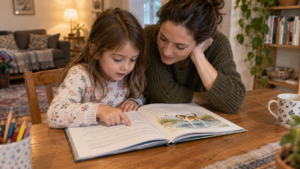


The child calls their grandmother. Pause. «Happy birthday.» Another pause. «Well, all the best.» Hangs up. The grandmother smiles, but feels a little empty inside. The parent hangs up the phone, thinking the child could have been warmer. The thought arises that they are becoming callous or don't appreciate loved ones. In reality, most often it's not about character, but about a lack of words.
This is not a question of upbringing. This is a question of vocabulary.

Bilingual children often have three phrases in Russian for a celebration. «Happy birthday.» After that, their mind goes blank. They'd like to say something else, but they don't know how. In English, there's a larger set of ready-made phrases, and they come out automatically. In Russian, there are few such automatic phrases, and children hear them less often. The child understands that they need to offer congratulations. They know it's important. But they don't see the «rails» in front of them to arrive at a warm wish.
Parents in such moments go searching and type "happy birthday in Russian" or "birthday wishes in Russian." They give the child a list of ready-made phrases, but don't explain how these phrases sound in spoken language, who they are suitable for, or in what situation they are best used.
| Phrase | Who to tell | Tone |
|---|---|---|
| Happy birthday! | To a friend, a classmate | Super casual |
| Happy birthday! | Hello everyone | Neutral |
| Happy birthday! | Acquaintances, colleagues | A little more formally |
| Happy birthday! | Older, unfamiliar | Politely |
| Allow me to congratulate you! | Official setting | Formally |
| Happy anniversary! | If it's a milestone birthday | Neutral |
Pronunciation and the «formula» for a greeting
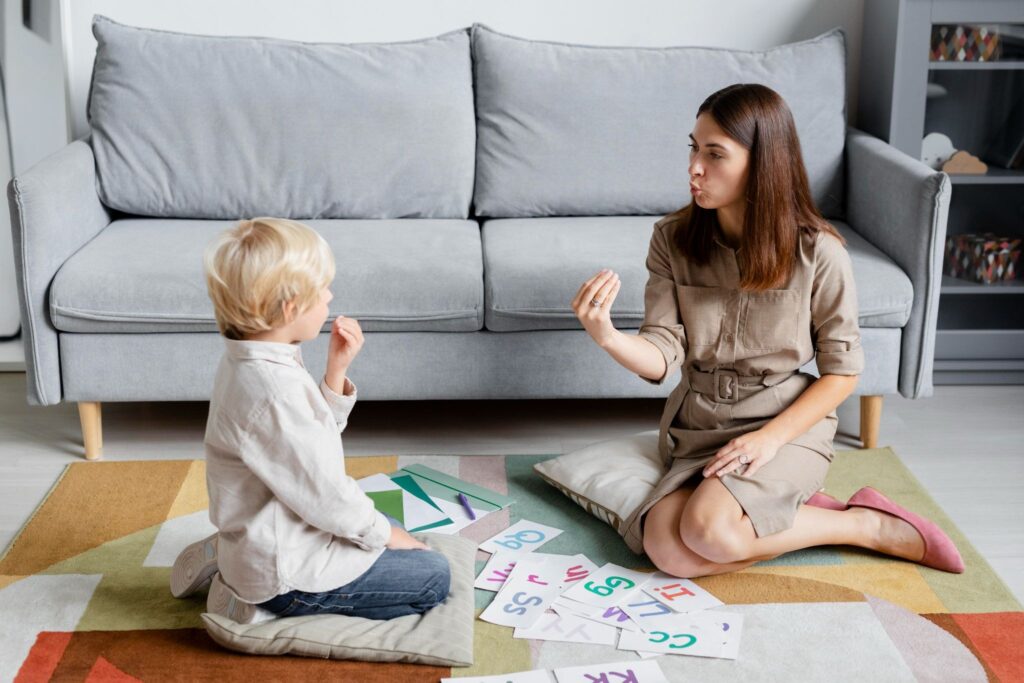
There's a small detail that native speakers notice instantly. The correct stress in the word «рождения» (birthday). «С днём рожДЕния,» with the stress on the second syllable. Not «рОждения.» The difference is small, but the ear catches it. The formula is also single. «С днём,» not «с днём.» It's easier to remember as a set phrase and not break down the grammatical cases. This kind of memorization of polite formulas is perfectly acceptable; that's how living language works.
The colloquial «happy birthday» (с днюхой) is appropriate among peers. It sounds fine in a chat with a friend or classmate. It's not okay in a conversation with your grandmother, teacher, or neighbor. Not because it's rude, but because it's too personal and friendly. The tone doesn't match the situation.
Why are Russian congratulations longer?
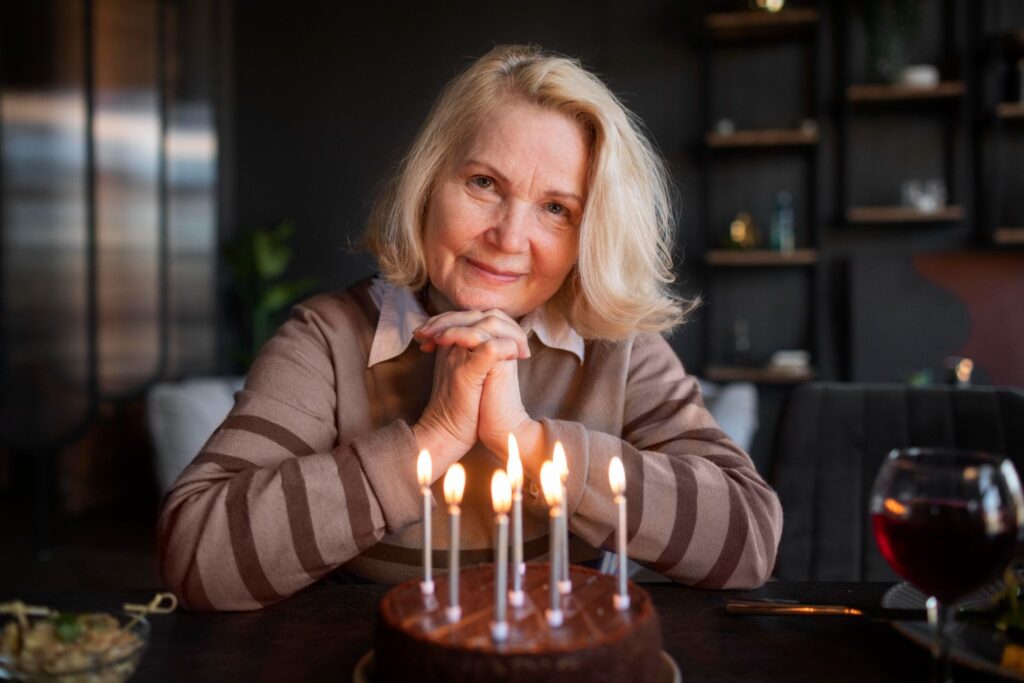
In English, it's «happy birthday» plus something like «have a great day,» and everyone is happy. In Russian, it's customary to say a bit more and more warmly. Wishes for health, happiness, success, and luck. Sometimes a small personal phrase. All of this together forms a little speech, even if it only takes twenty seconds. For a bilingual child, this is an unusual format. At home, they more often hear three words and then silence. Mom said three words. Dad said three words. So, that's how it should be.
A good habit for parents who want to maintain Russian. Watch movies and cartoons in Russian and specifically notice scenes with congratulations. In such moments, the language sounds more lively than in a textbook. There you can hear how people really speak when something is important to them.
Happy birthday!«
In Russian, a congratulation rarely ends with the first three words. A wish usually follows them. Not according to grammar rules, but according to the rules of human communication. When they are absent, the phrase sounds like a formality.
There are simple wishes that don't sound stiff.
"I wish you health and happiness.
«All the best.
«May all your dreams come true.
«Good luck and all the best.
This is convenient as a starter kit. The child can choose one phrase that sounds good to them and repeat it several times in different situations. It's easier to build upon it from there.
It's convenient for children to rely on the beginning «I wish you» and then add their own. I wish you joy. I wish you new friends. I wish you many years of life and health. This way, the phrase remains lively and doesn't turn into a memorized set of words.
A bit warmer, but still simple, are phrases like these.
«I wish you all the very best.
«May this day be special.».
«I wish you the fulfillment of all your desires.
For grandmothers and grandfathers, many families have separate words.
«I wish you good health, Grandma, you are the best.».
«Many years and joy.
«Thank you for being you.
This last phrase is rarely heard in real conversations, although it seems «too strong» to parents. In reality, grandmothers remember it for a long time. For a child, it's three words. For an adult, it's a big signal that they are needed and important.
The phrase «many years» sounds solemn and a bit bookish. It's more often used in toasts and official speeches. In a typical Russian birthday greeting, «long years» is closer. You can explain to a child once that «I wish you many years of life and health» sounds beautiful, but in everyday conversation, «I wish you long years and health» is simpler and warmer. While birthday wishes in English are usually limited to a couple of short lines, in Russian, such wishes often turn into a short speech. This isn't mandatory, but a cultural habit. With the words «I wish you» in Russian, you can stay close to a person a little longer, even if you're far away.
| Wish | To whom | Tone |
|---|---|---|
| I wish you health and happiness. | Hello everyone | Universal |
| All the very best | Hello everyone | Universal |
| Long life and joy | To Grandma, to Grandpa | Warm |
| Thank you for being you | To Grandma, to Mom | Very warm |
| May all dreams come true | To a friend, to a child | Easy |
| May all your wishes come true | Hello everyone | Universal |
| May this day be special | To loved ones | Informal |
| Stay as wonderful | for an adult | Warm |
| I wish you smiles and a good mood. | To a friend | Easy |
| You are the best. | Mom, Dad | Close |
Birthday songs
Families in emigration often face a simple question: Which song to sing – an English one or a Russian one? Both traditions coexist peacefully in Russia. On one holiday Both versions can be heard. And this is not a conflict, but a normal blend.
The Russian text to the same melody starts easily. The «Happy Birthday» motif is the same, with the words «Happy birthday to you.» In the third line, instead of «dear,» the birthday person's name is inserted. Children who have already heard the English version pick up the Russian one almost immediately. They don't need to get used to the melody again.
«Karavay» is a different story. Not about cake, but about a game. The song «Kak na imininy» (Like for a name day) is connected with movement. Children walk in a circle, spread out, come together. They show with their hands «this wide» and «this tall.» The words are remembered along with the gestures. If «Karavay» is already part of your family's life, children usually don't forget it, even if they speak little Russian in other situations.
Messages and postcards
Speaking and writing in Russian feel like two different skills. Many bilingual children experience this very acutely. Saying «Happy Birthday» out loud comes easily. A card or message to Grandma causes fear. What if there's a mistake? What if it's «not Russian»?.
It's important to show how this looks in real life, not in a textbook.
A message to a friend is usually short and informal.
«Happy birthday. All the best. Be happy.
That's how people write in chat. They don't expect a long speech there.
You write to your grandmother differently because the letter remains. She will reread it, show it to her friends, and keep it in a drawer. It's a working plan you can start with.
«Dear Grandma, happy birthday. I wish you health and happiness. I miss you. Kisses, [Your Name].
This isn't perfectly literary, but it's human. For a start, that's more than enough.
Children often write the shortest messages to their mothers or fathers.
«Mom, happy holiday. You're the best. I love you.
In Russian, «lyublyu tebya» sounds more significant than the common English «I love you.» It's used less often in everyday adult conversation. Therefore, in a card from a child, this phrase is perceived as an event, not a «routine closing.».
If a child is just beginning to write in Russian, you can agree on a simple three-line rule. A greeting. One congratulatory phrase. One short wish. Nothing more is needed. Over time, the child will want to add a couple more words themselves.
How to respond to congratulations
Another area where children often get lost is in responding to congratulations. They are told something long and warm in Russian. They get flustered and say «spasibo» or «thank you.» And that's where it ends.
In live conversations, the following answers are most common.
«Thanks a lot. The simplest and most versatile option.
«Oh, thank you, I'm so glad.» The word «oh» makes the phrase sound natural, not rehearsed.
«Thank you, I'm very pleased.» That's closer to adult speech.
Sometimes teenagers hear the phrase «I am touched» (masculine or feminine form). It's more suited for formal settings and adult celebrations. But it's also useful to know. If only so a child can understand someone else's response.
The easiest way to help is in advance. The day before the holiday, you can ask in a calm tone, «What will you say when Grandma calls to congratulate you?» Not as a test, but as a normal conversation. The child says one phrase out loud. On the birthday, their tongue won't stumble as much.
What truly helps parents
When a child falls silent after three words, the problem is rarely unwillingness. They simply don't have the ready «phrase brick.» They search for it in their head and can't find it. At this point, pressure only makes the situation worse.
It's better if the adult themselves becomes the source of the living language. First, you congratulate someone in Russian in front of the child yourself. Not once, but many times. After a few months, at the right moment, something similar will pop up in the child. Not word for word, but structurally similar.
Preparing in advance doesn't mean rehearsing like a role. You can choose one holiday with family and, a couple of days beforehand, come up with what your child will say together. In a playful way. Without judgment.
Voice messages are often easier than a live call. A child can record several options and choose the one they like best. Grandma can then listen to it as many times as she wants.
Postcards They work as a separate layer. Written phrases «settle» differently than spoken ones. When a child has written «I wish you health and happiness» several times, it is easier for them to say it over the phone.
Why isn't one mother enough?
If a child only hears congratulations from one adult, their vocabulary of phrases barely grows. The intonation is the same. The examples are the same. At some point, the child simply stops noticing these words. They become background noise.
When there are different people and different situations, Russian congratulations start to sound different. One adult speaks briefly. Another adds a personal story. A third laughs. In a child's mind, there's a feeling that you can congratulate people differently in Russian, not just «like in a book.».
How we handle congratulations at Palme School

At Palme School, the topic of congratulations isn't presented as a separate grammatical rule, but as part of real-life situations. Children congratulate each other on birthdays, come up with wishes, and hear different phrasings from their classmates. This happens not just once a year, but regularly, in a game format.
We offer a simple scheme for those who are just getting started. Three lines on a card. A greeting, a congratulatory phrase, one short wish. Then we add one detail at a time. For example, a personal thank you or a small memory. In class, this is done aloud and on paper, so it's easier for the child to transfer this experience home.
We're acting out typical scenes. Calling grandma. Texting a friend. The class sings «Happy Birthday» at the end of the lesson. The teacher gently introduces new phrases but doesn't force them to be repeated «word for word.» The main thing is for the child to feel that they have a choice.
For many families, it's important that this language is learned not through lists and tables, but through real-life situations. A child doesn't rote-learn a «correct greeting» but tries to speak Russian at the moment when it makes sense.
At Palme School, the first two lessons are free. During these sessions, children get to hear several live birthday greetings in Russian, try out their own phrasing, and understand that «Happy Birthday» isn't just three words or a test of grammar. It's a way to tell someone you care that they are important.
Frequently Asked Questions
Correct pronunciation of congratulations in Russian
The stress in the word «рождения» falls on the second syllable, rozdEnya, not rodzhdEniya. The form is singular, «с днем» (s dnyom), not «с дне» (s dne). It's simpler to learn this as a formula and not revisit it.
What to add after «happy birthday»
In Russian, congratulations are usually followed by a wish. Without it, the phrase sounds like a formality. The simplest variant is «I wish you health and happiness» or «all the best».
Russian birthday wishes and English greetings
In English, it's often limited to a short «Happy birthday» and a couple of lines. In Russian, wishes often turn into a small speech. Through the words "I wish you," you can say a little more to a person.
«С днюхой» is a very informal, colloquial, and often cheerful way to say "Happy Birthday" in Russian. It's derived from "с днём рождения" (s dnyom rozhdeniya), which is the standard way to say "Happy Birthday."
You would use "с днюхой" in situations where:
* **Informality is key:** You are speaking with close friends, family members, or people you know very well and have a relaxed relationship with.
* **A lighthearted or playful tone is desired:** It's often used with enthusiasm and a smile, conveying a sense of fun and camaraderie.
* **You're among peers or younger people:** It's more common among younger generations and in casual settings.
You would generally *avoid* using "с днюхой" in:
* **Formal settings:** Such as addressing a boss, a teacher, an elder you don't know well, or in official correspondence.
* **When showing great respect:** If you want to convey deep respect for someone's birthday, the traditional "с днём рождения" (or "поздравляю с днём рождения") is more appropriate.
* **When you're unsure of the relationship:** If there's any doubt about the level of familiarity, it's safer to stick to the standard greeting.
In essence, think of it as the Russian equivalent of saying "Happy B-day!" or "HBD!" in English – casual, friendly, and often abbreviated or slangy.»
This phrase is suitable for chatting with a friend or classmate. With a grandmother, teacher or neighbor, it is better to choose a more neutral «happy birthday» or «congratulations».
When to say «Happy Anniversary»
This is how people usually congratulate someone on milestone birthdays, like their fiftieth or sixtieth. For a regular birthday, «Happy Anniversary» sounds strange; the usual «Happy Birthday» is sufficient.
«Many years» and «many years»
«Long years» is said in ordinary congratulations; it's a warm wish for a long life. «Many years» sounds more formal and is often found in toasts and official speeches.
How to help a child write their first greeting
We can agree on a three-line rule. An opening, a congratulatory phrase, and one short wish. This format isn't intimidating and still looks like a real letter.
How to prepare a child to respond to congratulations
It's better to talk about it in advance. The day before the holiday, calmly ask what he will say when grandma calls. It's enough for the child to say «thank you very much» or «thank you, I'm very pleased» out loud, so that their tongue doesn't get tied up at the right moment.