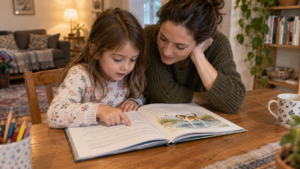


You are teaching your child Russian yourself. You select books, make up assignments on the fly, and persuade them to read at least one page. On good days, everything comes together, and on bad days, you hear in your head: I don't want to do this anymore. And guilt immediately washes over you, because if not you, then who will take on this task?.
This is a familiar state for almost everyone who has decided to take responsibility for their child's Russian language education themselves. It doesn't mean you're a bad parent. It means you're doing the work of an entire team, and your energy reserves are finite.
Where does this come from?
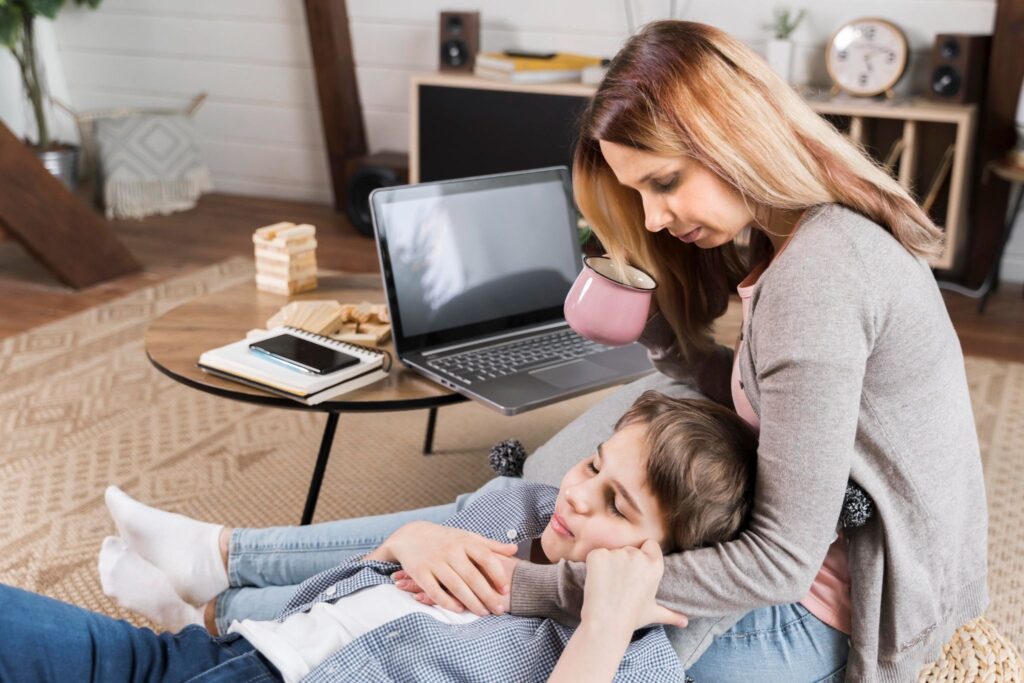
A parent who teaches their child at home switches between multiple roles every day. In the morning, they are the mom who hugs. Half an hour later, they are the teacher who demands attention. Ten minutes after that, they are the checker who points out mistakes. And then, they are mom again, who has to comfort after all of that.
In school or in courses, the roles are divided. The teacher presents the material, the parent supports. If the child gets upset about an assignment, they can go to their mom and complain about the teacher. At home, there's no one to complain to because the teacher and mom are the same person. The child gets confused, the parent does too, and gradually Russian turns into a source of tension for both.
There's a feeling from above that you can't stop. You miss a day, and it feels like you've regressed. You miss a week, and your mind conjures up a disaster. This pressure doesn't let up, even when classes are going normally.
What does this fatigue look like?

It rarely comes in the form of «that's it, I'm falling.» More often, it masquerades as irritation, procrastination, or a dull feeling of «nothing is working.».
Try to recognize yourself. You snap at your child for not wanting to study, even though you used to react more gently. You postpone lessons from evening to evening, then to the weekend, then to the next week, and each postponement is accompanied by pangs of conscience. You feel there are no results, although very recently you noticed progress. The topic of Russian increasingly ends in a quarrel. You think: «What's the point of trying if he'll just switch to English anyway.».
Each of these signs is normal. None of them means you've given up. They all mean one thing: a system where everything rests on one person has reached its limit. It needs a reset, not perseverance.
What can be changed right now
The very first step: consciously lower the bar, not out of a sense of defeat. Instead of hour-long daily sessions, three short fifteen-minute conversations a week. Instead of «finish the whole textbook by summer,» aim for «chat in Russian at breakfast.» A child won't lose the language from a week's break. But they will instantly absorb a mother's irritation, and it will stick to Russian for a long time.
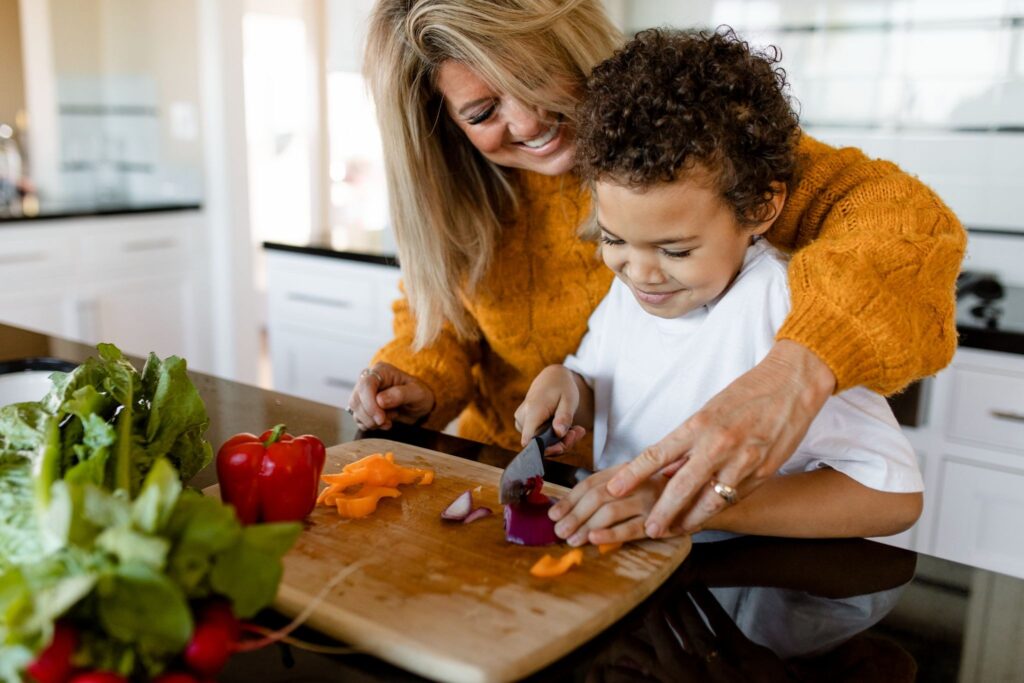
Next, communication and learning should be separated. Cooking together, going for a walk, watching a cartoon in Russian, chatting before bed – all of these also work for the language. Without structure, without a notebook, without a feeling of obligation. Sometimes, it's enough to take the «lesson» label off of Russian for it to become something enjoyable again.
And third: let in other voices. Grandmother via video call, a Russian-speaking neighbor, a podcast, an audio story for bedtime. Any additional source of Russian speech unburdens you. When the language sounds not only from your lips, the inner «I have to speak to him in Russian every minute» weakens.
At what point is a teacher needed?

There's a line after which «holding on by yourself» stops being resilience and becomes a trap. Here are the signs you can look for to spot it.
Russian has turned into a battlefield. Lessons regularly end in tears or slammed doors, and it's no longer possible to return to a calm tone. The child sees you not as a parent, but as an examiner, and shuts down.
You've hit a ceiling. You've mastered everyday Russian, and now it's unclear what comes next: what grammar to teach, how to teach reading, and what to do about writing. You've downloaded textbooks, but a system isn't forming, and each lesson starts from scratch.
The child has lost interest. They refuse, crawl away, say «boring» or «I won't.» You've tried everything, from cartoons to stickers, and nothing works for more than two days. Sometimes, all it takes to restart motivation is a new person and a new context.
You yourself started avoiding Russian. If the thought of a lesson spoils your mood, the child picks up on it instantly. For him, Russian also becomes «something difficult,» and now two people in the family associate the language with unpleasant emotions.
In each of these cases, the teacher doesn't displace you, but stands alongside you. They take over the methodology, curriculum, and control, and return to you the opportunity to simply be a mom or dad who talks to their child in Russian without overthinking it.
How does it work at Palme School?

Parents often come to us at this exact point. They've invested a lot: they've read, they've searched for approaches, they haven't given up. But their resources have run out, and they need help.
In class, the teacher builds the curriculum, selects assignments, monitors progress, and maintains motivation. The parent's role is the easiest and most pleasant: simply speaking Russian with the child in everyday life. No oversight, no tests, no nightly «did we study today?».
The groups are small, and the children in them live in a similar language situation. For the child, this is a discovery: it turns out that Russian can be heard not only from their mother, but also from other children, from a new adult, in a completely different environment. Language ceases to be a domestic chore and becomes something that belongs to them personally.
If you feel you no longer have the strength to teach Russian alone, sign up for a trial lesson. We won't replace you. We'll take the role of teacher off your shoulders so that Russian brings you joy again, not guilt.