

The book begins in July 1805, at a dinner party at the house of the lady of the court Anna Pavlovna Sherer. French speeches, conversations about Bonaparte.
But in one of the early versions, everything was arranged differently. The reader is offered to recall Prince Peter Kirillovich B., whom in the 1850s was already known as an old man who had returned from Siberia, and imagine him as a young man.
Researchers associate this old man with Pierre Bezukhov.
That is, the novel’s plot began with a man returning from exile, not with the evening at Anna Pavlovna’s house. And this is not an alternative ending to War and Peace. It is the plot of another book that Tolstoy was planning to write earlier.
The old man who returned in 1856
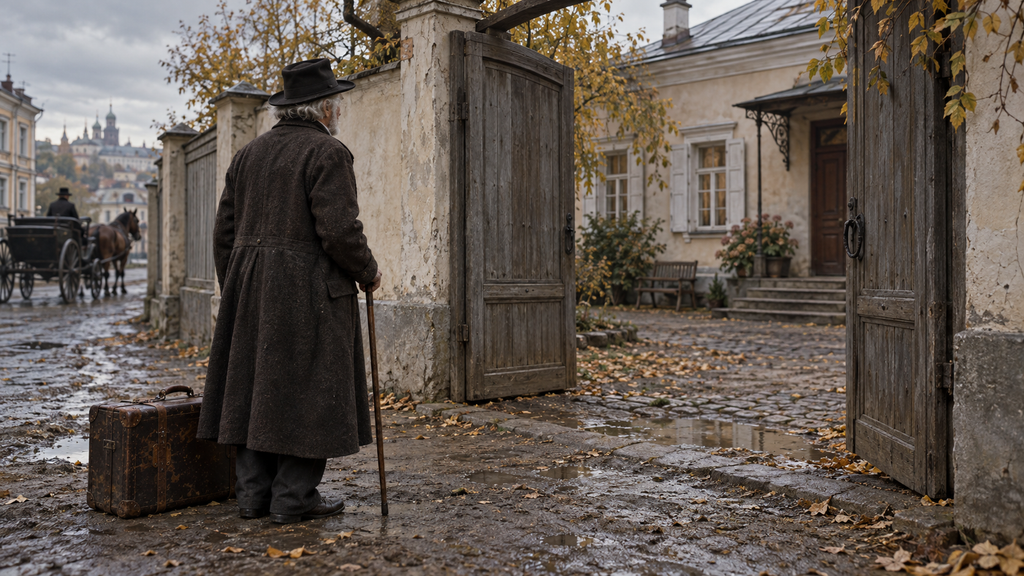
In 1860, Tolstoy begins the novel «The Decembrists.».
Here’s the plan: The old Decembrist returns from the Siberian exile to Moscow in 1856, looks at the changed country and reassesses himself and his comrades in the uprising. By 1861, three chapters have been written. Tolstoy reads the beginning to Herzen, and in March reports to Herzen that he is working on it.
And then Tolstoy stops and starts backing away.
To explain the old man, it took the year 1825. To explain the year 1825, it took the youth of these people. From there the author was swept away to 1812. And since the war of 1812 was connected with the previous campaign, it was necessary to go even further, to 1805. According to his own explanation, it was a matter of conscience for him to write about one Russian triumph over Napoleon without showing previous defeats.
Thus, out of the three articles about the old man, the one that was published in the Russian Bulletin in 1865 and 1866 was titled «1805 Year.» The early publication even had subheadings like «In St. Petersburg,» «In Moscow,» and «In the Village,» which were later discarded.
What remains of the original plan
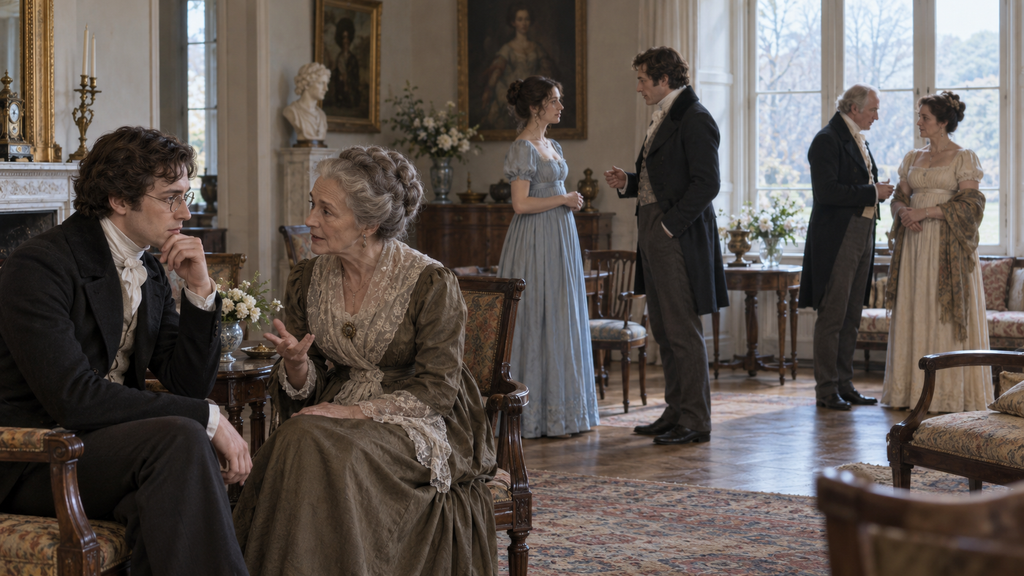
The traces didn't go anywhere.
In the Decembrists themselves, Pyotr Ivanovich Labazov returns with his wife Natalia Nikolayevna. Pyotr Kirillovich B. appears already in one of the early versions of the future «War and Peace». These are different stages of the work, not the biography of a single character who simply changed his surname.
In that early version, the future Pierre is presented as a man who is about to return from Siberia. In the final text, this direct reference to his future is gone.
The rest, however, have appeared. Andrey Bolkonsky, Natasha, and Kuragin are already coming together as the story progresses; at that point Tolstoy stops writing a biography about one person and takes on, in his words, young and old people, men and women of that time.
The structure of the novel in its volumes
| Tom | Years | What's happening |
|---|---|---|
| In Volume 1 | 1805 year | Salons of St. Petersburg, the death of the old Bezukhov, the Austerlitz battle, the injury of Prince Andrei |
| Volume II | 1806–1811 | The lives of the heroes between the campaigns, the 1807 war, Pierre's Freemasonry, Natasha's first ball and her story with Anatole |
| Volume III | 1812 | Napoleon's invasion, Smolensk, the Borodino battle, and the abandoned Moscow |
| Volume IV | 1812 and beyond | The Siege of Pierre, Guerrilla War, Retreat of the French, Death of Prince Andrew |
| Epilogue | 1813–1820 | Two families, Pierre's conversation about a secret society in St. Petersburg, and the dream of Nikolai Bolkonsky |
The main characters
| Hero | Who is this? |
|---|---|
| Pierre Bezukhov | The illegitimate son of a wealthy noble who acquired title and wealth. A hero whom researchers associate with the early draft of the novel about the Decembrist |
| Andrey Bolkonsky | The prince, an officer, disappointed by the light. Passing Austerlitz and Borodino, he dies from his wound |
| Natasha Rostova | The younger daughter of a Moscow family; from the girl at the first ball to the mother of the family in the epilogue |
| Nikolay Rostov | Her brother, a Cossack, an honest servant. In the epilogue, he argues with Pierre about the discontent in St. Petersburg |
| Maria Bolkonskaya | Prince Andrei's sister, religious and introverted, marries Nikolai Rostov |
| Kutuzov | Commander-in-Chief of the Russian Army. Tolstoy opposes the idea of a commander-in-chief who alone controls the course of history. |
| Napoleon | The Emperor of the French, shown without the halo, as a man confident in his own greatness |
Fifteen times rewritten beginning
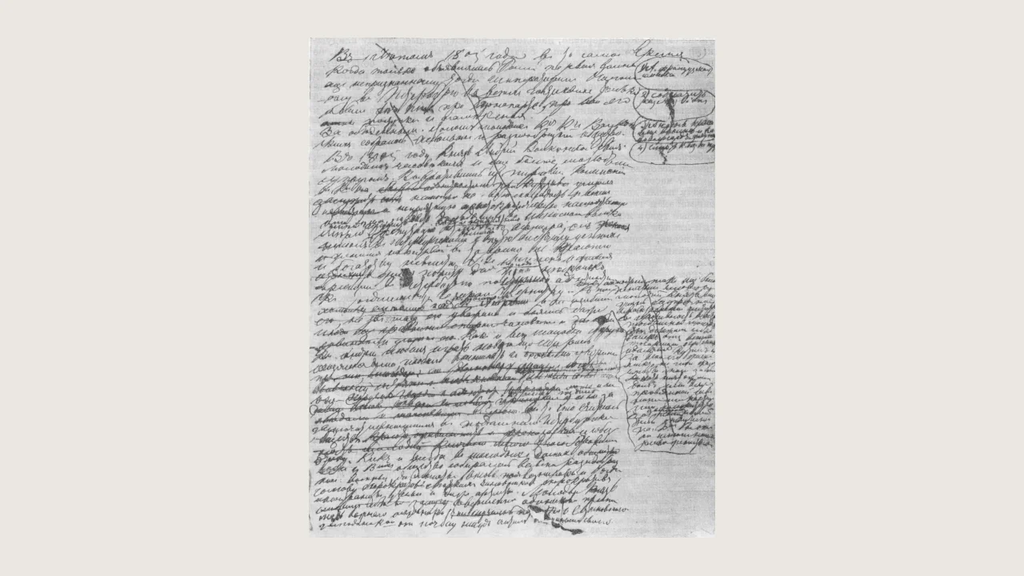
While the plot was unfolding, the author couldn’t figure out how to start.
Исследовательница Эвелина Зайденшнур насчитала в бумагах Толстого пятнадцать вариантов начала романа. Где-то книга открывалась историей семьи, где-то рассуждением автора, где-то тем самым взглядом из 1850-х на вернувшегося старика. Салон Анны Павловны, к которому мы привыкли, победил не сразу.
Досталось не только первой странице. Толстой многократно перерабатывал отдельные главы и эпизоды. Значительную часть рукописей набело переписывала Софья Андреевна.
Поездка на поле
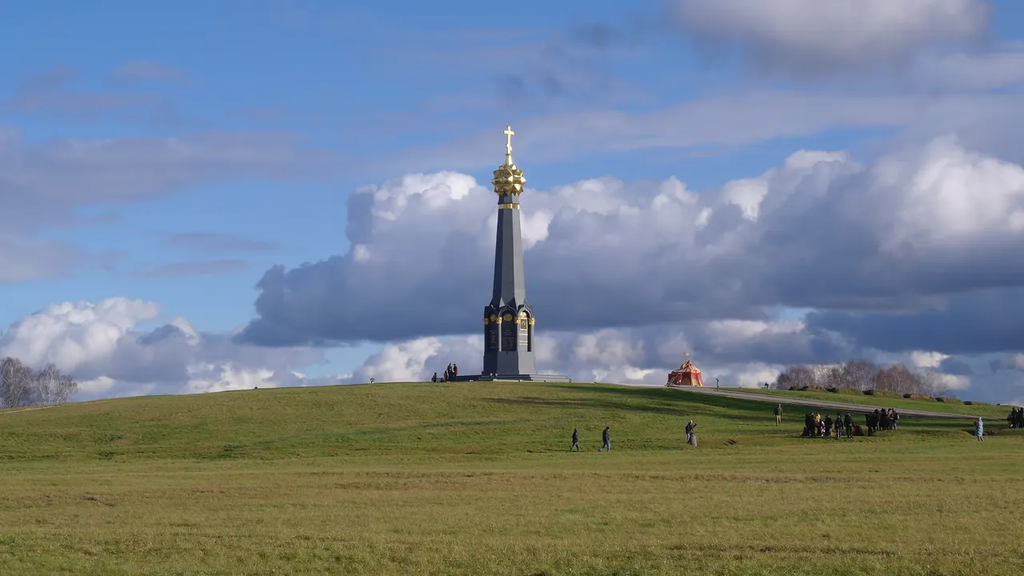
Осенью 1867 года, когда книга уже писалась, Толстой поехал смотреть Бородинское поле.
Взял с собой двенадцатилетнего брата жены Степана Берса, провел там два дня, ходил по местности с записной книжкой. Среди рукописей сохранился листок с пометками, сделанными прямо на поле: где Бородино, где Горки, где Семеновское, зарисованная линия горизонта и короткая запись, что даль видна на двадцать пять верст.
Вернувшись в Москву, он написал жене, что очень доволен поездкой и надеется написать такое Бородинское сражение, какого еще не было.
Это, кстати, ответ на частый вопрос, почему батальные главы читаются так подробно. Автор ходил по этому полю сам и смотрел, откуда что видно.
Книга, у которой нет окончательного текста
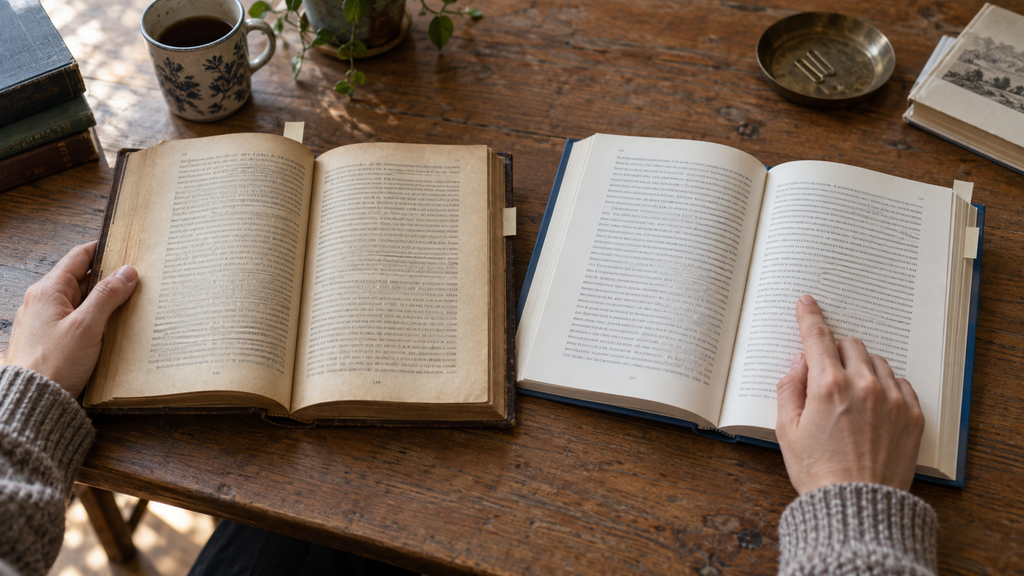
С «Войной и миром» есть еще одна странность, о которой редко говорят.
Для третьего издания 1873 года Толстой существенно переработал роман. Часть историко-философских рассуждений исключил, часть перенес в приложение, а почти весь французский текст заменил русским переводом. Уничтожать французский ему, по собственному признанию, местами было жалко.
Потом, в следующих переизданиях, часть правок он отменил и внес новые.
Одного бесспорного текста у этой книги попросту не существует, о чем писал еще Борис Эйхенбаум. Нынешние издания чаще всего повторяют второе из них, а привычное деление на четыре тома пришло из третьего.
Почему эпилог на самом деле не эпилог
Обычно первую часть эпилога читают как необязательный довесок. Свадьбы, дети, пеленки, Наташа с ее хозяйством. А вторую часть, с рассуждениями об истории, и вовсе пролистывают.
Но посмотрите на дату. Действие доведено до 1820 года.
Пьер приезжает из Петербурга и рассказывает, что в столице собираются люди, недовольные тем, куда все идет, и что он в этом участвует. Николай Ростов, послушав, отвечает, что если прикажут, пойдет рубить своих. В кабинете незаметно для дяди сидит подросток Николенька Болконский, сын князя Андрея, умершего после ранения при Бородине, и слушает взрослых.
Ночью ему снится слава, войско, отец и то, как он совершит что-то, чем отец был бы доволен.
До восстания на Сенатской площади остается пять лет.
Толстой не написал, что стало с Пьером дальше, и внутри «Войны и мира» этого будущего нет. Но ранний вариант начала сохранил след другого будущего Пьера, возвращения из Сибири стариком.
Поэтому эпилог не хвост романа. Это его открытая дверь.
«Это не роман»
Когда книга вышла, автору пришлось объяснять, что он вообще написал.
Отвечать он стал печатно. В 1868 году выходят его «Несколько слов по поводу книги „Война и мир“», и там сказано прямо, что перед читателем не роман, еще менее поэма, еще менее историческая хроника. Это, пишет Толстой, то, что он хотел и мог выразить, и в той форме, в какой оно выразилось.
Заодно он объясняет, почему у него на страницах столько французского. Французскую речь Толстой связывает с особенностями изображаемого общества и признает, что местами увлекся ею больше, чем было нужно.
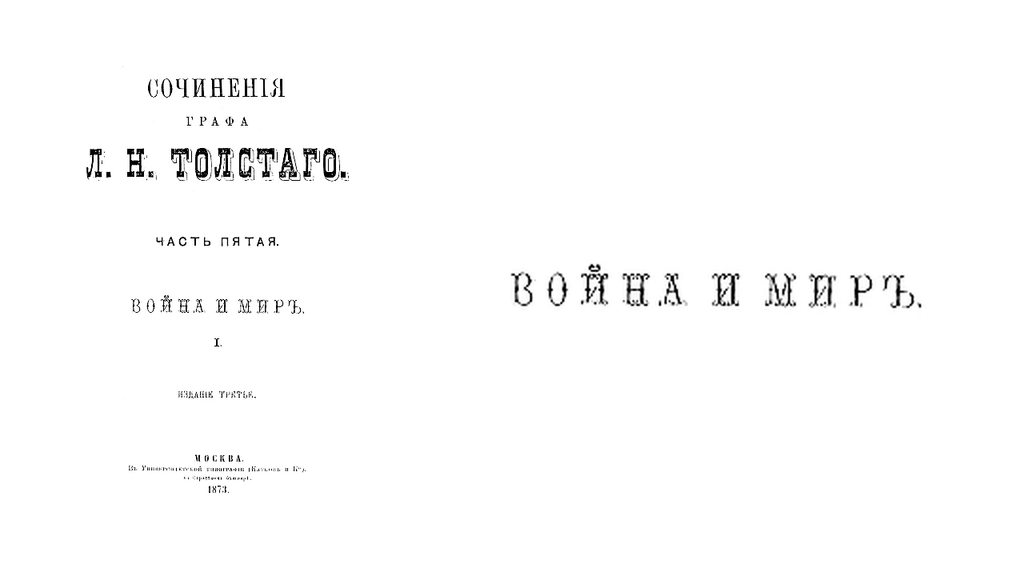
Про само название ходит красивая легенда. Будто бы в старой орфографии там стояло «міръ» в значении общество. Прижизненные издания этого не подтверждают, на титульных листах стоит обычное «миръ».
Жанрового имени у книги так и не нашлось, поэтому в англоязычных каталогах и подборках она обычно идет по автору, war and peace tolstoy. О жизни самого Толстого и остальных его книгах у нас есть отдельная статья.
Толстой попробовал еще раз
Дальше была «Анна Каренина».
А потом, в 1878 году, Толстой вернулся к старому замыслу. И взялся всерьез. Встречался с живыми декабристами, Свистуновым, Беляевым, Муравьевым-Апостолом, говорил с их родственниками, собирал материалы. Осенью сел за роман. В 1879-м продолжал и пытался получить доступ к подлинному делу декабристов в архиве Третьего отделения.
И снова остановился. Почему, точно неизвестно. Доступа к подлинным делам он так и не получил, и примерно в те же годы его все сильнее занимали религиозные и общественные вопросы, из которых выросла вся его поздняя публицистика.
Так и вышло, что книга про старика, вернувшегося из Сибири, существует в виде трех глав, а ее предыстория заняла четыре тома.
Зачем это знать перед чтением
Совет тут простой. Не бросайте книгу на свадьбах.
Если читать эпилог как отчет о том, кто на ком женился, он и правда тянется. Если помнить, что где-то за этими страницами стоит старик, вернувшийся из ссылки, разговор Пьера с Николаем Ростовым читается совсем иначе, а сон Николеньки перестает быть милой детской сценой.
Толстой довел героев до времени, в котором уже угадывается будущая декабристская история. Но саму эту историю в «Войне и мире» не рассказал.
Частые вопросы про «Войну и мир»
What is «War and Peace» about in short?
About several noble families and Russia in the era of the wars with Napoleon. The action takes place from 1805 to 1820; it features the salons of St. Petersburg, Austerlitz, Borodino, the abandoned Moscow, and the heroes' return to ordinary life. The volume of the novel intimidates many readers, so the English-speaking reader often starts with the query war and peace summary.
How many volumes are in the novel and what are the contents of each one?
Four volumes and an epilogue. The first covers the year 1805 and the campaign against Napoleon, the second the lives of the heroes between the campaigns, the war of 1807, Pierre's Freemasonry, Natasha's first ball and her story with Anatole, the third 1812 and Borodino, the fourth the left of Moscow, Pierre's captivity and the retreat of the French. The epilogue is extended to 1820.
Who are the main characters?
Pierre Bezukhov, Andrei Bolkonsky, Natasha Rostova, Nikolai Rostov, and Maria Bolkonskaya. Next to them are historical figures: Kutuzov, Napoleon, Alexander I. In creating some of the characters, Tolstoy used family legends and traits of people he knew well.
Why doesn’t the novel have a single text?
Tolstoy edited the novel from edition to edition. In the third edition of 1873, he removed some of the historical and philosophical arguments and translated the French dialogues, then reversed some of the corrections. In the current editions that are widely available, the basis is the text of the second edition, and the division into four volumes dates back to the third edition.
Is it mandatory to read the French pieces?
In most modern Russian editions, French quotes are accompanied by translations, so there is no need to miss anything. In the third edition of 1873, Tolstoy himself replaced almost the entire French text with a Russian translation, and in subsequent editions he eliminated some of these corrections.
What are the known screen adaptations?
Among the well-known screen adaptations are Sergei Bondarchuk’s Soviet film from 1965–1967, King Vidor’s American-Italian film from 1956 with Audrey Hepburn, and the BBC series from 2016. Bondarchuk’s film won an Oscar for Best Foreign Language Film, awarded in 1969.
Where to start if the novel seems too big?
Start with Pierre, Andrei, and Natasha’s main line, and don’t miss the epilogue. It’s there that the novel comes closest to the story from which its concept grew up in the first place.
Русская литература для детей от 4 до 18 лет
Читаем и обсуждаем русские книги онлайн, в группах по возрасту и уровню языка. Начать можно с бесплатного урока.
Book a Free Trial