
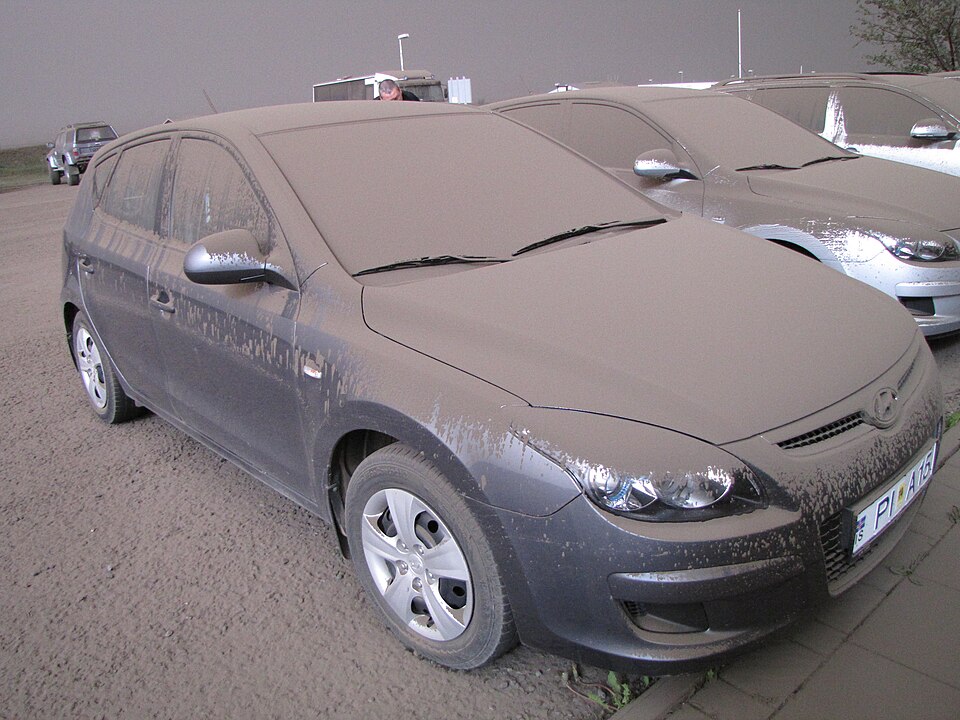

After the volcano erupts, the city may look as if a giant fire has been burning nearby all night.
Grey roofs. Grey cars. The road has to be cleared of debris. A layer of what is called volcanic ash lies on the ground.
Only nothing burned there.
If you take such ash and examine it under magnification, instead of the soft ash from paper or wood, you will find tiny pieces of stone, minerals, and glass. Volcanologists call the ash particles less than two millimeters in size. Some are so small that the wind carries them hundreds and thousands of kilometers from the volcano.
So where did the word «ash» come from, and how can a stone be broken into a state of gray dust?
To get an answer, you will have to look inside the volcano.
Before it is released into the open air, lava is called something else.
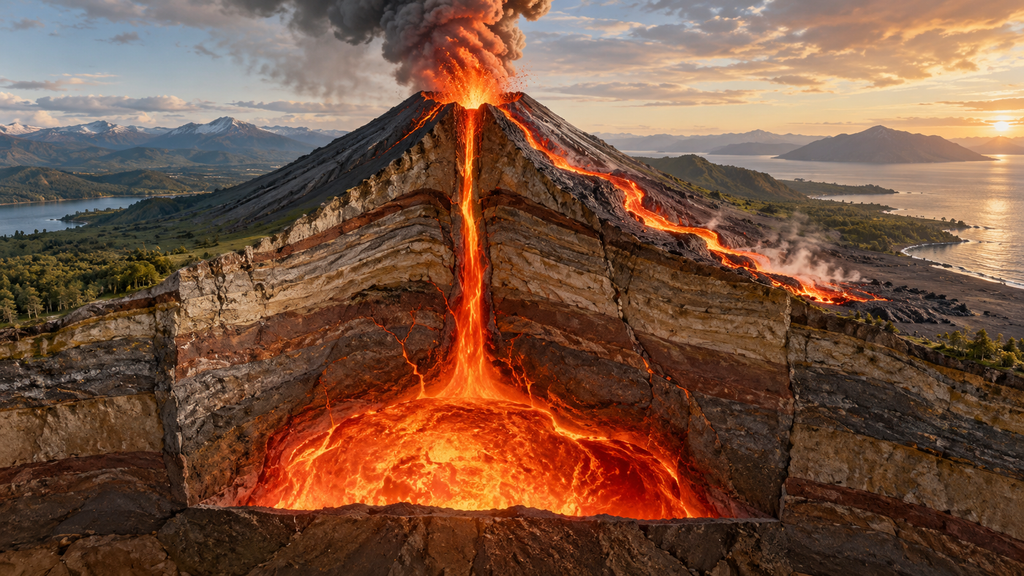
In children's drawings, a volcano usually starts with red lava.
In a true eruption, the story begins earlier, when the word does not yet exist.
The molten rock below the surface is called magma. When the molten rock erupts onto the surface, it is called lava.
But magma doesn't always come out peacefully.
Sometimes instead of a lava flow, an explosion occurs.
And here the story of the ash begins.
There is something in the magma that is hardly visible in the picture
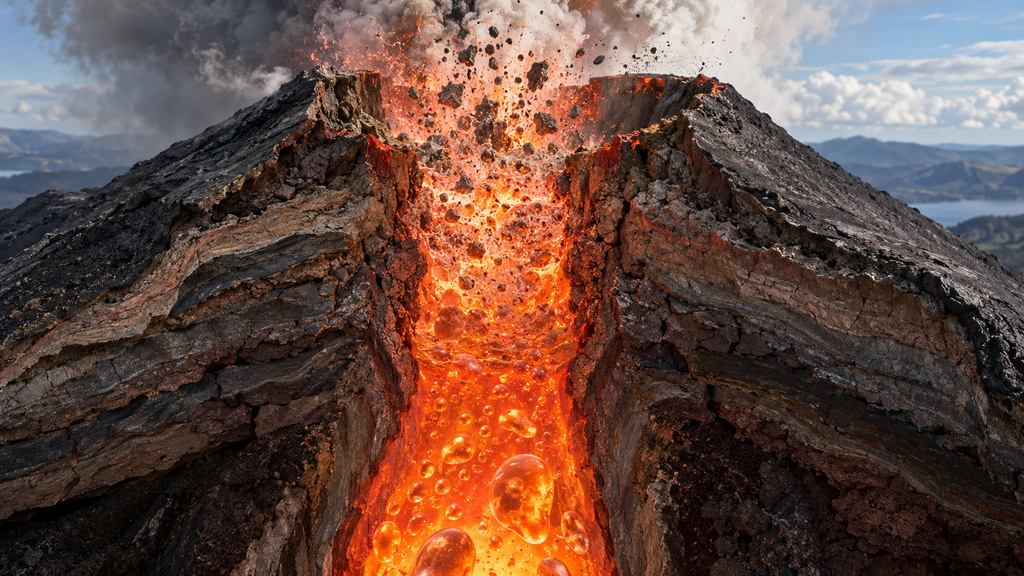
If you open a bottle of soda, the bubbles appear especially quickly after the pressure inside has decreased.
Comparing magma isn’t exactly accurate, but one important thing is similar.
Underground, gases can be dissolved in magma under high pressure. As magma rises closer to the surface, the pressure decreases, and the gases begin to escape and expand.
If they erupt quite peacefully, the eruption can be accompanied by lava flows.
And if the gas expands sharply, it is capable of breaking the magma into a huge number of fragments. At the same time, the explosion also breaks the already solid rocks around the channel through which the magma was rising.
All of this is thrown up.
Large fragments fall back quickly.
The smallest ones remain in the cloud.
And that's exactly what they are called—volcanic ash.
A piece of glass the size of a grain of sand
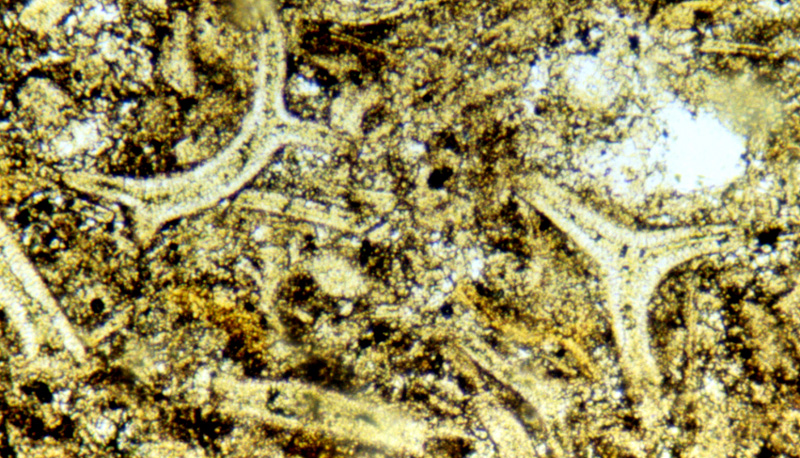
The word «ash» is convenient because it immediately paints a picture.
It performs poorly with the content.
Volcanic ash is composed of various particles. It also contains fragments of old rock, mineral crystals, and volcanic glass.
Part of the volcanic glass forms in this way.
Bubbles of gas grow in the magma. During an explosive eruption, the walls of these bubbles burst open. Tiny jets and splinters of molten material fly outwards and cool down so quickly that they fail to turn into ordinary crystalline matter. The result is volcanic glass particles.
Under the microscope, some of them do not look like rounded pebbles, but sharp fragments.
Therefore, it is not worth rubbing real volcanic ash between your fingers for the sake of experience. It is hard and abrasive, and the fine dust is dangerous for breathing. It is better to study it in photographs and ready-made museum specimens than to collect it during an eruption.
Why a large stone falls nearby, but the ashes fly away
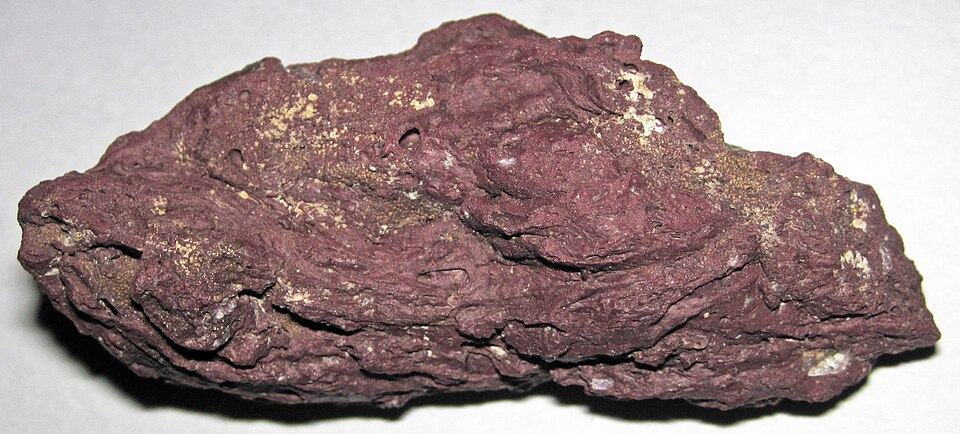
During explosive eruptions, pieces of very different sizes are ejected from the volcano.
There is even a common word for them: tephra.
Ash is the smallest type of tephra. Particles up to two millimeters in size are considered tephra, and volcanologists use other names for larger fragments.
The size here immediately turns into geography.
Large heavy fragments are difficult to remain airborne for long, so they usually fall relatively close to the eruption site.
Small particles rise along with the hot gases higher and are picked up by the wind.
Thus, a volcano may be on the map in one place, but its ash will be found far from it.
The USGS writes that under suitable conditions, the smallest particles can travel through the air for tens to thousands of kilometers.
It is convenient to check this on a map after a real eruption.
First, find the volcano.
Then the direction of the wind.
And then the cities where ash was reported to have fallen.
What emerges is a trail of eruption that is far from resembling a neat circle around the mountain.
The eruption is not necessarily to look like a lava fountain
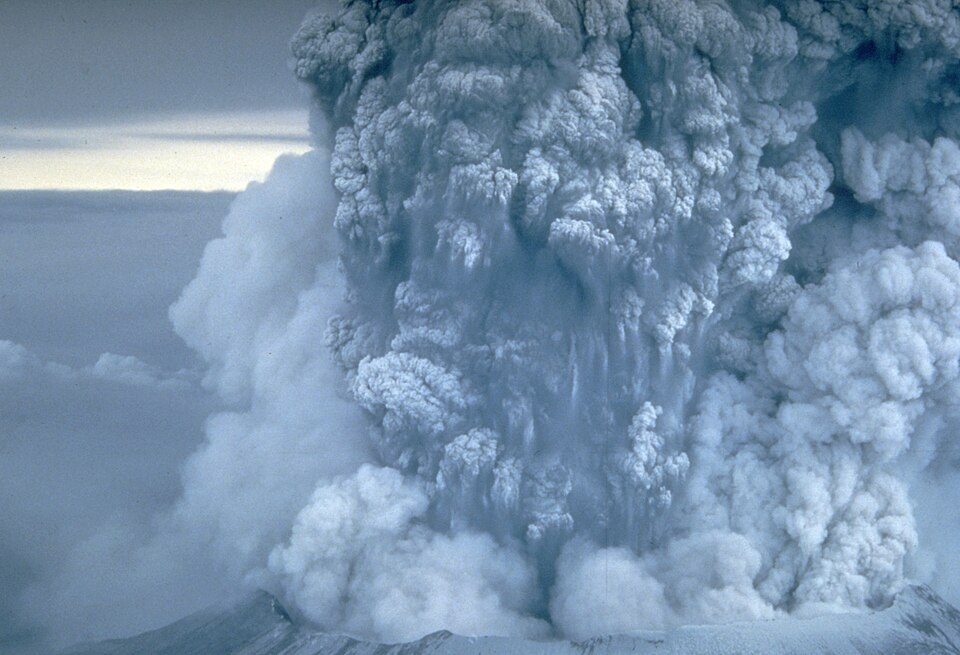
Еще одна привычная картинка ломается здесь же.
Если попросить ребенка нарисовать извержение, сверху почти наверняка полетит красная лава.
Но вулканы извергаются по-разному.
В одном случае расплав действительно выходит сравнительно спокойно и течет по склону.
В другом главная картина это столб газа и раздробленного материала, уходящий высоко в атмосферу.
Иногда именно встреча воды с горячей магмой или породой помогает сделать извержение взрывным: вода быстро превращается в пар и резко расширяется.
Поэтому вопрос «где лава?» не всегда лучший для фотографии извержения.
На некоторых снимках самое важное уже находится в огромном сером облаке над вулканом.
Пепел может упасть там, где вулкана даже не видно
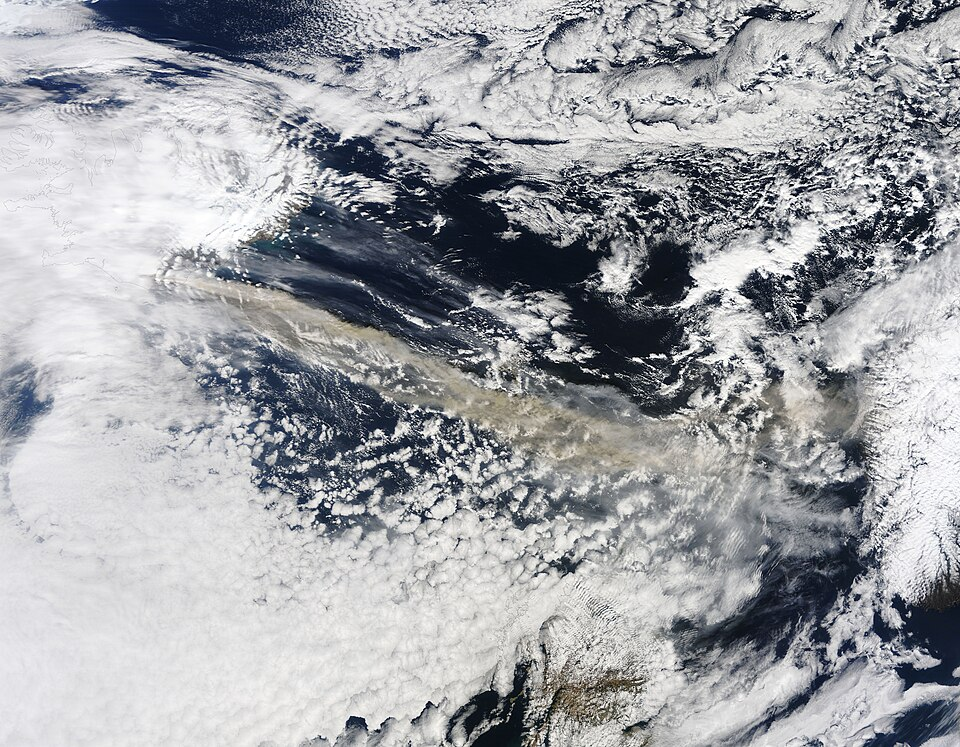
Для ребенка расстояние особенно хорошо работает как загадка.
Представьте: утром на машине лежит серый налет, но самого вулкана с улицы не видно.
Как доказать, откуда прилетел материал?
Сегодня за этим следят спутники, метеорологи и вулканологи. Направление облака важно в том числе для авиации: твердые частицы вулканического пепла опасны для самолетов.
Но сам принцип можно увидеть на обычной карте.
Вулкан дает начальную точку.
Ветер дает направление.
Сообщения о выпадении пепла дают следующие точки.
Чем мельче частицы и чем выше они попали в атмосферу, тем дальше часть материала способна уйти от места извержения. Крупный материал обычно выпадает раньше, мелкий может продолжать путешествие.
Вулкан оказывается не только горой на карте.
На несколько часов или дней он связывается с огромной территорией вокруг.
Когда пепел снова становится камнем
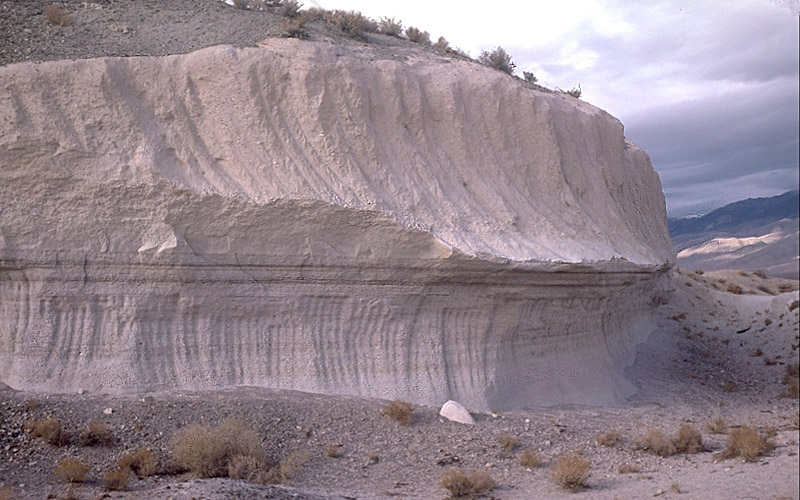
После извержения путешествие частиц заканчивается на земле, воде, крышах, растениях.
Но геологическая история на этом не обязательно заканчивается.
Слои вулканического материала могут сохраняться. Со временем их перекрывают новые отложения. Они уплотняются, изменяются и остаются в породах как след конкретного вулканического события.
Через очень долгое время геолог может увидеть слой древнего вулканического материала там, где никакого действующего вулкана рядом уже нет.
Тогда направление задачи меняется.
Сначала мы шли от известного вулкана и спрашивали, куда улетел пепел.
Теперь можно найти слой и спросить наоборот:
«Какое извержение его сюда принесло?»
Так маленькая частица становится уликой.
У вулкана есть несколько историй одного камня
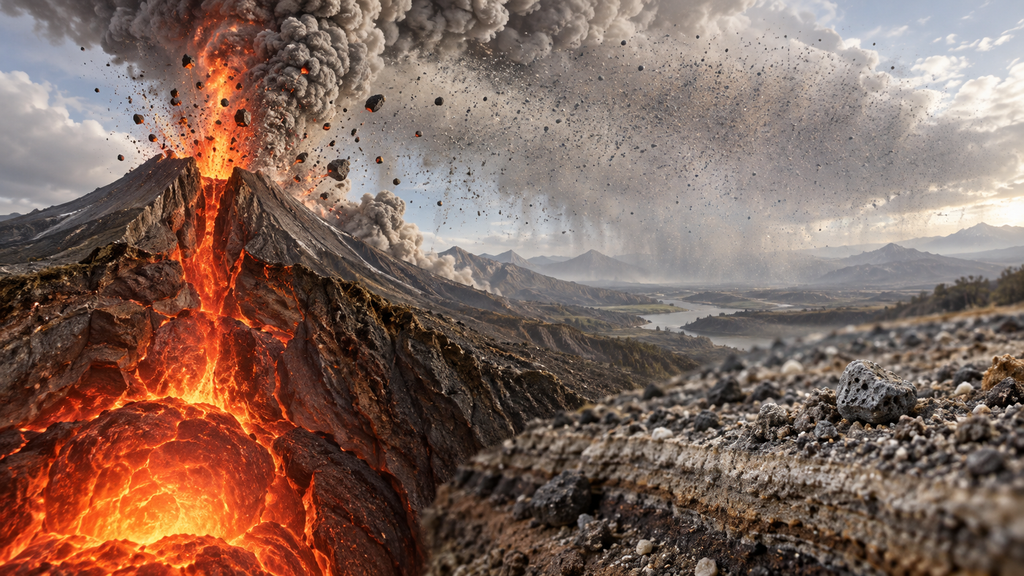
Под землей расплав называется магмой. После извержения расплавленного материала на поверхность мы говорим о лаве.
А при взрывном извержении магма и окружающие породы могут раздробиться на тефру. Самые мелкие ее частицы, меньше двух миллиметров, называют вулканическим пеплом.
За несколько минут материал из глубины Земли может оказаться на поверхности, расколоться на части и улететь далеко от места извержения.
Наверное, поэтому вулкан удобнее изучать не с рисунка конуса с красной струей наверху.
Лучше начать с серой крупинки.
Она выглядит скромнее лавы, зато заставляет задать правильный вопрос:
если это не остаток огня, то что именно разлетелось по воздуху?
И ответ ведет прямо внутрь вулкана.
Три опыта без настоящего вулканического пепла
Настоящий вулканический пепел для домашних опытов не нужен. Все три задания показывают отдельную часть механики извержения на безопасных предметах.
Что падает первым
Возьмите маленький кусочек бумаги и такой же по размеру кусочек плотного картона. Одновременно отпустите их с одинаковой высоты и сравните, как они падают.
Что обсуждаем
Предметы разной массы и формы ведут себя в воздухе по-разному. Вулканический пепел очень мелкий, поэтому часть его может долго оставаться в воздухе и уноситься ветром далеко от вулкана. Опыт не моделирует извержение буквально, а показывает только влияние сопротивления воздуха.
Куда унесет облако
Нарисуйте вулкан в центре листа. Поставьте стрелку направления ветра и попросите ребенка отметить три места, куда облако пепла могло бы сместиться, и несколько мест с противоположной стороны, куда пепел, скорее всего, не долетит.
Как проверить
Точки не должны образовывать ровный круг вокруг вулкана. При устойчивом ветре область переноса пепла будет вытянута преимущественно по ветру.
Магма или лава
Нарисуйте линию поверхности Земли. Под ней подпишите расплав «магма», а затем проведите стрелку наружу и спросите, как его теперь назвать.
Answer
Под поверхностью расплавленная порода называется магмой. После извержения расплавленного материала на поверхность говорят о лаве. Меняется положение материала, а вместе с ним и термин.
Important: не предлагайте ребенку собирать настоящий вулканический пепел во время или после извержения. Он может содержать твердые острые частицы и вреден для дыхания.
Когда одного ответа мало
На занятиях дети не просто запоминают, что такое вулкан, магма или пепел. Они рассматривают карты, фотографии и природные процессы, задают вопросы и сами ищут объяснение тому, что сначала кажется странным. Познакомиться с преподавателем и форматом можно на бесплатном пробном уроке.
Try a geography lessonЧастые вопросы про вулканы для детей
Is volcanic ash formed because something burned?
No. Volcanic ash consists of very fine particles of volcanic glass, minerals, and fragmented rocks. It forms when material is broken down during an explosive eruption, not when it burns.
What size are the particles of volcanic ash?
Volcanologists classify the particles smaller than two millimeters as pumice. Larger fragments are included in other size groups of tephra.
How is magma different from lava?
The molten rock beneath the Earth's surface is called magma. When the molten material erupts onto the surface, it is called lava.
Why can volcanic ash fly far?
Very small particles can rise along with the hot gases and enter air currents. The wind is capable of carrying them hundreds and even thousands of kilometers from the volcano.
Are all eruptions accompanied by lava flows?
No. Eruptions can be of various types. In some cases, lava flows are clearly visible, while in others the main manifestation is an explosion and a large column of gas, ash, and other fragments.
Is it dangerous to touch volcanic ash?
Real ash is not suitable for children's home experiments. Its particles are solid, can be sharp and irritate the eyes and airways. It is better to use photographs, diagrams, and safe substitutes for activities.
Can old volcanic ash turn into a mineral?
Yes. Layers of volcanic ash can be compacted and cemented. Such rocks are called tuff. They preserve traces of ancient eruptions even after a very long time.