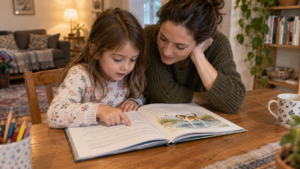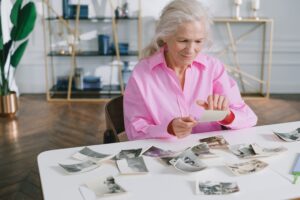


The child sees a photograph. In it is a grandmother and a large copper object with a tap. «Mom, what is that?» Mom looks. A pause. It's not just any teapot.
This is not a matter of culture. It's a matter of memory. Mom knows what a samovar is. She remembers with her body, not her mind. But how do you explain it to a child who grew up in Canada?.
Based on the experience of Palme School, bilingual children remember samovars, baranki, and jam more often than the Kremlin and birch trees. Because it smells like home.
What is a samovar
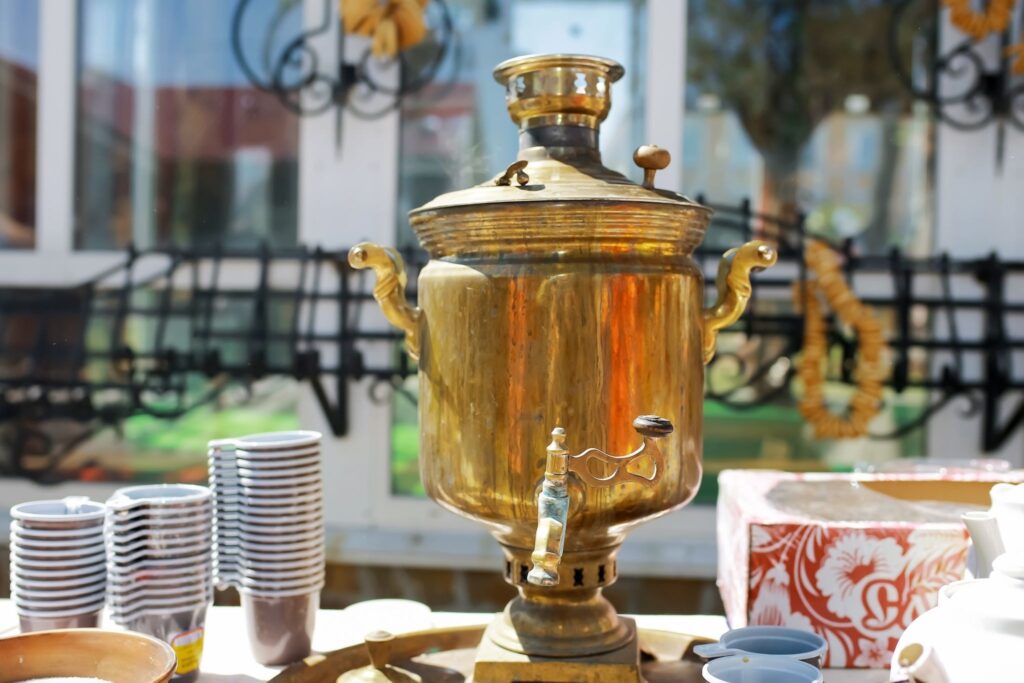
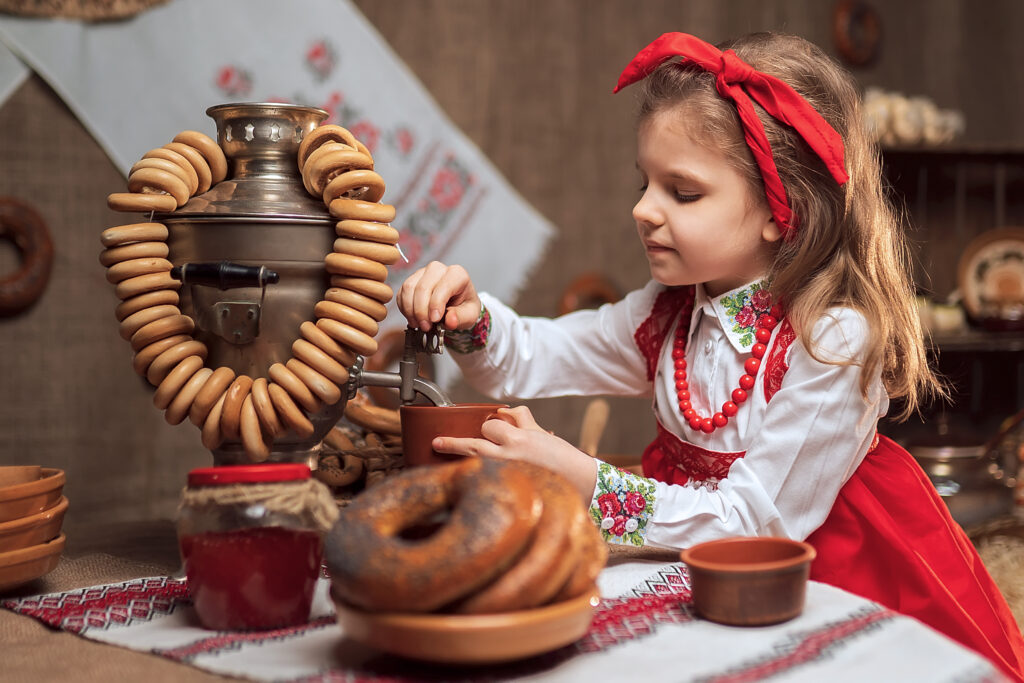
Samovar: an object around which the whole family used to gather. In English: samovar. Literally «boils by itself.».
Inside the pipe, they put coals or wood chips. They burn, heating water. On top is a small teapot with tea leaves. Steam keeps it hot. Tea is poured for everyone: a little tea, then boiling water. Some stronger, some weaker. The hostess knew the taste of each guest.
The water stays hot for several hours. You can sit at the table for as long as you like. That was the whole point.
How did they ignite it
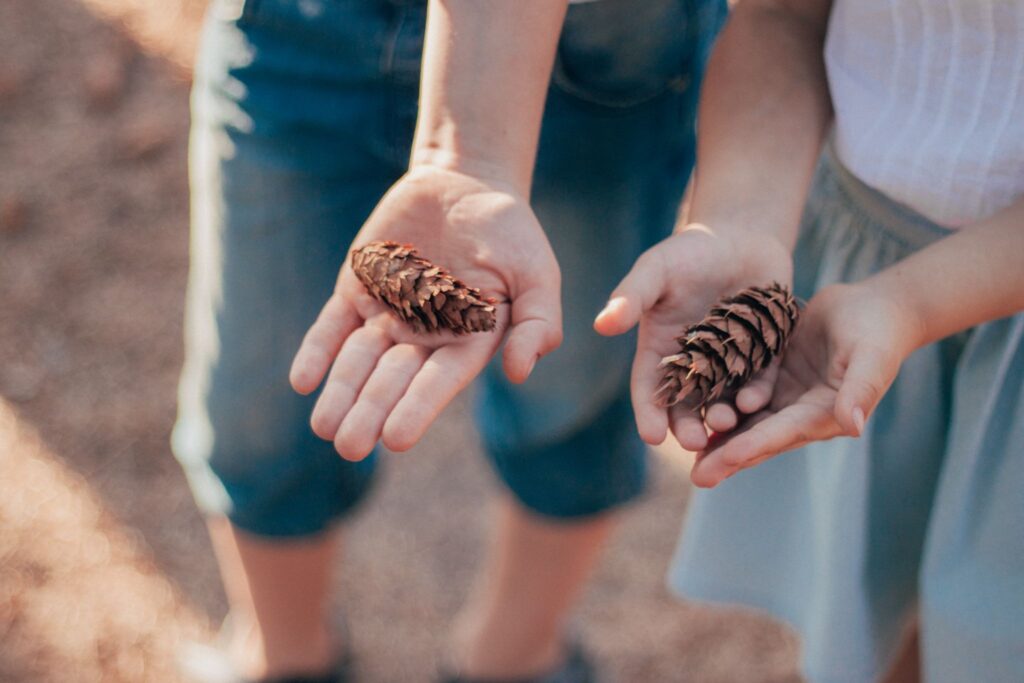
Kindling or cones in the pipe, then coals. They light it from below. They wait. If there isn't enough draft: they put a boot on the pipe and pump with the shaft. The children watched. They laughed. They asked for it to be shown again.
Charcoal samovar: a classic. Copper, heavy, with a tap. Electric: more convenient in an apartment, smokeless. Looks the same. But it doesn't give that atmosphere.
They drank tea by "in-mouth": they held sugar in their teeth and sucked hot tea through it. An old habit. It is still found among grandmothers.
| View | How does it work | Where is it used? | Feature |
|---|---|---|---|
| Coal (Tula) | Coals in the pipe | Dacha, nature, holidays | Classic. The water stays hot for several hours |
| Wood-burning | Chips and cones | Village, forest, excursions | The water takes on a peculiar smoky smell. |
| Electric | Heating element | Apartment, office | Convenient for everyday use. Looks similar to a classic one. |
| Decorative | Not used | Interior, souvenirs, gifts | There are miniature and ceremonial ones. |
Why do bilingual children remember the samovar
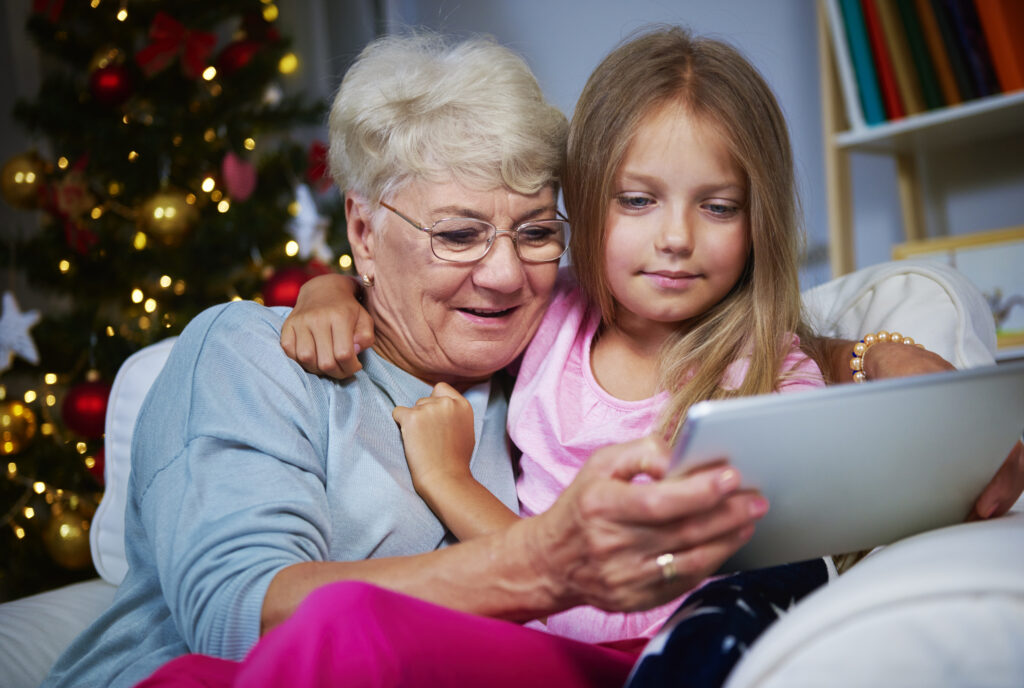
In classes at Palme School, children are asked: what do you associate with a Russian home? Many don't remember the Kremlin. A blanket, jam, bagels. And a samovar.
Even those who have only seen it a couple of times. Even those who only have it in a photograph. It's an object around which family stories grow. Who spilled boiling water. Who found the samovar in the attic. Who fanned the cones with a boot.
For children in emigration, the samovar is often the first object that connects stories of «back in Russia» with their current kitchens. An electric samovar has a cord. But the same stories lie behind it.
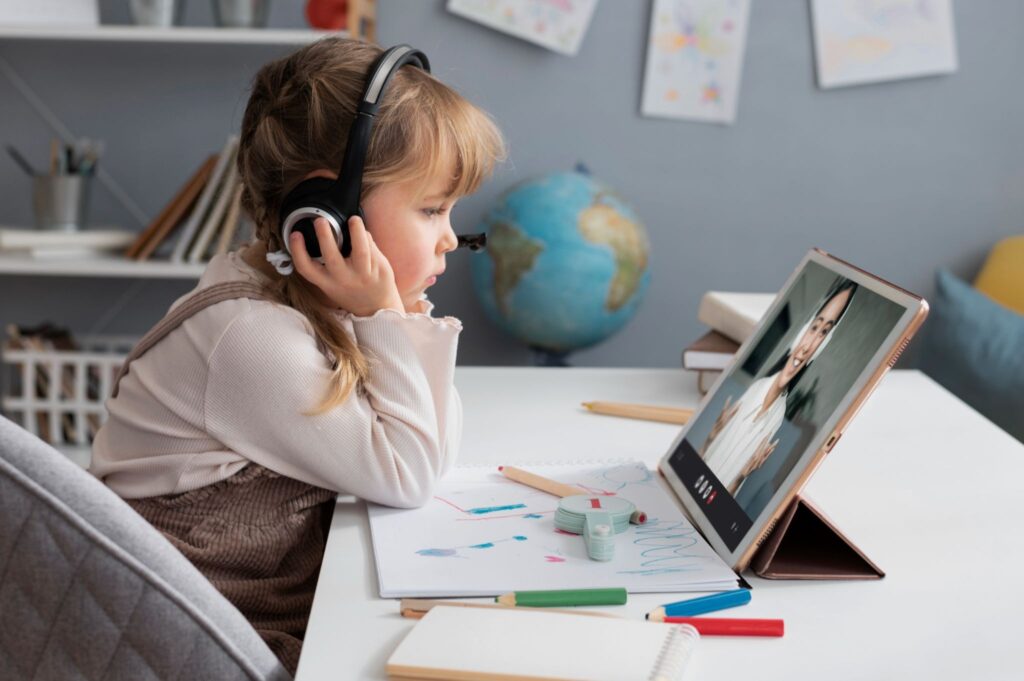
V Palme School We're talking about the samovar through these stories. Not as a metal vessel. But as the smell of smoke and a funny boot. This is how the Russian language becomes a language on which you can tell a very personal story. The first two lessons are free.
| Fact | Learn More |
|---|---|
| «He cooks it himself.» | The word «samovar» literally means «it boils itself»: samo (self) plus varit (to boil). The device works without constant supervision. |
| Tula is the samovar capital. | Since the 18th century, Tula has been producing samovars. This is the origin of the saying: «To arrive in Tula with your own samovar» – to bring something to a place where there is already plenty of it. |
| Firestarter boot | A coal samovar is lit using a boot: it's put on the pipe and the shaft is pumped with the leg, creating draft. Children always ask to see it again. |
| Tea with a sweet snack | A piece of sugar was held between the teeth, and hot tea was drunk through it. This way, the sugar was consumed more slowly – an old peasant habit. |
| Word without translation | Samovar entered the English language without translation, like matryoshka or borscht. It is understood without explanation in many countries. |
| The water is hot for hours | A coal samovar keeps water hot for several hours. That's precisely why people didn't rush away from the table back then: the samovar is there, the water is hot, what's the hurry. |
What is a samovar and how does it work
Samovar: a vessel for boiling water with a pipe inside. Coals or wood chips are placed in the pipe, heating the water around it. A small teapot with tea leaves is placed on top, and the steam keeps it hot. Tea is poured for each person separately, to their taste. The water stays hot for several hours, so you can sit at the table as long as you like.
Samovar
Samovar. The word entered the English language without translation, like matryoshka or borscht. Literally «it cooks itself»: samo plus varit (to boil/cook). A device that works without constant supervision.
Where are the best samovars made
In Tula. Tula samovars have been known since the 18th century, and «Tula samovar» has become a set expression. There is a saying: «To arrive in Tula with one's own samovar» means to bring something to a place where there is already plenty of it.
A charcoal samovar differs from an electric one in its heating method. A charcoal samovar uses burning charcoal or wood to heat the water, while an electric samovar uses an internal heating element powered by electricity.
The charcoal one works over an open flame: twigs, cones, coals. It heats up slower, but the water stays hot longer and gets a special flavor. The electric one is more convenient in an apartment: no smoke, no lighting. But it doesn't give that atmosphere—and kids feel that.
«Vpriskusku» is a way of drinking tea where you hold a piece of sugar or a candy in your mouth and sip the tea through it. This was a common practice in Russia, especially when sugar was expensive and considered a luxury. Instead of dissolving the sugar directly into the tea, people would savor it slowly by letting the tea infuse through it, creating a sweeter and more flavorful drinking experience.
A piece of sugar was held in the teeth while drinking hot tea through it. The sugar was consumed more slowly than if it were placed in the mug. This is an old peasant habit from times when sugar was expensive. You can still find grandmothers who do this.
A samovar is a special metal container used to heat and boil water, usually for making tea. It's like a fancy teapot that keeps the water hot for a long time.
Not through the device, but through the story. Who found it in the attic. How they lit the fire with pinecones. What kind of tea it was. Children don't remember facts—they remember smells and scenes. This is how culture is passed down: not through explanation, but through real conversation.
Why did the samovar become a symbol of Russia
Because it embodies Russian hospitality: warmth, unhurriedness, and the readiness to sit at the table for a long time. The samovar appears in literature, painting, and folk tales as a symbol of home comfort. It is not just an everyday object. It is a way to gather together.