


Three billion dollars a year. That's how much America spends so that schools and libraries have internet access. The program has been running since the nineties, and the cable has even reached remote corners of the country. And now the state is wondering: isn't it too much?.
The reason is unexpected. Not money. Not politics. Children. More precisely, the screens these children stare at from morning to night, including at school. And for the first time, the regulator openly linked two things: public money for the internet and a child's health.
What exactly happened

The head of the Federal Communications Commission, the agency responsible for telecommunications in the US, has announced a complete overhaul of the school internet program. According to him, screen time in schools has skyrocketed, and with it come problems: mental health is suffering, and reading comprehension is declining. And if that's the case, it's worth re-evaluating where these billions are going.
It's important to understand the scale here. This isn't about banning the internet in schools. It's about the fact that for the first time, top officials are questioning: does more technology in the classroom really mean better? It used to seem obvious that the more tablets and faster the Wi-Fi, the more modern the school. Now, this symbol of faith has been shaken. And it wasn't parent activists who shook it, but officials with budgets in hand.
Why did they start talking about screens at all?

And because anxiety has been building up for a long time. Teachers, doctors, parents are noticing the same thing more and more often: children are drowning in screens, and it doesn't come without consequences.
Attention is scattered. It's already a feat to finish two pages of a book. Face-to-face communication is even harder. And at school, where tablets have long replaced notebooks, children sometimes don't write by hand and don't read physical books for weeks. The authorities have heard this concern and made a move that would have seemed wild five years ago: they've questioned the very idea of total digitalization in schools. They haven't banned it, but they've started to think about it. And that's already a lot.
And what's in it for us parents?
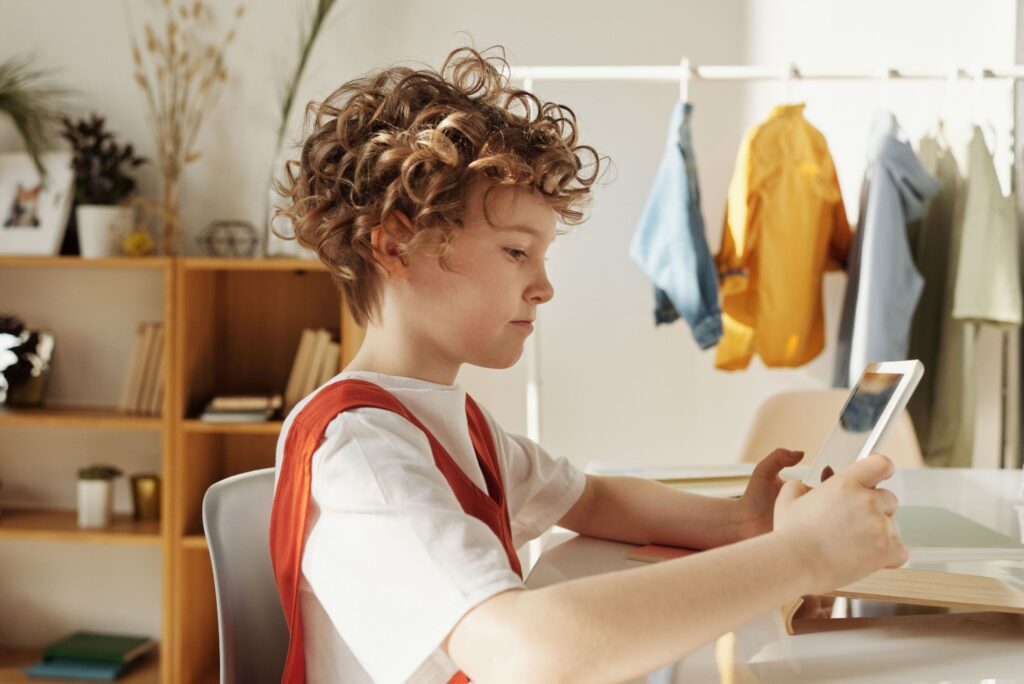
It would seem that American bureaucracy has nothing to do with us. But the connection is as direct as possible, and here's why.
Our children spend time in front of the same screens, and often even more. English YouTube, English games, and English TikTok flow in an endless stream. And in this stream, the Russian language drowns first. After all, to maintain their native language, a child needs real-life interaction: conversations, books, arguments at the table, not another video in their feed. Every extra hour on a screen steals an hour away from language, from family, from books.
And here, the interests of the state and the parent suddenly align. The state became concerned that screens were stealing children's attention and health. Meanwhile, the parent in emigration is tormented by the fact that the same screens are stealing the child's Russian language, as it's the first thing to go when there's less and less real-life interaction. The conclusion is the same for both: the child needs less empty screen time and more real-life interaction.
What can a parent do
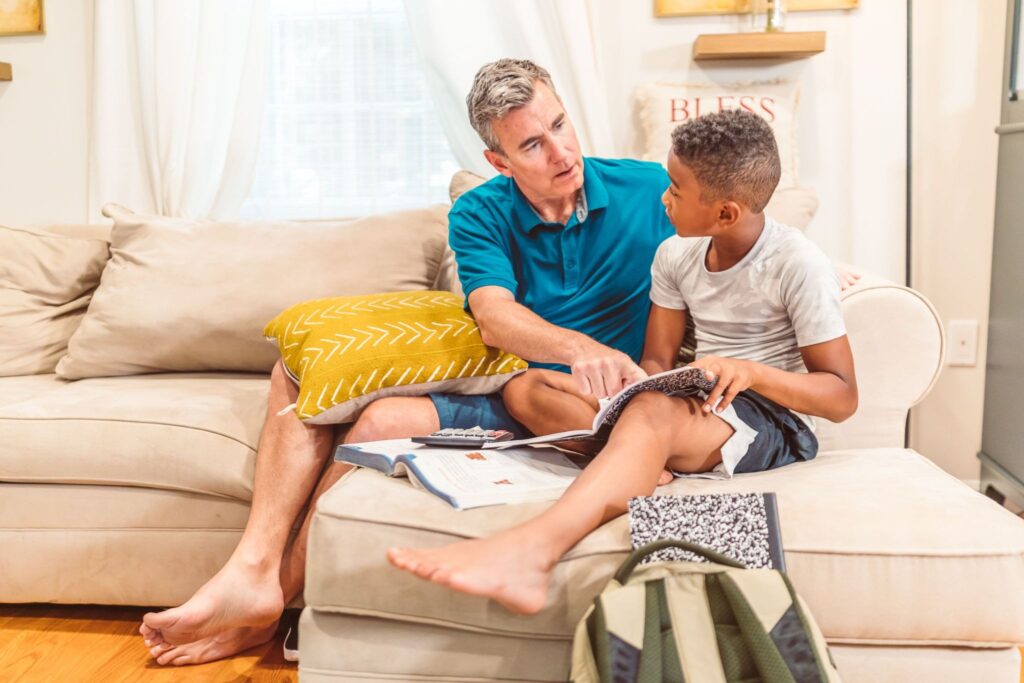
Don't fight against technology; it's a battle that's lost before it begins. Instead, shift the balance. Add so much life to Children's Day that the screen stops being the only window to the world.
The most valuable thing here is simply conversation. Not a lecture, but a real chat: about the day, about a book, about nonsense. Reading aloud, discussing a movie, arguing about trifles over dinner. All those things that no screen can replace, no matter how hard it tries. And this is especially important for the Russian language, which lives only through use. A silent language dies out, a speaking one grows stronger. It's a simple truth, one that’s easy to forget when a child always has a glowing rectangle in their hand.
The Palme school will help with
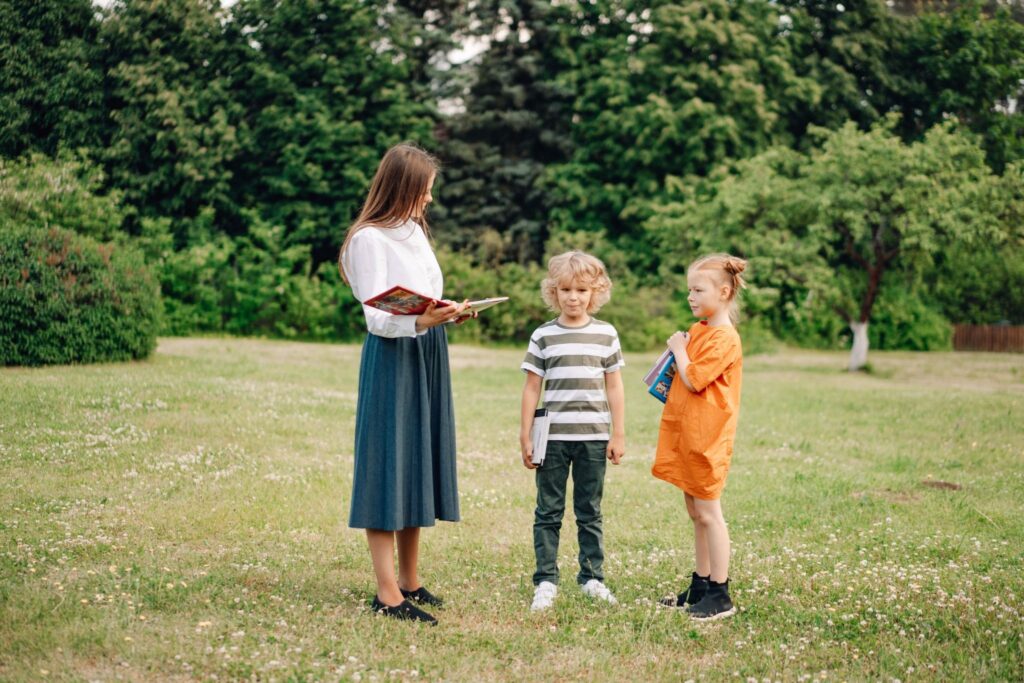
The whole bet here is on the live interaction, on what no app can give you. The child isn't sitting alone with an educational program, pressing buttons. They speak. With a teacher, with other children, out loud, seriously. The lesson is structured as a conversation, not as watching a video.
Yes, video calls also shine a light on the screen, there's no getting around that. It's just that on the other side, it's not an algorithm feeding you the next video, but a person. They listen, ask clarifying questions, laugh at a joke, argue. The difference is huge. In class, Russian transforms from a school subject into a living tool that can be used.
We teach children from four to seventeen. When Russian is spoken at home, they choose Program for bilinguals, and if the language is still foreign to the child, they take Russian as a foreign language course. All online, in small groups, the lesson lasts forty minutes. You can get acquainted for free, and not in one go: first, a conversation with a methodologist who will determine your level, then a trial lesson directly in the group. These two meetings are usually enough to decide if it's for you.
Home

For the first time, the state has cast doubt on what seemed unshakeable: that more screens in school are always good. The reason is serious: children's health and attention. For a Russian-speaking family, this story has its own layer: the screen takes away not only the child's attention but also their native language, which relies solely on live communication. And the answer here is not in prohibitions, but in increasing the amount of real-life interaction in a child's life. The revision of the school internet subsidy program was reported in the American media, including in The Hill material.
Does this mean they want to ban the internet in schools?
No. It's not about a ban, but about a review. A large program that has been subsidizing internet for schools and libraries for many years has decided to re-evaluate it. The head of the relevant department announced a full audit, citing a simple reason: children spend too much time on school screens, which harms their psyche and their ability to grasp what they read. The question is not about taking away technology. The question is how much of it a child actually needs.
Aren't online classes the same screen?
Formally, yes, video communication happens through a screen. But the point is what's on the other side. The feed and the game feed the child picture after picture, and they're alone with the algorithm. In a live lesson, there's a person behind the screen: listening, arguing, joking, answering. The child isn't passively engrossed, but talking. This is the exact opposite of mindless scrolling, even though the device is the same.
What should a parent do right now?
Don't take gadgets away by force, but add more of the real world. Conversation at dinner, reading aloud, arguing about trivial things, doing things together. All the things a screen can't replace. This is doubly important for the Russian language: it only survives through usage. The more a child speaks and reads Russian in person, the stronger the language becomes, and the less room there is for empty scrolling.