


In January 1700, strange figures appeared at the Moscow gates. Scarecrows, dressed in the new European style, were put on public display as an example of what would now be ordered to be worn. Nearby, soldiers with scissors nonchalantly trimmed the coats of those passing by in long Russian kaftans. Tsar Peter, by his decree, was changing the country's clothes.
There were many decrees, about seventeen in a quarter of a century. Boyars and nobles were ordered to wear Hungarian caftans, then townspeople German clothing, and women were obliged to change their attire by the beginning of 1701. A special tax was levied on beards, and the stubborn threatened with punishment. They resisted desperately, which is why the decrees were repeated again and again.
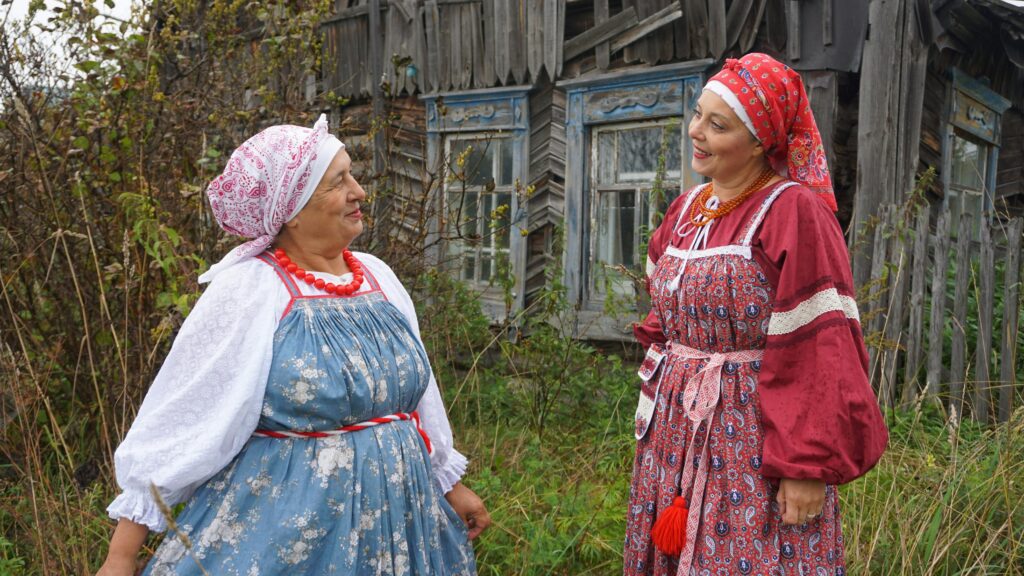
But this reform had a significant loophole. It did not affect the peasants and the clergy; their attire was not touched at all. And it turned out that real Russian clothing survived not in palaces or wealthy homes, but in the villages. When a foreigner today searches for "Russian traditional clothing" and sees a sarafan and a kosovorotka, they are looking, without even knowing it, at peasant clothing, at what Peter did not manage or did not want to change. Let's start with that.
The Russian folk costume is often referred to as a peasant costume because historically, its development and widespread use were most prominent among the peasant class. The elaborate and richly decorated folk costumes that are most recognizable today were typically worn by peasants, especially for festivals, holidays, and special occasions. Here are a few reasons why the peasant connection is so strong: * **Preservation:** Peasants, especially in rural areas, often had a stronger connection to older traditions and customs. They tended to wear their traditional clothing for much longer than the urban nobility or merchant classes, who were more exposed to Western European fashion trends and adopted them more quickly. * **Materials and Craftsmanship:** While the materials used might have been simpler (like linen and wool, often self-produced), the folk costumes were frequently adorned with complex embroidery, weaving, and appliqué. This decorative aspect was a way for peasants to express their artistry, cultural identity, and beliefs, often imbued with symbolic meanings. * **Social Stratification:** Clothing played a significant role in social stratification throughout history. The specific styles, colors, and decorations of folk costumes could indicate regional origin, marital status, age, and social standing within the community. The peasant class, being the largest segment of the population for much of Russian history, had a very distinct and visible set of traditional clothing. * **Modern Perception:** When we think of "Russian folk costume" today, we often see iconic images that have been preserved through ethnographic studies, museum collections, and performance groups. These images are frequently derived from the clothing worn by peasants, as their attire was more enduring and less subject to rapid changes in fashion compared to the upper classes. While it's true that nobility and merchants also had their own forms of traditional dress, the term "Russian folk costume" has become synonymous with the visually distinctive and culturally rich attire associated with the historical peasant population.
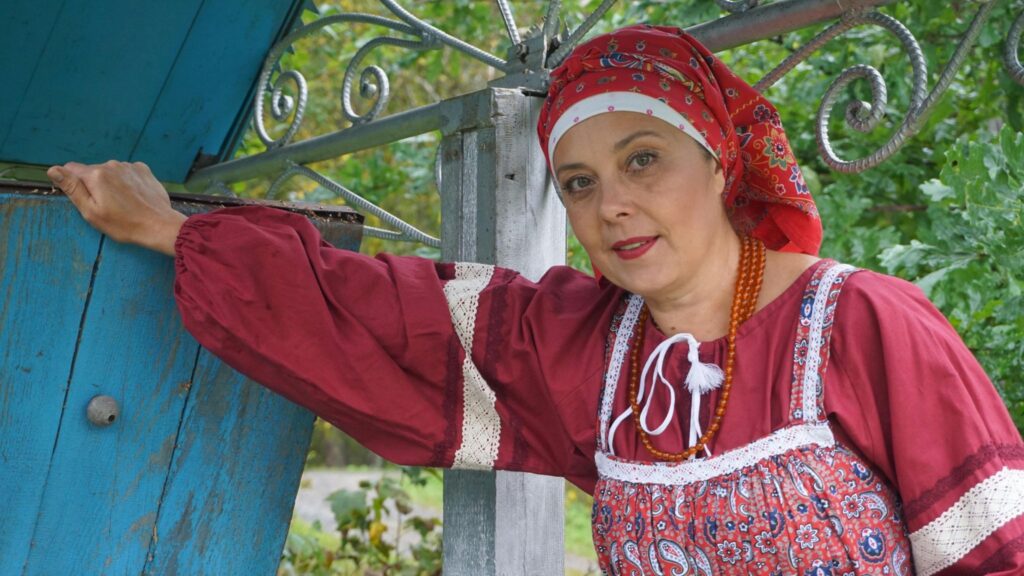
What we are accustomed to calling Russian folk costume developed over centuries and remained almost unchanged until Peter the Great. In the seventeenth century, both a boyar woman and a peasant woman wore clothes of the same cut: a sarafan with a blouse and a kokoshnik; the only difference was in the richness of the fabric and embellishments. The noblewoman had silk and pearls, the common woman had linen and modest embroidery, but the silhouette was the same.
The Petrine reforms split this in two. The upper classes changed into European clothing and quickly forgot about their old attire, while the lower classes kept theirs. Throughout the eighteenth century, the sarafan descended the social ladder: first, it was worn by less wealthy merchants and artisans, and by the mid-nineteenth century, it had become purely peasant attire. It turns out that the folk costume is not an ancient garment of all Russians at once, but the clothing of that part of the people that fashion never reached. Therefore, it is more accurate to speak of it not as the attire of a nation, but as the attire of a village, where it survived in some places until the 1920s of the last century.
Women's outfit, sundress, shirt, and vest
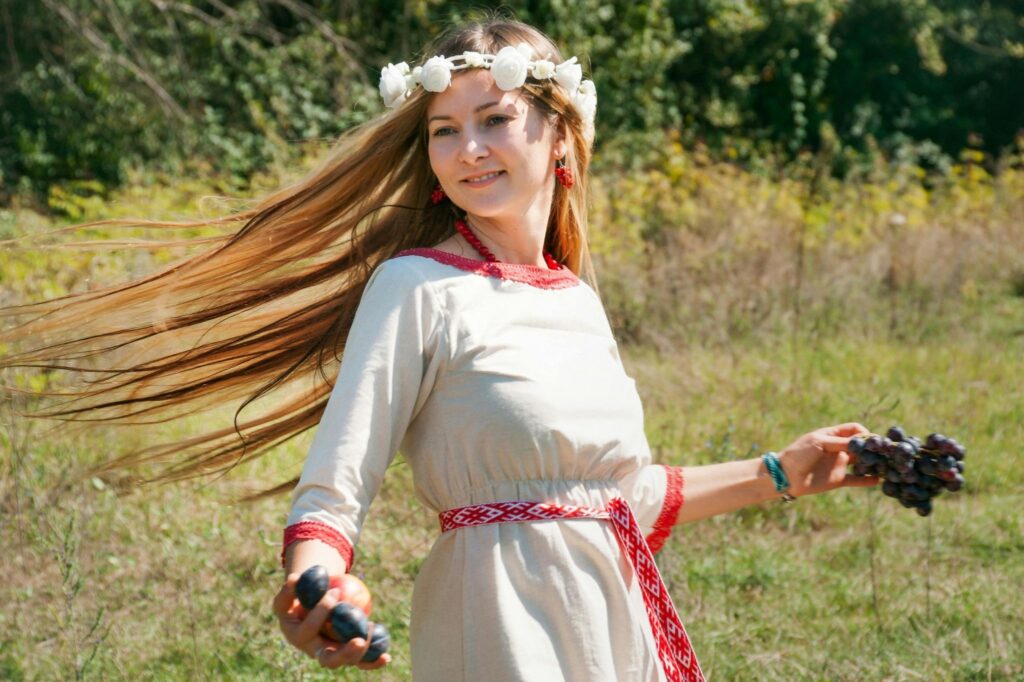
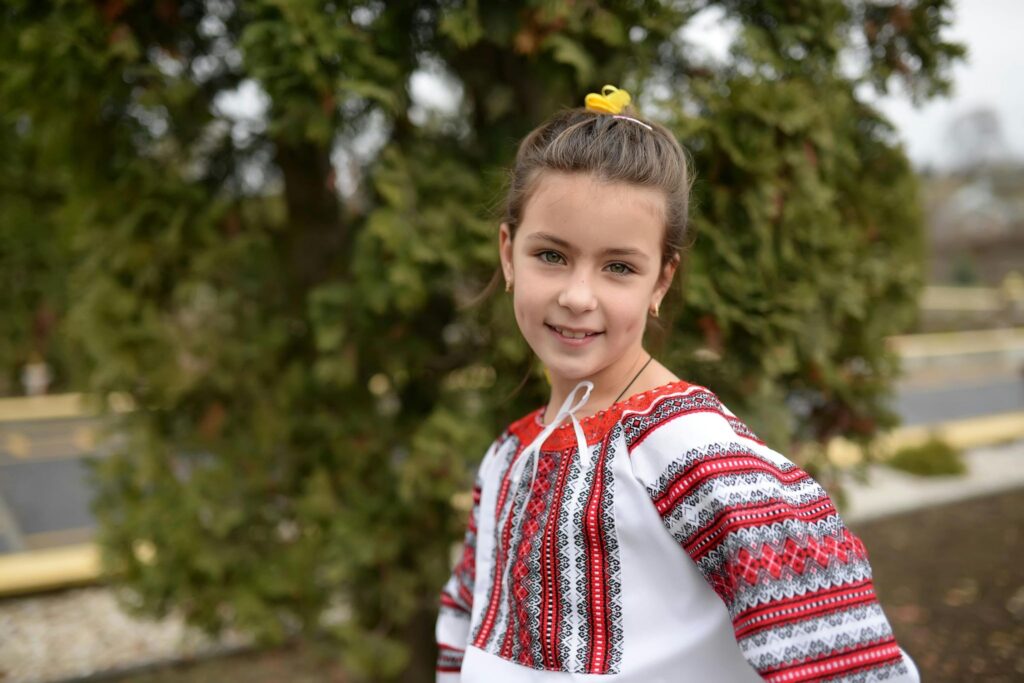
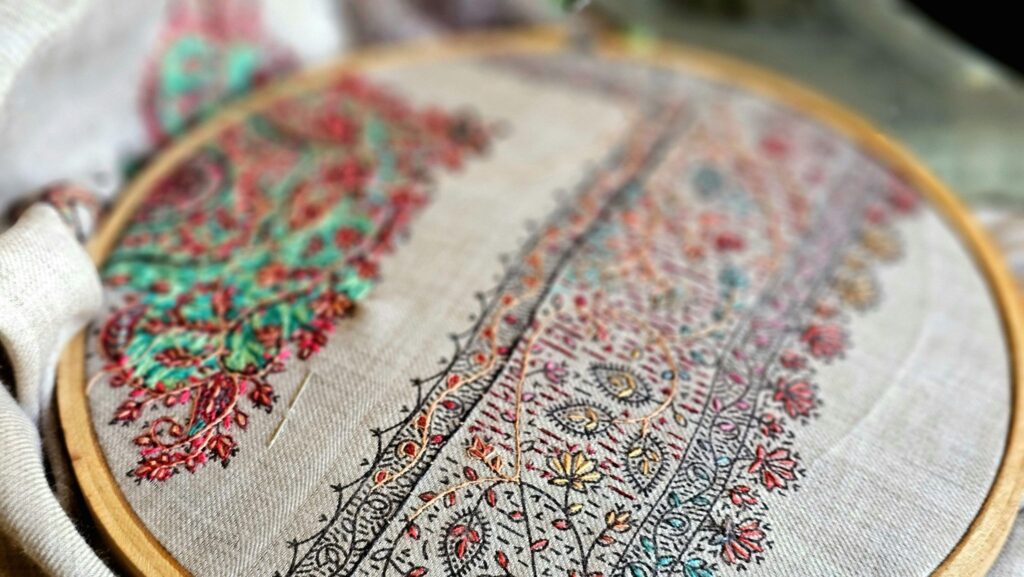
At the foundation of every women's outfit was a shirt, long, down to the heels, made of homespun linen. It was rarely shown in its entirety; only the sleeves and the hem peeked out, and these were adorned with embroidery. The pattern was not placed arbitrarily, but along the edges, at the neckline, on the wrists, and at the bottom, where the body is exposed and, according to belief, vulnerable to evil spirits. Embroidery was not just for beauty, but a protective charm, and the red and black geometric pattern was read as a protective amulet.
Over the shirt was the very thing without which the Russian costume cannot be imagined.
Sundress
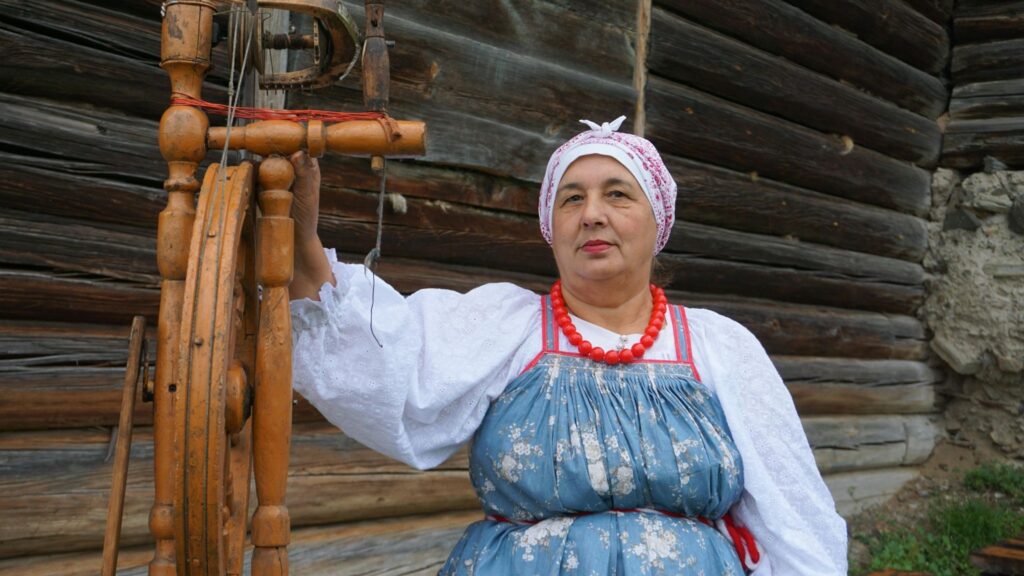
A sarafan is a long, sleeveless dress with straps, worn over a shirt. The word, according to one version, came from the East, from the Persian designation for something like dressed from head to toe, and initially in Rus', even long men's robes could be called that. But it stuck to women's clothing.
A rich sarafan was sewn from silk and brocade, embroidered with gold and river pearls, for which the North was famous, and over it they wore a dushereya, a short warm jacket with straps, both festive and cozy. The everyday one was much simpler, made of dyed canvas. From how a woman was dressed, it was read without words whether she was married, from what region, whether she came out on a weekday or on a big holiday. The costume worked like an identity card, understandable to anyone who met you.
What was it made of
| Material | Where and for whom |
|---|---|
| Linen canvas | Everyday clothing of common people, shirts and inexpensive sarafans |
| Fur | Poneva and warm clothes, especially in the south |
| Silk and brocade | Festive and rich attire for the nobility and wealthy townspeople |
| River pearl and beads | Embroidery of kokoshniks and festive headdresses, especially in the North |
| Gold thread | Sewing on expensive kokoshniks and fancy clothing |
Kokoshnik and headscarf
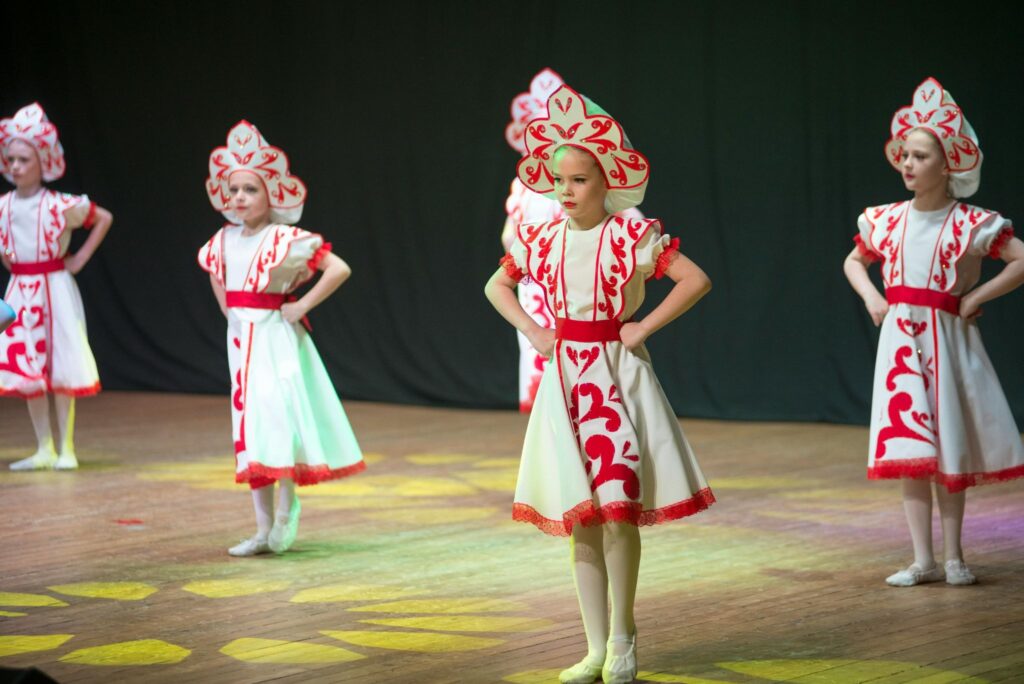
A married woman always covered her head. To go out bareheaded was considered a disgrace, hence the word "oprostovolosit'sya" (to get into trouble/make a fool of oneself). On weekdays, hair was hidden under a scarf or head covering, but for holidays it was taken out. kokoshnik, a solid, elegant headdress embroidered with pearls and beads. In the North, kokoshniks were tall, while in the South, they were replaced by kika and soroka headdresses of a different cut. Unlike married women, girls did not need to hide their hair; they could go with their braid uncovered or wear a wreath, and it was immediately clear from a woman's headdress whether she was a maiden or a married wife.
Men's outfit, kosovorotka and kaftan
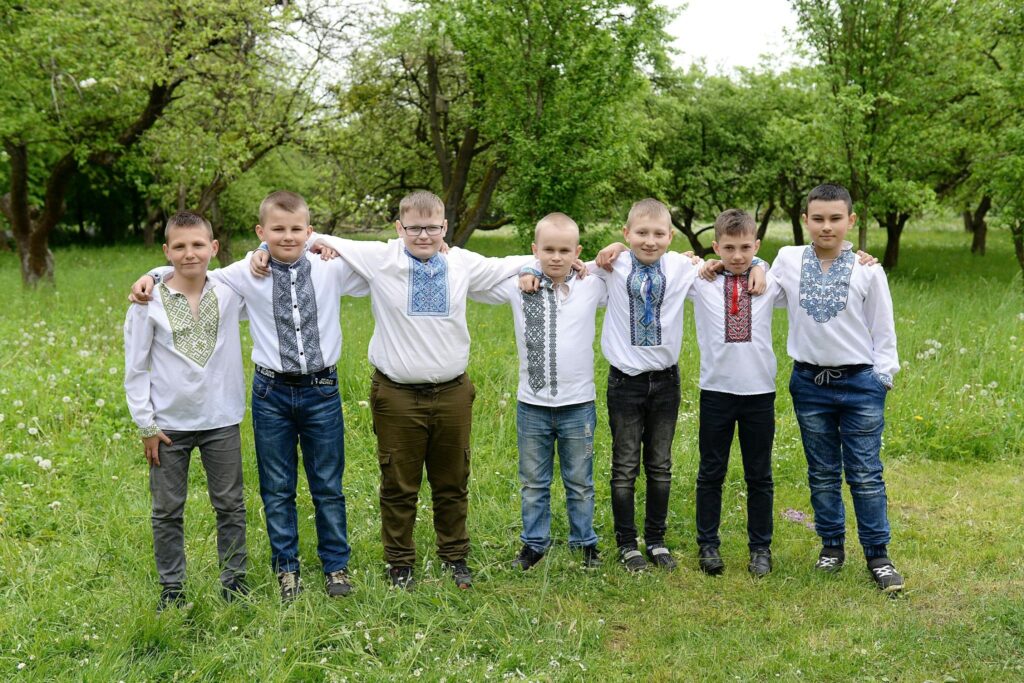
The men's suit was simpler than the women's, but every detail in it also had meaning.
Kosovorotka
The main item of clothing for men was the kosovorotka, a shirt with a collar opening not in the center, but on the side, usually to the left. It got its name from this diagonal collar. No one knows exactly why the opening was shifted to the side, and there are several theories. Some see Byzantine influence here, others think that this distinguished the Russian shirt from the Tatar one after the Horde period, and according to another, quite practical version, when bending over for work, a religious amulet would slip out of a straight collar, but a diagonal one would keep it in place. Which version is correct is still debated.
They wore the kosovorotka untucked, cinching it with a cord or belt, and embroidered the same protective areas as on a woman's shirt: the collar, chest, and sleeve edges. The everyday version was made of plain white linen, while the festive one was ornate, and for those with means, made of silk. In summer, they wore it by itself, and in cold weather, they threw a caftan over it. The kosovorotka proved to be surprisingly resilient: it is still worn today by Old Believers when going to services.
Kaftan
A caftan is a type of men's outerwear, and the word itself, according to one version, is not Russian and came from the East. The traditional Russian caftan was long, reaching the ankles, loose-fitting, wrapped closed, and belted. There were plenty of variations for different weather and financial means, from rough homespun cloth to elegant holiday attire. Interestingly, it was precisely the caftan that was most painfully affected by Peter's reform: the European caftan that the Tsar made the nobility wear was much shorter than the Russian one, reaching the knees and fitted, so soldiers at the gate would cut off the long skirts, crudely transforming the old garment into a semblance of the new one. The long peasant caftan, however, peacefully survived until the time when urban Russia had forgotten all about it.
North and south, two different suits
Here, it's time to dispel the main misconception. A single Russian costume never existed; the country is too large. Roughly speaking, there were two different worlds, northern and southern, and the women's attire in them differed fundamentally.
In the North and Center, the sarafan reigned supreme, the very one that made it onto matryoshka dolls and postcards, and that any foreigner pictures in their mind upon hearing "Russian folk costume." The costume there was restrained and majestic, with a high pearl kokoshnik, in noble, muted tones. But in the South, in lands like Voronezh or Ryazan, married women wore not a sarafan, but a poneva, an A-line skirt made of checked wool, often dark with bright red or orange checks. The Southern costume is considered more ancient and archaic, it is more colorful, with puffy sleeves, with geometric red and black embroidery, and complex headdresses called soroki, studded with beads. So the beauty on the matryoshka doll is the face of only the North, and attributing her attire to all of Russia would be a mistake.
Suit by gender and region
| Who and where | Outfit base | Features |
|---|---|---|
| Woman, North and Center | Sundress and shirt | Dushegreya, a high pearl kokoshnik, restrained noble colors |
| Woman, South | Poneva and shirt | Plaid wool skirt, puffy sleeves, magpie headdress, brighter and more archaic |
| Man | Kosovorotka and breeches | Slanted collar, belt left untucked, a long caftan over it in the cold |
| Headwear by status | Scarf or kokoshnik | The married woman always covered her hair, the girl walked with her braid uncovered or with a wreath. |
What remains of all this today
The folk costume has almost entirely left everyday life, and this is natural; you won't go to work in a *ponieva*. But it hasn't vanished completely; it has moved to special occasions.
It is most alive in folk ensembles and at folk festivals, where the sarafan and kokovorotka are back in vogue, albeit in a staged, polished form. The kokoshnik has taken on a separate, unexpected life: it is worn at weddings, as a bold decoration by fashionistas, and was sported by Russian fans in the stands at the World Cup, turning the ancient headdress into almost a carnival symbol of the country. As far back as the nineteenth century, the sarafan silhouette and kokoshnik briefly returned to court as formal Russian style, and this fashion still reappears among designers from time to time. And in families living far from Russia, the costumes are brought out for cultural celebrations, when children are dressed in little sarafans and kokovorotkas, so that they can at least touch upon their origins in this way.
Why should children growing up outside of Russia know this
For a child growing up in America or Canada who primarily hears Russian at home, an ancestral costume seems like something from a fairy tale, no more complex than a picture. Yet, behind every detail lies a living logic: why the collar is on the side, why a married woman hides her hair, why a sarafan is worn in the North and a povyazka in the South. Understanding this logic means understanding how the people from whom the child descends lived and thought.
At Palme School, children are taught not only to speak and read Russian, but also what lies behind the words: holidays, customs, and the culture from which the language grew. A discussion about folk costumes in class is not a fashion history lesson, but a way to connect the child with their roots, so that Russia is not an abstraction for them, but something personal and understandable. Children aged four to seventeen are taught, separately. bilingual and for those, To whom is Russian essentially a foreign language, online, in small groups, for forty minutes.
You can find out if it's suitable for your child for free. The school offers two trial lessons. The first is an introduction with a methodologist who will determine the level and explain how the program is structured. The second is a real lesson in a group, with a teacher and other children. This way, it's immediately clear how the child feels in the Russian environment and what interests them the most.
What is worth remembering
Peter reformed Russia from the top down, but he couldn't reach the very bottom, and that's why the national costume has come down to us precisely in its peasant form. It's not a single outfit for a great country, but a motley multitude of local styles, where the northern sarafan and the southern poneva are as different as two separate languages. Behind every detail, behind the angled collar, behind the covered head of a married woman, behind the embroidery on the edges, there's not a whim, but meaning and belief. Today, this costume is hardly worn, but it remains a sign by which those from the same background recognize each other, and which one should be able to read, especially those who are growing up far from their native places.
A sundress is a type of dress, usually sleeveless and made of light fabric, typically worn by women and girls.
A sarafan is a long, sleeveless women's dress with straps, worn over a shirt. Before Peter the Great, it was worn by women of all social classes, but after his reforms, it gradually became clothing for common people and by the mid-nineteenth century, it was only worn by peasant women. It was common mainly in the North and central Russia.
How did men's Russian suits differ from European ones?
The main difference was the silhouette. The traditional Russian attire was long and loose, with the caftan reaching the ankles. The European suit, introduced by Peter, was shorter and fitted, with the caftan reaching the knees. The basis of men's clothing was the kosovorotka, a shirt with a slanted collar, which was completely unknown in Europe.
Why is the collar of a kosovorotka on the side?
There is no definitive answer; there are several versions. One suggests Byzantine influence, another claims it distinguished a Russian shirt from a Tatar one. Yet another version posits that the slanted cut prevented an undergarment cross from falling out during bent-over work. Researchers still debate which version is correct.
Is it true that the Russian folk costume was the same throughout the country?
No, there wasn't a single costume. In the North and in the center, they wore a sarafan, while in the South, married women wore a poneva, a checkered wool skirt, and the entire outfit there was different. The image familiar from matryoshka dolls is primarily the Northern costume, not a pan-Russian one.
Why was there embroidery on the clothing?
Embroidery served not only as decoration but also as a protective charm. The pattern was placed along the edges of clothing, at the neckline, on the sleeves, and at the hem, in areas where the body was exposed, to protect the person from evil forces. Therefore, the ornament was not random but had its own meaning and could be read by knowledgeable people.
Do people wear Russian traditional clothing now?
In everyday life, there are almost none, but it is alive in folklore ensembles, at folk festivals and weddings. The kokoshnik has become a fashionable decoration and even a symbol in sports stands. And in families abroad, children are dressed in sarafans and kosovorotkas for cultural holidays.